Safety Window Film for Residential Properties: A Homeowner’s Guide
Published: August 21, 2026 · 8 min read · Category: Safety & Security Film
About this article: KSB Window Film manufactures safety film for both commercial and residential applications. Residential safety film involves different priorities from commercial security — this guide addresses the homeowner’s decision specifically.
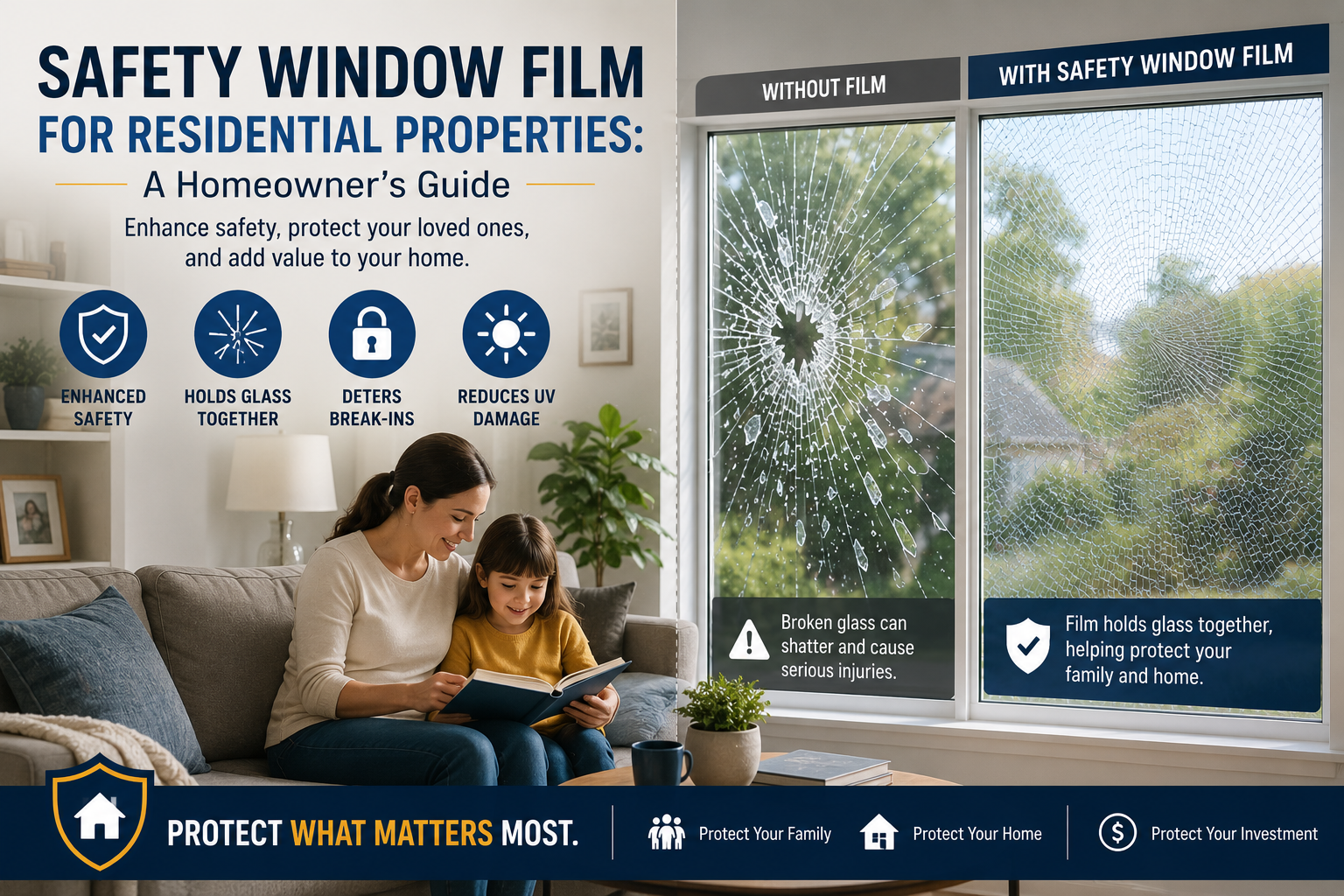
Residential safety window film helps reduce injury risks by holding broken glass together in homes.
Most homeowners think about window film for heat or privacy. Safety film rarely comes up until something happens — a child runs into a glass door, a storm sends debris through a window, or a ground-floor window is broken in an attempted burglary. At that point, the value of safety film becomes obvious. Before that point, understanding what it does and where it makes the most difference is what this guide provides.
The Residential Glass Hazard Problem
Residential buildings have more glass per occupant than most people realise — and much of it is in locations where glass failure causes direct injury risk.
High-risk locations in a typical home:
Glass doors (sliding, French, bi-fold): The most common source of residential glass injuries. Children and adults routinely walk into glass doors or fall through them. Standard tempered glass reduces shard risk but still creates an immediate opening on failure. In some older homes, glass doors may still have annealed glass (non-tempered) — a significantly higher injury risk.
Low-level windows (below 800mm from floor): Windows accessible to children, or at a height where adults can fall through them.
Large window panels in living areas: Floor-to-ceiling glazing, picture windows, and large glass panels — attractive architecturally, higher injury risk if failed.
Skylights: Breakage from above (falling objects, storm debris, maintenance access) sends glass fragments directly down onto occupants below.
Garage windows and doors: Often annealed glass, rarely upgraded.
What Safety Film Does in a Home
Fragment retention: The primary benefit for most residential applications. When glass breaks, the film holds the fragments together in the frame rather than scattering. This prevents the laceration injuries that cause most glass-related emergency room visits.
Forced entry delay: On ground-floor windows and doors, safety film significantly slows an attempted forced entry. An unprotected window can be cleared in 3–5 seconds. A properly installed 8 mil security film with frame attachment can resist penetration for 60–120+ seconds — long enough for a burglar to abandon the attempt or for an alarm to activate.
UV protection: Safety film almost always includes UV blocking — typically 99%+. This provides the UV protection for occupants and interior furnishings as a secondary benefit.
Storm protection: In storm-prone regions, safety film reduces the risk that wind-borne debris will send glass fragments through the home during extreme weather events.
Which Windows to Prioritise
Not every window in a home needs safety film. A risk-based approach to prioritisation:
Highest priority:
Glass doors (sliding, French, bi-fold) — most common injury source
Ground-floor entry windows — primary forced entry points
Any low-level glazing below 800mm from floor
Windows in rooms where children spend significant time
Second priority: 5. Large picture windows and floor-to-ceiling glazing 6. Skylights 7. Bathroom glazing (where glass failure near fixtures could cause serious injury)
Lower priority (if budget allows): 8. Upper-floor windows not near a fall risk 9. Windows not accessible from ground level
Product Selection for Residential Use
For injury prevention / fragment retention (glass doors, low-level windows): 4–6 mil clear safety film. Provides the fragment retention benefit at the lowest visible impact. Appropriate for most residential safety code compliance needs and for reducing day-to-day accident risk.
For forced entry delay (ground-floor windows, entry-adjacent glazing): 8 mil security film, ideally with frame attachment. The additional thickness and frame attachment significantly increase the time required for an intruder to penetrate the window.
For combined solar control and safety: Some manufacturers produce multi-functional films combining safety performance (4–6 mil equivalent) with solar control tinting. These provide fragment retention and UV protection with visible light reduction — useful for west or south-facing windows where both benefits are desired.
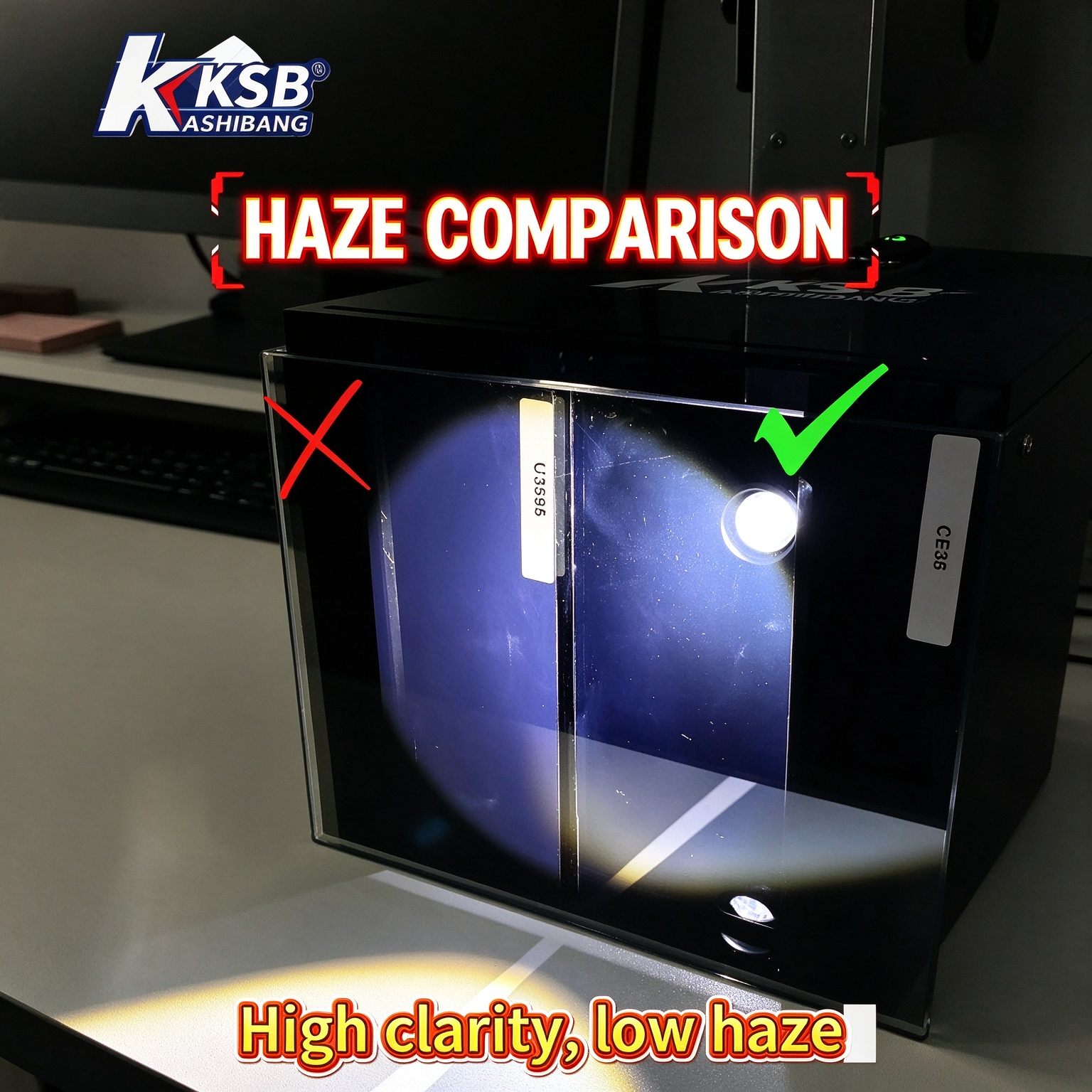
Appearance: Clear safety film is essentially invisible — you won’t see it on the installed glass under normal conditions. Some security film at higher thickness has a very slight tint; most clear variants are undetectable.
Frame Attachment for Residential Applications
In commercial security applications, frame attachment (bonding the film edge to the window frame) is essential for forced entry resistance. For residential applications:
Glass doors: Frame attachment is highly recommended. The door frame perimeter is accessible for attachment tape application and the forced entry risk is highest here.
Ground-floor windows: Frame attachment recommended if security is the primary concern.
Upper-floor windows, interior safety applications: Frame attachment less critical — the primary benefit (fragment retention) is achieved by the film alone.
Frame attachment in residential settings is typically done with perimeter attachment tape — a structural adhesive tape bonding the film edge to the window frame. This is a straightforward addition that a professional installer can complete alongside the film installation.
DIY vs. Professional Installation for Residential Safety Film
Residential safety film can be installed DIY for simple, flat, accessible windows with basic tools. The technique is the same as any window film application: clean glass, wet application with a slip solution, squeegee out bubbles, trim edges.
When DIY is appropriate:
Simple rectangular windows, easily accessible
Interior application on standard flat glass
When frame attachment is not required
Low-to-mid-end film (basic fragment retention, not high-security)
When professional installation is recommended:
Glass doors (large panel, precision trim required)
When frame attachment is part of the specification
Any curved or non-rectangular glass
High-security applications where the installation quality is the margin of safety
Poor installation — bubbles, edge lifting, incorrect trim — reduces both the aesthetic result and the film’s performance. For safety-critical applications, professional installation is the right investment.
Cost Reference for Residential Safety Film
Installed costs (professional installation, Western markets):
Application
Film Type
Area
Installed Cost
Single glass door (2m²)
6 mil safety
2 sqm
$80–$180
Sliding door set (4m²)
6 mil safety
4 sqm
$160–$350
Ground-floor windows (10m²)
8 mil + frame attach
10 sqm
$450–$900
Full ground floor (20m²)
4–8 mil safety
20 sqm
$700–$1,500
These ranges reflect film material + professional labor. Self-installation using quality film reduces cost by roughly 50–60% on materials.
FAQ
My house has double-glazed windows. Does safety film work on them?
Yes, with appropriate product selection. Standard safety film applied to the inside face of a double-glazed unit must be compatible with the IGU (avoiding thermal stress cracking). Request IGU-compatible film from your supplier. See Window Film for Double-Glazed and Low-E Glass for details.
Will safety film prevent an intruder from breaking in through a window?
It won’t prevent glass breakage, but it will significantly slow penetration — from 3–5 seconds (unprotected) to 60–120+ seconds (8 mil with frame attachment). Combined with a monitored alarm system, this delay is often enough to cause an intruder to abandon the attempt. Safety film is one layer of a home security strategy, not a complete solution.
Can I install safety film myself on glass doors?
Large glass door panels are challenging for DIY installation — getting a bubble-free result on a 2m² panel requires practice. For safety-critical applications (where the film quality is the protection), professional installation is recommended.
Source Residential Safety Film for Your Project or Distribution Range
KSB Window Film produces clear safety film from 4 mil through 12 mil for residential and commercial applications. We supply to distributors, glazing contractors, and home improvement retailers.