Windshield Protection Film and ADAS: The Complete Compatibility Guide
Published: October 12, 2026 · 9 min read · Category: Windshield Film
About this article: KSB Window Film’s technical team has developed ADAS application zone guidance based on testing across multiple vehicle platforms. ADAS compatibility is the most technically complex aspect of windshield film installation on modern vehicles — this guide provides the framework.
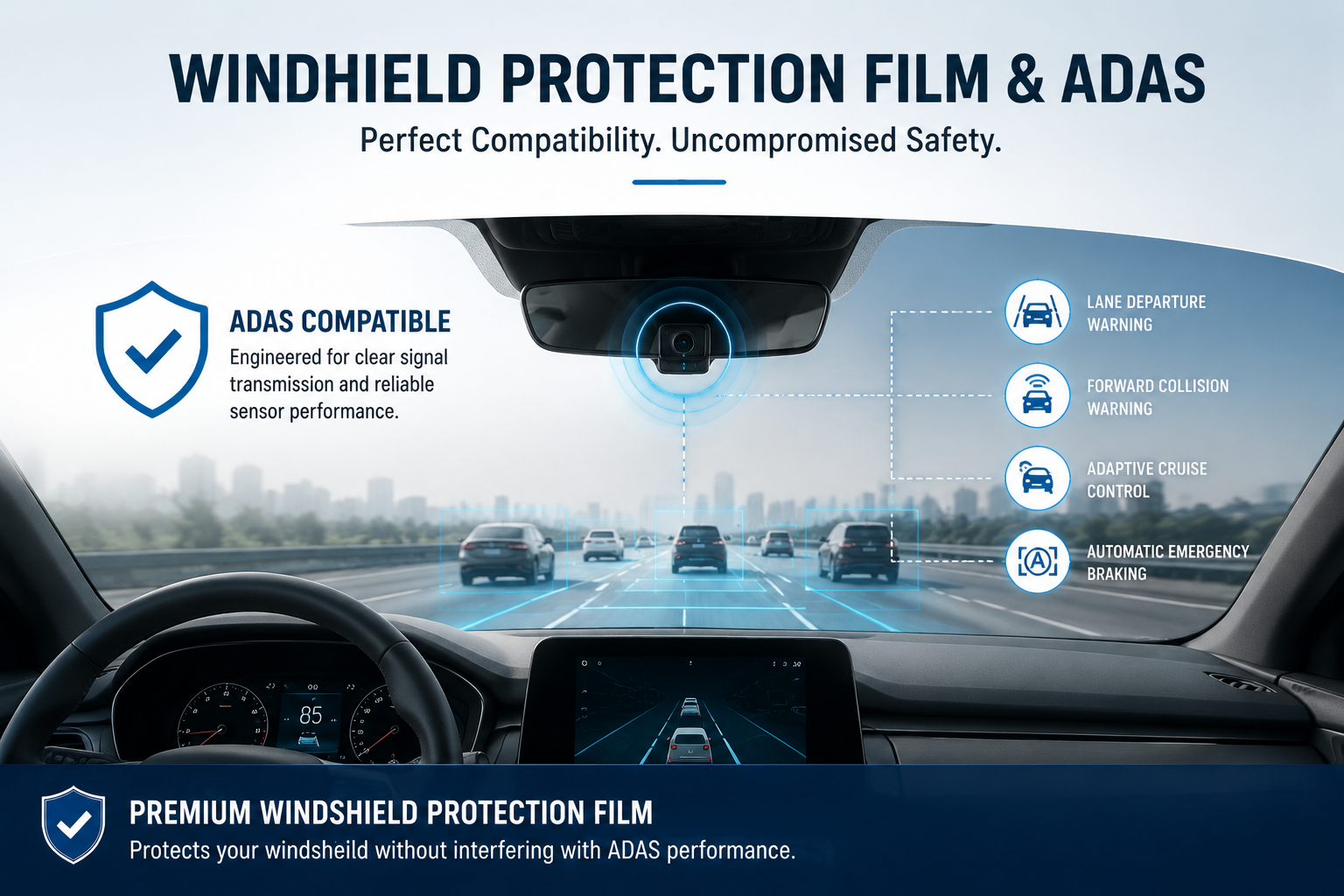
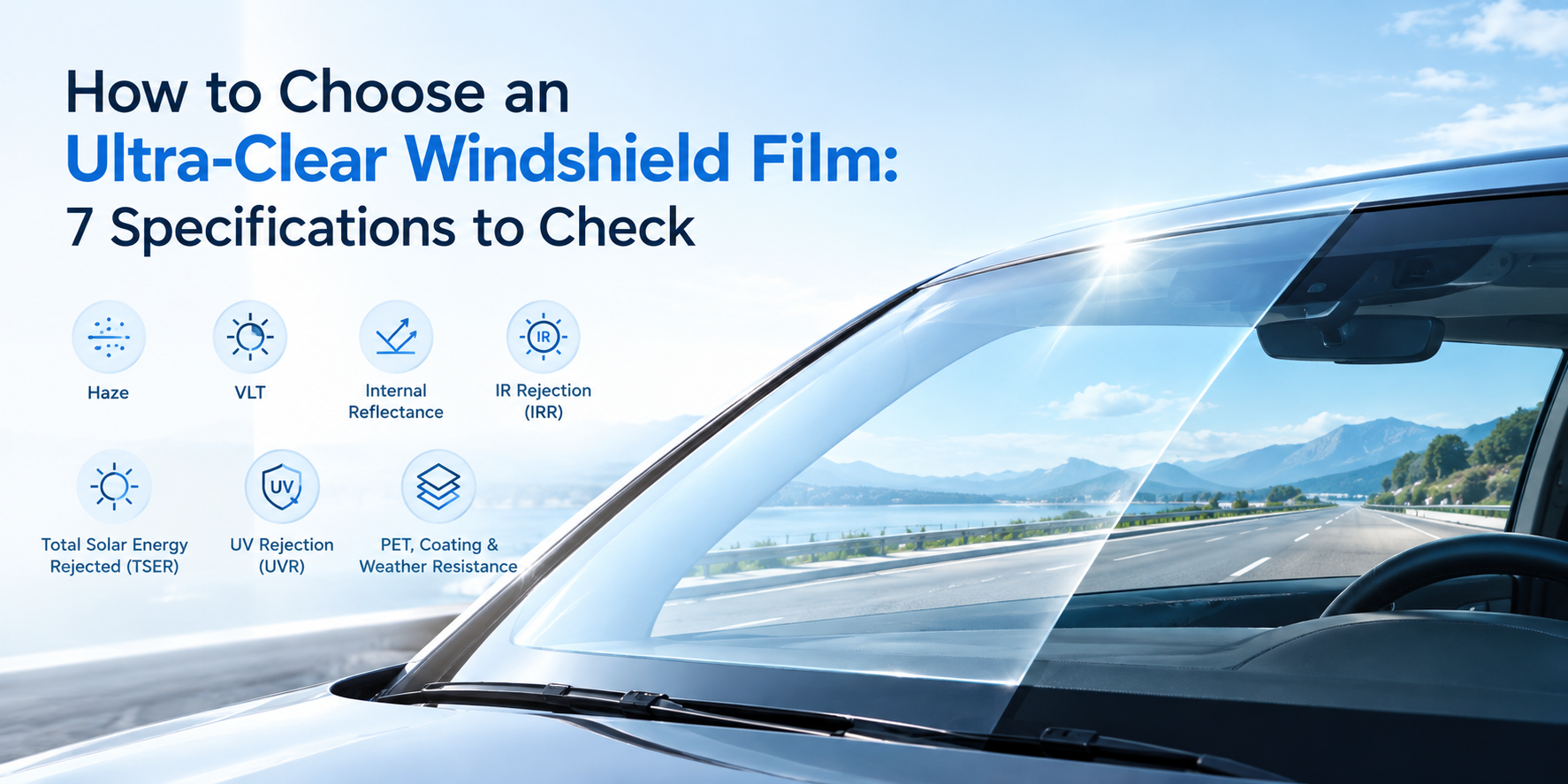
Showing how windshield protection film works with ADAS systems to maintain safe sensor performance and driving visibility.
Five years ago, applying film to a windshield was a relatively straightforward decision. Today, the typical modern vehicle windshield is a sensor platform carrying forward-facing cameras, rain sensors, heating elements, and heads-up display projection areas — each with specific optical, electrical, and mechanical requirements that windshield film must not compromise.
Getting this wrong has real consequences. Misaligned or optically-compromised ADAS cameras generate false positives, miss real hazards, and can result in emergency brake events at highway speed. Rain sensors that malfunction cause wiper operation failures in poor visibility. These aren’t minor inconveniences — they’re safety issues.
This guide gives installers and specifiers the framework for ADAS-compatible windshield film application.
What ADAS Systems Are Affected
Forward-Facing Cameras (ADAS Primary)
Forward-facing cameras — positioned at or behind the rear-view mirror, looking through the windshield — are the most critical ADAS component for film compatibility. These cameras power:
Lane departure warning and lane keeping assist
Adaptive cruise control and forward collision warning
Automatic emergency braking (AEB)
Traffic sign recognition
Pedestrian and cyclist detection
How film can affect them: The camera relies on optical transmission through the windshield glass to capture clear images of the road ahead. Film in the camera’s field of view (FOV) that introduces haze, distortion, or altered light transmission can degrade camera performance by:
Reducing image contrast (haze)
Distorting object positions (optical distortion)
Altering colour balance (tinted film)
Reducing light level (very low VLT film)
The threshold: Most ADAS camera systems are designed with margin for normal windshield ageing and soiling. A small amount of additional haze (0.3–0.5%) from premium windshield film is typically within the system’s tolerance range. Budget film with 2–5% haze in the camera FOV can degrade camera performance to the point of false detections or missed events.
Application guidance: Most premium windshield film manufacturers specify a clear (unfilmed) zone around the forward-facing camera, typically 100–150mm diameter around the camera module. Application within 30mm of the camera housing is generally not recommended without specific OEM guidance.
Rain Sensors
Rain sensors use infrared light (typically 850–950nm wavelength) reflected from the inner windshield surface to detect water droplets. The sensor projects IR into the glass and detects how much is reflected back — more water on the outer surface = more total internal reflection = wetter conditions.
How film can affect them: Film applied over the rain sensor area can:
Alter the IR reflection properties at the glass-film interface
Change the total internal reflection pattern the sensor is measuring
In some cases, create a false “wet” reading due to the adhesive-glass interface optical properties
The threshold: Most rain sensors have calibration margins that accommodate normal windshield variation. Clear film applied carefully to the rain sensor area often has minimal effect. Some installers report no rain sensor issues with clear windshield film; others report miscalibration requiring dealership adjustment.
Application guidance: Apply film around the rain sensor area rather than over it where possible. If full-windshield coverage is specified, use clear film with low adhesive-interface optical density and be prepared to advise the customer on potential recalibration needs.
Heads-Up Display (HUD) Projection Zone
HUD systems project information onto the windshield surface, creating a virtual image that appears to float above the bonnet in the driver’s field of view. The windshield has a specific coating in the HUD zone — typically a semi-reflective treatment that redirects projected light toward the driver while maintaining forward view clarity.
How film can affect HUD: Film in the HUD projection zone can:
Create a secondary reflection of the HUD image (double image)
Reduce the contrast of the HUD image by adding a reflective layer
In some cases, prevent HUD calibration from working correctly
Application guidance: Do not apply film over HUD projection zones without specific confirmation that the film product has been tested for HUD compatibility. The HUD zone is typically printed on the windshield or visible as a semi-reflective band — usually in the lower centre of the upper windshield area.
Windshield Heating Elements
Some premium vehicles have electrically heated windshields — a matrix of fine electrical conductors embedded in the glass, used for defrost and de-icing. These are distinct from the heated rear window elements, and are not visible to the eye.
How film can affect heating elements: Most windshield film application over heating elements is fine — the film adhesive doesn’t conduct electricity and the thin film layer doesn’t significantly affect thermal performance. The primary risk is during installation: aggressive squeegee pressure or heat gun application over the heating element areas can damage the conductors.
Application guidance: Apply film with gentle squeegee pressure over heating element areas. Use controlled heat gun application — avoid direct high-heat application sustained over small areas.
ADAS Zone Mapping: How to Identify Restricted Areas
Standard location references:
Forward camera: Located at the top centre of the windshield, typically behind or adjacent to the rear-view mirror. Usually visible as a black module bracket. Clear zone: typically 150mm diameter around the camera housing.
Rain sensor: Located adjacent to the forward camera, typically a flat sensor module bonded to the glass. Identifiable by a small printed area or visible sensor element. Clear zone: 50–80mm radius around the sensor.
HUD zone: A rectangular band in the lower central area of the upper windshield — typically 200–300mm wide × 100–150mm tall. May be visible as a slightly different appearance area in certain lighting.
Heating elements: Not visible without specialist tools. Check vehicle specification documentation.
Vehicle-specific guidance: KSB Window Film and other professional windshield film manufacturers maintain application zone guidelines for major vehicle platforms. Request vehicle-specific guidance before installation on any modern premium vehicle.
Post-Installation ADAS Checks
After installing windshield film on an ADAS-equipped vehicle:
Camera image check: If available via the vehicle’s diagnostic interface or infotainment display camera view, review the forward camera image for any visible degradation.
ADAS function check: Drive a short calibration route in normal conditions. Confirm that lane departure, adaptive cruise, and collision warning systems function as expected.
Rain sensor check: Activate manual wiper mode, then set to automatic. Apply water to the windshield and verify that the automatic wipers respond normally.
HUD check: If the vehicle has HUD, confirm the projected image is clear and single (no double image or ghost image).
If any systems appear to malfunction after film installation, the film should be removed from the affected zone and the system recalibrated by the vehicle dealer or ADAS specialist.
FAQ
Do all windshield films cause ADAS problems?
No. Premium clear windshield film with haze below 0.5%, applied outside the camera and sensor zones per manufacturer guidance, typically has no effect on ADAS function. Problems arise from: film applied over camera or sensor areas, high-haze film degrading camera image quality, or tinted film reducing light levels for camera or sensor operation.
Does the vehicle manufacturer’s warranty cover ADAS recalibration after film installation?
No. Aftermarket installation of any product on the windshield is at the vehicle owner’s responsibility. If ADAS recalibration is needed after film installation, this is an out-of-warranty cost. This is part of the total cost of windshield film installation that buyers and installers should communicate clearly.
Is there a windshield film that’s certified for use with specific ADAS systems?
Some windshield film manufacturers have pursued specific OEM compatibility testing with vehicle manufacturers or Tier 1 ADAS system suppliers. This is emerging and not universal. When this documentation exists, it’s a valuable differentiator. Ask specifically whether the product has been tested against the specific ADAS systems on your customer’s vehicle platform.
KSB Provides ADAS Zone Guidance for Major Vehicle Platforms
KSB Window Film has developed application zone guidelines for ADAS-equipped vehicles across major European, US, and Asian platforms. Contact our technical team for vehicle-specific installation guidance.