From Order to Port: How a PPF Manufacturer Ensures Safe Global Shipping
Published: August 11, 2026 · 7 min read · Category : PPF Logistics
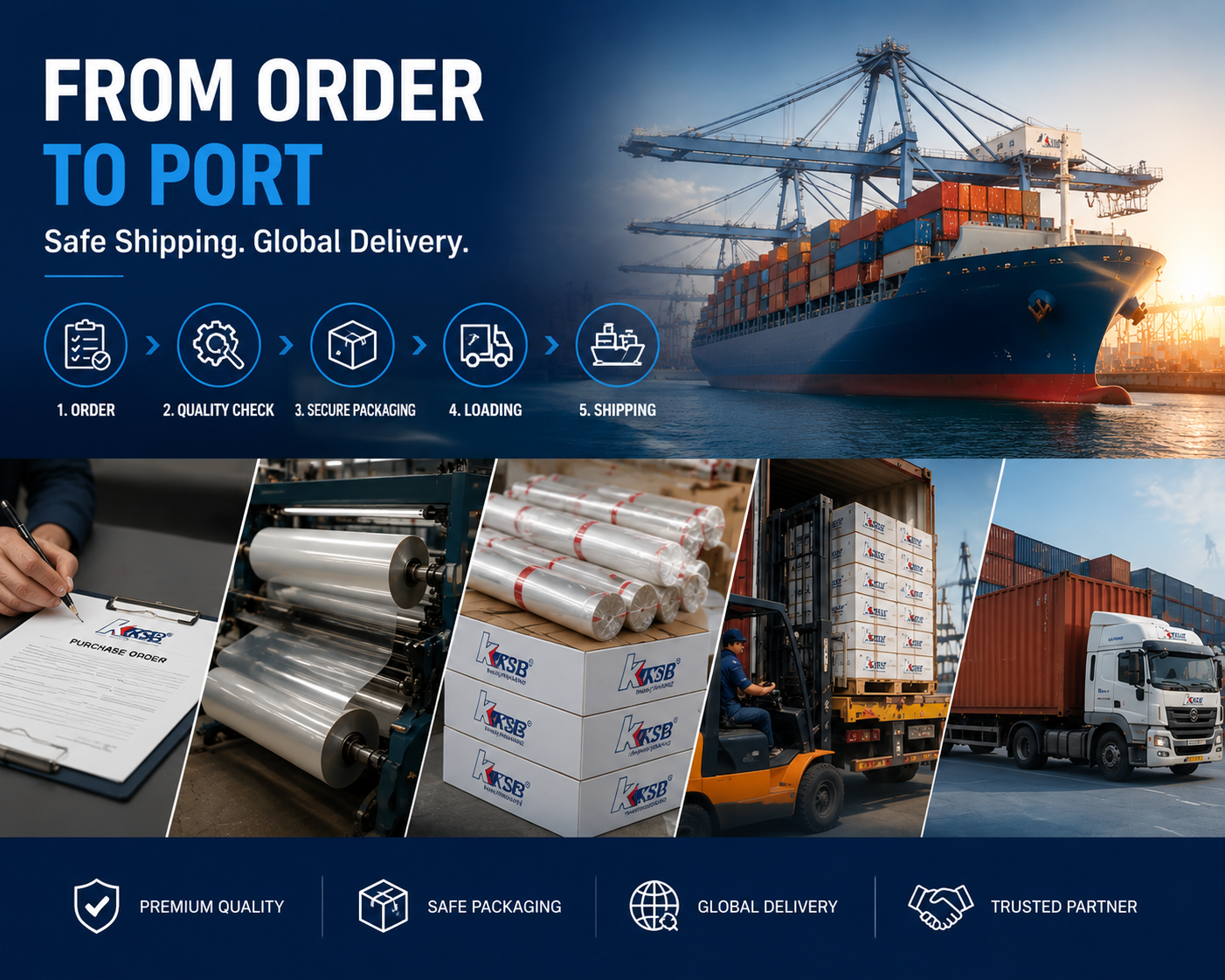
About this article: KSB Window Film ships PPF to distributors in over 60 countries. Global shipping of film products has specific requirements that not all manufacturers handle correctly — this guide explains what we do and why it matters.
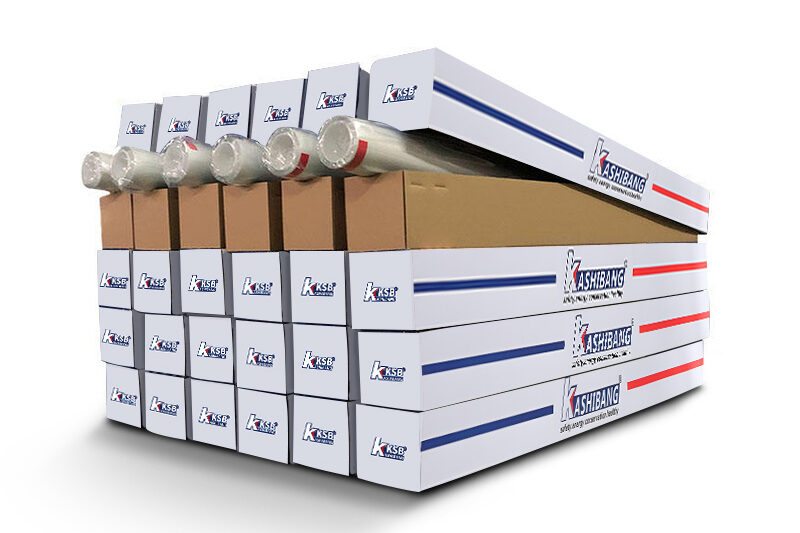
Factory-packed PPF rolls secured in cartons designed for global shipping protection
PPF is not a forgiving product to ship. Rolls that arrive crushed, humidity-damaged, or with cores deformed by improper stacking produce immediate product loss — and insurance claims that delay your ability to serve customers. After 20 years of international PPF shipping, KSB has developed packaging and logistics protocols that consistently deliver product in perfect condition.
Why PPF Shipping Is Technically Demanding
Compression sensitivity: Stacked improperly, PPF rolls deform — the cylindrical cross-section becomes elliptical. Once the roll is distorted, it can no longer be applied cleanly to glass. Even slight core distortion affects the winding tension on the outer layers.
Humidity sensitivity: PPF adhesive absorbs atmospheric moisture over extended periods in high-humidity shipping environments. Absorbed moisture causes the adhesive to cloud, foam, or change tack characteristics. Sea freight in tropical shipping lanes creates sustained humidity exposure.
UV sensitivity in transit: Certain PPF formulations are sensitive to UV during the uncured adhesive phase. Transparent outer packaging in containers exposed to light can cause partial adhesive cure before installation.
Temperature sensitivity: Extreme cold (below -10°C in winter sea freight) can affect adhesive properties. Extreme heat in containers at anchor in tropical ports (container temperatures can reach 70°C+) can cause adhesive flow and blocking between layers.
KSB’s Packaging System
The Core
KSB uses double-wall corrugated cardboard cores with a minimum wall thickness of 5mm and burst strength of 1,000 kPa. This provides the structural rigidity needed to resist the compression forces from stacking during shipping without deforming the roll’s circular cross-section.
Standard single-wall cores used by lower-cost manufacturers deform under the weight of stacked cartons in a standard 20′ container — leading to the crushed/oval roll condition on arrival.
Individual Roll Wrapping
Each roll is wrapped in:
Polyethylene foam inner wrap: Protects the film surface from contact abrasion during transit
Moisture-barrier outer bag (VCI-protected): Vapour Corrosion Inhibitor (VCI) poly bags provide active moisture protection. VCI molecules released by the bag coating reduce relative humidity within the sealed bag to below 40% — preventing adhesive moisture uptake even in tropical sea freight.
Carton and Pallet Design
Outer carton: Heavy-duty double-wall corrugated with a compression strength specification (Edge Crush Test, ECT) of minimum 600 kN/m. This ensures cartons maintain structural integrity when stacked 5 high in a standard container — the loading typically achieved in a 20′ FCL shipment.
Pallet construction: ISPM 15 heat-treated wood pallets (required for phytosanitary clearance in most markets). Pallet dimensions designed to match standard container floor efficiently — minimising wasted space and movement during transit.
Corner protectors: Moulded foam corner protectors on each roll position within the carton prevent corner crushing from carton stacking pressure — a common source of roll-end deformation.
Pallet wrap: Double-layer stretch wrap with corner reinforcement strapping. The wrapped pallet is a rigid unit that resists movement during container transit.
PPF rolls securely packaged in reinforced cartons designed for safe international shipping and export distribution
Container Loading Protocol
Load direction: PPF rolls shipped horizontally (on their side, not upright). Vertical shipping of heavy rolls allows the roll’s own weight to compress the innermost layers — creating tension variation that causes installation problems.
Layer count: Maximum 3 carton layers high on the pallet. Container specification allows more, but KSB limits to 3 to stay below the pressure threshold for the ECT-rated cartons.
Desiccant: Silica gel desiccant packets placed in the container (not in individual cartons) absorb container ambient humidity. This is particularly important for container-direct shipments where the container may sit in port for extended periods.
Temperature monitoring: For high-value shipments, KSB includes a temperature and humidity data logger in the container. The logger records conditions throughout the voyage. If product arrives with condition concerns, the logger record provides evidence of whether the shipping environment was a cause.
Documentation for Import Clearance
KSB provides standard export documentation for all shipments:
Commercial invoice (accurate transaction value, correct product description)
Packing list (roll-level detail including dimensions and weights)
Bill of lading (carrier-issued)
Certificate of origin (for preferential duty rate applications where applicable)
SGS product test reports (for markets where customs documentation for plastic film is required)
For first-time shipments to new markets, KSB’s export team works with the buyer to identify any market-specific documentation requirements (ESMA for UAE, specific labelling requirements for EU customs, etc.) before shipment.
Claims Process for Transit Damage
Despite robust packaging, transit damage occasionally occurs (from extreme handling events, forklift punctures, or water damage from container breach). KSB’s process:
Buyer photographs all damage on arrival, before unpacking cartons
Damage claim submitted to KSB within 5 business days of delivery
KSB reviews evidence and coordinates with freight insurer
For confirmed transit damage: replacement rolls shipped on priority, or credit applied to next order
KSB recommends buyers include marine cargo insurance in their import cost structure for all commercial shipments.
FAQ
Can KSB ship on pallets designed for specific importers’ warehouse systems?
Yes. For buyers with defined pallet dimension requirements (Euro pallet vs US pallet vs custom), KSB can adapt the pallet configuration with sufficient lead time (typically 2–3 weeks notice).
What incoterm does KSB ship under?
KSB ships FOB (Shenzhen or Guangzhou) as standard. CIF options are available for buyers who prefer to consolidate freight through KSB. DDP arrangements are discussed case by case.
KSB Window Film’s packaging and logistics system has been refined through 20 years of international shipments. Talk to our export team about your market and volume — we’ll confirm the right shipping configuration.