PPF film works by creating a protective barrier between the vehicle paint and external damage. Its multi-layer TPU structure absorbs impact, reduces scratches, and protects the paint from environmental exposure.
When small rocks, sand, road debris, or sharp objects hit the vehicle surface, the PPF layer absorbs and disperses the force before it reaches the paint underneath.
At the same time, the top coating helps resist UV rays, water stains, dirt, and chemical contamination.
PPF Film Working Process
1. Impact Absorption
The TPU layer is flexible and elastic. When road debris hits the surface, the film absorbs part of the impact energy, helping reduce paint chips and scratches.
This is especially important for:
- Highway driving
- Off-road vehicles
- Daily commuting
2. Self-Healing Surface
Many premium PPF films use self-healing technology.
When light scratches appear on the surface, heat from sunlight or warm water activates the top coating. The surface slowly returns to its original smooth condition.
This helps maintain:
- Glossy appearance
- Surface clarity
- Long-term durability
3. UV Protection
PPF film blocks harmful UV rays that can cause:
- Paint fading
- Oxidation
- Yellowing
- Surface aging
UV-resistant coatings help maintain the original factory paint for a longer time.
4. Hydrophobic Protection
The top coating also creates a hydrophobic surface that repels:
- Water
- Dust
- Oil
- Dirt
As a result, vehicles become easier to clean and maintain.
PPF Film Structure
| Layer | Function |
|---|---|
| Top Coating | Self-healing and scratch resistance |
| TPU Layer | Impact absorption and paint protection |
| Adhesive Layer | Secure installation without damaging paint |
| Release Liner | Protects film before application |
Benefits of PPF Film
- Reduces scratches and stone chips
- Protects original automotive paint
- Maintains vehicle gloss and appearance
- Improves long-term resale value
- Makes cleaning and maintenance easier
Many vehicle owners also combine PPF with our Ceramic Window Tint or UV Protection Window Film for more complete automotive protection.
Where Can PPF Be Applied?
PPF film is suitable for:
- Cars
- SUVs
- Motorcycles
- Commercial vehicles
- Headlights and trim parts
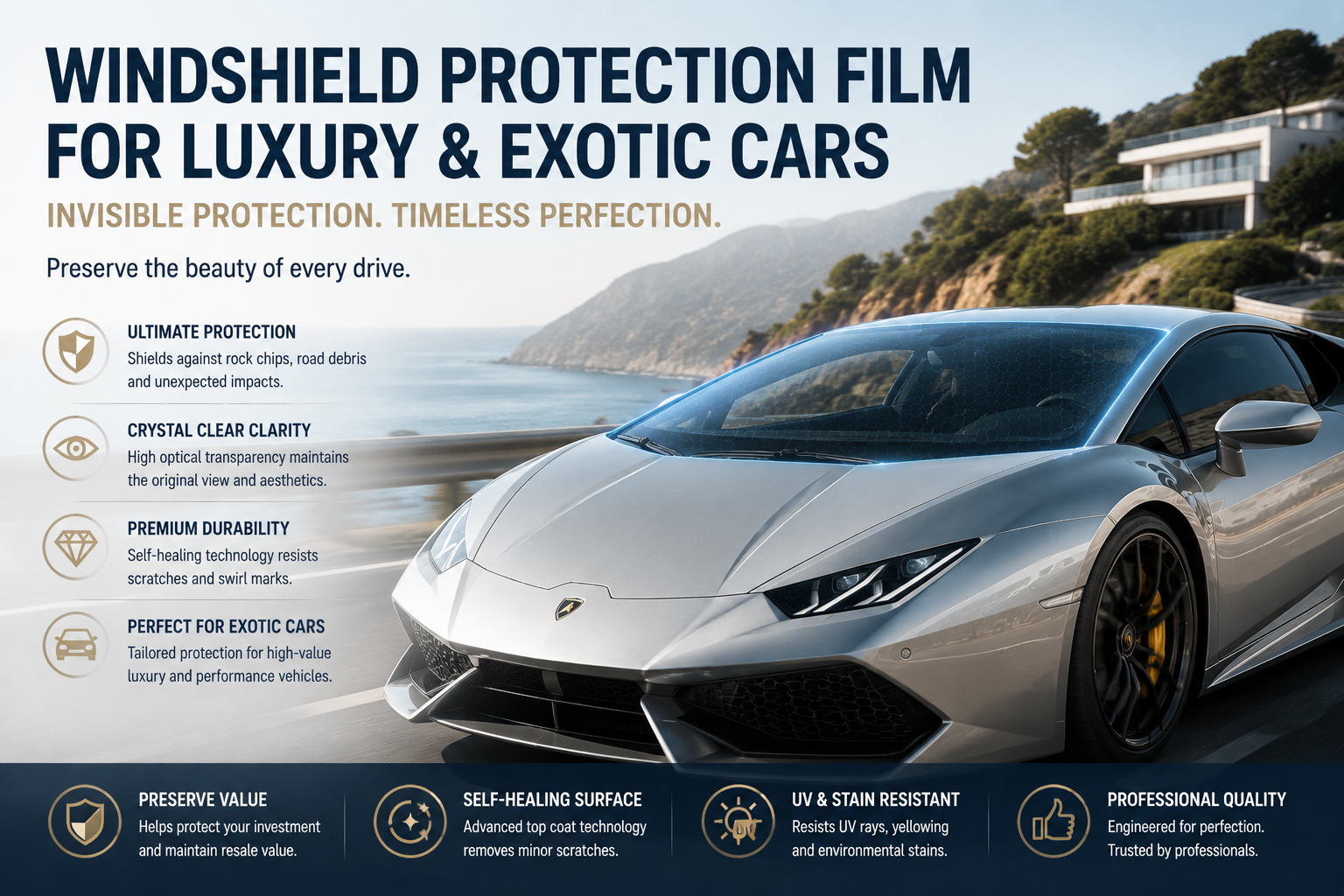
Full-body PPF installation is especially popular for luxury and performance vehicles.
FAQ
Q1: Does PPF damage vehicle paint?
No, professionally installed PPF protects the original paint and removes safely.
Q2: How long does PPF film last?
High-quality TPU PPF films typically last 5–10 years.
Q3: Can PPF heal scratches automatically?
Yes, many self-healing PPF films remove light scratches when exposed to heat.
Q4: Will PPF turn yellow over time?
Premium PPF films use UV-resistant coatings to reduce yellowing.
Q5: Is PPF worth it for daily driving?
Yes, PPF helps reduce daily paint damage and maintains vehicle appearance over time.
Get a Free Sample or Quote
Looking for a reliable window film supplier? Contact us today for fast response and professional support.