Chameleon Window Film vs Nano Ceramic Window Film: Which Is Better?
Published: October 19, 2026 · 8 min read · Category: Chameleon Window Film
About this article: KSB Window Film manufactures both chameleon and nano-ceramic window film. This comparison is written to help installers and buyers make the right choice for their specific application — not to favour one product over the other.
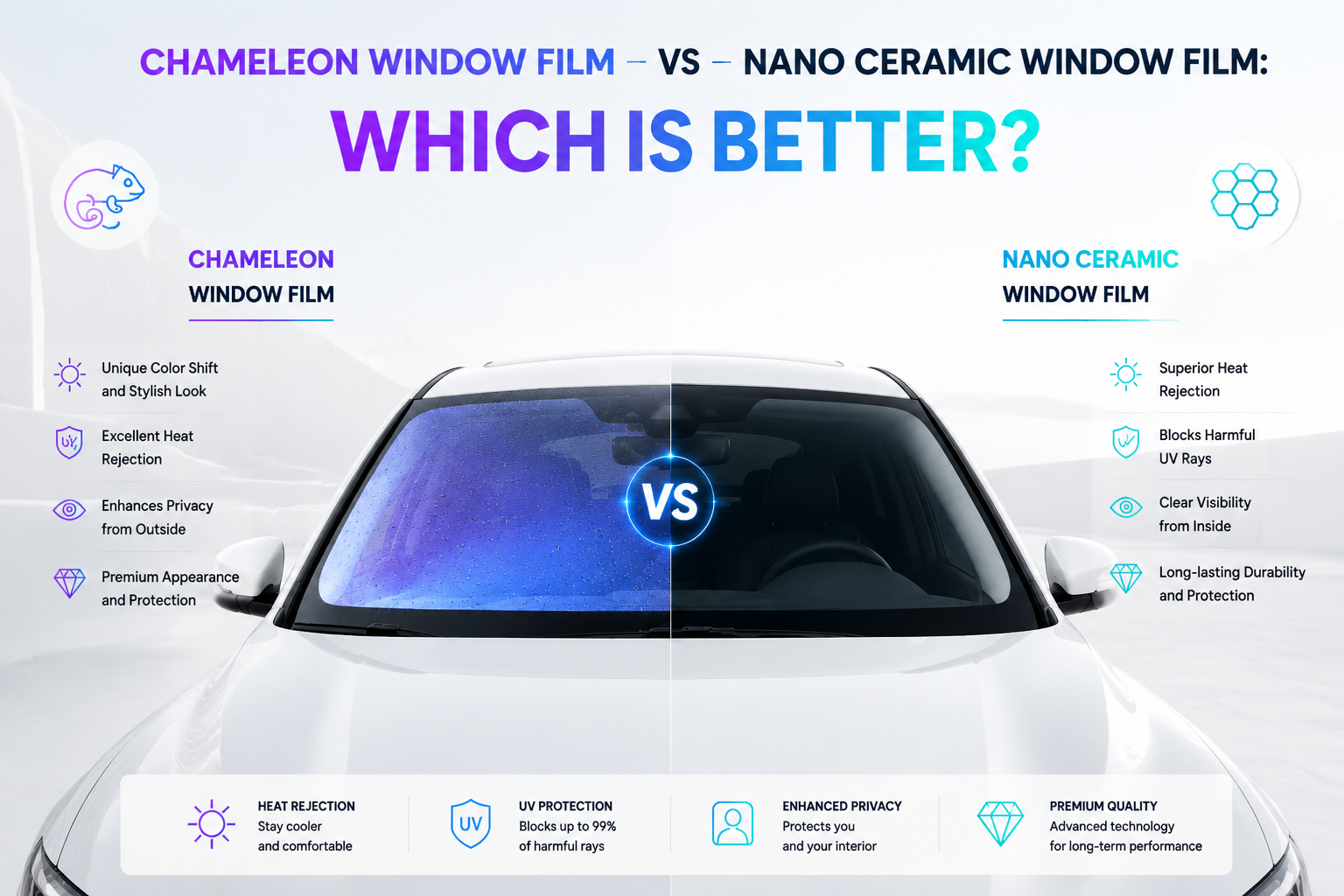
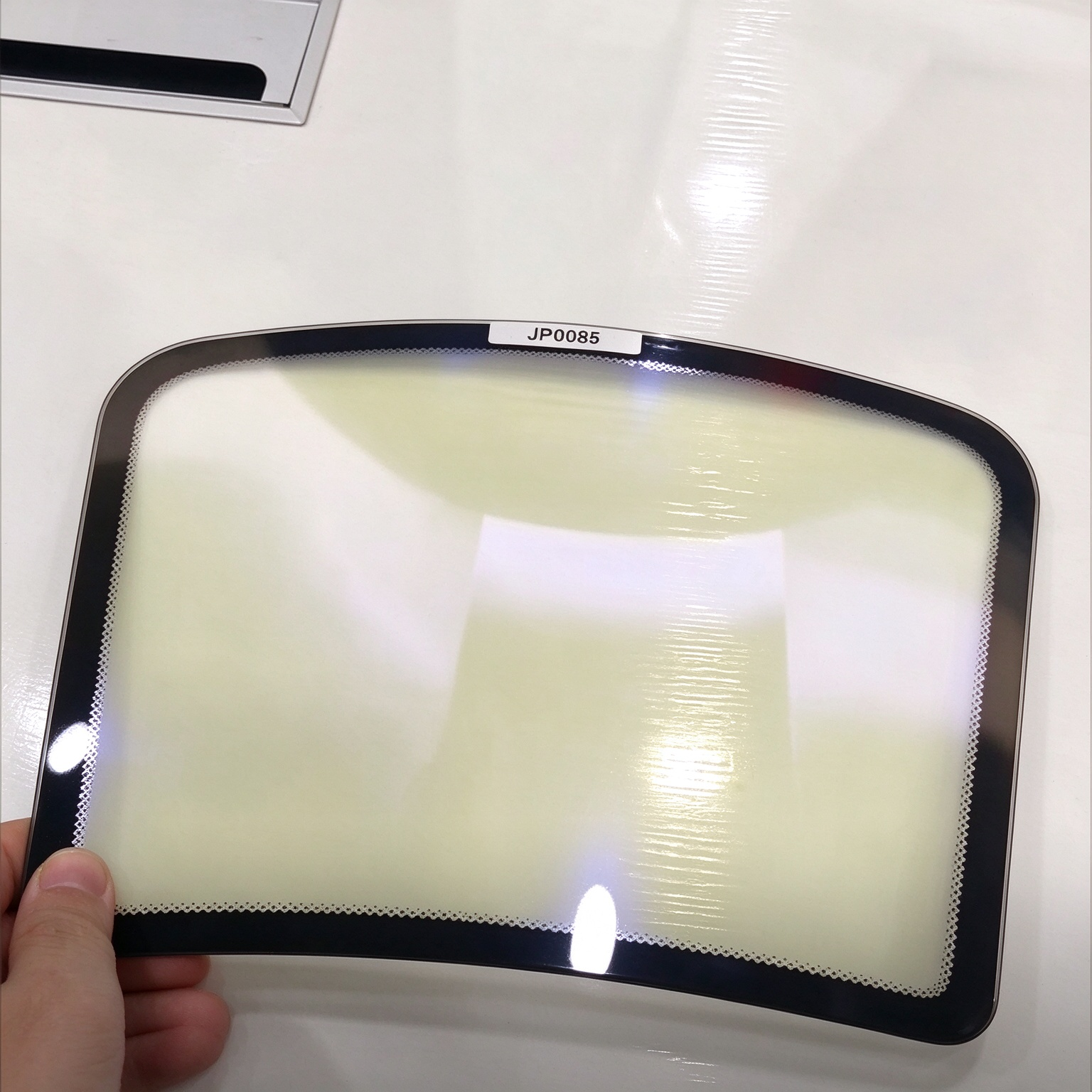
Chameleon window film and nano ceramic window film comparison showing different automotive window film technologies, appearance, and performance benefits.
Chameleon and nano-ceramic are both premium automotive window film technologies. They’re frequently compared because both command premium pricing, both are sold as upgrades from standard dyed or carbon film, and customers often ask which one they should choose.
The honest answer: they’re different products optimised for different customer priorities. The right choice depends on what the customer values most.
What They Have in Common
Both chameleon and nano-ceramic film:
Block 99%+ UV
Provide meaningful solar heat rejection (though at different levels)
Are non-fading and colour-stable over their service life
Are professionally installed on automotive glass
Command a price premium over basic dyed or carbon film
Where They Differ Fundamentally
Primary Value Proposition
Nano-ceramic: The primary value is performance — specifically, high TSER (55–70%) at high VLT (50–80%), achieved through non-conductive ceramic nanoparticles that block infrared heat without significantly darkening the glass. Buyers choose nano-ceramic for what it does: superior heat rejection with maintained visibility, no signal interference.
Chameleon: The primary value is aesthetics — specifically, the distinctive colour-shifting appearance created by optical interference. Buyers choose chameleon for what it looks like: a visually unique effect that makes the vehicle stand out. Heat rejection is a secondary benefit.
This difference in primary value proposition determines which product is right for each customer. A driver who wants maximum heat reduction in a hot climate: nano-ceramic. A driver who wants their car to look unique and different from others on the road: chameleon.
Performance Comparison
Heat Rejection (TSER)
Product
Typical TSER
VLT
Nano-ceramic (mid-range)
55–65%
50–75%
Nano-ceramic (premium)
62–72%
55–80%
Chameleon film (standard)
35–45%
40–60%
Chameleon film (premium)
45–55%
40–65%
Verdict: Nano-ceramic significantly outperforms chameleon for heat rejection, especially when considering the higher VLT options. At comparable VLT levels, nano-ceramic TSER is 15–25 percentage points higher.
For customers whose primary concern is keeping the car cool: nano-ceramic is the clear winner.
UV Blocking
Both: 99%+. No meaningful difference.
Signal Interference
Nano-ceramic: Non-conductive. No RF signal attenuation. GPS, cellular, Wi-Fi, satellite radio all unaffected.
Chameleon: Conductive metallic and dielectric layers. Attenuates RF signals — GPS signal may degrade, mobile phone reception reduced inside the vehicle.
Verdict: Nano-ceramic wins for connected vehicles, especially for front window applications.
Optical Clarity
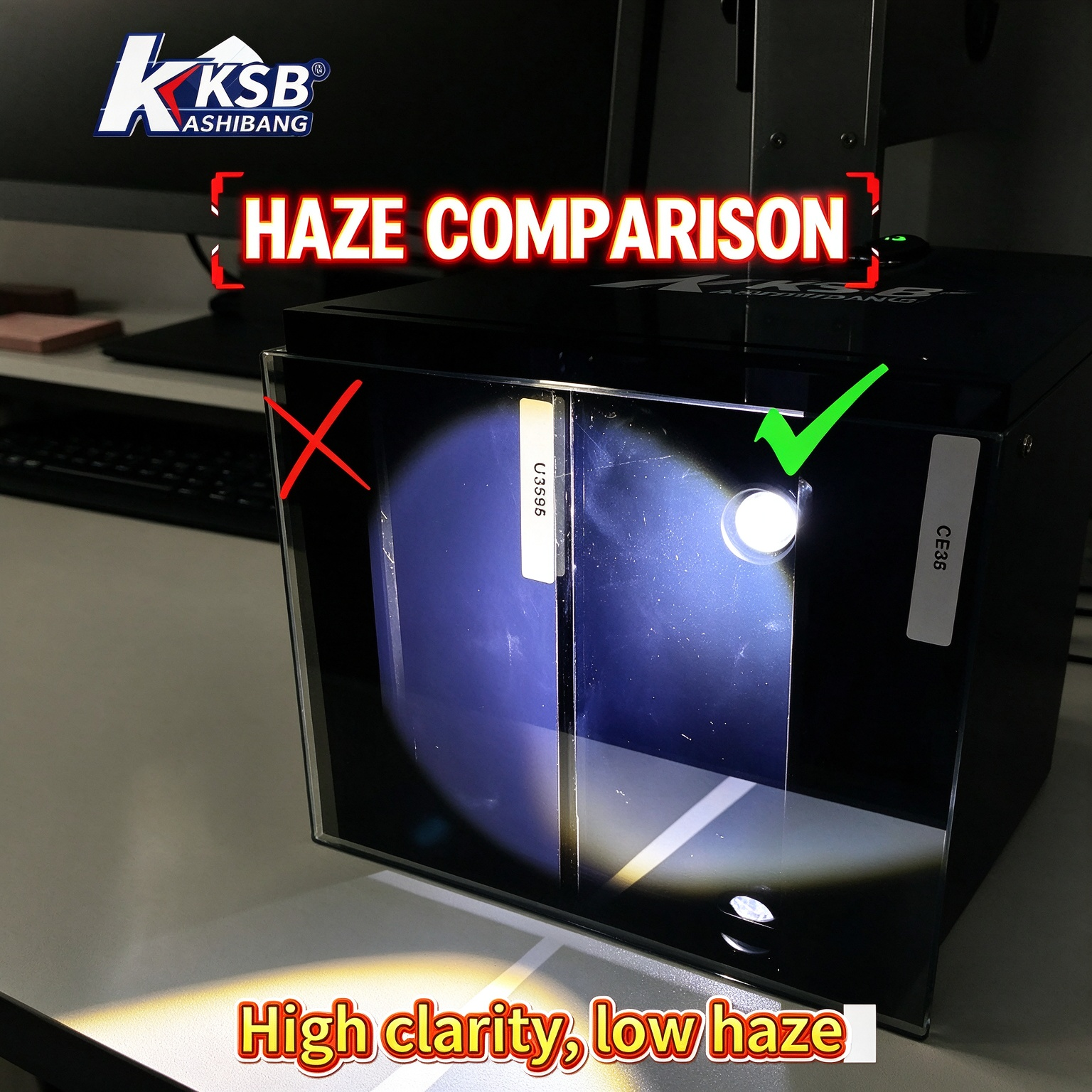
Nano-ceramic: Typically haze below 0.5%. Near-invisible on the glass, maintaining excellent optical clarity for driving.
Chameleon: By design, produces visible colour when viewed from outside. Optical clarity in the driver’s outward-looking field of view is generally good, but the colour-shifting effect itself is visible and intentional.
VLT Range and Regulation Compliance
Nano-ceramic: Available from very light (75–80% VLT) to dark (15–25% VLT), covering all regulatory requirements.
Chameleon: Most products cluster in the 35–65% VLT range — inherent to the interference stack design. Less flexibility for very light or very dark specifications. May not comply with front window regulations in markets requiring 70%+ VLT.
Durability Comparison
Nano-ceramic: Ceramic nanoparticles are chemically and UV stable — don’t oxidise, don’t fade, don’t change colour. Service life: 7–12 years.
Chameleon: The metallic layers in chameleon film can, in lower-quality products, be subject to edge oxidation over time. Quality chameleon film using magnetron sputtered layers with protective dielectric layers maintains colour fidelity for 7–10 years. Budget chameleon film may show colour change or delamination sooner.
Price Comparison
Product
Relative price (professional install)
Standard dyed/carbon
1× (baseline)
Nano-ceramic (mid)
2–3×
Nano-ceramic (premium)
3–4×
Chameleon film
2.5–4×
Premium chameleon and premium nano-ceramic are in similar price ranges, though both are significantly above entry-level film.
The Right Choice by Customer Type
Choose nano-ceramic for:
Customers primarily concerned with heat reduction
Vehicles in hot climates with high solar gain
Front windows where legal VLT minimums apply
EVs where range preservation from reduced A/C matters
Customers who want invisible-looking protection
Any application with GPS, satellite, or cellular signal concerns
Choose chameleon for:
Customers who want a visually distinctive vehicle
Automotive enthusiasts who view window film as part of personalisation
Rear windows and applications where aesthetics are the driver
Markets where colour-shifting film has fashion status
Customers who already have thermal protection and want a visual upgrade
The combination: Many installers specify nano-ceramic on the front windscreen and front side windows (for performance and legal compliance) and chameleon on the rear side windows and rear windscreen (for aesthetics where regulations are more permissive). This gives the customer both performance and visual appeal on the same vehicle.
FAQ
A customer wants both heat protection AND the chameleon look. What’s the recommendation?
Premium chameleon film provides meaningful but not maximum heat rejection (TSER 45–55%). If the customer wants the visual effect and some thermal benefit, premium chameleon on rear windows plus nano-ceramic on fronts is the best balanced approach. Some customers pay a premium for both effects; the layered specification serves them well.
Is one more likely to fade over time?
In quality products, both maintain colour stability. The risk with budget chameleon film is metallic layer oxidation, which can affect the interference colour over time. Budget nano-ceramic may lose some haze clarity with age. Specify quality products from verified manufacturers for both.