What Is Chameleon Window Film and How Does It Work?
Published: October 7 2026 · 10 min read · Category: Chameleon Window Film
About this article: KSB Window Film manufactures chameleon window film for the automotive aftermarket, exported to distributors and installers globally. This guide explains the technology behind color-shifting film clearly — what it is, how the optical physics produces the effect, and what buyers should realistically expect from it.
Chameleon window film uses advanced thin-film interference technology to create dynamic color shifts on automotive glass with different viewing angles and lighting conditions.
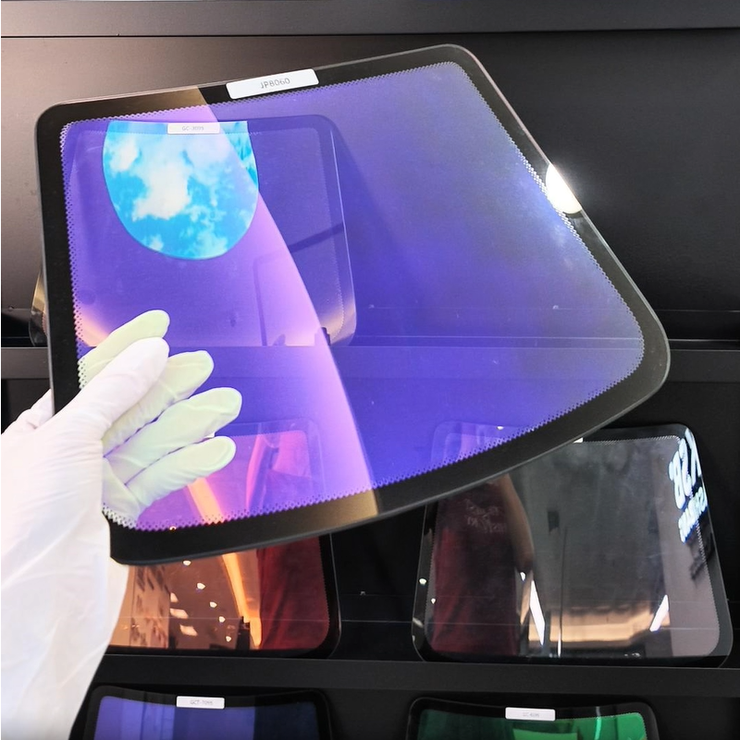
Chameleon window film is one of the most visually distinctive products in the automotive film market. Unlike standard tint — which presents a single, consistent colour — chameleon film shifts between two or more colours depending on the angle of observation, the lighting conditions, and the position of the sun relative to the viewer. A car can appear to have purple windows from one angle and shift to green, blue, or gold when viewed from another.
The effect is striking, increasingly popular, and the result of genuine optical engineering — not a printed pattern or coating trick. This guide explains the mechanism, the performance characteristics, and what the product realistically delivers.
The Optical Physics: Thin-Film Interference
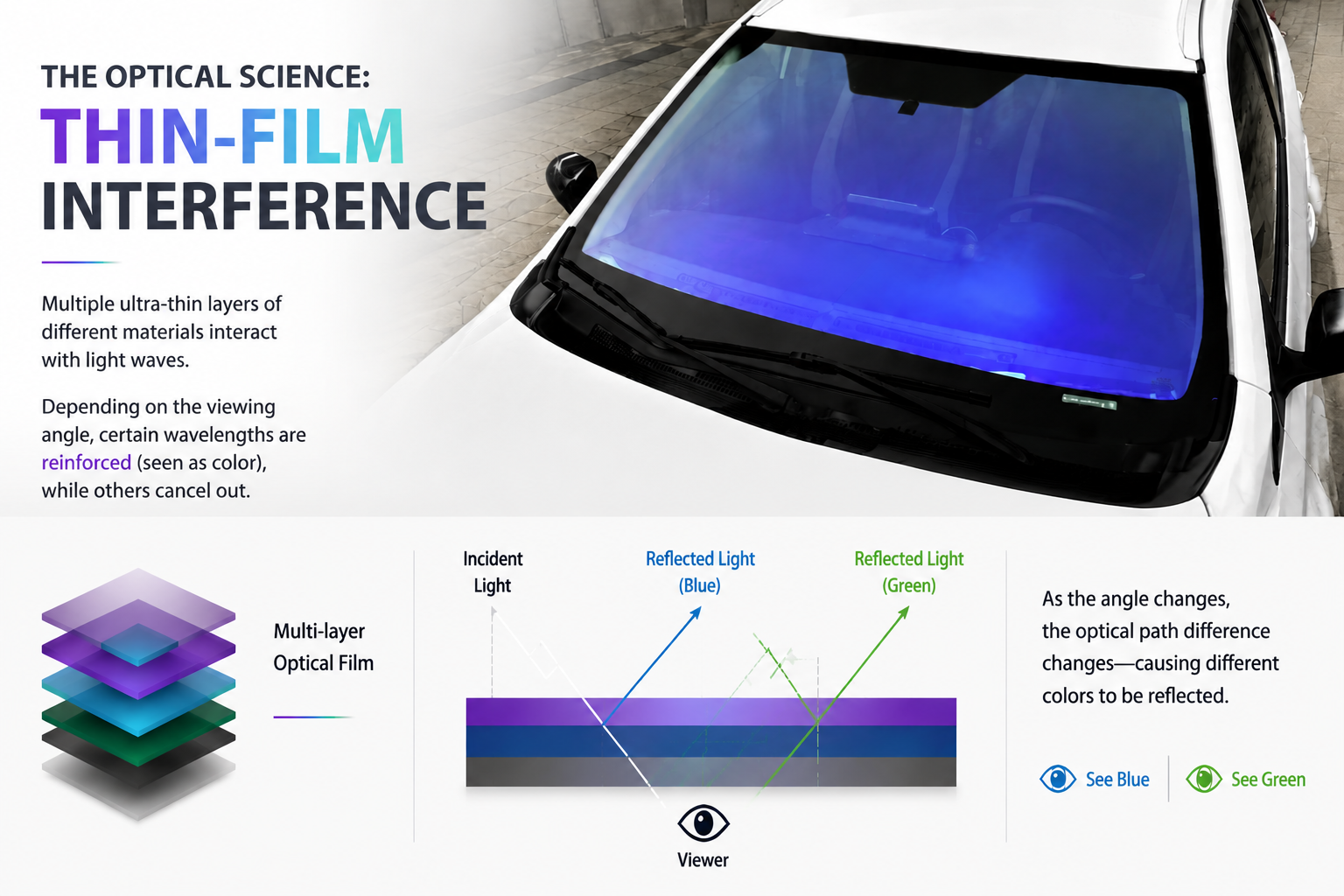
The color-shifting behaviour of chameleon window film is produced by thin-film optical interference — the same phenomenon that creates the rainbow colours in soap bubbles, oil slicks on water, and the wings of morpho butterflies.
How Light Behaves at Thin-Film Boundaries
When light strikes a boundary between two materials with different refractive indices, part of the light is reflected and part is transmitted. In a very thin film (with thickness comparable to the wavelength of visible light, approximately 400–700 nanometres), the reflected beam from the top surface and the reflected beam from the bottom surface travel slightly different distances and recombine.
This recombination is called interference:
When the two reflected beams are in phase (peaks align with peaks), they reinforce each other — that wavelength is reflected strongly (constructive interference)
When the two reflected beams are out of phase (peaks align with troughs), they cancel each other — that wavelength is absorbed or transmitted rather than reflected (destructive interference)
Which wavelengths are strongly reflected depends on the film thickness and the angle of the incoming light.
Why the Colour Shifts with Angle
The optical path difference between the two reflected beams changes as the viewing angle changes. At one angle, 550nm green light undergoes constructive interference and is strongly reflected. As the viewing angle increases, the same film geometry produces constructive interference at a different wavelength — say 450nm (blue) or 630nm (red).
This is why the film changes colour as you (or the viewer) moves relative to the glass. The colour you see is the wavelength that is constructively interfered at the specific geometric relationship between the light source, the film, and your eyes.
The Stack Design
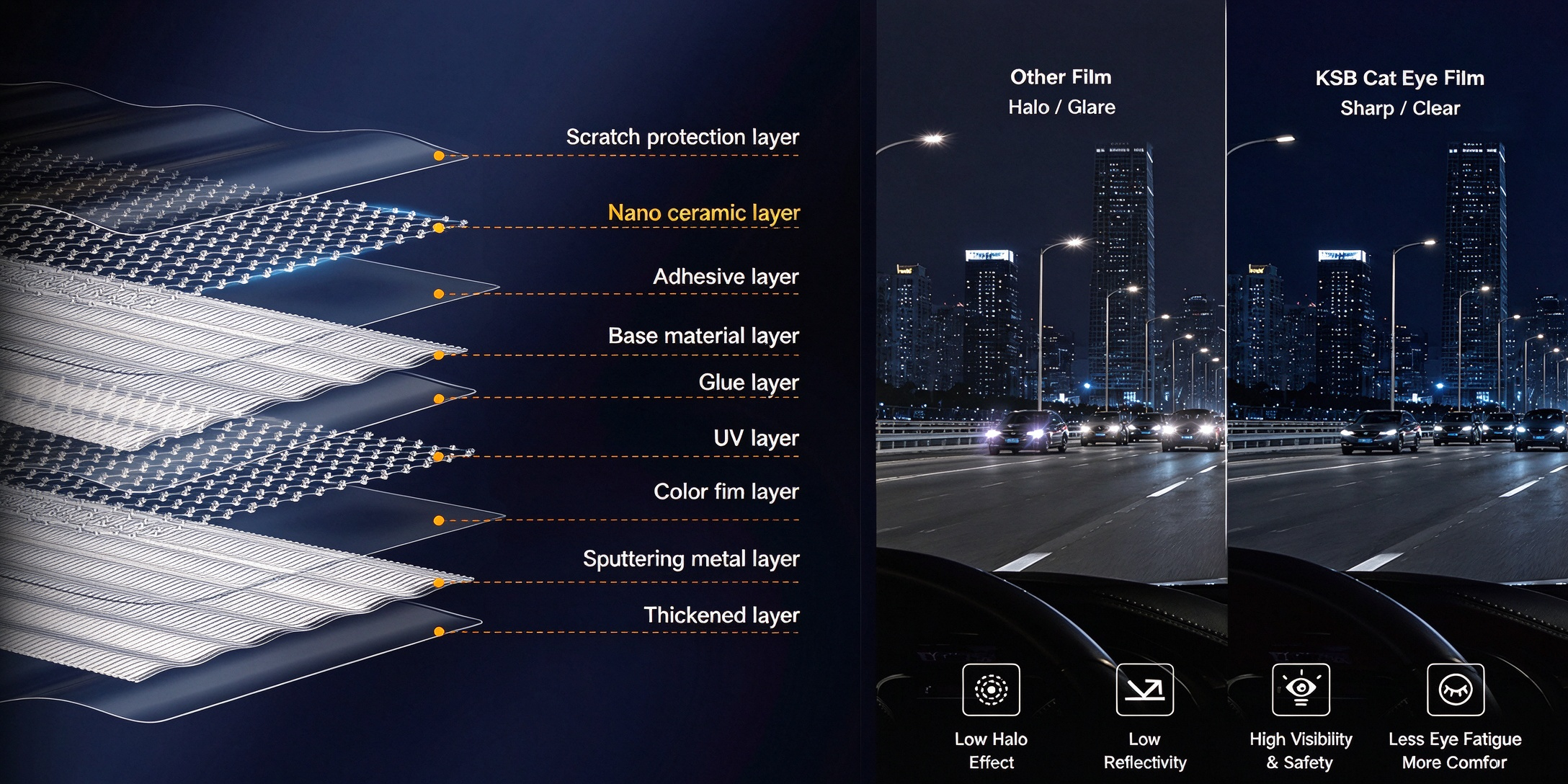
Chameleon film doesn’t achieve this effect with a single thin layer. It uses a precisely engineered multilayer stack — typically 5–20 alternating layers of high and low refractive index materials:
High refractive index layers: TiO₂ (titanium dioxide), ZrO₂ (zirconium dioxide), or metallic layers (silver, aluminium alloys)
Low refractive index layers: SiO₂ (silicon dioxide), MgF₂ (magnesium fluoride), or similar dielectric materials
Each layer is measured in tens of nanometres. The specific thicknesses, materials, and sequence of layers determines:
Which colours appear and shift (the chromatic range of the chameleon effect)
The angle range over which the shift occurs
The intensity of the colour shift (saturation)
The overall transparency of the film
This level of precision requires magnetron sputtering — the physical vapour deposition process that can deposit layers at nanometre-level thickness control. See How Chameleon Window Film Is Manufactured for the full production detail.
Common Colour Combinations
The colour shift range is designed into the film during manufacturing by specifying the layer stack. Common chameleon film colour combinations:
Purple-to-green (most popular): One of the most dramatic shifts. The film appears deep purple in reflected overhead light and shifts to vivid green when viewed at oblique angles or in different lighting. A very common choice for dark-coloured vehicles.
Blue-to-purple: Cooler colour palette shift. Popular in markets that prefer subtle colour effects.
Green-to-gold/amber: Warm shift. Popular in Middle Eastern and Southeast Asian markets.
Blue-to-green-to-yellow: Multi-stage shift across a wider range. More complex stack design, higher manufacturing cost.
Red-to-purple: Warm dominant colour with purple shift. Popular for red and orange vehicles.
The “dominant” or base colour is what the film appears in most standard lighting conditions (overcast, front-lit). The “shift” colour is what appears when the sun or a strong directional light source hits from behind the viewer.
What Chameleon Film Does Besides Looking Distinctive
Heat Rejection
Chameleon film’s metallic and dielectric layers provide solar heat rejection — though not always as high as a dedicated nano-ceramic solar control film. TSER (Total Solar Energy Rejected) for typical chameleon film: 35–55% depending on the specific product.
This is meaningful solar control but positioned primarily as an aesthetic product with heat rejection as a secondary benefit — unlike dedicated solar control films where heat rejection is primary.
UV Blocking
Quality chameleon film blocks 99%+ UV. UV absorbers are incorporated in the adhesive or coating layers.
IR Rejection
The metallic and dielectric layers in chameleon film have some infrared rejection properties, typically 40–65% depending on the stack design.
VLT Range
Most chameleon film operates in the 35–70% VLT range. The metallic layers absorb and reflect some visible light, reducing transmission compared to clear glass. Most popular specifications: 45–55% VLT for front windows (subject to local regulations), 25–35% VLT for rear windows.
Important Limitations
Signal interference: The metallic layers in chameleon film are conductive and attenuate RF signals (GPS, cellular, Wi-Fi, key fob). For front window applications, this is the same concern as metallic tint generally. For rear windows and less critical locations, signal interference is less problematic.
Regulation: Chameleon film is subject to the same VLT regulations as standard window tint. The visually shifting nature of the film doesn’t exempt it from legal VLT minimums. In many markets, front side windows require minimum 70% VLT — chameleon film at 45–55% VLT is not legal on front windows in those markets.
Viewing angle dependency: The colour-shifting effect is an aesthetic quality only — the film doesn’t change its physical heat rejection properties with angle. The optical interference colours you see are not “working harder” or differently at any angle; the thermal performance is constant.
FAQ
Is chameleon film legal on car windows?
This depends entirely on the jurisdiction and which windows. In most US states, European countries, and Australian states: front side windows have minimum VLT requirements (typically 70–75% for front side windows). Chameleon film at 45–55% VLT is typically not legal on front side windows in these markets. Rear side windows and rear windscreens often have permissive or no restrictions. Always verify local regulations before specifying chameleon film on any window.
Does the colour really change, or is it a print?
The colour shift is a real optical phenomenon, not a print or coating pattern. Looking at the glass from different angles genuinely produces different colours due to optical interference. It’s the same physics as iridescent materials in nature.
Is chameleon film more expensive than standard tint?
Yes — typically 40–80% more expensive than equivalent solar control film at comparable VLT due to the more complex manufacturing required.
Source Chameleon Film for Your Installation Business
KSB Window Film manufactures chameleon window film in multiple colour combinations with current SGS performance documentation. Installer and distributor pricing available.