Material selection is an important part of paint protection film (PPF) manufacturing. The TPU base, adhesive, and paint coat each serve a different purpose, and their combination helps define the finished film.
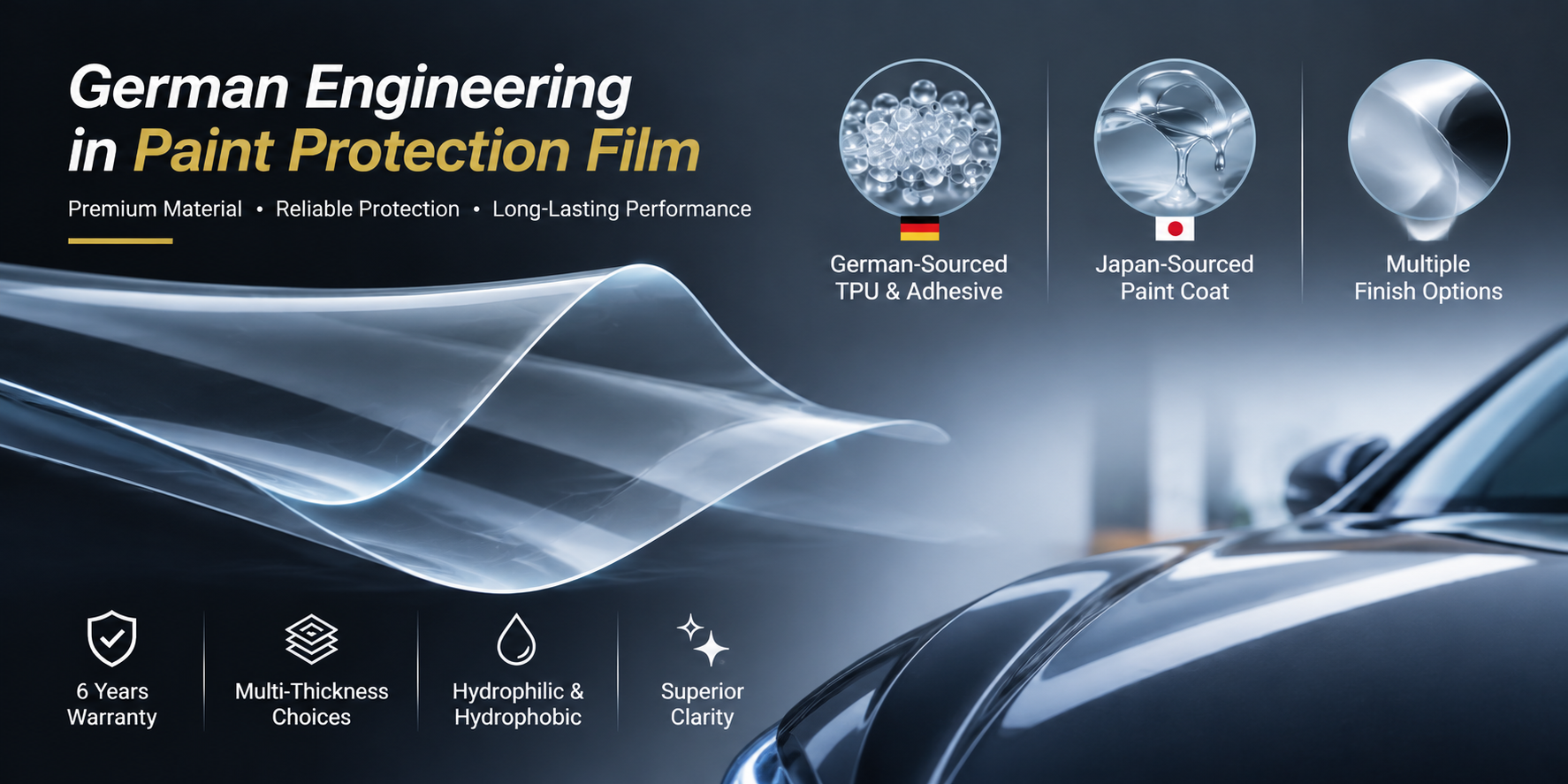
The KSB TPU-D Series combines German-sourced glue and TPU base material with a Japan-sourced paint coat. For distributors and professional buyers, understanding this configuration helps provide a clearer picture of the product’s construction and sourcing.
Three Main Materials in PPF
TPU Base Material
The TPU base forms the main body of PPF. Its physical properties influence characteristics such as flexibility and breaking elongation. Choosing suitable TPU is an important part of product development. Learn more in How to Choose TPU for Paint Protection Film.
Adhesive
The adhesive bonds the film to the vehicle’s painted surface. Its performance affects bonding behavior and installation. Buyers should review technical data and sample results rather than relying on material origin alone. See PPF Adhesive Explained: Why Glue Quality Matters.
Paint Coat
The paint coat forms the outer surface and contributes to characteristics such as water interaction and stain resistance. It is also relevant when comparing hydrophilic and hydrophobic finishes.
TPU-D Series Material Configuration
The KSB TPU-D Series uses the following material combination:
| Component | Material Origin |
|---|---|
| Glue | Germany |
| TPU Base Material | Germany |
| Paint Coat | Japan |
| Warranty | 6 Years |
Material origin helps buyers understand product sourcing, but it should not be treated as the only indicator of quality. Technical specifications, sample performance, and manufacturing consistency also matter.
Understanding how these components are combined is equally important. For more details, see How Paint Protection Film Is Manufactured and How to Identify High Quality Paint Protection Film.
Explore the available models on the KSB TPU-D Series product page.
Surface Options: Hydrophilic and Hydrophobic
The TPU-D Series offers different surface behaviors and finishes:
- Hydrophilic transparent: D65, D75, D85, D95.
- Hydrophobic transparent: DS65, DS75, DS85, DS95.
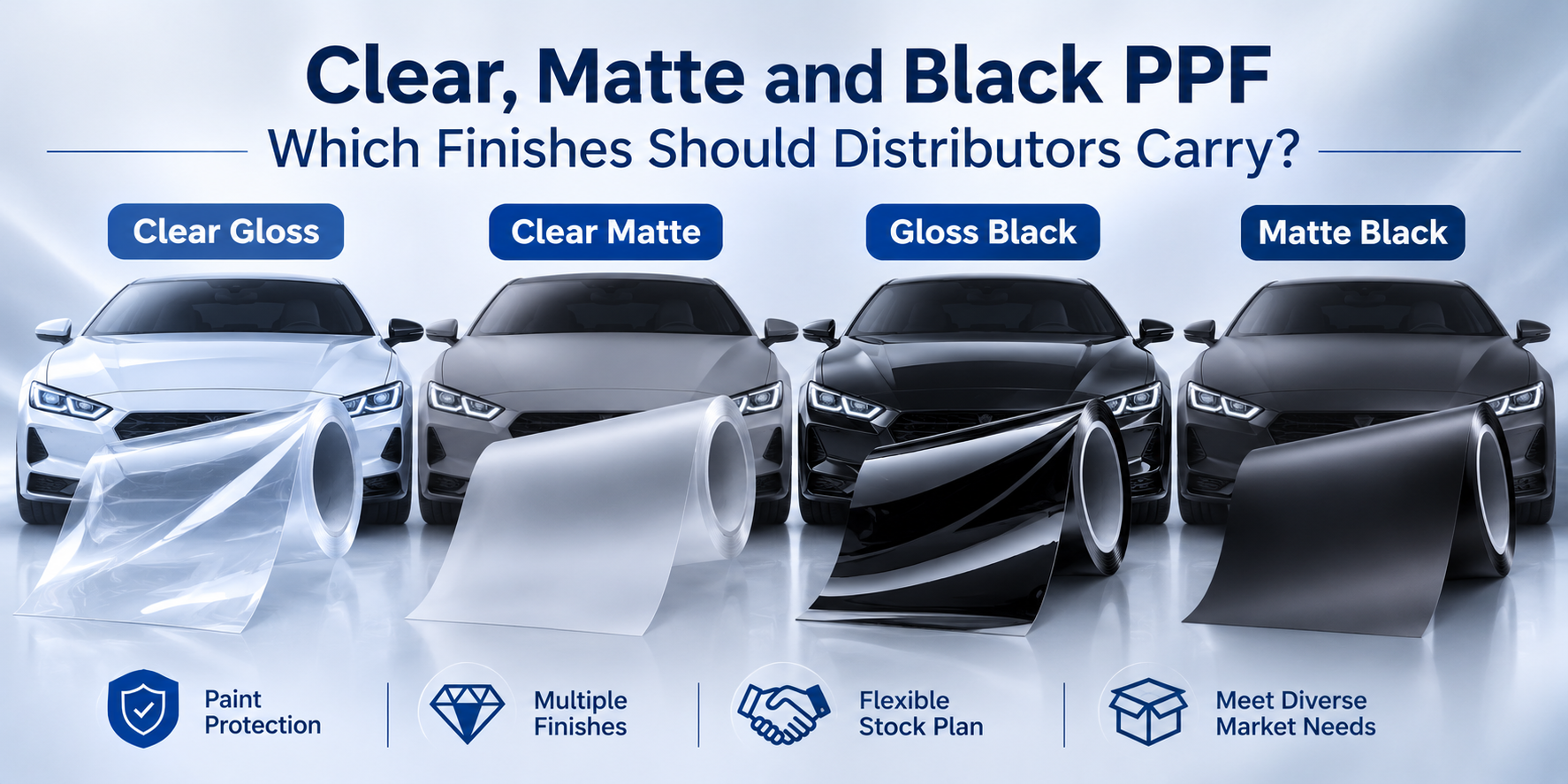
- Hydrophobic special finishes: Glossy Black, Matte Black, Matte.
Hydrophilic surfaces encourage water to spread, while hydrophobic surfaces encourage water to form droplets. Neither is universally better; the choice depends on customer preferences and product positioning.
Read Hydrophobic vs. Hydrophilic PPF: Key Differences Explained for a closer comparison.
TPU-D Series Specifications
| Model | Thickness | Finish | Surface | Base Material Breaking Elongation |
|---|---|---|---|---|
| D65 | 6.5 MIL | Transparent | Hydrophilic | 280% |
| D75 | 7.5 MIL | Transparent | Hydrophilic | 302% |
| D85 | 8.5 MIL | Transparent | Hydrophilic | 306% |
| D95 | 9.5 MIL | Transparent | Hydrophilic | 320% |
| D75 Glossy Black | 7.5 MIL | Glossy Black | Hydrophobic | 289% |
| D75 Matte Black | 7.5 MIL | Matte Black | Hydrophobic | 405% |
| D75 Matte | 7.5 MIL | Matte | Hydrophobic | 380% |
| D85 Matte | 8.5 MIL | Matte | Hydrophobic | 360% |
| DS65 | 6.5 MIL | Transparent | Hydrophobic | 280% |
| DS75 | 7.5 MIL | Transparent | Hydrophobic | 302% |
| DS85 | 8.5 MIL | Transparent | Hydrophobic | 309% |
| DS95 | 9.5 MIL | Transparent | Hydrophobic | 328% |
Elongation refers to the TPU base material’s breaking elongation, not the finished film’s installation stretchability.
Shared Performance Specifications
| Performance Item | Specification |
|---|---|
| Heat Repair | Yes |
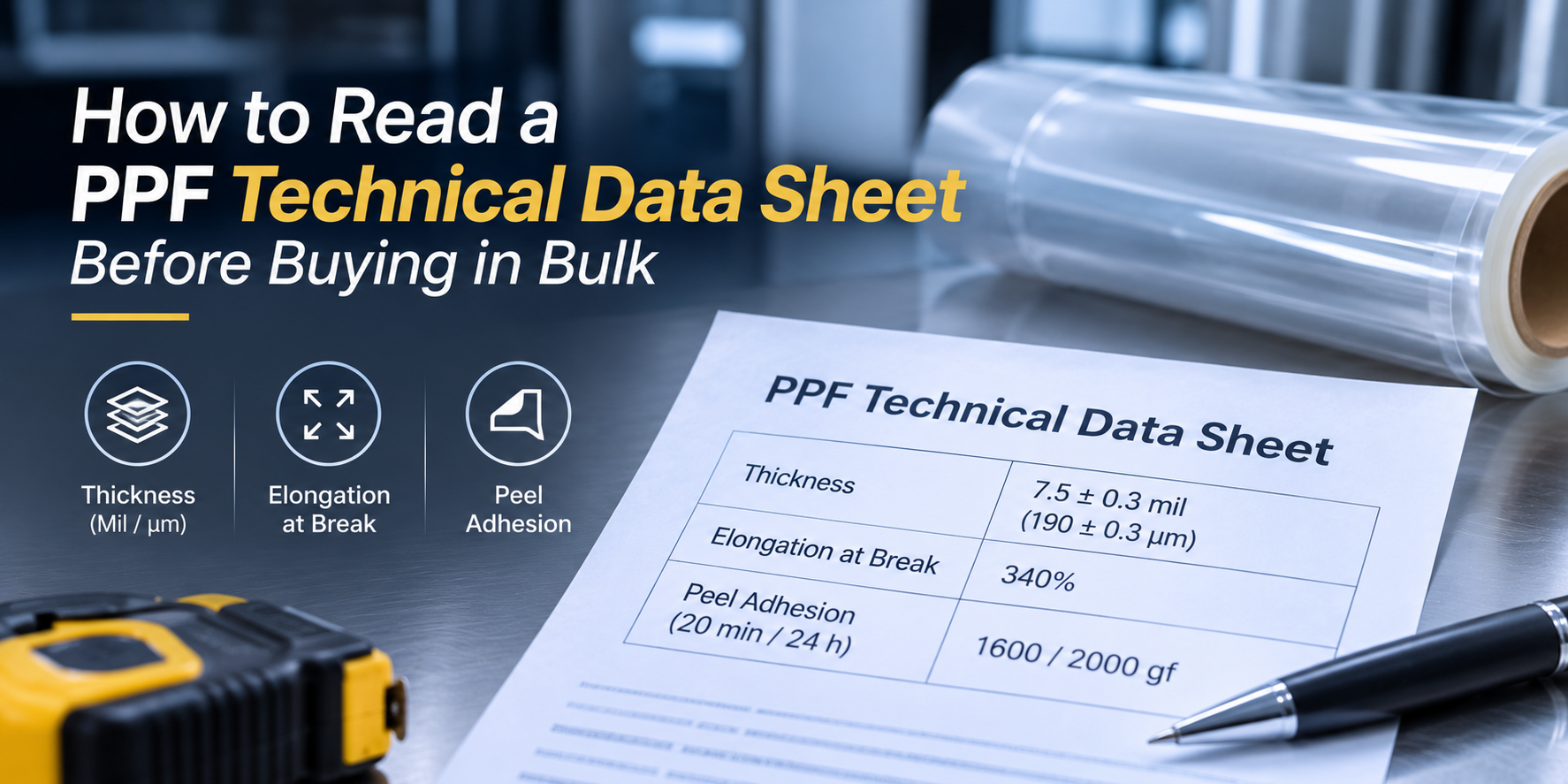
| 20-Minute Peeling Force | 1700–1800 GF |
| 24-Hour Peeling Force | 2200–2300 GF |
| Gray Level | Level 4 |
| Stain Resistance | Star rating; exact rating to be confirmed |
| Warranty | 6 Years |
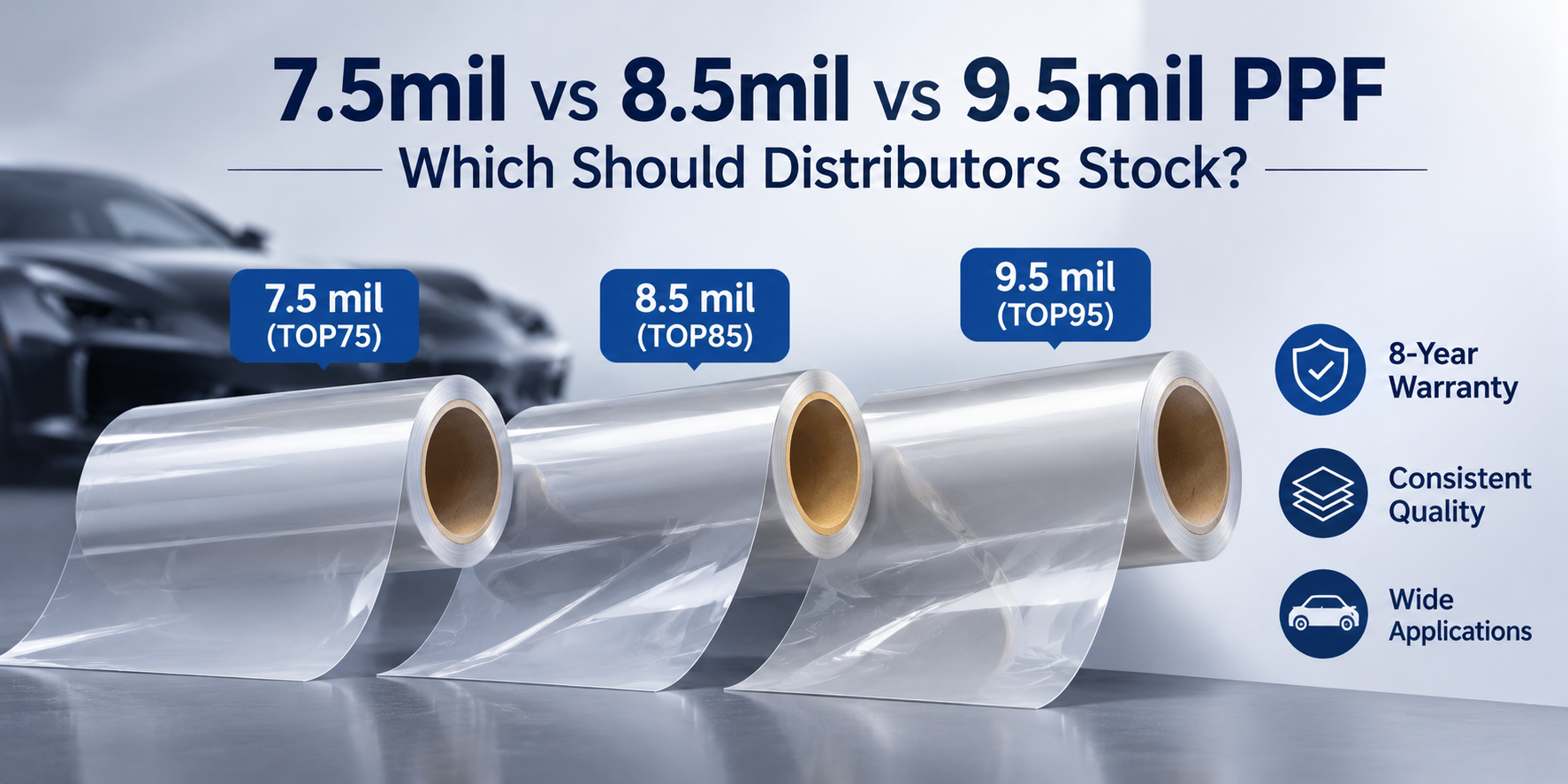
For buyers comparing thickness options, 6.5mil vs. 7.5mil vs. 8.5mil PPF explains how thickness fits into product evaluation.
Evaluating a PPF Manufacturer
Beyond material origin, distributors should also consider technical documentation, sample quality, warranty terms, and consistency across repeat orders.
A manufacturer should be able to explain its material configuration and provide clear specifications for each model. Buyers can also review PPF Factory Audit Checklist for Importers and Distributors when assessing a potential supplier.
FAQ
What are the main materials used in PPF?
The main components are the TPU base, adhesive, and paint coat. They form the film body, bonding layer, and outer surface respectively.
Does material origin determine PPF quality?
Not by itself. Buyers should also evaluate technical specifications, sample performance, manufacturing consistency, and warranty terms.
What is the difference between hydrophilic and hydrophobic PPF?
Hydrophilic surfaces encourage water to spread, while hydrophobic surfaces encourage water to form droplets. The choice depends on the desired surface behavior.
Further Reading
On this site:
- PPF Adhesive Explained: Why Glue Quality Matters
- How to Choose TPU for Paint Protection Film
- How Paint Protection Film Is Manufactured
Conclusion
The KSB TPU-D Series combines German-sourced glue and TPU base material with a Japan-sourced paint coat. With multiple thicknesses, surface types, and finishes, it provides distributors with several product options.
Contact KSB to learn more about the TPU-D Series and available supply options.
Get a Free Sample or Quote
Looking for a reliable window film supplier? Contact us today for fast response and professional support.