Why Chameleon Window Film Is Popular in the Automotive Market
Published: October 27, 2026 · 7 min read · Category: Chameleon Window Film
About this article: KSB Window Film manufactures and exports chameleon window film globally. This guide examines the market dynamics and customer psychology behind chameleon film’s growth — useful context for distributors and installers building their product strategy.
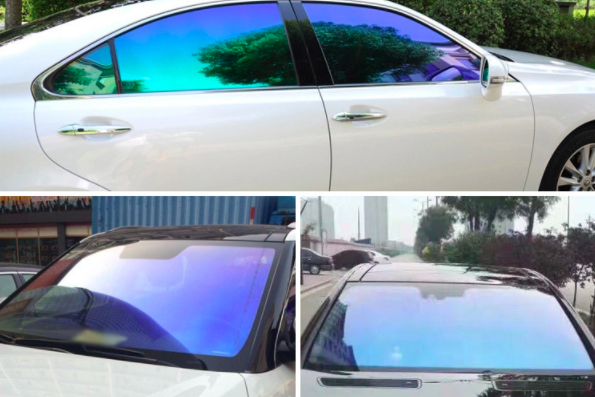
blue chameleon film enhances full car windows with color changing effect while providing uv protection and heat reduction
Chameleon window film has grown from a niche curiosity to a mainstream automotive aftermarket category in less than a decade. Understanding why helps distributors and installers position it effectively and anticipate where the market is heading.
The Core Appeal: Visual Distinctiveness in a World of Identical Cars
Modern automotive design has consolidated around a relatively narrow aesthetic language — most vehicles in any given segment look broadly similar. Personalisation has become one of the strongest buying motivations in automotive aftermarket spending.
Window tint has historically been a personalisation choice, but standard tint is ubiquitous — dark windows don’t differentiate a car the way they once did. Chameleon film gives windows a visual character that’s genuinely distinctive: a car with purple-to-green chameleon film on its rear windows is immediately recognisable, and the colour-shifting effect under different lighting creates a sense of motion and dynamism even when parked.
This visual distinctiveness is the primary commercial driver. Consumers are paying for something that makes their car look unlike other cars — an increasingly scarce commodity in a sea of similar vehicles.
The Social Media and Car Culture Effect
Automotive content on social media (Instagram, TikTok, YouTube) has significantly accelerated chameleon film adoption. The colour-shifting effect is inherently photogenic and video-friendly — the colour transition visible when a camera pans past a chameleon-filmed car creates engaging content that plain black tint simply doesn’t.
The dynamics:
Car enthusiast content creators feature chameleon film on builds that reach millions of viewers
The visual effect is immediately comprehensible without explanation — viewers see the colour shift and immediately understand what they’re looking at
Consumer requests to installers follow: “I saw that purple window thing on TikTok, can you do that to my car?”
This social media acceleration has shortened the traditional adoption curve for specialty automotive products. Markets in Southeast Asia, the Middle East, and Eastern Europe that historically took 5–7 years to adopt new automotive film categories are now adopting chameleon film within 2–3 years of its emergence in leading markets.
The Halo Effect: Perceived Quality and Premium Association
There’s a subtle but important commercial dynamic in chameleon film’s success: the visual complexity of the product creates a perception of technical sophistication that elevates the perceived quality of the car itself.
Consumers and car owners who understand something about thin-film optics associate the iridescent colour shift with advanced technology. Even those who don’t understand the mechanism simply perceive it as “more” than ordinary tint — more advanced, more premium, more interesting.
This halo effect allows installers to charge a meaningful premium for chameleon film work, and for distributors to command better margins than standard film. The product justifies its own pricing through its visible distinctiveness.
The “Conversation Starter” Dynamic
Owners of chameleon-filmed vehicles consistently report that the windows generate questions and comments from other people. This social reinforcement — the car doing something that prompts conversation — creates satisfaction that standard tint doesn’t generate.
For automotive enthusiasts, this is a significant quality-of-ownership benefit. The car becomes a conversation starter in a community where individual expression is highly valued. Word-of-mouth referrals from chameleon film installations are disproportionately strong compared to standard film.
Market Geography: Where Chameleon Film Is Strongest
Most developed markets (highest penetration):
China (domestic market, where the product originated)
Russia and Eastern Europe (strong car personalisation culture)
Thailand, Malaysia, Indonesia (highly active automotive aftermarket)
UAE and Gulf States (premium and exotic vehicle concentration)
Rapidly growing markets:
Western Europe (UK, Germany, France — strong enthusiast communities)
Australia and New Zealand
US and Canada (growing fastest in enthusiast-dense markets)
South Korea and Japan
The growth pattern: Markets follow a consistent trajectory — initial adoption among car enthusiasts, social media amplification, mainstream awareness, broader consumer adoption. Most Western markets are currently in the social media amplification to mainstream awareness phase.
The Regulatory Tailwind (and Headwind)
Tailwind: In many markets, regulations on rear side windows and rear windscreens are permissive or non-existent for VLT. This creates legal space for chameleon film’s typical 35–55% VLT range on rear glass — the most visually impactful installation position.
Headwind: Front side window regulations in most developed markets require 70–75% VLT minimum. Standard chameleon film at 35–55% VLT doesn’t comply. This limits where the film can legally be installed. The market response: focusing chameleon film on rear windows, rear windscreens, and (in markets with permissive regulations) front windows. Some manufacturers are developing chameleon film at 70–75% VLT with the colour shift effect — addressing the regulatory constraint.
Why Chameleon Film Benefits Installers Specifically
For automotive film installers, chameleon film represents a commercially attractive opportunity for several specific reasons:
Higher average ticket: A full chameleon film job (rear windows + rear windscreen) commands 40–80% higher price than the equivalent standard solar control film job.
Referral quality: Customers who get chameleon film installed actively refer other enthusiasts — the visual effect acts as a walking advertisement.
Upsell dynamics: A customer who comes in for standard tint can be shown a chameleon film sample as an upgrade. The visual impact of the sample is the most compelling upsell tool available.
Skill differentiation: Installers who develop expertise in chameleon film installation — including managing the specific challenges of multilayer film on curved glass — develop a skill premium that standard film installation doesn’t create.
FAQ
Is chameleon film a fad or a lasting category?
The structural drivers — personalisation demand, social media acceleration, strong enthusiast community adoption, and genuine visual novelty — suggest chameleon film is a lasting category rather than a temporary trend. The technology has been in the market for 8–10 years with consistent growth, not a spike-and-decline pattern.
What percentage of film installers are currently offering chameleon film?
In the most developed markets (China, SE Asia, Middle East), the majority of professional installers offer it. In Western markets, approximately 40–60% of professional installers currently offer chameleon film, with this proportion growing.