Automotive window film technology is evolving beyond conventional solar control. Material combinations, optical performance, and additional functional features are becoming important considerations for distributors and importers.
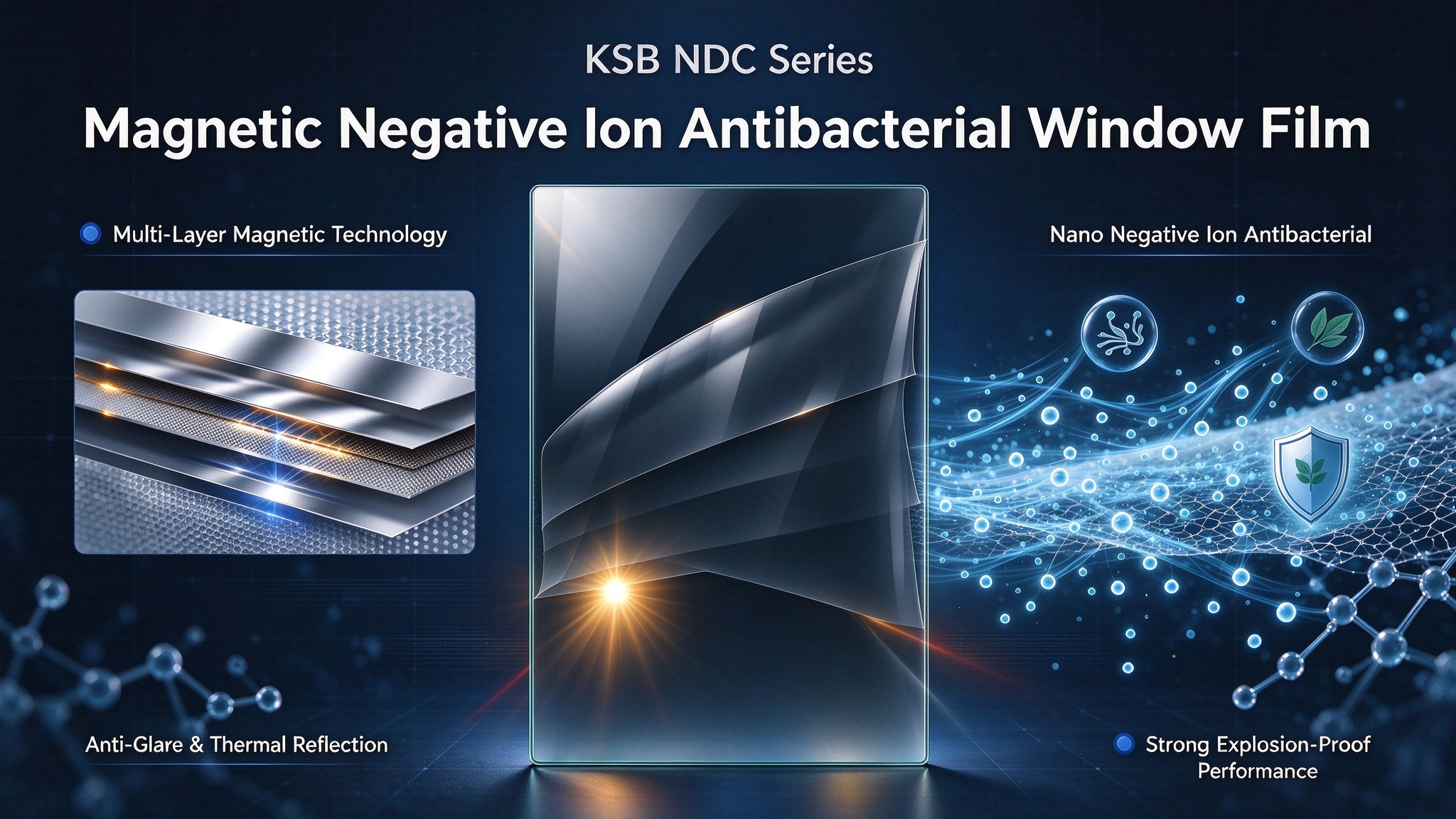
KSB NDC Series Magnetic Negative Ion Antibacterial Window Film combines multi-layer magnetic technology with nano negative ion and antibacterial functionality. With additional features such as anti-glare, thermal reflection, and explosion-proof performance, the series offers a distinctive option for automotive window film markets.
Magnetic and Negative Ion Technology
The NDC Series combines two key technologies:
- Multi-Layer Magnetic: Incorporated with anti-glare technology and thermal reflection features.
- Nano Negative Ion: Combined with antibacterial functionality, air purification, and formaldehyde removal features.
This combination distinguishes the NDC Series from conventional automotive solar control films.
Material Composition
The NDC Series incorporates five main materials and technologies:
- Nano Negative Ion
- Anti Glare
- Multi-Layer Magnetic
- Tungsten Oxide
- Nano Titanium Nitride
Patent Information: KSB holds Chinese Utility Model Patent No. ZL201920332997.9.
Key Product Features
- Air Purification: Includes air purification functionality.
- Formaldehyde Removal: An additional functional feature.
- Antibacterial: Incorporates negative ion and antibacterial technology.
- High Definition: Designed for clear visibility.
- High Insulation: Provides solar control functionality.
- Strong Explosion-Proof Performance: An additional safety-related product feature.
- Thermal Reflection: Designed to reflect solar heat.
- Anti-Glare: Incorporates anti-glare technology.
NDC60 and NDC20 Technical Specifications
The series includes two models with different visible light transmission and solar performance configurations.
| Parameter | NDC60 | NDC20 |
|---|---|---|
| Visible Light Transmittance (VLT) | 57% | 18% |
| IRR 950nm | 96% | 96% |
| IRR 1400nm | 99% | 98% |
| Ultraviolet Rejection (UVR) | 99% | 99% |
| Total Solar Energy Rejection (TSER) | 67% | 87% |
| Total Solar Transmittance | 0.33 | 0.13 |
| Internal Reflectance | 10% | 10% |
| Shading Coefficient | 0.37 | 0.15 |
| Haze | 0.39 | 0.39 |
| Scratch Resistance | 3H | 3H |
| Thickness | 2.5mil | 2.5mil |
| Color Decay Time | 10 years | 10 years |
Both models share 99% UVR, 3H scratch resistance, 2.5mil thickness, and a listed color decay time of 10 years.
Model Comparison
- NDC60: 57% VLT and 67% TSER, providing higher visible light transmission.
- NDC20: 18% VLT and 87% TSER, offering lower visible light transmission and higher total solar energy rejection.
When comparing the models, buyers should consider VLT, IRR at the specified wavelengths, TSER, and haze together. A high IRR value does not necessarily mean the highest TSER. Local automotive tint regulations should also be considered.
KSB Manufacturing and Quality Credentials
- Established: 2014
- Factory Area: 50,000 m²
- Production Lines: 3
- Annual Production Capacity: 80 million m²
- Quality Management Certifications: ISO 9001, IATF 16949
- Product Compliance: CE, RoHS
- Patent: Chinese Utility Model Patent No. ZL201920332997.9
KSB supports wholesale supply, OEM and ODM customization, and private label requirements for distributors, importers, and automotive film brands.
Wholesale and OEM Supply
KSB provides NDC Series model selection, product specifications, available technical documentation, and customization support.
Distributors and importers can contact KSB to discuss wholesale orders, private label packaging, and supply requirements for their target markets.
Frequently Asked Questions
Why can two window films with similar IRR values have different TSER performance?
IRR measures infrared rejection at a specific wavelength, while TSER considers the overall solar energy rejected. Other solar transmission and reflection characteristics also contribute to the overall result. Buyers should compare the complete specification rather than relying on IRR alone.
What test documentation should buyers request for explosion-proof window film?
Buyers should request relevant test reports and confirm the tested film specifications, test conditions, and performance scope. Thickness alone cannot establish explosion-proof performance.
How should buyers verify negative ion and antibacterial claims?
Request supporting reports covering negative ion concentration and antibacterial performance. Testing methods, sample specifications, and reported results should be reviewed before making performance comparisons.
Further Reading
On this site:
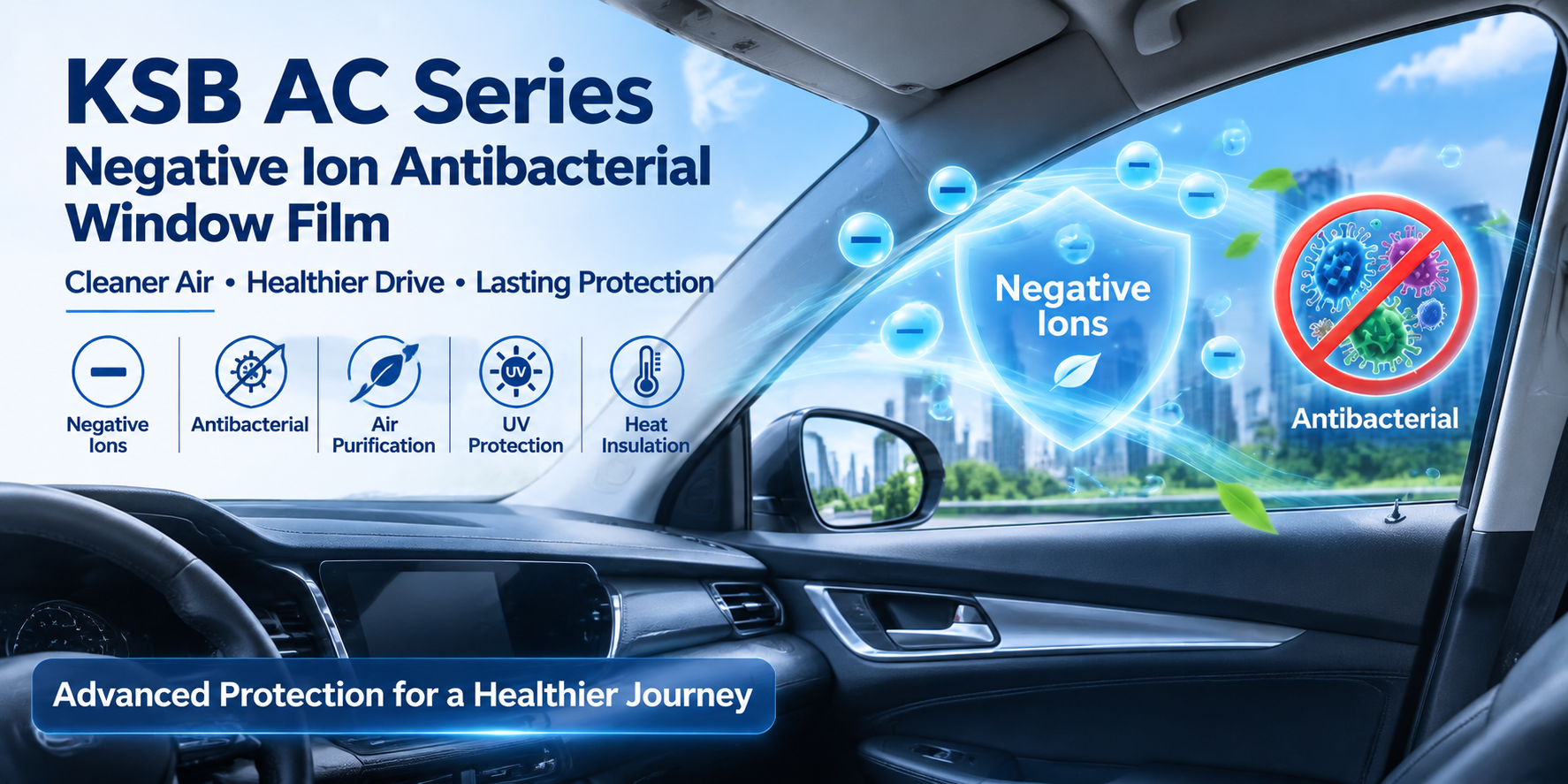
- KSB AC Series Negative Ion Antibacterial Window Film | 7 Model Options — Explore another negative ion antibacterial automotive film range.
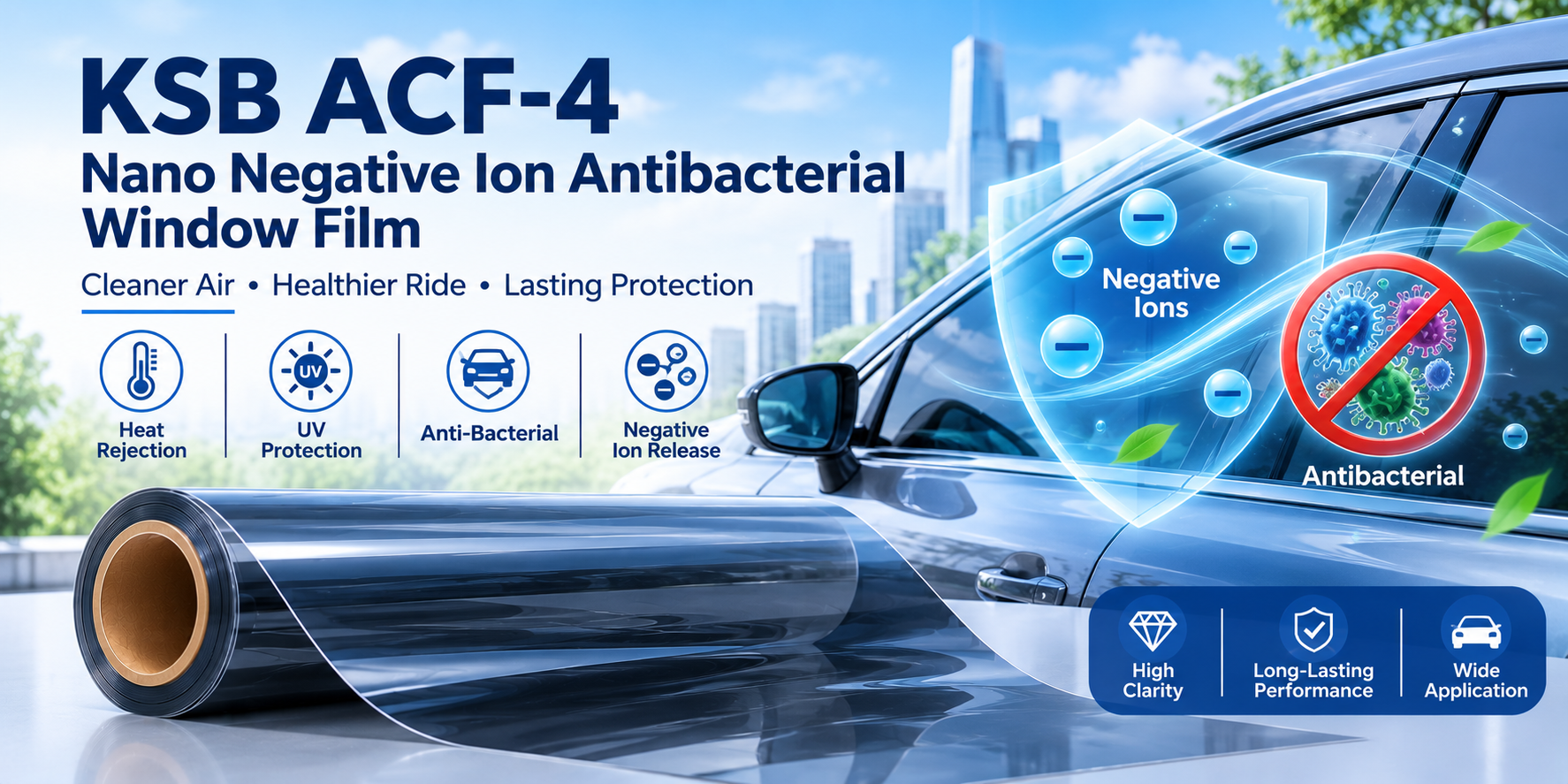
- KSB ACF-4 Nano Negative Ion Antibacterial Window Film — Discover the 4mil version with five model options.
- When Glare Control Matters: M99 Magnetron Sputtering Window Film — Learn about magnetron sputtering, anti-glare and thermal reflection technology.
- Nano Titanium Gold Window Film: Inside the TK Series Technology — Explore another material and technology approach to automotive solar control.
Conclusion
KSB NDC Series combines multi-layer magnetic technology, negative ion antibacterial functionality, and solar control features in two model configurations. With different VLT and TSER specifications, NDC60 and NDC20 provide options for distributors serving varied automotive window film markets.
Contact KSB for product specifications, available technical documentation, and wholesale or OEM inquiries.
Get a Free Sample or Quote
Looking for a reliable window film supplier? Contact us today for fast response and professional support.