Benefits of Installing Sunroof Film on Panoramic Roof Vehicles
Published: September 28 2026 · 7 min read · Category: Sunroof Film
About this article: KSB Window Film manufactures sunroof and panoramic roof film for automotive installers globally. This guide covers the benefits that drivers consistently report — and the ones that are measurable vs. those that are more subjective.
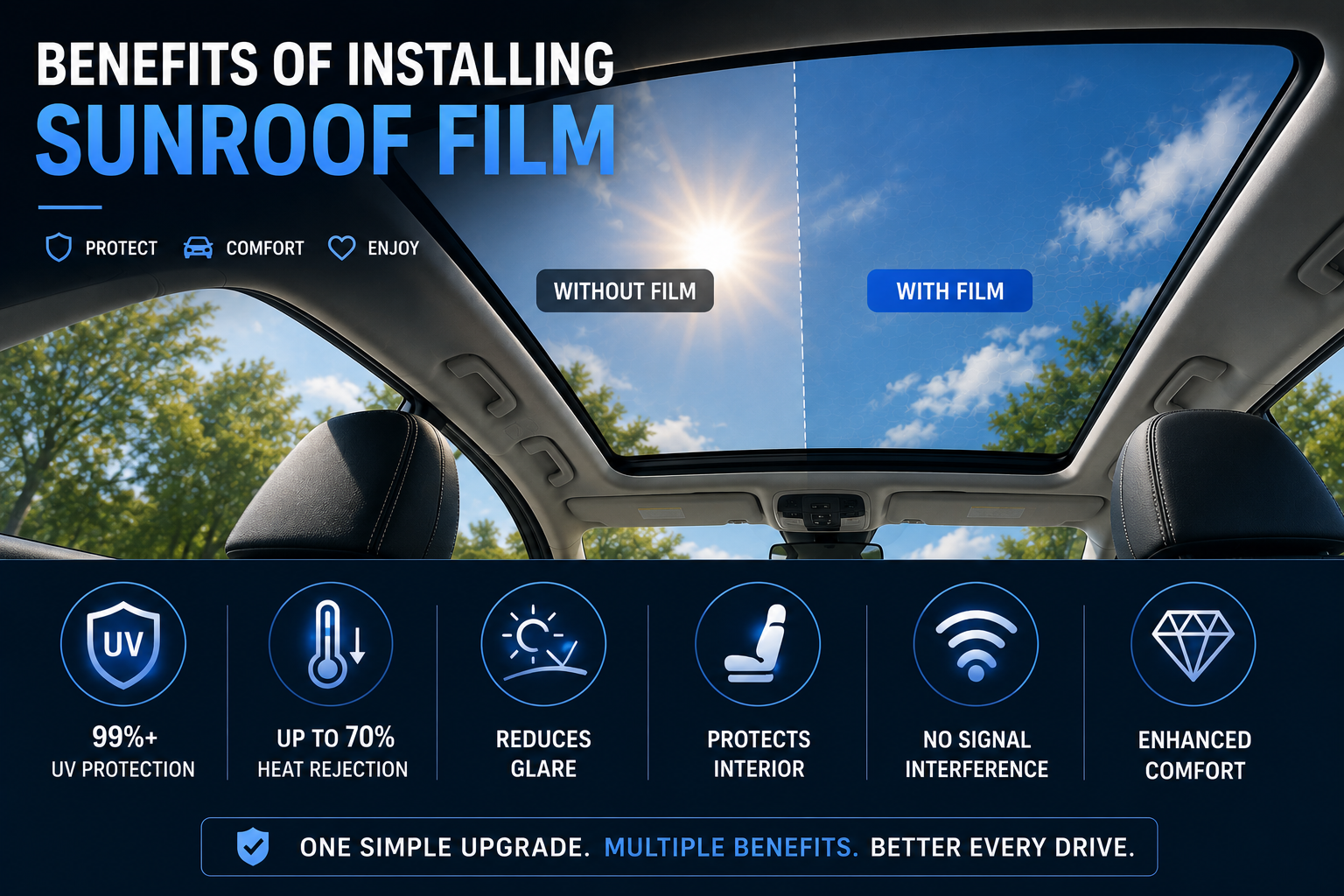
Sunroof film helps reduce heat, UV exposure, and glare on panoramic roofs.
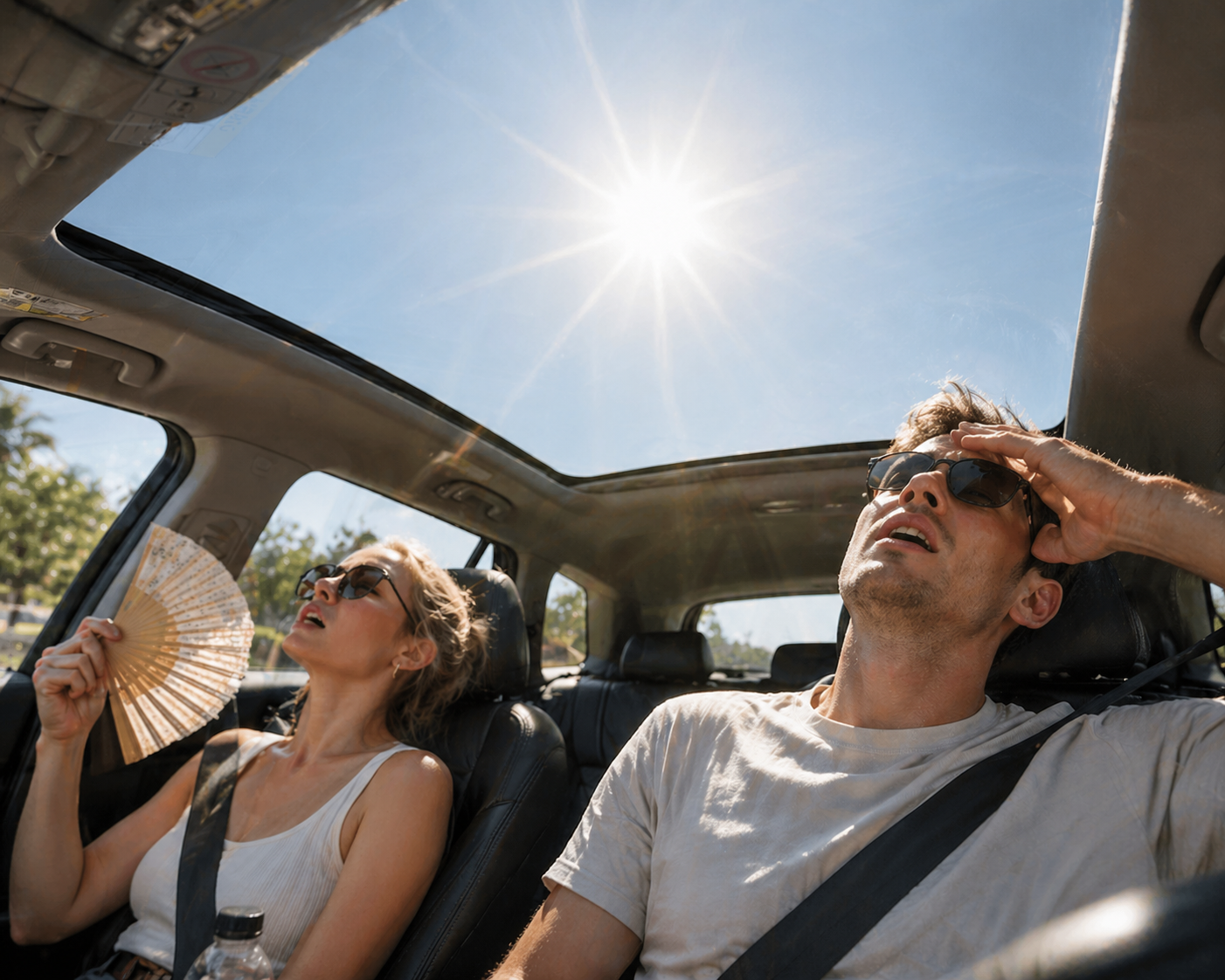
Panoramic roof vehicles have been sold on the promise of open-air ambience. The reality of unprotected panoramic glass in summer is rather different: an overhead radiant heat source, blinding overhead glare on certain sun angles, and a cabin that challenges even a well-specified air conditioning system. The glass roof that looks spectacular on the showroom floor creates a practical problem for anyone driving in a warm, sunny climate.
Sunroof film addresses this. The benefits are real, measurable, and consistently reported by drivers who’ve made the upgrade. Here’s what you can realistically expect.
Benefit 1: Significantly Reduced Cabin Heat
This is the headline benefit and the reason most drivers install sunroof film. A vehicle parked in direct sun on a 35°C day can reach internal temperatures of 65–80°C within an hour. A significant portion of this heat enters through the glass roof — the largest single glass surface on most panoramic roof vehicles.
What film achieves: Quality ceramic sunroof film with TSER (Total Solar Energy Rejected) of 55–65% reduces the solar heat entering through the glass roof by more than half. In practice, this means:
A parked car feels significantly cooler when you return to it
Rear-seat passengers — who sit closest to the panoramic glass — notice a meaningful comfort improvement immediately
The cabin reaches target A/C temperature faster from a standing-start in heat
What it doesn’t achieve: Zero heat — some solar energy still passes through. And if the car has been parked closed for hours in extreme heat, the glass, leather seats, and dashboard have already absorbed substantial heat; film reduces new solar input but can’t instantly cool what’s already hot.
Benefit 2: 99%+ UV Protection
Ultraviolet radiation causes three types of damage relevant to vehicle owners:
Occupant skin exposure: Passengers spending extended time in glass-roof vehicles accumulate UV exposure through the unprotected glass. Standard automotive glass has relatively low UV blocking compared to architectural glass, and panoramic glass is a large unprotected overhead UV source.
Interior fading and degradation: UV breaks down the dyes and structural polymers in leather, fabric, carpet, and plastics. The overhead angle of UV through panoramic glass means it falls directly on seats, dashboard, and instrument panels — accelerating fade and material degradation.
Film’s UV performance: Any quality sunroof film — regardless of VLT or technology tier — blocks 99%+ UV. This is not a premium feature; it’s a baseline specification for quality film across all tiers.
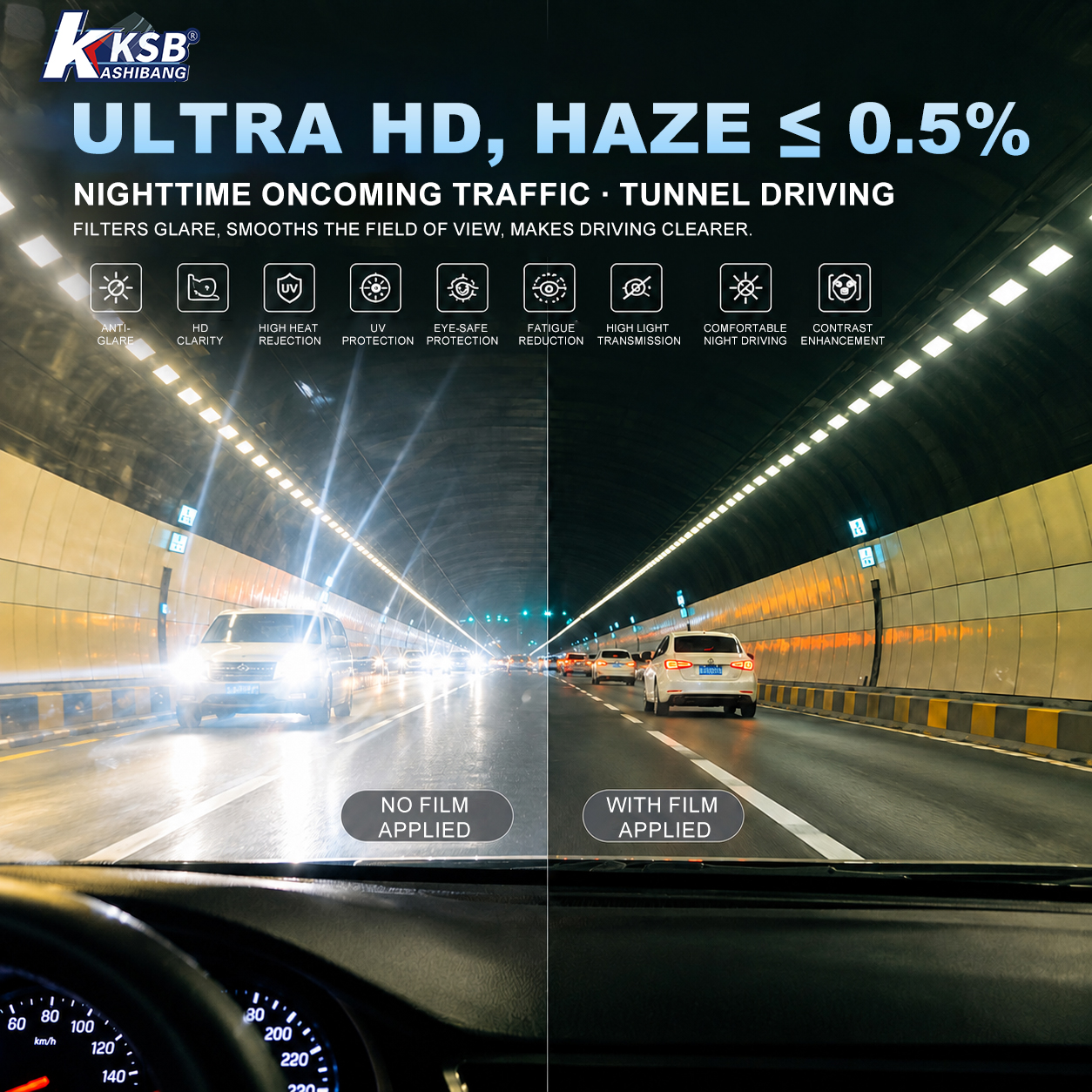
Benefit 3: Reduced Overhead Glare
This benefit is most appreciated by rear-seat passengers and drivers in certain conditions. Panoramic glass on a bright day creates intense overhead light that:
Reduces screen readability for rear passengers using tablets or phones
Creates eye fatigue in bright, overhead-lit conditions
Can create uncomfortable contrast between the bright overhead glass and darker interior
this ak70 sunroof film effectively reduces heat and blocks uv rays, improving driving comfort
Film at VLT 70–80% reduces this overhead light intensity to a comfortable level — enough reduction to eliminate the harsh glare effect while preserving the open, naturally lit feel of panoramic glass.
For front-seat occupants: the sun visor handles direct forward sun, but high-angle overhead sun that hits through panoramic glass — particularly problematic for taller drivers — is substantially reduced by film.
Benefit 4: Reduced A/C Load and Improved Fuel/Range Efficiency
Less solar heat entering the cabin = less work for the air conditioning system = less energy consumed by the A/C compressor.
For conventional vehicles: Reduced A/C compressor load improves fuel economy. The improvement is small per journey but meaningful over a vehicle lifetime, particularly for high-mileage drivers in warm climates.
For electric vehicles: This benefit is proportionally larger. EV air conditioning draws directly from the traction battery. On hot days, A/C can reduce EV range by 15–30%. Sunroof film that meaningfully reduces cabin heat load reduces the A/C demand, which preserves range. For EV panoramic roof vehicles (Tesla Model Y and 3, BMW iX, Rivian R1T, and many others), sunroof film is an increasingly rational range management tool.
Benefit 5: Interior Preservation
The combination of heat and UV is the primary accelerator of automotive interior ageing. Dashboard cracking, leather fading, fabric colour loss, and plastic discolouration are all driven by the sun’s thermal and UV energy.
Panoramic glass creates a concentrated overhead exposure that accelerates this process in the areas below the glass — typically the rear seats, the top of the front seatbacks, and any exposed surfaces in the roof area.
Film that blocks 99%+ UV and reduces total solar transmission by 50–60% significantly slows this degradation. For drivers who plan to keep their vehicle long-term or who are concerned about resale value, interior preservation is a concrete financial benefit alongside the comfort improvement.
Benefit 6: Privacy Without Total Blackout
Many panoramic roof vehicles have no privacy option beyond closing an internal shade. Drivers who want some reduction in visibility from above — in multi-storey car parks, on elevated roads, or simply for comfort — find that tinted sunroof film provides a degree of privacy from above without completely blocking the view upward.
A 70% VLT film is not a privacy film in the traditional sense, but combined with bright outdoor conditions, it reduces the visibility into the car from above more than the driver’s visibility out.
Benefit 7: No Sacrifice of the Panoramic Experience
This is what separates quality sunroof film from just closing the shade. Premium ceramic film at 70–80% VLT maintains the fundamental character of the panoramic glass experience: the sense of openness, the natural light, the sky view. The glass doesn’t look dark from inside or outside.
Occupants who didn’t know film was installed often don’t notice it’s there — they just notice the car is more comfortable.
FAQ
Will sunroof film make the car too dark?
At VLT 70–80% (the most common specification for panoramic roofs), the glass is nearly as bright as unfilmed glass. Most occupants can’t perceive the difference in ambient light. Below 50% VLT, the darkening effect is more noticeable — appropriate if additional privacy or heat reduction is the priority, but not the standard choice for panoramic roof applications where maintaining the open feel is the point.
Does sunroof film work year-round?
In warm climates: yes, and the heat benefit is relevant for most of the year. In cold climates: the UV protection and glare reduction benefits apply year-round, but the heat reduction benefit is only relevant in warm months. In cold climates, blocking some solar gain through the roof reduces passive solar heating — a minor trade-off in most cases, but worth considering for drivers who specifically rely on solar heating in winter.
KSB Window Film’s panoramic roof and sunroof film range gives installers a product with clear, documentable benefits to present to panoramic roof vehicle owners — the fastest-growing segment in the automotive film market.