Published: October28 2026 · 7 min read · Category: Sunroof Film
About this article: KSB Window Film manufactures ceramic and nano-ceramic sunroof film. Heat reduction is the primary reason most drivers install sunroof film — this guide addresses whether and how well it actually works, with real data.
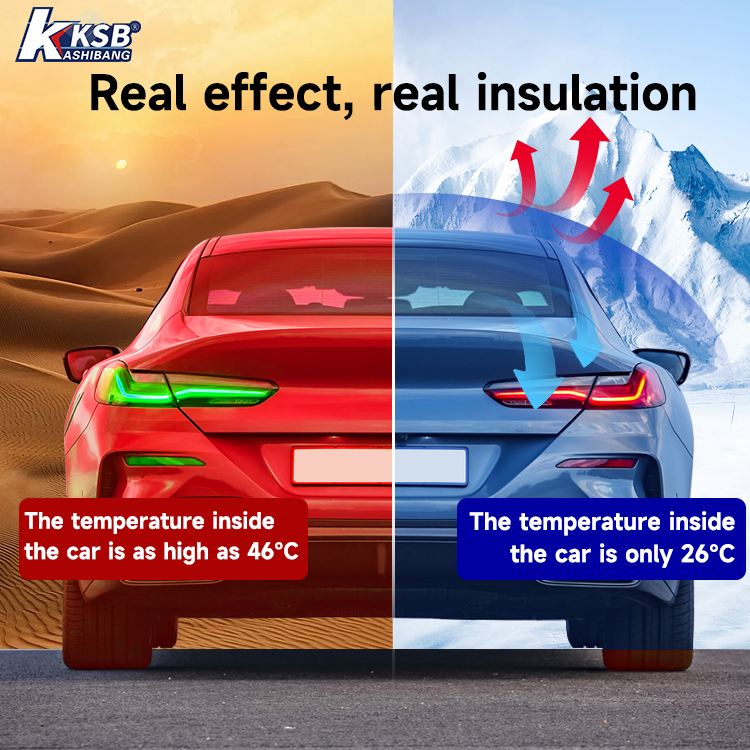
Sunroof film heat reduction comparison showing lower surface and cabin temperatures.
Yes — quality sunroof film genuinely reduces heat entering a vehicle through the glass roof. But the degree of reduction, which film products deliver the most, and what “heat reduction” means in practical terms all deserve specific answers rather than a simple yes.
The Specific Heat Reduction Claim
When manufacturers say sunroof film “rejects” or “blocks” solar heat, they’re referring to the percentage of total solar energy the film prevents from entering the vehicle. This is measured as TSER — Total Solar Energy Rejected.
TSER is the metric to focus on for heat reduction because it covers the full solar spectrum:
UV (5% of solar energy)
Visible light (44% of solar energy)
Near-infrared / infrared (51% of solar energy)
Since infrared is the largest heat component and is invisible, a film can block significant heat while maintaining high visible light transmission. This is why premium ceramic film can feel “cooler” without looking dark.
Reference TSER values for sunroof film by technology tier:
Film Type
Typical TSER
Typical VLT
Heat Reduction Feel
Basic dyed film
35–45%
50–70%
Modest improvement
Carbon film
45–55%
60–75%
Noticeable improvement
Ceramic / nano-ceramic
55–70%
65–80%
Significant improvement
Magnetron sputtered metal
60–75%
30–60%
Strong improvement, darker
What the Temperature Data Shows
The most useful way to understand heat reduction is in-cabin temperature measurement — what actually happens to vehicle cabin temperature with and without film.
Research and real-world data consistently show:
For a vehicle parked in direct sun at 35°C ambient for 60 minutes:
Unfilmed panoramic glass: cabin reaches 65–75°C
Quality ceramic sunroof film (TSER 60%): cabin reaches 52–58°C
A difference of 10–18°C in cabin peak temperature
For a vehicle being driven with A/C at target 22°C in 38°C ambient with strong overhead sun:
Unfilmed: A/C runs at higher duty cycle to maintain target temperature; rear passengers may feel overhead warmth from radiant heat through the glass
Quality ceramic film: A/C maintains target temperature more comfortably; radiant heat from the glass panel is substantially reduced
The radiant heat effect: This is a distinct sensation that temperature measurements don’t fully capture. Even when the A/C maintains cabin temperature, direct solar radiation through overhead glass creates a “burning” radiant effect on occupants — their skin absorbs the infrared regardless of air temperature. Film that rejects infrared eliminates this sensation even if the air temperature is managed by A/C.
Why Some People Say Film “Doesn’t Work”
The heat reduction is real, but expectations management matters. Film won’t:
Cool a car that’s been parked shut for hours. A car that’s been closed in direct sun for three hours has thermal mass — the seats, dashboard, and interior panels have stored heat. Film stops new solar heat from entering, but it doesn’t remove the stored heat. The car still needs to be vented and cooled by A/C.
Replace air conditioning. Film reduces the cabin heat load, making A/C more effective. It doesn’t substitute for A/C on a 40°C day.
Work equally in all conditions. On overcast days, the solar heat through glass is minimal — film provides no perceptible benefit in those conditions.
Provide maximum effect with cheap film. Basic dyed film at TSER 35–40% provides modest heat reduction that some drivers find underwhelming. Premium ceramic film at TSER 60–70% provides a dramatically more noticeable result. The “film doesn’t work” experience often comes from budget products installed with unrealistic expectations.
Which Film Provides the Most Heat Reduction?
Ranked by heat rejection performance for sunroof application:
1. Nano-ceramic / ceramic (highest performance): TSER 55–70%. Highest infrared rejection at high VLT. No RF interference. Best choice for most panoramic roof applications where maintaining the bright, open feel is important alongside maximum heat rejection.
2. Magnetron sputtered metallic (high performance, darker): TSER 60–75%. Very high heat rejection via reflectance. Lower VLT (darker glass). May interfere with phone, GPS, and satellite signals. Better heat rejection per VLT level than ceramic at equivalent darkness, but the signal interference and darker appearance are trade-offs.
3. Carbon film (mid-range): TSER 45–55%. Good heat rejection, no metallic signal interference. A step up from dyed film at modest additional cost.
4. Dyed film (entry level): TSER 35–45%. Basic heat reduction. Good UV protection. Appropriate entry point for price-sensitive applications.
FAQ
If I put my hand on the glass with and without film, will I feel a difference?
Not much of one — the glass surface temperature changes minimally with film applied to the interior face. What changes is the heat energy entering the cabin below the glass. The heat you feel inside the car from the overhead radiant source is substantially reduced; the glass surface temperature itself is determined mostly by the solar energy absorbed by the glass, which film doesn’t significantly alter from the interior face.
Does ceramic sunroof film actually block more heat than dark-tinted film?
In many cases yes, and this surprises some buyers. A ceramic film at 75% VLT can reject more total solar energy than a dark dyed film at 40% VLT. The ceramic’s selective IR rejection is more efficient per unit of visible light transmission than a dark absorptive dyed film. This is the counterintuitive power of spectrally selective technology.
My car has a built-in shade. Does film still help when the shade is open?
Yes — film reduces heat when the glass is exposed, which is whenever the shade is open. If you drive with the shade permanently closed, film provides no additional heat benefit. Film’s value is in allowing you to drive with the shade open (enjoying the panoramic experience) while still reducing the heat penalty.
KSB Window Film’s ceramic and nano-ceramic sunroof film achieves TSER 58–70% at VLT 65–80% — the performance that makes the heat reduction genuinely noticeable. Test data provided with every enquiry.