Forced Entry Delay Film: How It Works and What the Test Data Shows
Published: August 27, 2026 · 7 min read · Category: Safety & Security Film
About this article: KSB Window Film manufactures security film certified to EN 12600 and LPS 1270 standards. The test data discussion in this article is based on published standards and our direct product testing experience.
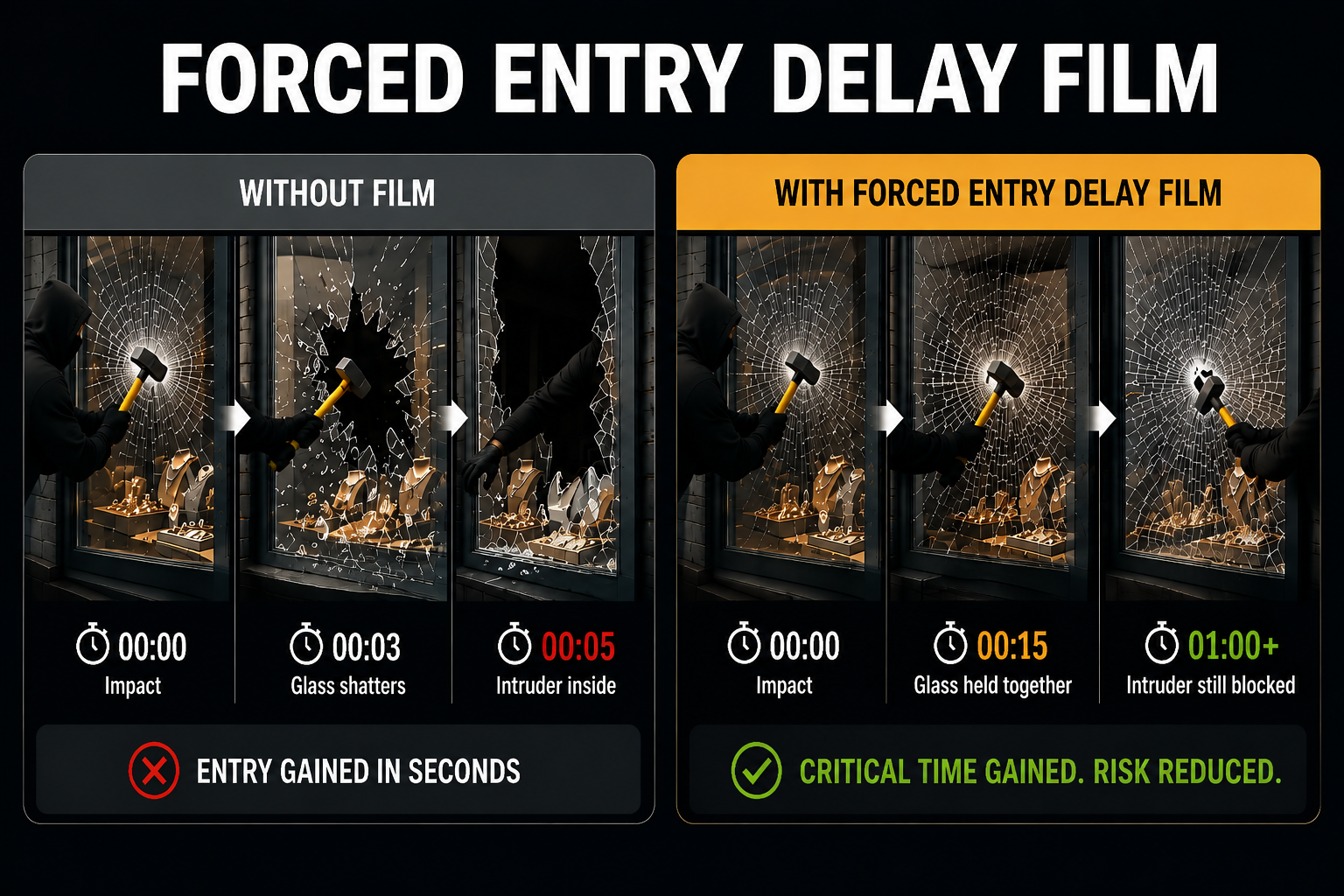
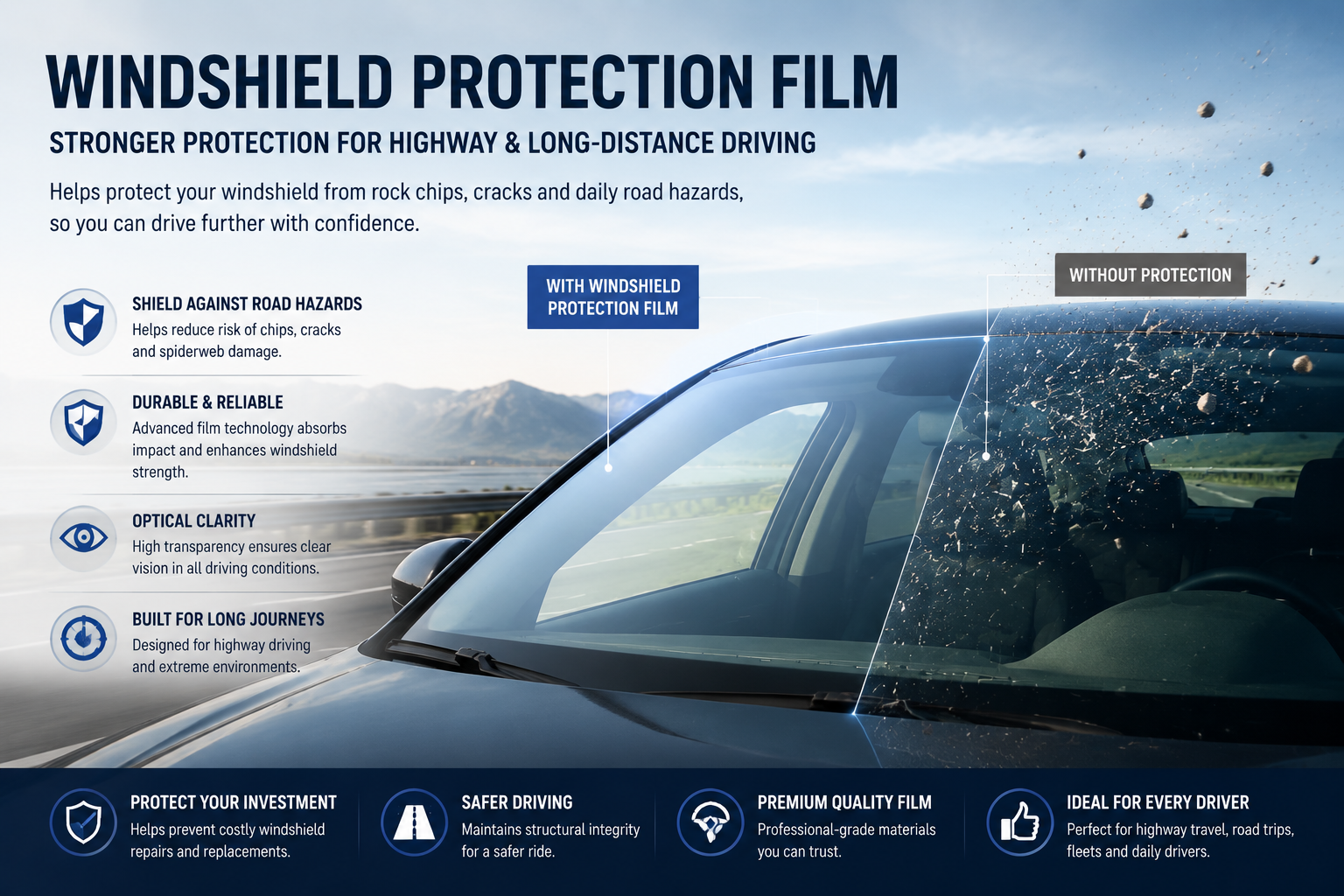
Comparison of unprotected glass and security film showing how forced entry delay film extends break-in time and improves building security.
“Forced entry delay film” is the technically accurate description for security window film in its primary protective function. It doesn’t stop forced entry. It delays it — measurably, significantly, and in a way that changes the risk calculation for an attacker.
Understanding the mechanism and the test data behind this function helps buyers specify the right product and understand what they’re actually buying.
The Delay Mechanism
When an intruder attempts to penetrate a security-filmed window:
Step 1: The glass breaks under impact. This is essentially instantaneous regardless of film.
Step 2: The attacker attempts to create an opening in the film-glass unit. This is where the delay occurs.
The film holds the glass fragments in a matrix — the fractured glass remains embedded in the film’s polymer structure. To create an accessible opening, the attacker must physically defeat this film-glass matrix, typically by:
Cutting: requires a sharp blade and sustained cutting motion
Tearing: the film stretches elastomeric-ally under force, requiring significant sustained effort
Continued impact: pounding through the film matrix is far slower than the initial glass break
Each of these methods takes time. The film’s tensile strength, tear resistance, and elongation properties determine how much time.
The Frame Attachment Variable
Frame attachment converts delay into genuine resistance. Without it, an attacker can push the intact film-glass unit inward (since it’s only adhesively bonded to the glass, not mechanically to the frame), creating an accessible opening in seconds.
With frame attachment (perimeter tape or mechanical anchoring):
The film-glass unit cannot be pushed through
The attacker must physically defeat the film material itself
Total time to penetration increases dramatically
This is why frame attachment is not optional in security film specifications. Film alone ≠ forced entry resistance. Film + frame attachment = forced entry resistance.
What the Standards Measure
EN 12600 — Impact Performance
EN 12600 uses a pendulum impactor — a 50kg sphere on a pivot arm, released from a defined height to deliver a defined energy level to the glass-film assembly. The test evaluates:
Whether break-through occurs (Class A = no break-through; Class B = break-through but fragment retention)
At what energy level (Class 1 = highest energy, Class 3 = lowest)
Relevant ratings for security film:
Class B1: No break-through at maximum test energy. The highest EN 12600 rating relevant for most commercial security applications.
Class A1: No break-through AND the impactor doesn’t pass through. The most demanding rating.
EN 12600 is primarily a drop/impact test — it measures resistance to a single high-energy impact, not sustained tool attack. It’s relevant for establishing baseline performance but doesn’t fully characterise forced entry resistance.
UL 972 — Burglary Resistance (US)
UL 972 tests specifically for burglary resistance — the standard is closer to real-world smash-and-grab scenarios. The test involves:
Multiple impacts using standardized tools (hammers, bars)
A defined time limit
Assessment of whether an accessible opening is created
Film assemblies that pass UL 972 have demonstrated resistance to a sustained, multi-impact attack — more relevant to security applications than EN 12600 alone.
LPS 1270 — Attack Testing (UK/Europe)
The Loss Prevention Standard 1270 uses trained “attackers” with defined tool sets (ranging from basic hand tools to powered tools depending on the class) attempting to create a 400mm × 250mm accessible opening in a defined time period.
LPS 1270 performance classes:
Class A1: 1-minute attack resistance with basic hand tools
Class A2: 3-minute attack resistance with basic hand tools
Class A3: 5-minute attack resistance with enhanced hand tools
Class A4: 10-minute attack resistance with enhanced hand tools (and sub-classes with power tools)
LPS 1270 is the most rigorous and practically relevant forced entry test standard for commercial security film applications. Insurance requirements in the UK often specify minimum LPS 1270 class.
Typical Performance Data by Film Specification
Standard security film (8 mil, no frame attachment):
Assessment: Adequate for basic security, insufficient for serious forced entry resistance
Security film (8 mil with perimeter attachment tape):
EN 12600: B1
Forced entry delay: 60–90 seconds under hammer and blade attack
LPS 1270: Borderline A1/A2 depending on specific product and installation
Assessment: Good deterrent against opportunistic smash-and-grab
Security film (10–12 mil with structural frame attachment):
EN 12600: B1 or A1
Forced entry delay: 120–180+ seconds under sustained hand tool attack
LPS 1270: A2 or A3 achievable with appropriate installation
Assessment: Significant deterrent, adequate for most commercial security requirements
High-security film (15 mil with mechanical frame attachment):
EN 12600: A1
LPS 1270: A3 or A4 achievable
Assessment: Suitable for high-value targets requiring certified forced entry resistance
What Affects Real-World Performance
Attacker skill and tools: LPS 1270 trained testers represent a higher skill level than most opportunistic attackers. Real-world performance against less-skilled attackers is typically better than test data.
Alarm integration: Test data measures film resistance in isolation. An activated alarm during a 60-second attack significantly changes the practical security outcome — most real-world attackers abort when alarms activate.
Frame condition: Film installed on frames in poor condition or with inadequate bonding surface for frame attachment will underperform test ratings. Installation quality matters.
Film age: Well-maintained security film within its service life performs to specification. Aged film (10+ years, particularly in high-UV locations) may show adhesion degradation that reduces performance.
FAQ
Is there a standard way to compare forced entry resistance between products?
The most objective comparison is LPS 1270 class — the class achieved at a standardised installation specification gives you directly comparable performance data. UL 972 class provides a comparable basis for US-market comparison. EN 12600 class alone is insufficient for comparing forced entry resistance (it’s an impact test, not a time-limited tool attack test).
Does film appearance affect security performance?
No. Clear security film performs identically to tinted security film at the same thickness and installation specification. The choice between clear and tinted is driven by aesthetic requirements, not security performance.
KSB Window Film provides EN 12600 certification documentation and LPS 1270-referenced performance data for our security film range. Specification support for forced entry delay applications is provided by our technical team.