Window Film Safety Certifications Explained: EN 12600, ANSI Z97.1 and GSA Standards
Published: September 3, 2026 · 9 min read · Category: Safety & Security Film
About this article: KSB Window Film maintains EN 12600 certification documentation for our safety film range and works with government project buyers who require GSA and LPS 1270 compliance. This guide systematises the certifications that come up in every serious safety film specification.
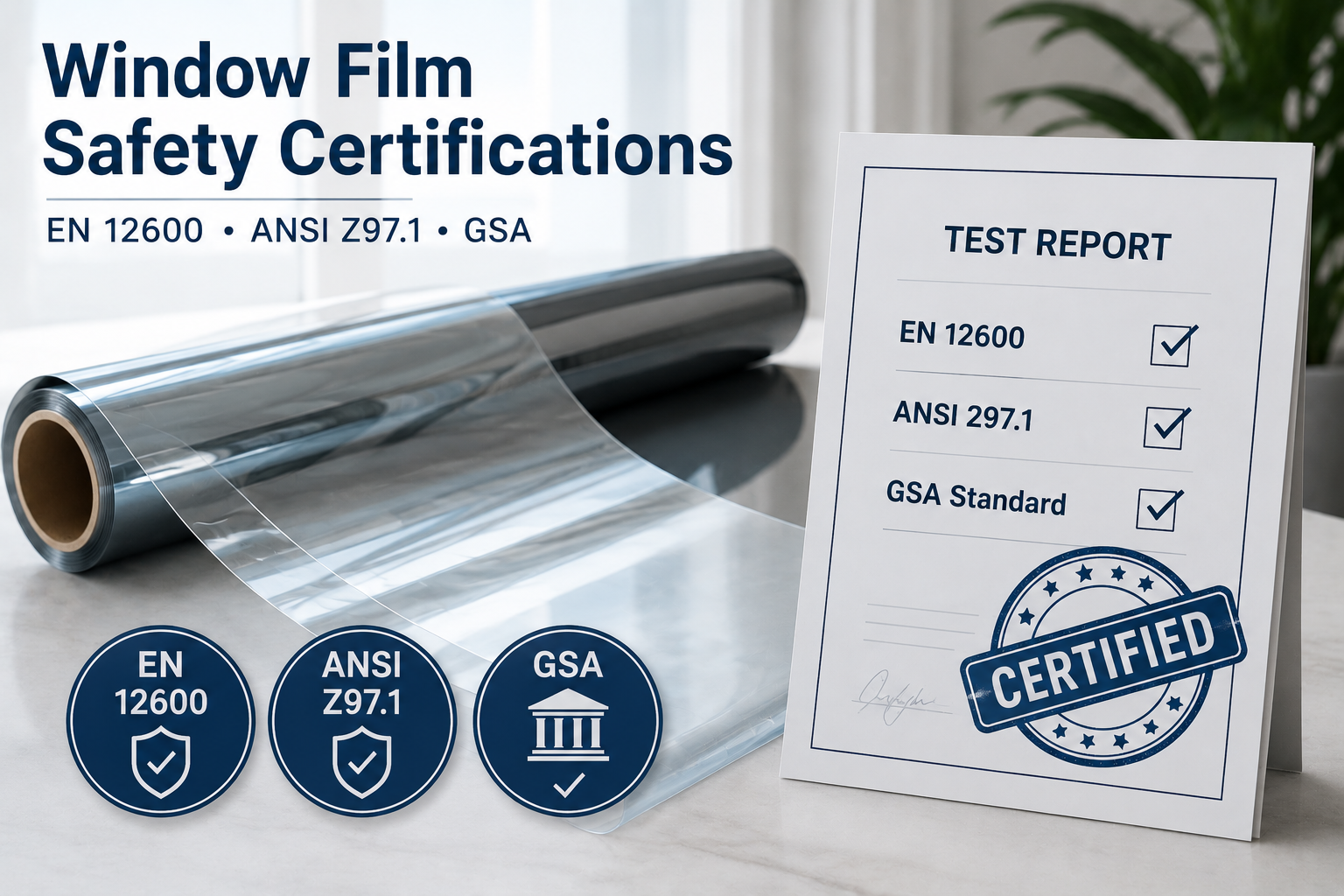
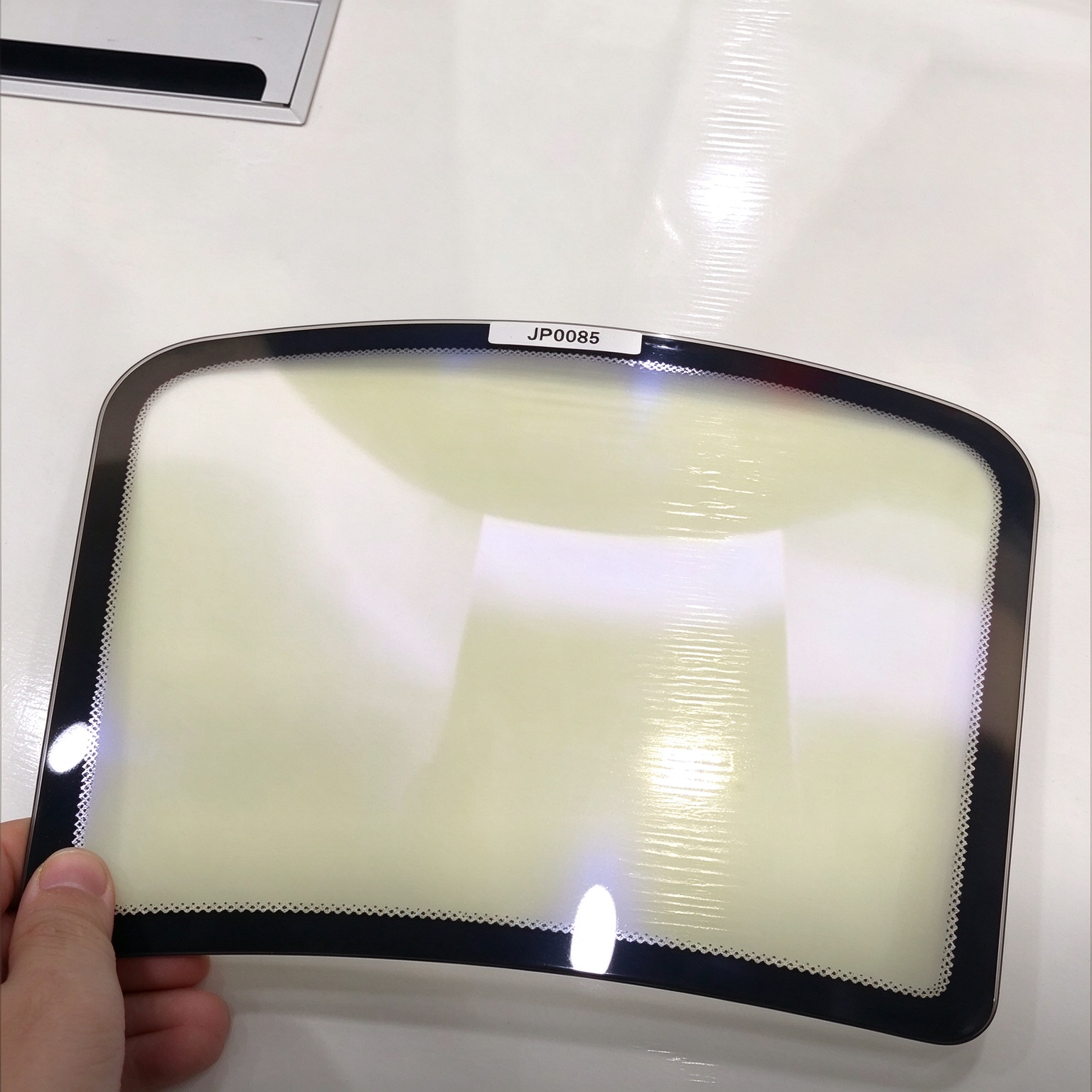
Certified safety window film meeting EN 12600, ANSI Z97.1 and GSA standards for commercial, institutional and government glazing projects.
Safety film certifications are a minefield for buyers who haven’t navigated them before. The same product can be described as EN 12600 Class B1, ANSI Z97.1 Class A, and “blast rated” — and all three claims can be accurate or misleading depending on what was actually tested and how the results are presented.
This guide explains each major certification framework, what it actually tests, and how to verify claims independently.
Why Certifications Matter More in Safety Film Than Other Film Categories
For solar control film, a supplier who exaggerates TSER claims causes a building that’s slightly warmer than expected. For safety film, a supplier who misrepresents safety certification can contribute to genuine injury outcomes. This isn’t abstract — there are documented cases of non-certified safety film installed in code-required safety glazing locations.
The stakes justify the verification effort.
EN 12600: Europe’s Safety Glazing Impact Standard
What It Tests
EN 12600 uses a pendulum impactor — a 50kg steel sphere on a pivot arm — released from defined heights to deliver specific energy levels to the glass-film assembly. The test simulates the impact of a human body falling against glass, which is the primary mechanism for glass injury in buildings.
The test configuration:
The film is applied to a glass sample of standard dimensions
The pendulum is released from increasing heights (increasing energy levels)
The assembly’s failure mode and integrity are assessed
The Classification System
EN 12600 ratings have three components: [failure mode][impact class](glass type)
Failure mode:
A: No break-through at the test energy level — the impactor does not penetrate through the assembly
B: Break-through occurs, but fragments remain in the film matrix — the glass breaks but shards don’t scatter
Impact class:
1: Highest energy level (fall from maximum height)
2: Medium energy level
3: Lowest energy level
Glass type:
(1): The outer lite of a double-glazed unit
(2): The inner lite of a double-glazed unit or single glazing
Example readings:
B1(1): Fragment retention (B) at the highest impact energy (1) when on the outer pane of an IGU — the film holds fragments but break-through occurs
A1(1): No break-through (A) at the highest impact energy (1) on the outer pane — the impactor cannot pass through
What this means for buyers: For most commercial safety film applications (injury prevention, code compliance for human impact), B1 or B2 rating is appropriate. Class A ratings indicate higher impact resistance and are relevant for security applications where no-break-through is required.
What EN 12600 Doesn’t Test
EN 12600 is a single-impact pendulum test. It does not test:
Sustained tool attack (relevant for forced entry resistance)
Blast pressure loads (relevant for bomb blast applications)
Multiple impact sequences
Long-term performance under UV or thermal ageing
A film rated EN 12600 B1 is good at fragment retention from a single body impact. It doesn’t necessarily perform well under sustained forced entry. For forced entry, LPS 1270 or UL 972 is the relevant test.
How to Verify
EN 12600 certificates have a certificate number, an issuing test laboratory, a specific product identification, and the glass type and configuration tested. Verify:
The certificate is current (within 5 years, some labs require more frequent renewal)
The configuration tested matches your installation (glass type, thickness, whether IGU or single-pane)
The product name matches the specific product you’re buying, not a different variant in the same range
ANSI Z97.1: US Safety Glazing Standard
What It Tests
ANSI Z97.1 is the US standard for safety glazing materials in buildings — the American equivalent of EN 12600 for most practical purposes. It uses a similar pendulum impactor methodology but with slightly different energy levels and pass/fail criteria.
Key difference from EN 12600: ANSI Z97.1 classification uses Class A (no break-through at test energy) and Class B (fragments contained) at energy levels defined in the standard. The classification nomenclature is simpler than EN 12600.
Building Code Relevance
ANSI Z97.1 certification is the required certification for safety glazing compliance in US building codes. The International Building Code (IBC) and International Residential Code (IRC) specify safety glazing locations where ANSI Z97.1 Class B or Class A products are required. Safety film certified to ANSI Z97.1 is the recognised code compliance pathway for upgrading non-compliant existing annealed glass.
CPSC 16 CFR Part 1201
Consumer Product Safety Commission standard — similar to ANSI Z97.1 but applicable to consumer products including residential glazing. Often cited alongside ANSI Z97.1 in US market certifications.
LPS 1270: Forced Entry Resistance Standard
What It Tests
The Loss Prevention Standard 1270 (maintained by the Loss Prevention Certification Board, UK) is fundamentally different from EN 12600 and ANSI Z97.1. It’s a forced entry resistance standard, not an impact standard.
The test methodology:
A trained assessor attempts to create a specific-size opening (400mm × 250mm) in the tested assembly using defined tools
The test is time-limited based on the class being assessed
Tools escalate in capability across classes (from basic hand tools to powered tools)
Performance classes (simplified):
Class A1: 1-minute resistance to basic hand tools
Class A2: 3 minutes
Class A3: 5 minutes
Class A4: 10 minutes (with sub-categories for power tool resistance)
Why LPS 1270 Matters for Security Film
LPS 1270 is the standard that actually measures what buyers care about in security applications: how long does it take an attacker to get through? EN 12600 tells you about impact resistance. LPS 1270 tells you about forced entry resistance. For retail security, bank security, and institutional security specifications — LPS 1270 class is the more relevant certification.
UK insurance requirement: Major insurers in the UK (and increasingly Europe) specify minimum LPS 1270 class for commercial properties with high-value contents. Class A1 minimum for standard commercial; A2 or A3 for high-value retail and financial institutions.
UL 972: Burglary-Resistant Glazing (US)
What It Tests
Underwriters Laboratories Standard 972 tests glazing assemblies for resistance to burglary — using multiple impacts with standardised tools (hammers, bars) within a defined time period, assessing whether an accessible opening is created.
Key difference from EN 12600: UL 972 involves multiple impacts, simulating a sustained burglary attempt rather than a single accidental body impact.
Building Application
UL 972 certification is referenced by US insurers and by some state and local government procurement specifications for security glazing. Less universally required than LPS 1270 in international markets, but the appropriate US standard for security film specification.
GSA and Government Standards
GSA PBS-P100
The US federal government’s physical security standard for federal buildings. Glazing requirements specify performance by standoff distance and occupancy type. Film systems can comply with GSA standards when properly specified, tested, and installed.
Critical point: GSA compliance requires the complete system — film + frame attachment + adequate frame structure. No film product alone satisfies GSA blast requirements.
UFC 4-010-01
Department of Defense standard for antiterrorism. Similar framework to GSA PBS-P100 but applied to military and defence facilities. The most demanding civilian blast standard in the US market.
ASTM F1642 / ISO 16933
Standards specifically for glazing systems subjected to airblast loadings. These are the test methodologies used to qualify glazing systems (including film + glass + frame) for blast protection in government applications.
Reading a Safety Film Certification: A Checklist
When a supplier presents certification documentation:
[ ] Does the certificate name the specific product you’re buying (not just the product family)?
[ ] Is the glass configuration tested the same as your installation?
[ ] Is the certificate current (check expiry or re-test date)?
[ ] Is the certifying body independent and accredited (UKAS for UK labs, A2LA for US, DAkkS for Germany)?
[ ] Does the standard referenced (EN 12600, LPS 1270, UL 972) match the application requirement?
[ ] Is the installation configuration specified (with or without frame attachment)?
If the answer to any of these is “no” or “I can’t tell,” ask for clarification before accepting the certification as evidence of compliance.
FAQ
Can a film be certified to both EN 12600 and ANSI Z97.1?
Yes. These are parallel standards covering similar performance but for different markets. A manufacturer targeting both European and US markets will typically test to both. The certificate should separately identify each standard and the result under each.
Does LPS 1270 replace EN 12600 for commercial security specifications?
They address different aspects. EN 12600 tests impact safety — protection against accidental human impact through glass. LPS 1270 tests forced entry resistance — protection against deliberate attack. A complete commercial security specification ideally references both: EN 12600 for safety compliance and LPS 1270 for security performance.
My specification says “EN 12600 rated” without specifying a class. Is that sufficient?
No. “EN 12600 rated” without a class designation is meaningless — there are nine possible ratings under EN 12600 (3 classes × 3 failure modes) with dramatically different performance levels. A specification should state the specific class required (e.g., “EN 12600 Class B1”).
KSB Window Film provides EN 12600 certification documentation, LPS 1270-referenced performance data, and ANSI Z97.1 test results for our safety film range. Our technical team can advise on which certifications are required for your specific application and market.