Reviewed by KSB PPF Product and Quality Control Team
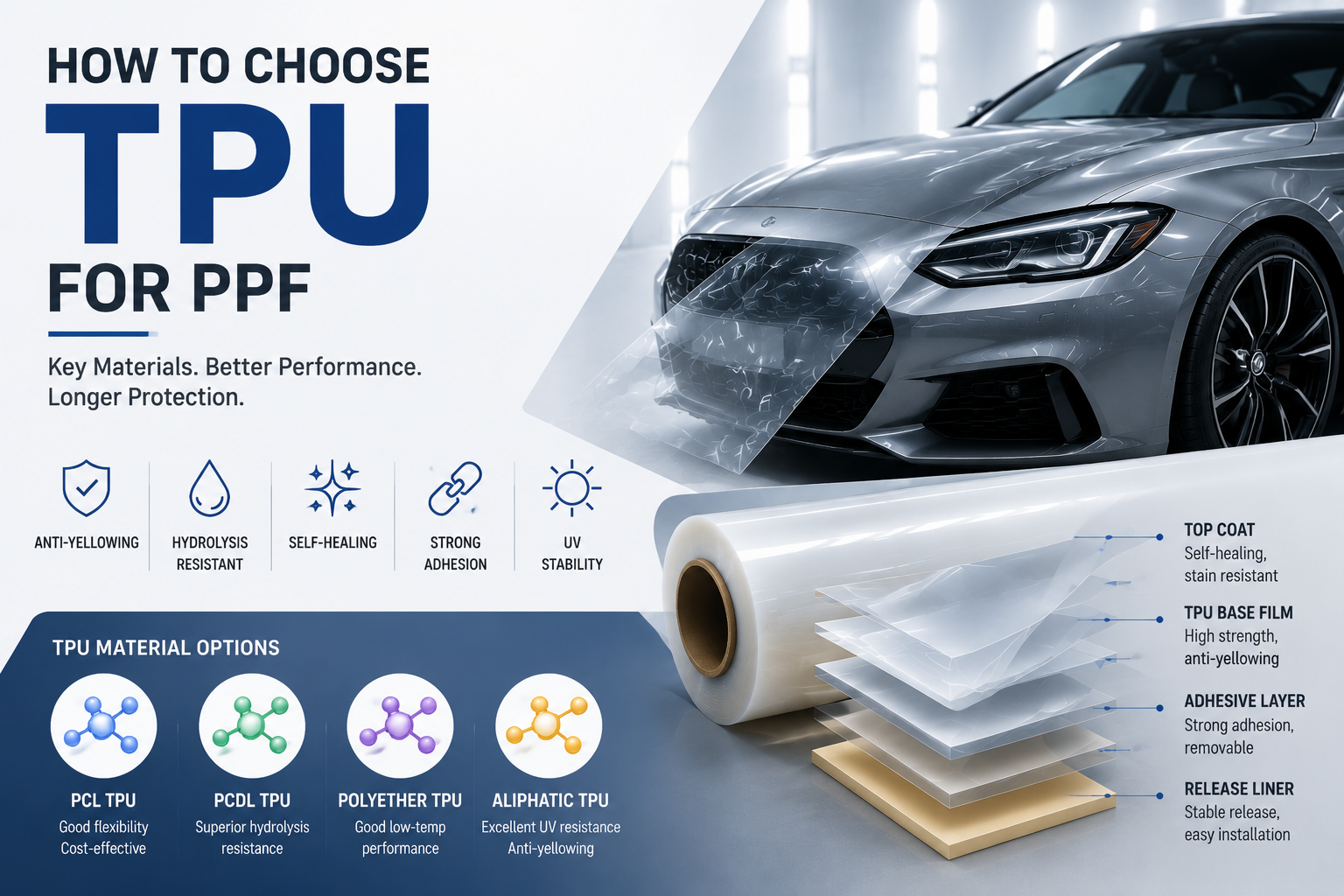
If you’re sourcing paint protection film for your brand, distribution network or OEM project, you’ve likely come across a range of material claims: PCDL TPU, aliphatic TPU, self-healing top coat, and so on. Some of these terms matter more than others — and understanding the difference will help you ask the right questions, compare products properly, and avoid expensive sourcing mistakes.
This guide explains the key materials used in PPF construction, what they actually affect, and how to evaluate a film before placing a bulk order.
The Problem With Oversimplified Material Claims
A common mistake in PPF sourcing is treating the TPU resin as the only thing that matters. Suppliers sometimes market their film purely on the basis of one ingredient — “we use PCDL” or “100% aliphatic TPU” — as if the finished product is defined by a single component.
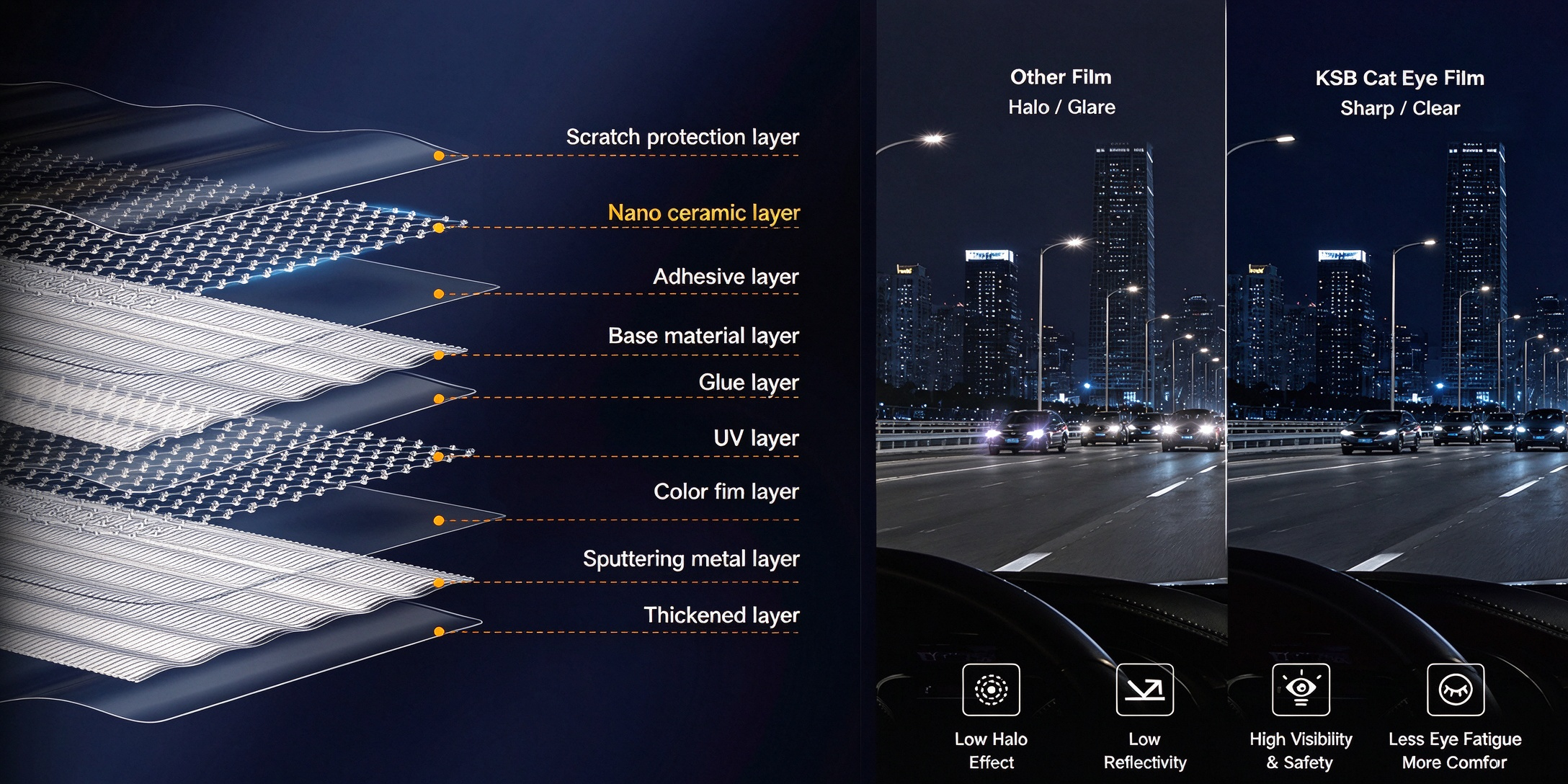
In reality, PPF performance is the result of the entire film construction:
- TPU base layer (soft segment and isocyanate chemistry)
- Top coat (hardness, self-healing performance, UV protection)
- Adhesive layer (bonding strength, removability, residue)
- UV stabilizer package (type and loading level)
- Manufacturing process (casting method, thickness consistency)
- Film layer construction (single-layer vs. multi-layer)
Changing any one of these will affect the finished product. This is why two films can use the same TPU resin and still perform very differently — and why you should always evaluate the complete film, not just the raw material claims.
Understanding TPU Chemistry: Two Separate Things
When suppliers talk about TPU, they’re often combining two distinct aspects of the chemistry. It helps to understand them separately.
1. Soft Segment Chemistry
The soft segment is the flexible backbone of the TPU. It significantly influences hydrolysis resistance, low-temperature flexibility, and long-term durability. The main types used in PPF are:
Polyester TPU A broad category that includes ester-based polyols. Generally offers good mechanical properties, but the ester linkage can be vulnerable to hydrolytic degradation, particularly in high-humidity environments or with frequent washing.
Polycaprolactone (PCL) A specific type of polyester polyol that has been widely used in PPF production. It offers a reasonable balance of flexibility, clarity, and processing ease. PCL-based films are common in mid-market PPF products. The ester linkage still has some hydrolysis sensitivity, though actual durability depends heavily on the stabilizer package and total film construction.
Polycarbonate Diol (PCDL) PCDL uses a carbonate linkage rather than an ester linkage. This makes it generally more resistant to hydrolysis and oxidative degradation. PCDL-based films tend to show better performance in humid climates and over longer service periods — but actual outcomes still depend on how the film is formulated and manufactured. PCDL is typically used in premium-grade PPF products.
Polyether TPU Polyether-based TPU has good hydrolysis resistance and performs well at low temperatures. However, it has weaker UV and oxidative stability compared to polycarbonate-based systems, which limits its use in transparent outdoor applications like PPF.
None of these categories is simply “better” or “worse.” A well-formulated PCL-based film with the right stabilizer package and quality top coat can outperform a poorly formulated PCDL-based film. Material selection is one input, not the whole answer.
2. Isocyanate Chemistry: Aliphatic vs. Aromatic TPU
This is a separate and equally important aspect of TPU chemistry — and one that is often under-explained.
Aromatic TPU uses aromatic isocyanates (such as MDI or TDI). These are cost-effective and provide good mechanical properties, but aromatic TPU yellows under UV exposure. For most outdoor transparent applications, this is a significant disadvantage.
Aliphatic TPU uses aliphatic isocyanates (such as HDI or H12MDI). These are inherently more UV-stable and resist yellowing much better than aromatic versions. For transparent PPF that needs to stay clear over years of outdoor use, aliphatic isocyanate chemistry is important — arguably more important than the soft segment choice alone.
This is why the combination matters: a PCDL soft segment paired with aliphatic isocyanate chemistry will generally offer both good hydrolysis resistance and good UV stability. But even that combination needs to be supported by an appropriate stabilizer package and a quality top coat to deliver consistent performance in service.
TPU Type Comparison at a Glance
| TPU Type | Key Characteristic | Common Use in PPF | Main Limitation |
|---|---|---|---|
| Polyester (general) | Good mechanical properties | Economy to mid-range | Hydrolysis sensitivity |
| PCL (polyester type) | Balanced flexibility and clarity | Mid-range PPF | Ester linkage degradation in high humidity |
| PCDL | Stronger hydrolysis resistance | Premium PPF | Higher cost; depends on full construction |
| Polyether | Good hydrolysis resistance, low-temp flex | Less common in PPF | UV/oxidation stability |
| Aliphatic TPU | UV stable, anti-yellowing | All transparent outdoor PPF | Higher cost vs. aromatic |
| Aromatic TPU | Cost-effective | Non-transparent or short-life applications | Yellows under UV |
What Else Affects PPF Durability
Top Coat The top coat is the outermost layer. It protects the TPU from direct UV exposure, provides scratch resistance, and in self-healing films, it enables the recovery effect. A high-quality top coat can significantly extend the effective service life of the film. Without it, even a premium TPU layer degrades faster.
Adhesive The adhesive affects bonding performance, long-term edge retention, and clean removability. A poor adhesive causes edge lifting, residue on paintwork, and installation problems — regardless of how good the TPU is.
UV Stabilizers Hindered amine light stabilizers (HALS) and UV absorbers are added to the film formulation to slow photodegradation. The type, combination and loading level of stabilizers meaningfully affect how the film performs under long-term UV exposure.
Manufacturing Process Casting consistency, thickness uniformity and quality control during production affect whether a film’s stated properties are consistently delivered across rolls and batches.
How to Choose TPU PPF in 5 Steps
Step 1: Confirm Your Target Market and Climate
Climate affects which PPF construction makes sense. High-humidity regions (Southeast Asia, coastal markets) put more stress on hydrolysis resistance. High-UV markets (Middle East, Australia, southern US) place greater demands on UV stability and anti-yellowing performance. Cold climates require adequate low-temperature flexibility. Define this before evaluating materials.
Step 2: Define Product Positioning and Warranty Period
A 3-year entry-level film and a 10-year premium film should not be sourced the same way. Your warranty commitment drives the material and construction requirements. Be clear about what your brand is promising before approaching suppliers.
Step 3: Evaluate the TPU, Top Coat and Adhesive Together
Ask suppliers to explain the full film construction, not just the TPU resin. What isocyanate type is used? What is the top coat chemistry? What adhesive system? This gives you a basis for comparing products on an equal footing.
Step 4: Request Samples and Technical Documents
Before committing to any bulk order, get samples and ask for technical data sheets, accelerated aging test reports (where available), and installation guidelines. Legitimate manufacturers can provide documentation. If a supplier cannot produce basic technical data, treat that as a warning sign.
Step 5: Test the Film Before Bulk Ordering
Lab claims and marketing descriptions are not substitutes for your own hands-on evaluation. See the next section for a practical testing checklist.
How to Test PPF Samples Before Bulk Ordering
You do not need a laboratory to run a meaningful initial evaluation. These tests can be done with basic tools and give you a useful picture of real-world performance:
Optical Clarity Hold the film up to light or lay it over a painted surface. Check for haze, cloudiness or visible inclusions. High-clarity films should be nearly invisible when properly installed.
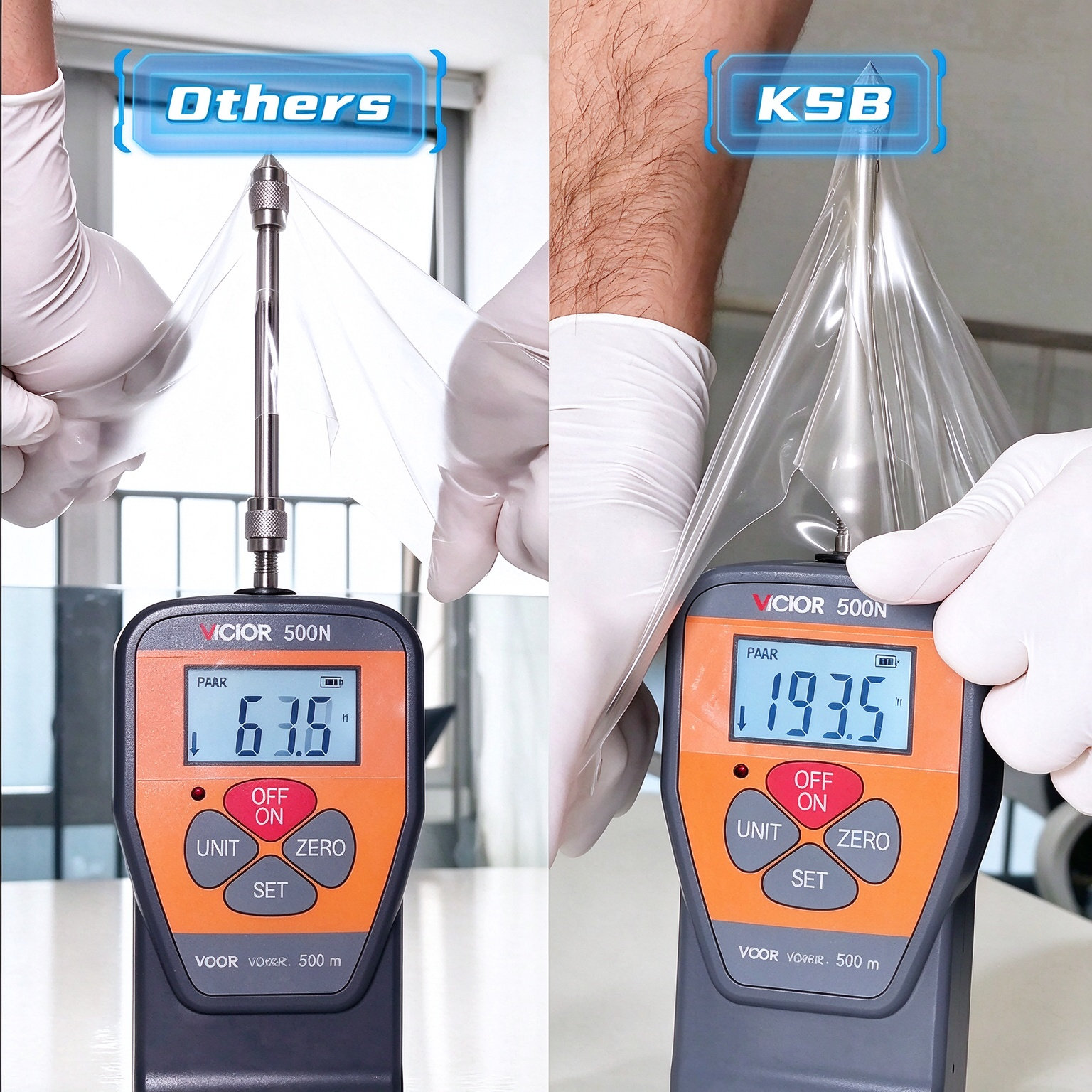
Stretch and Recovery Pull the film by hand and observe how it stretches. Release it and see how quickly and completely it returns to its original shape. Self-healing films should show good elastic recovery with no permanent deformation at moderate elongation.
Self-Healing Make a light surface scratch with a fingernail or a soft implement, then apply gentle heat (a heat gun on low or direct sun exposure). A functional self-healing top coat should close the scratch within a short time. Note the recovery temperature and time.
Stain Resistance Apply common contaminants — bird dropping simulant, tree sap, food dye, sunscreen — and leave for 24–48 hours. Clean and assess whether staining remains. This tests top coat resistance to chemical exposure.
Adhesive Performance Install a sample on a test panel and apply pressure. Check for air bubbles, edge lifting, and whether the adhesive bonds consistently. Also check removability after a period of adhesion — it should come off cleanly without leaving residue or pulling paint.
Edge Lifting After installation, leave the sample panel in a warm or humid environment for several days. Check whether edges remain bonded or begin to lift. Edge retention is a practical indicator of adhesive quality.
Removal Residue Remove the sample after the test period and inspect the surface for adhesive residue. Excessive residue is a significant quality concern for professional installers and end customers.
Yellowing and Weathering Where possible, request accelerated weathering test data (xenon arc or QUV) from the supplier. If this is not available, you can place film samples in outdoor exposure to compare yellowing over several months — a simple but useful long-term reference.
What to Include in Your PPF RFQ
A clear RFQ helps suppliers give you accurate recommendations and pricing, and reduces back-and-forth. Include the following:
- Target market and climate — country or region, notable climate conditions
- Thickness — e.g. 6 mil, 7.5 mil, 8 mil (state your requirement or ask for options)
- Finish — gloss, matte, or satin
- Roll size — width and roll length
- Required warranty period — e.g. 5-year, 7-year, 10-year
- Estimated annual quantity — helps suppliers assess whether OEM pricing applies
- OEM packaging requirements — branded box, liner, core label, insert card, language requirements
Providing this information upfront allows a supplier to recommend a construction suited to your specific market and warranty needs — rather than a generic product that may not fit your requirements.
Frequently Asked Questions
Is PCDL TPU always better than PCL for PPF? Not automatically. PCDL generally offers stronger hydrolysis resistance, but actual film performance depends on the complete construction including the top coat, adhesive, stabilizer package and manufacturing quality. A well-made PCL-based film can outperform a poorly constructed PCDL film in real-world conditions.
Does aliphatic TPU mean the film won’t yellow? Aliphatic isocyanate chemistry is significantly more UV-stable than aromatic, which reduces yellowing. However, long-term yellowing performance also depends on UV stabilizer loading, top coat quality, and exposure conditions. Aliphatic TPU is a necessary starting point for outdoor transparent PPF, but not a complete guarantee on its own.
How do I compare two films that both claim PCDL TPU? Ask for the full film construction, not just the resin type. Compare top coat chemistry, isocyanate type, UV stabilizer package, and any available aging test data. Request samples and test them under your own conditions.
What thickness is right for my market? 6 mil (150 micron) is a common entry-level thickness. 7.5–8 mil is standard for full-body protection. Some premium products go to 10 mil for high-impact areas. Thickness requirements vary by market preference — ask about what is typical in your target region.
Can I request OEM packaging with my own brand? Yes. Standard OEM services include branded boxes, custom roll labels, liner printing and carton marking. Specify your requirements in the RFQ, including language, logo files and packaging dimensions.
Ready to Source the Right PPF for Your Market?
Not sure which TPU-based PPF suits your target market and warranty requirements? Share your target country, preferred thickness, finish, warranty period and estimated order quantity. Our team will recommend a suitable PPF construction and can provide samples, technical data sheets and an OEM quotation.
Request PPF Samples | Get an OEM Quotation | Talk to a PPF Specialist
Reviewed by KSB PPF Product and Quality Control Team.
Information in this article reflects general industry knowledge and KSB’s product experience. Specific performance data should be verified with technical documentation and sample testing relevant to your application.
Get a Free Sample or Quote
Looking for a reliable window film supplier? Contact us today for fast response and professional support.