Safety Film Thickness Explained: 4 mil, 8 mil, 12 mil — Which Do You Need?
Published: August 24, 2026 · 7 min read · Category: Safety & Security Film
About this article: KSB Window Film manufactures safety and security film across the full thickness range. Thickness specification questions are among the most common from facilities managers, security consultants, and building owners evaluating safety film.
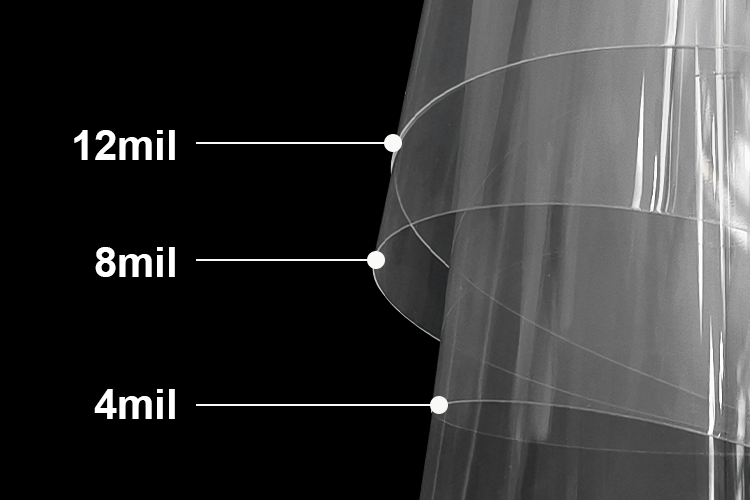
Choose the right safety film thickness (2mil, 4mil, 8mil, 12mil) for optimal glass protection against impact and shattering
Film thickness in safety applications isn’t a number you pick arbitrarily. It’s determined by what you need the film to do — fragment retention, delayed forced entry, blast mitigation — and by the standard the application needs to meet. This guide maps thickness to application so the specification decision is clear.
What Thickness Actually Does (and Doesn’t Do)
More thickness = more material to absorb and contain energy.
When glass breaks under impact, the safety film must absorb the kinetic energy of the fragments and hold them in the film matrix. Thicker film has more material for this energy absorption. It also has more physical resistance to a tool attempting to cut or tear through the film-glass assembly.
What thickness doesn’t determine alone:
Performance isn’t just about raw thickness. The TPU base material quality, adhesive bond strength, and installation method (particularly frame attachment) all affect real-world security performance. A 12 mil film with substandard adhesive and no frame attachment may perform worse than an 8 mil film with quality adhesive and properly executed frame attachment.
That said, for comparable product quality, thickness drives the performance tier.
The Thickness Tiers in Practice
4 mil (100 microns) — Basic Fragment Retention
What it does: Holds glass fragments together after breakage. The primary protection is against secondary fragment scatter injuries from accidental glass failure.
What it doesn’t do well: Meaningful forced entry resistance. An attacker can punch through 4 mil film relatively easily after the glass breaks.
Performance characteristics:
Fragment retention under impact: Yes
Forced entry delay: Minimal (5–15 seconds additional vs unprotected glass)
EN 12600 rating: Typically Class B3 or B2
Right for:
Basic safety code compliance for glass in public areas
Schools and healthcare where the primary concern is accidental injury
Skylights and overhead glazing where fragment scatter is the hazard
General occupant safety improvement in buildings with older annealed glass
Residential low-level glazing and glass doors (accident protection)
6 mil (150 microns) — Standard Safety
What it does: Strong fragment retention with modest forced entry delay. The step up from 4 mil provides noticeably better performance in sustained impact scenarios.
Residential safety applications where some security benefit is desired
Schools and healthcare where moderate security is also a consideration
Buildings in storm/hurricane zones (wind-borne debris protection)
8 mil (200 microns) — Security Grade
What it does: Meaningful forced entry resistance. This is where safety film transitions to security film — the additional material and tensile strength make penetration through the film-glass unit a sustained effort.
The frame attachment threshold: At 8 mil, frame attachment becomes important. The intact glass-film unit is strong enough to resist push-through if properly attached to the frame. Without frame attachment, even 8 mil film can be defeated by pushing the unit inward after breaking the glass.
Performance characteristics:
Fragment retention: Excellent
Forced entry delay: Significant (60–120 seconds with frame attachment)
EN 12600 rating: B1 or A (highest classes)
Smash-and-grab resistance: Sufficient to deter most opportunistic attacks
Right for:
Retail smash-and-grab prevention
Ground-floor commercial security
Schools, banks, government offices, pharmacies
Any application where forced entry delay is required alongside fragment retention
Hurricane/storm protection where the highest available film protection is desired
12 mil (300 microns) — High-Security
What it does: Extended forced entry resistance. A properly installed 12 mil security film installation with frame attachment can withstand 120–180+ seconds of sustained tool attack — significantly beyond 8 mil.
Performance characteristics:
Fragment retention: Maximum for film-based protection
Forced entry delay: Extended (120–180+ seconds with proper frame attachment)
EN 12600 rating: Class A1 (highest impact class)
LPS 1270 compliance: Achievable with appropriate frame attachment
Right for:
High-value retail (jewellers, luxury goods)
Banks and financial institutions
Government and institutional buildings
Any building where a professional, determined attack is a credible threat
15 mil and above — Blast Protection
What it does: Blast mitigation — holding shattered glass fragments together under blast overpressure conditions. The increased tensile strength and energy absorption capacity of 15 mil+ products is designed specifically for the high-energy, rapid-loading conditions of a blast event.
Frame attachment is non-negotiable: Blast film without structural frame attachment (mechanical or wet-glazed) provides limited blast protection. The system specification — film + frame attachment type — is the product in blast applications.
Certifications: GSA PBS-P100, UFC 4-010-01, ISO 16933.
Right for:
Government and embassy buildings
Military and critical infrastructure
Buildings in terrorism-risk environments
Any application where formal blast resistance certification is required
Thickness Selection by Application Summary
Application
Minimum Thickness
Frame Attachment
Primary Standard
Residential accident prevention
4–6 mil
Not required
ANSI Z97.1
Schools — basic safety compliance
4–6 mil
Not required
EN 12600 B2/B3
Commercial general safety
6 mil
Not required
EN 12600 B2
Retail — light smash-and-grab
8 mil
Recommended
EN 12600 B1
Retail — serious security
8–10 mil
Required
LPS 1270 / UL 972
Banks, jewellers, pharmacies
10–12 mil
Required
LPS 1270 Class 2+
Government, blast risk
15+ mil
Required (mechanical)
GSA / UFC
Hurricane/storm (existing buildings)
8 mil
Recommended
ASTM E1886 equivalent
FAQ
Is thicker always better for a given application?
Not if the thicker product creates installation problems (reduced conformability around frames) or significantly increases cost without a commensurate security improvement for your specific threat. 8 mil with proper frame attachment typically provides better forced entry resistance than 12 mil without it. Specify what the threat requires rather than defaulting to the thickest available.
Can I layer two 4 mil films to get 8 mil performance?
No. Multi-layer film application creates adhesion problems between the layers and does not achieve the same performance as a single-ply 8 mil product. Always specify single-ply product at the required thickness.
Does increasing thickness affect solar control or clarity?
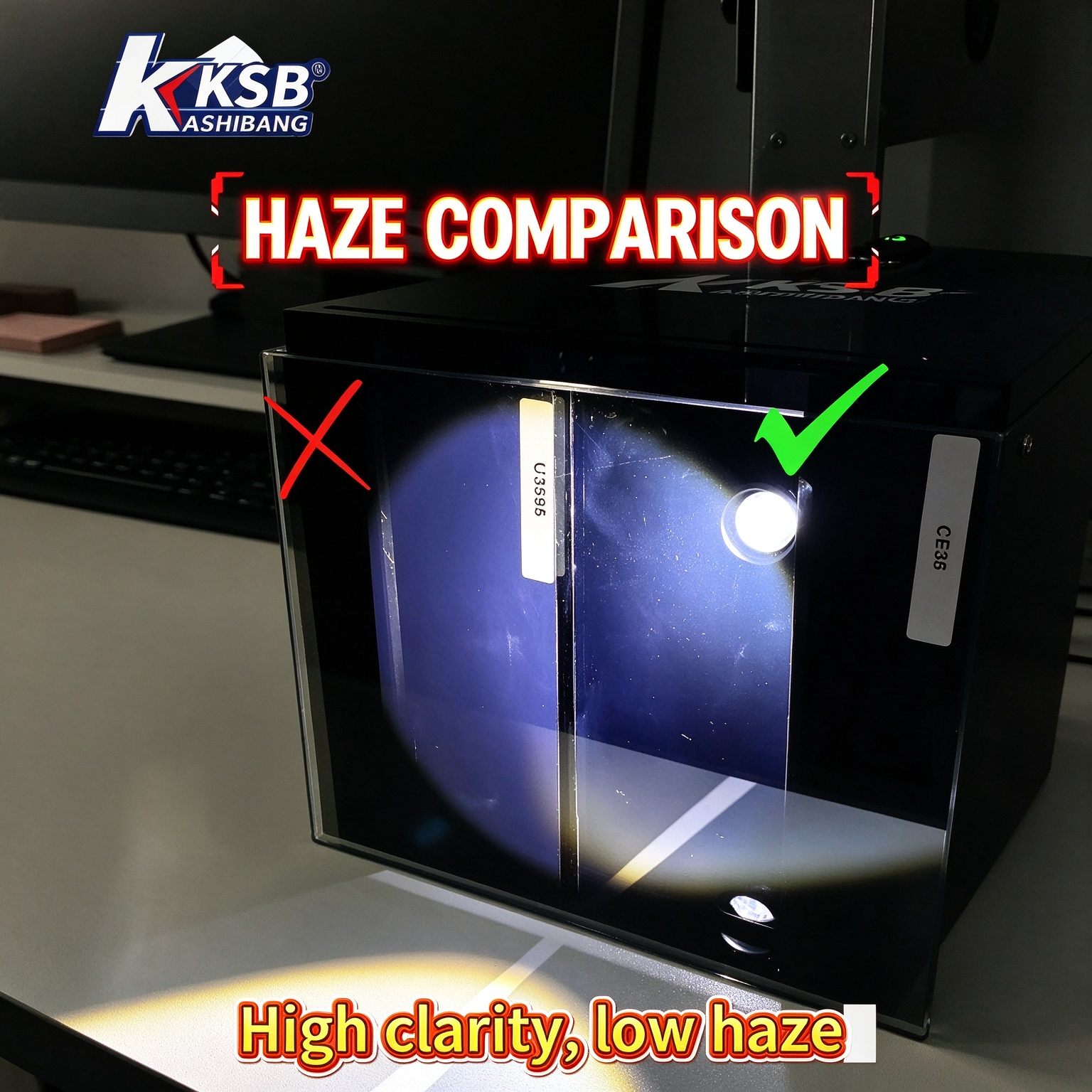
In clear safety film, marginal optical effect at higher thicknesses — virtually undetectable in normal conditions. Tinted safety film (which combines solar control with safety performance) has VLT determined by the tint, not the thickness. Clear safety film at any thickness from 4–15 mil is essentially optically transparent.
KSB’s Safety Film Range Covers Every Thickness Requirement
KSB Window Film manufactures safety film from 4 mil to 12 mil with EN 12600 certification documentation. Our technical team can advise on the correct thickness and frame attachment specification for your specific application.