Security Window Film for Retail Stores: Smash-and-Grab Prevention Guide
Published:August 31, 2026 · 8 min read · Category: Safety & Security Film
About this article: KSB Window Film manufactures security film for retail applications globally. Smash-and-grab prevention is the largest single commercial security film application we supply — this guide reflects our direct project experience across retail categories.
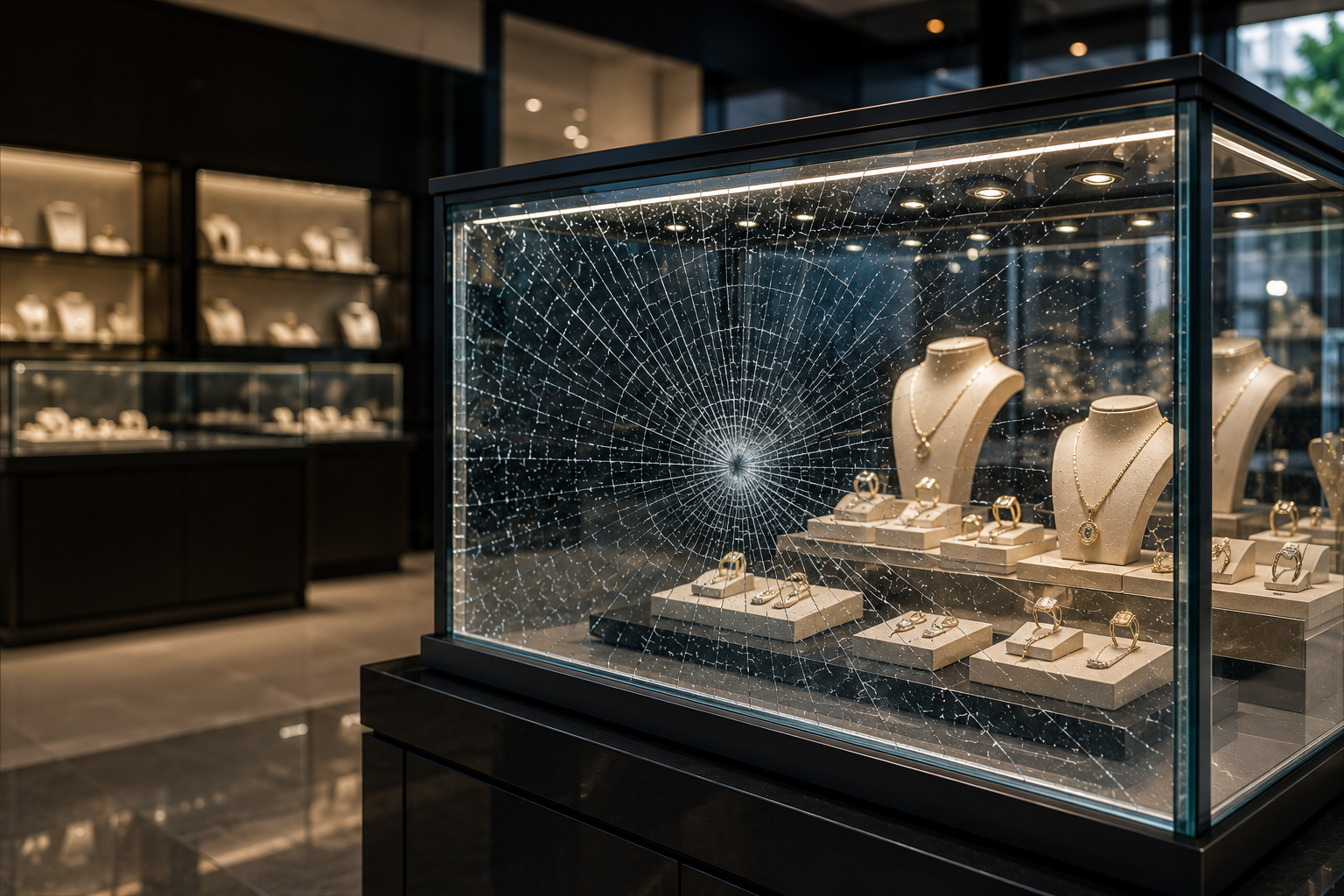
Security window film helps reinforce retail display glass, delaying smash-and-grab attacks while protecting valuable merchandise.
Retail smash-and-grab incidents have increased in frequency across most Western markets over the past three years. The contributing factors — economic pressure, reduced consequences for certain theft categories in some jurisdictions, the visibility of high-value merchandise in well-lit shopfronts — have made smash-and-grab an increasingly attractive proposition for opportunistic criminals.
Security window film is the most cost-effective first-line physical deterrent available to most retailers. This guide covers how to specify it correctly and how to integrate it into a complete retail security approach.
Why Smash-and-Grab Happens (and How Film Changes It)
Smash-and-grab is almost always opportunistic. The attacker evaluates three things:
Value visible through the window (worth targeting?)
Time to penetrate (can I do this fast enough?)
Perceived risk (alarm? CCTV? security guard?)
Without security film, the answer to question 2 is “yes” — unprotected retail glass can be cleared in 3–5 seconds. The event is over before most alarm systems complete their delay and activate a response.
With 8 mil security film and frame attachment:
The glass breaks, but the opening is blocked by the film-glass unit
Penetrating the film requires 60–120+ seconds of sustained physical effort
The alarm is activated on glass breakage (not on penetration)
The physical effort of defeating the film is visible and audible
Most opportunistic attackers abort at 20–30 seconds when the attack is obviously prolonged
The film doesn’t need to make the window impenetrable. It needs to make the attack take long enough that the risk calculation changes. For most smash-and-grab criminals, that threshold is around 30–60 seconds.
Retail Security Film by Merchandise Type
Different retail categories face different specific risk profiles, which affects the specification.
Fashion and General Merchandise
Risk profile: Moderate value individual items, high volume. Attacks typically target display window merchandise — accessible in the first few seconds through an unprotected window.
Specification: 8 mil clear security film with perimeter attachment tape.
The clear film doesn’t affect the display window appearance — merchandise is fully visible through the glass. Frame attachment is essential for preventing push-through. This specification handles the vast majority of fashion and general merchandise smash-and-grab scenarios.
Electronics Retail
Risk profile: Higher individual item value, compact and portable. Attackers willing to spend slightly more time than for fashion merchandise.
Specification: 8–10 mil security film with wet-glazed frame attachment.
The higher value of the target justifies the step up from 8 mil to 10 mil and from tape attachment to wet-glazed attachment. The marginal additional delay (90 vs. 60 seconds) has a disproportionate deterrent effect at this value threshold.
Jewellers and Luxury Goods
Risk profile: Highest value per item, compact targets. Professional criminal element more likely. Willing to sustain longer attacks.
Specification: 10–12 mil security film with mechanical frame attachment, or combination of security film and laminated glass replacement.
Jeweller smash-and-grab is often more organised and professional than general retail — the specification needs to reflect this. LPS 1270 Class A2 or A3 is the appropriate performance target. Insurance requirements from specialist jewellery insurers often specify minimum attack resistance standards.
Pharmacies and Drug Stores
Risk profile: Cash, medications with street value. Combined smash-and-grab and overnight break-in scenarios. Often located in areas with higher crime rates.
Specification: 8–10 mil security film with frame attachment on external glazing. Consider 12 mil on counter areas adjacent to prescription storage.
Pharmacy-specific consideration: if controlled substances are stored in areas visible from the shopfront, consider additional privacy film on the lower portion of windows to reduce visibility of storage areas.
Supermarkets and Convenience Stores
Risk profile: Lower value per item, higher attack frequency. Cash in registers. ATM units.
Specification: 8 mil on entrance glazing and any vulnerable display windows. Additional specification around ATM enclosure glazing if applicable.
The economics of security film for convenience stores require attention to installation cost vs. expected incident frequency and loss — the ROI calculation needs to work for a lower average incident value than for jewellery or electronics.
The Complete Retail Security Film Specification
A common mistake in retail security film specifications is treating film as a standalone solution rather than a system. The complete specification includes:
The film: Correct thickness and product for the threat and merchandise type.
Frame attachment method: Always specified. Tape for standard retail, wet-glaze or mechanical for higher-value applications.
Glass break detection: Alarm activation on glass breakage (not on penetration) is essential. The alarm must be monitored — unmanned alarms are largely ineffective as a deterrent.
CCTV: Coverage of all external glazing with adequate resolution for facial identification. Footage retention that supports police investigation.
Response protocol: Who responds to the alarm, how fast, what they do. If the film buys 60 seconds and the response time is 10 minutes, the deterrent is the film — not the response. If the response is 2 minutes, the combination is highly effective.
After an Incident: What to Expect
When a security film installation is attacked:
If the attack was unsuccessful: The glass is broken and will need replacement or repair, but the merchandise is safe. Remove the film and glass, replace the glass pane, and reinstall film. Inspect the frame attachment for any damage and repair before reinstalling.
If the attack succeeded (film was penetrated): Document the attack damage thoroughly for police and insurance. Replace the film after glass repair. Review whether the specification needs upgrading — if the attack took 120+ seconds and succeeded, consider the next tier of product.
Film that was subjected to a sustained attack should be replaced even if it didn’t fail. The film’s structural integrity may have been compromised in ways not visible to the eye. Don’t rely on previously attacked film for continued security performance.
ROI for Retail Security Film
The economics are typically straightforward:
Annual smash-and-grab incident probability (varies by location, merchandise type, local crime statistics): 5–30% per year for vulnerable retail locations.
Average incident cost (merchandise loss + glass replacement + insurance excess + staff time + lost trading): $5,000–$50,000 depending on merchandise value.
At a 15% annual incident probability and $10,000 average incident cost, the expected annual cost without film is $1,500 — equal to the film installation cost. After year one, the film is pure risk reduction.
For higher-value merchandise or higher-frequency attack locations, the ROI is significantly more favourable.
FAQ
Should I use tinted or clear security film for my shopfront?
Clear for most retail — it doesn’t affect display visibility or change the appearance of the shopfront. Tinted security film (typically light reflective) is used where daytime privacy of the interior is also desired (pharmacy storage areas, back-office zones behind the display).
My shopfront has a glazed door as well as windows. Should I film the door?
Yes. Glass doors are often lower-resistance than adjacent windows because the frame hardware creates structural rigidity that can be exploited. Doors should be specified with the same security film and frame attachment as the windows.
Will my landlord allow security film installation?
Interior-applied security film typically falls within tenant improvement rights in most commercial leases. Confirm with your lease terms before proceeding. External modifications or visible appearance changes may require landlord consent.
KSB Window Film manufactures clear and tinted security film for retail applications — from 8 mil for standard smash-and-grab prevention to 12 mil for high-value jewellery and luxury retail. Frame attachment specification and installer guidance included.