Forced Entry Delay Film: How It Works and What the Test Data Shows
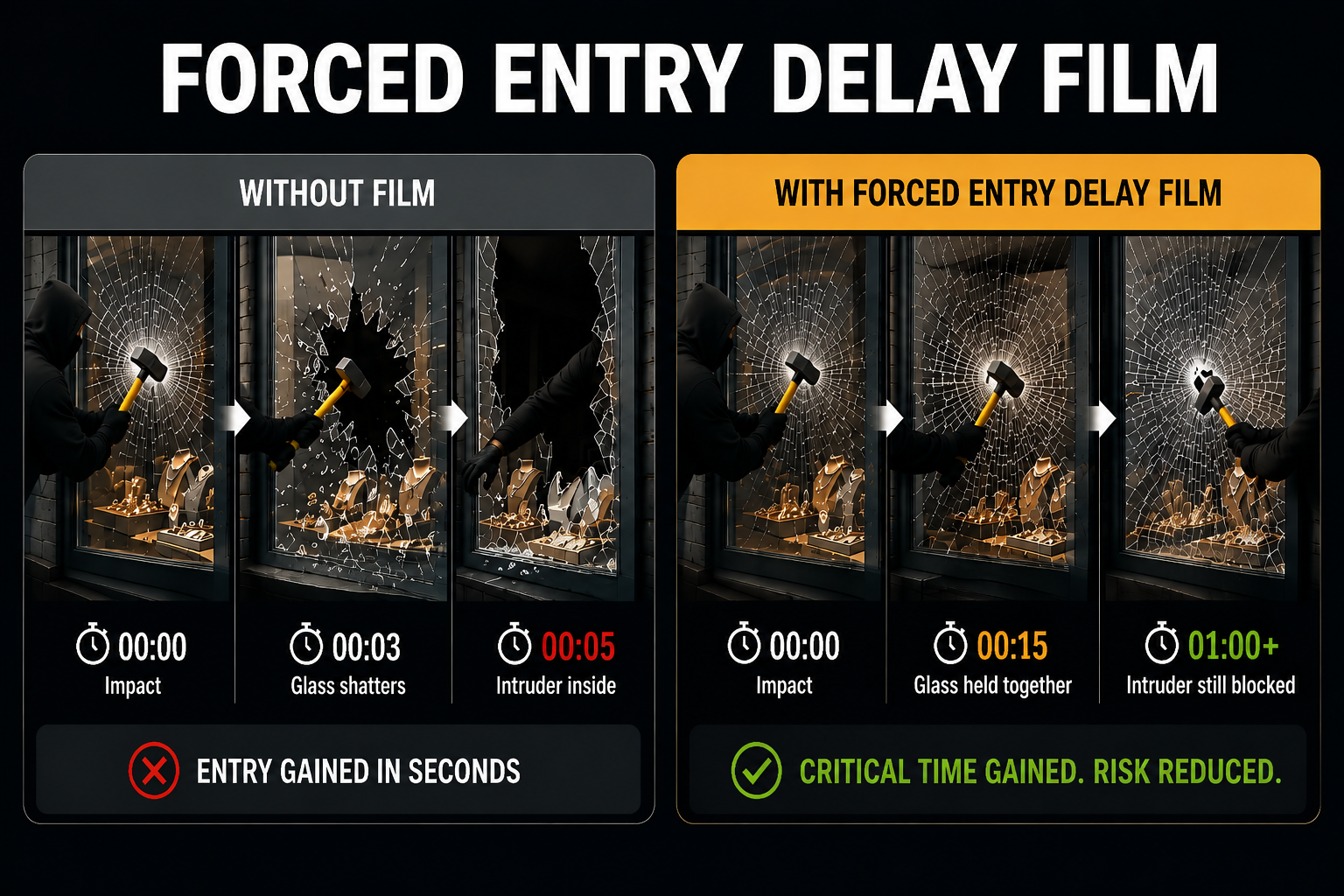
Learn how forced entry delay film works, how security film is tested, and what real-world performance data shows. This guide explains standards, frame attachment, and expected forced entry resistance levels.
Window Film for Double-Glazed and Low-E Glass: What’s Compatible?
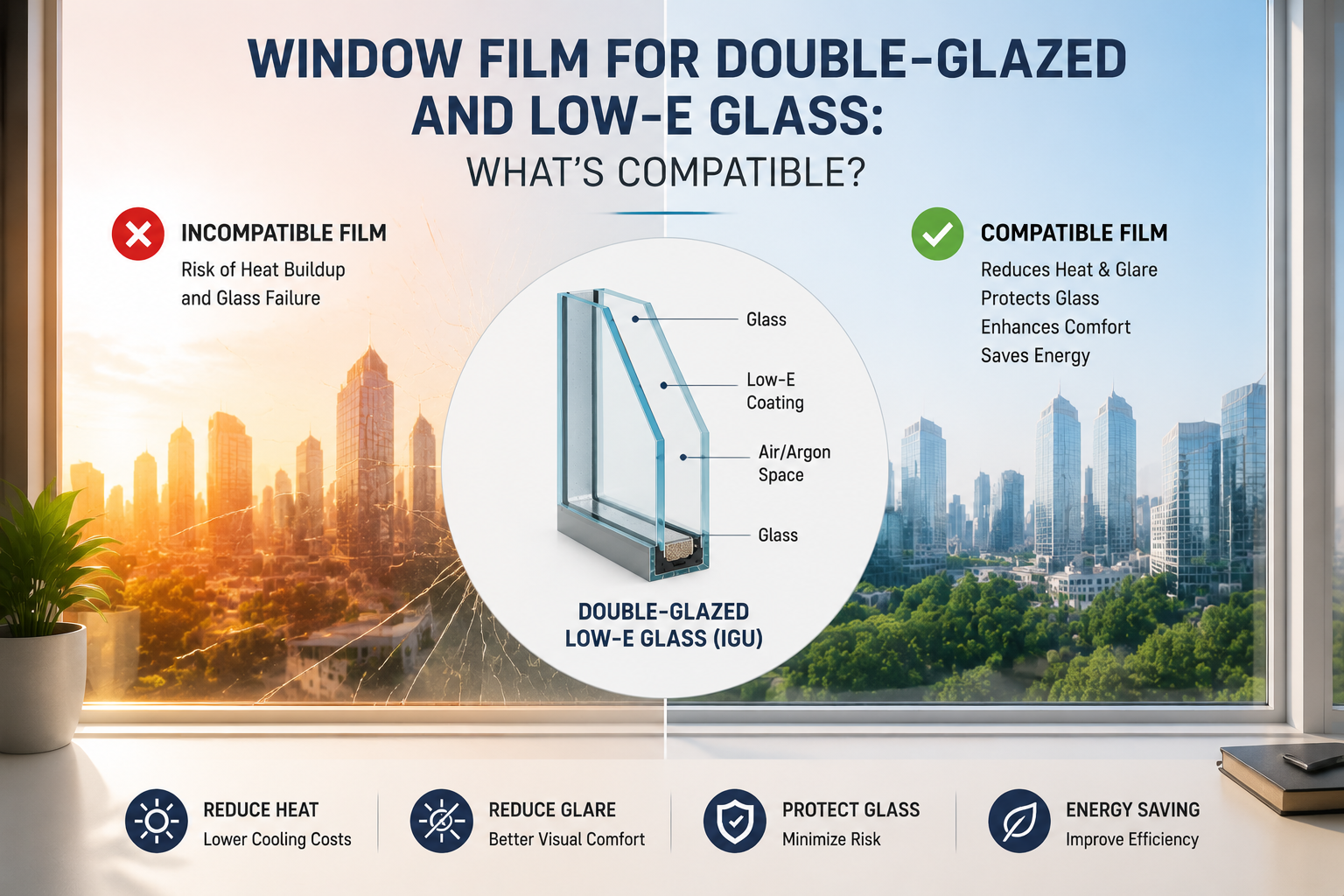
This article explains compatibility considerations when applying window film to double-glazed (IGU) and Low-E glass. It highlights how thermal stress cracking can occur if high-absorption films are used incorrectly, and why absorption factor, glass type, and coating position are critical for safe specification. It also outlines generally compatible film types, borderline cases, and the importance of obtaining manufacturer approval before installation.
Smash-and-Grab Protection Film: How to Stop Retail Window Break-Ins
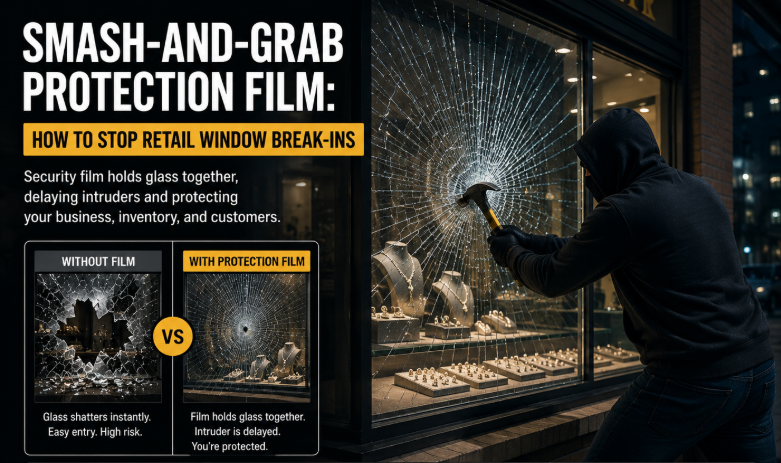
Learn how smash-and-grab protection film helps retailers delay break-ins, protect merchandise, and reduce losses. This guide explains security film performance, frame attachment, and retail security best practices.
Solar Control Window Film for West-Facing and South-Facing Windows
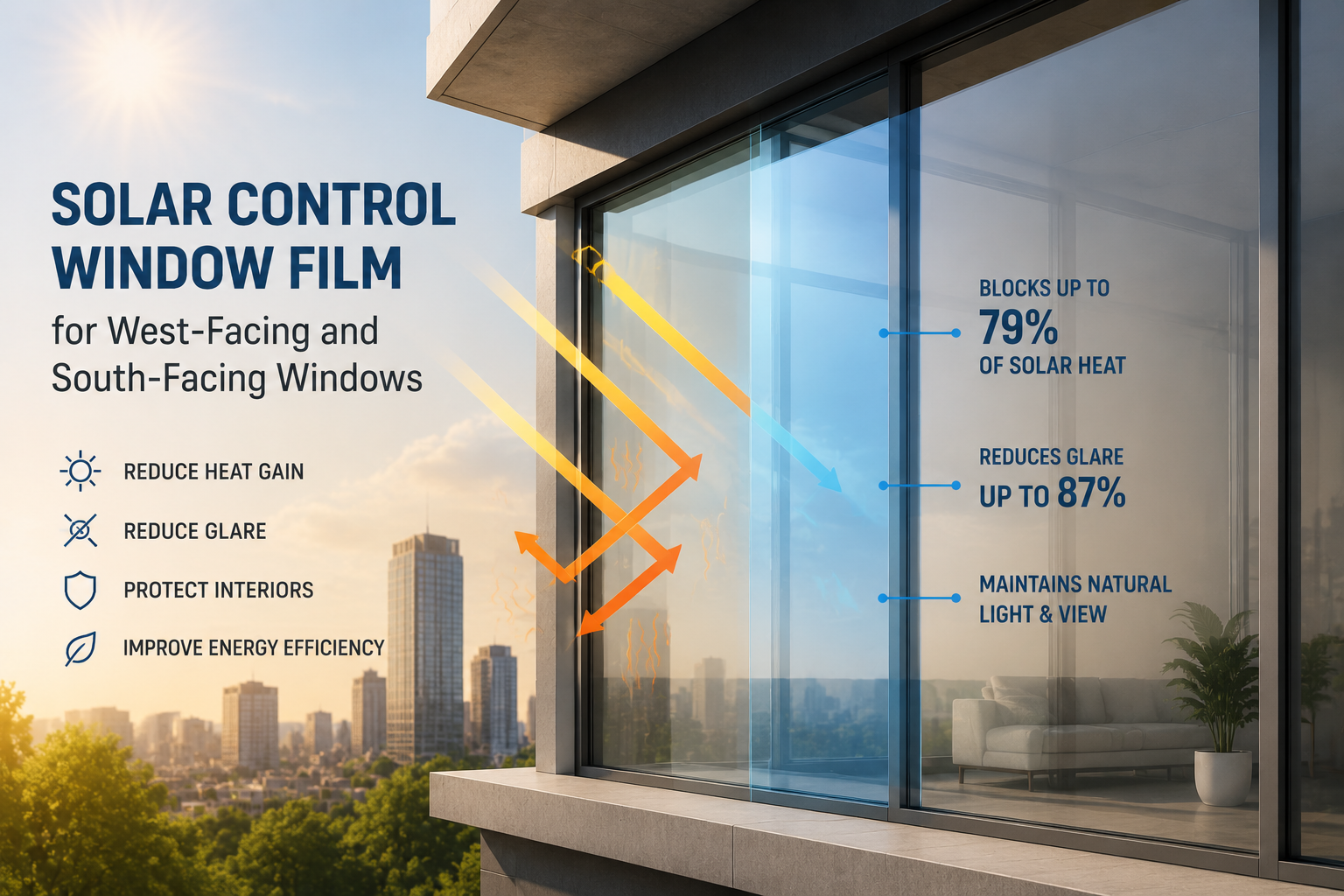
This article explains how solar control window film performance depends heavily on window orientation, especially west-facing and south-facing glass. It details why west-facing windows require the highest TSER and lowest VLT due to intense low-angle afternoon sun, while south-facing windows require a more balanced approach to heat reduction and daylight preservation. It also provides climate-based specification ranges and recommends zoning different film types across building elevations for optimal energy and comfort performance.
Blast-Resistant Window Film: How It Works and When You Need It
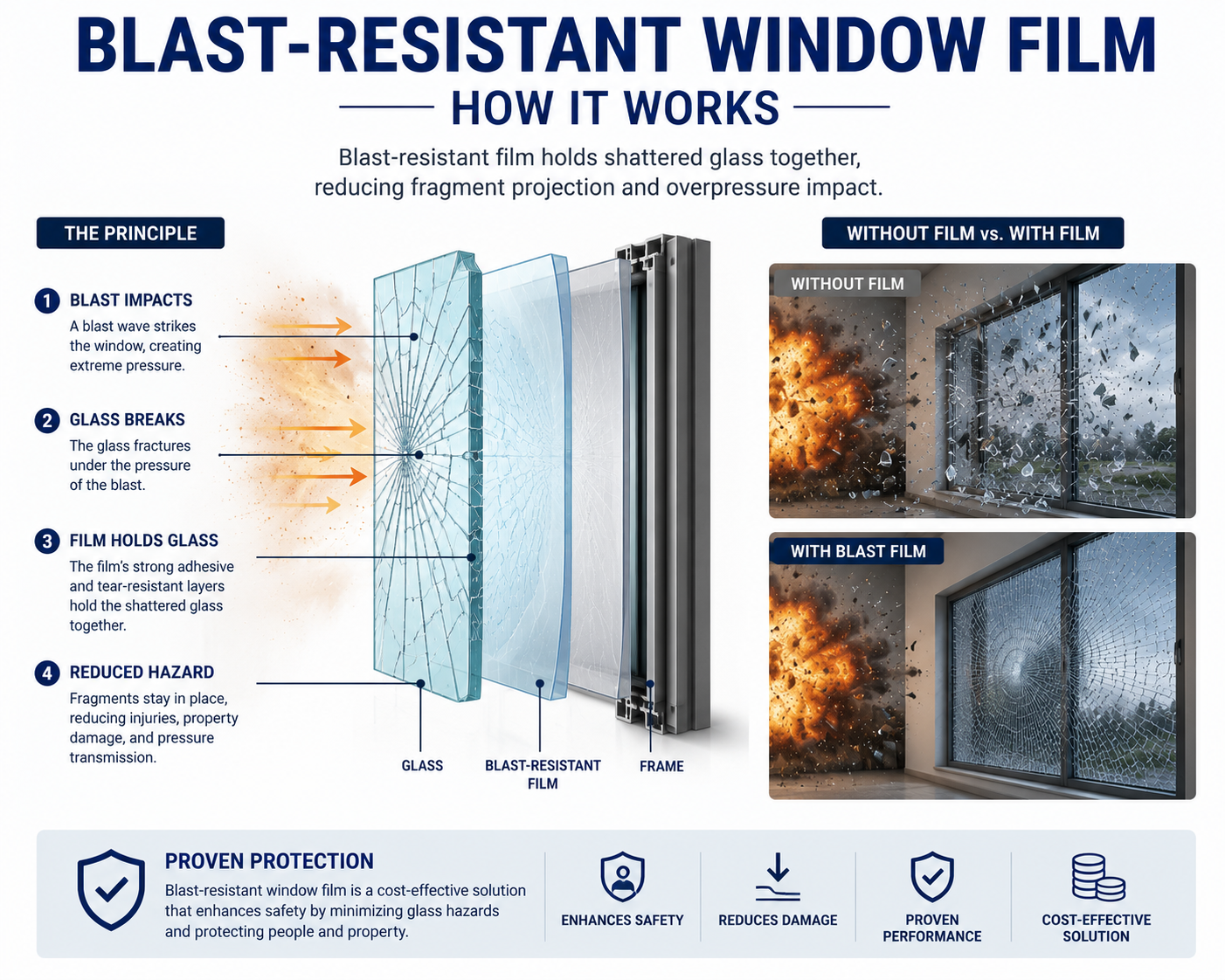
Learn how blast-resistant window film reduces glass-related injuries during explosions. This guide explains how blast film works, certification standards, frame attachment requirements, and where blast protection is necessary.
Anti-Glare Window Film for Offices: How to Fix Screen Glare Without Losing Natural Light

This article explains how anti-glare window film reduces screen glare in office environments without blocking natural light. It breaks down the causes of glare (direct sun vs diffuse reflections), compares VLT and haze tradeoffs, and explains how different film types—neutral, reflective, and spectrally selective—affect visual comfort. It also shows how zoning film by facade orientation can optimize glare control while preserving daylight.
Safety Film Thickness Explained: 4 mil, 8 mil, 12 mil — Which Do You Need?
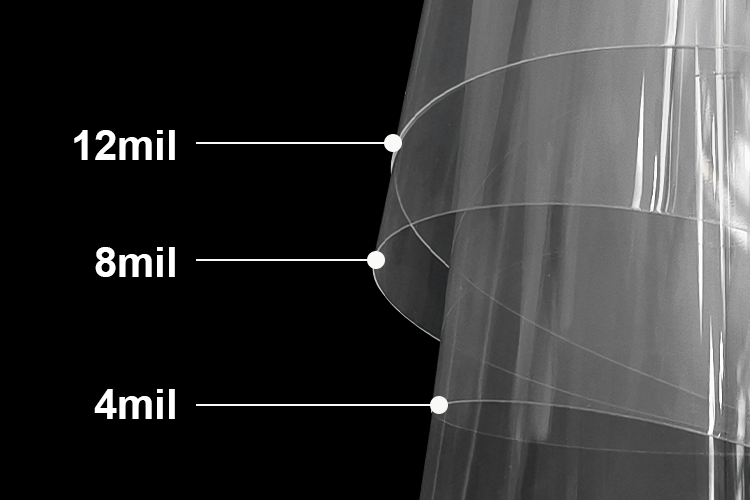
Learn the differences between 4 mil, 8 mil, and 12 mil safety window film. This guide explains thickness ratings, security performance, frame attachment requirements, and how to choose the right film for your building.
Window Film Payback Period Calculator: How Fast Does It Pay for Itself?
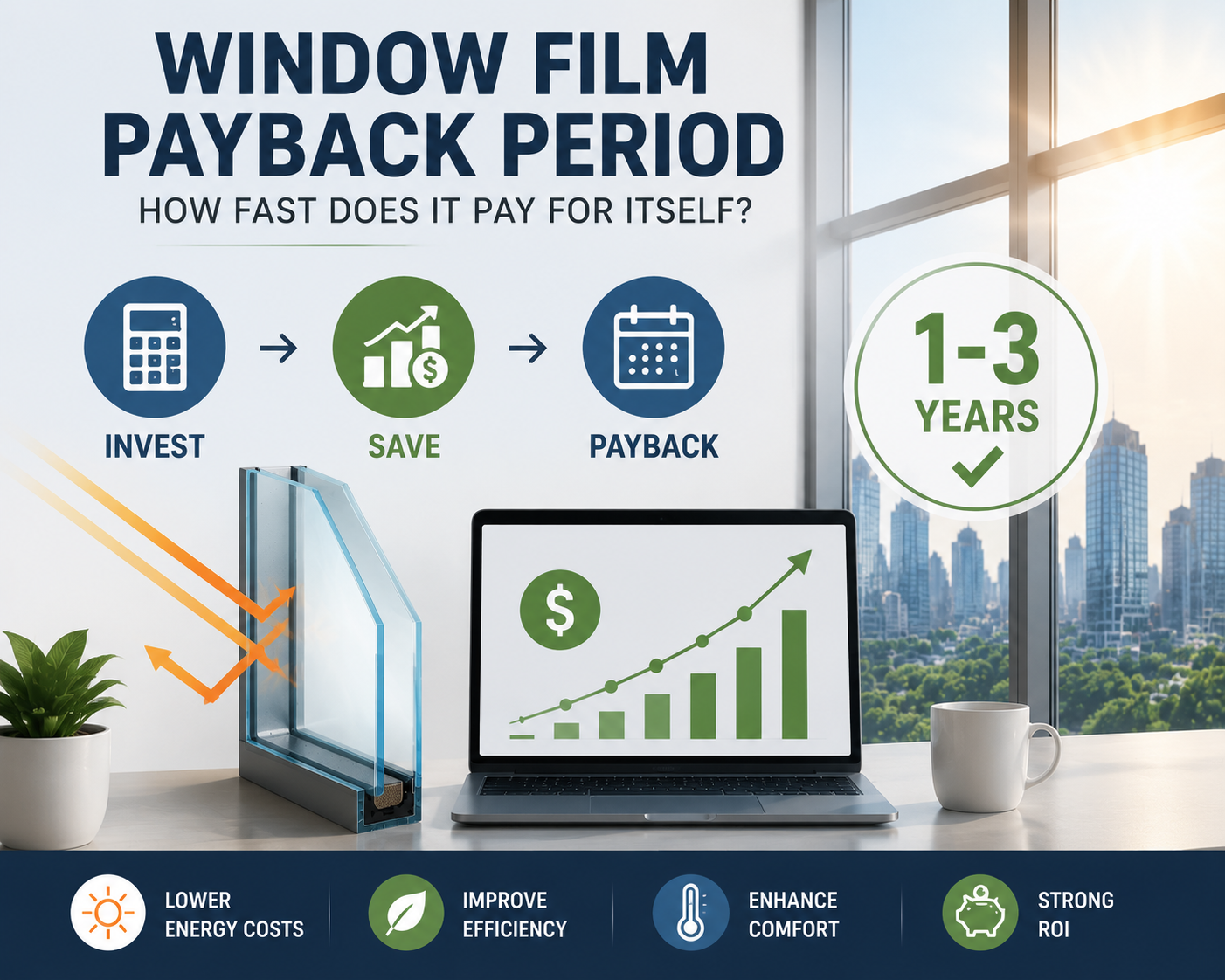
This article explains how to calculate the payback period of commercial window film using a step-by-step formula based on SHGC reduction, cooling energy savings, local energy prices, and installation cost. It also includes real-world examples showing how ROI varies by climate, glass type, and building usage, helping building owners evaluate investment return more accurately.
Safety Window Film for Residential Properties: A Homeowner’s Guide
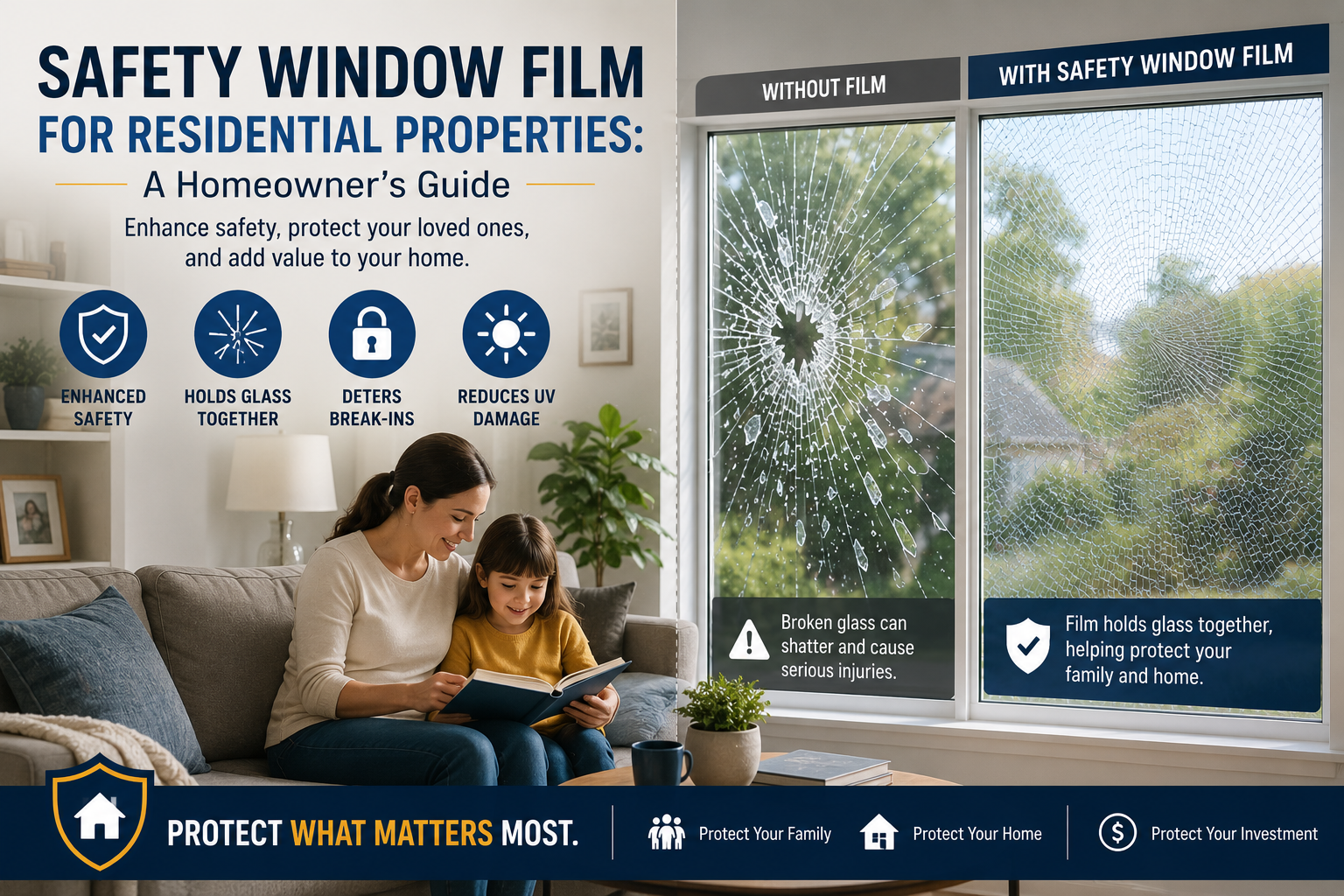
Discover how safety window film protects homes from glass injuries, break-ins, storms, and UV exposure. This homeowner’s guide explains where to install safety film, product options, and installation recommendations.
How Much Energy Can Window Film Save on Commercial Buildings?
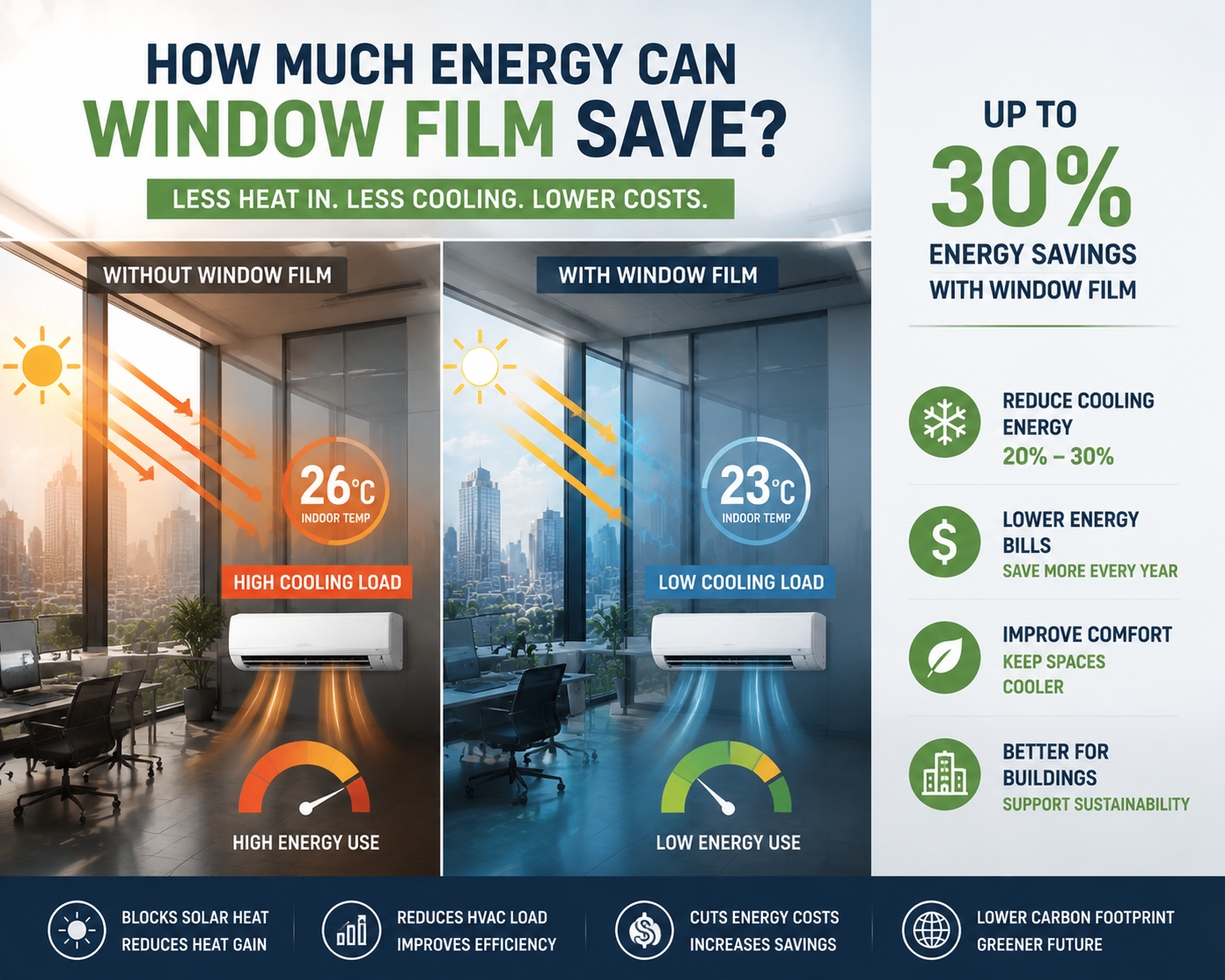
This article explains how much energy commercial window film can save, based on LBNL research, IWFA studies, and real project data. It breaks down cooling energy reduction, SHGC improvements, and ROI drivers such as climate, glass type, and film specification, helping building owners estimate real-world savings for their buildings.