Does Windshield Protection Film Really Prevent Stone Chips and Cracks?
Published: September 15 , 2026 · 7 min read · Category: Windshield Film
About this article: KSB Window Film manufactures windshield protection film and works with installers across markets with high stone-chip incidence. This article addresses the effectiveness question honestly — based on our product testing, installer feedback, and real-world evidence.
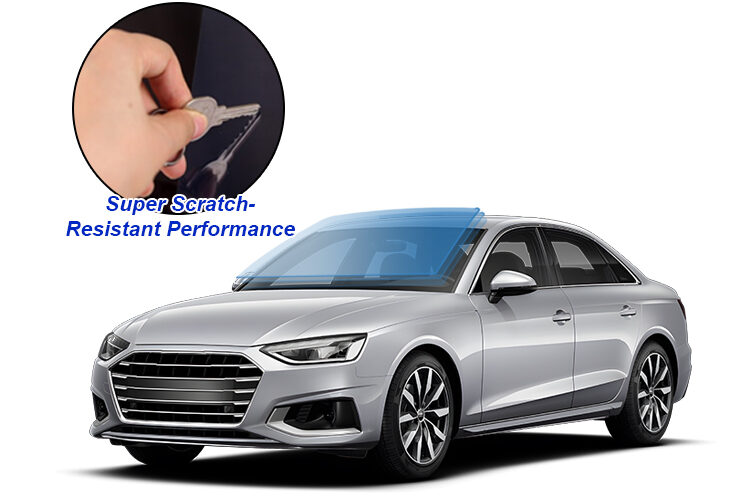
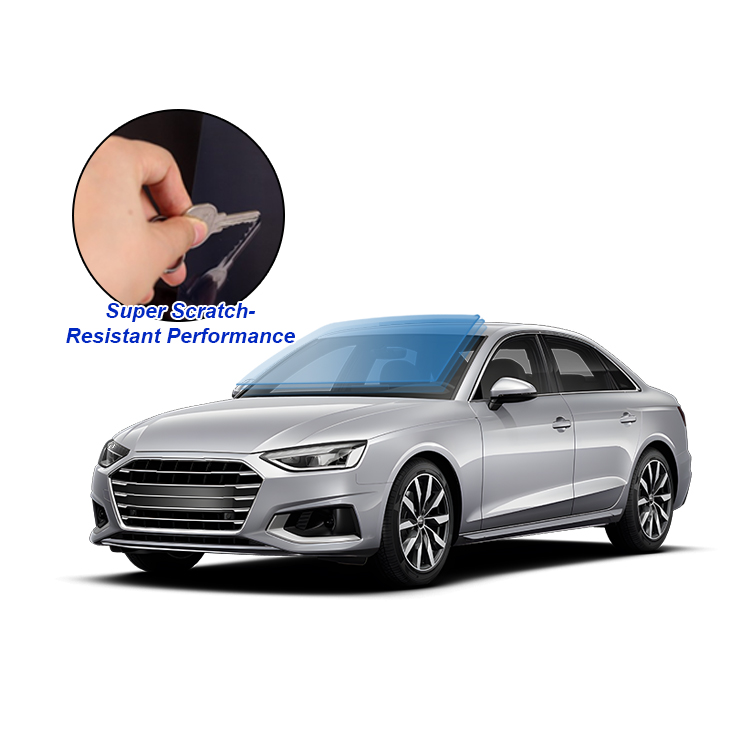
super strong scratch resistance for enhanced windshield protection.
The short answer: yes, but with important qualifications. Windshield protection film substantially reduces the frequency and severity of stone chip damage for most drivers in most driving conditions. It does not make the windshield bulletproof. Understanding the mechanism — and the limits — helps set expectations correctly.
The Physics of a Stone Chip
A stone chip occurs when a piece of road debris (stone, gravel, metal fragment) strikes the windshield at sufficient velocity to exceed the glass’s surface tensile strength at the impact point. The localised stress creates a small fracture in the glass surface — the familiar “bullseye” or star-shaped chip pattern.
Chips happen because:
The impact energy is concentrated at a small contact area
Glass is strong in compression but brittle under localised tension
At highway speeds, even small stones carry significant kinetic energy
The damage mechanism is almost always concentrated at the contact point — it’s not the stone’s hardness that matters most, but the energy density at impact.
Energy distribution: The film’s TPU or PET base material deforms elastically under impact, spreading the contact force over a larger area. The energy density at the glass surface is reduced — the same kinetic energy that would crack glass at a small contact point is absorbed and distributed.
Elastomeric absorption: The film’s elastomeric properties allow it to deform and recover — absorbing impact energy that would otherwise be transmitted to the glass. The film takes the damage instead of the glass.
Surface hardness: A film’s scratch-resistant hard coat provides a harder surface than automotive glass — resisting scratching and micro-chipping from smaller debris impacts that would otherwise accumulate as surface damage.
What the Evidence Shows
Installer feedback from fleet applications: Commercial fleet operators who’ve tracked windshield replacement rates before and after film installation consistently report reduction in replacement frequency of 40–70% for vehicles in high-chip environments.
Our own field data: KSB’s windshield film has been tested in standard stone chip impact simulations (projectiles at defined velocity ranges). At impact energies representing small-to-medium highway debris, filmed glass shows significantly reduced damage compared to unfilmed glass. At high-energy impacts (large stone, close range, high speed), both filmed and unfilmed glass sustain damage — the film may reduce severity but cannot prevent all damage.
The realistic expectation: Windshield protection film eliminates or contains the vast majority of chip events from normal highway driving debris. It does not prevent all chips from high-energy impacts.
What Film Protects Against (and What It Doesn’t)
Protected:
Small stones and gravel at normal highway speeds
Road debris scatter from vehicles ahead
Fine grit and sand abrasion (prevents micro-scratching that clouds glass over time)
Light impacts from insects and small debris at any speed
Reduced severity but not prevented:
Medium-sized stones at high speed (50–100km/h impact)
Road construction debris at moderate speeds
Not prevented:
Large rock or debris at high speed
Direct impact from roadworks equipment
Deliberate impact or vandalism
The honest framing: film provides protection across the spectrum of events that cause most real-world windshield damage. The events it cannot prevent are those at the extreme end of impact energy that represent a small fraction of actual replacement events.
What Happens When Film Is Chipped
When a stone impact hits windshield film:
Scenario A (minor impact): The film deforms under impact and rebounds. The glass is undamaged. The film surface may show a small mark — which may self-heal (on products with self-healing top coats) or remain as a small visible mark in the film. The film has done its job.
Scenario B (moderate impact): The film takes visible damage — a crater or chip in the film surface. The glass beneath may be undamaged or have a small surface chip that is contained within the film’s adhesive layer. The film has substantially reduced what would have been a significant glass chip.
Scenario C (high-energy impact): Both film and glass are damaged. The film may have reduced the damage severity, but replacement of both film and glass may be needed.
In Scenarios A and B — which represent the vast majority of highway chip events — the film has achieved its purpose. The film is replaced, not the windshield.
Crack Prevention: What Film Does Differently
Stone chips are localised damage events. Cracks — particularly the spreading cracks that cause windshield failure — typically originate from an untreated chip that propagates under thermal stress or vibration.
Windshield protection film contributes to crack prevention in an indirect but important way: by preventing or containing the initial chip, it removes the starting point for crack propagation. A chip that’s contained within the film layer (rather than in the glass itself) cannot propagate through the glass.
Film also provides a degree of stress distribution across the glass surface that can slow crack propagation from existing damage at the film edge — though this is secondary to the primary chip prevention function.
FAQ
How do I know if the film is doing its job if I can’t see obvious chips?
The absence of chips is the evidence. The counter-factual — what would have happened without the film — is invisible. Drivers who’ve switched from unfilmed windshields to filmed ones after experiencing chip damage typically report the absence of chip events as the most clear evidence of value.
What happens to the film after it absorbs a chip?
The chipped section of film can be replaced locally (patch repair) or the entire film can be replaced. Film replacement is substantially less expensive than windshield replacement. Some smaller chips in the film may self-heal (on products with self-healing top coats) — particularly surface marks rather than through-film damage.
Does film affect the windshield’s ability to crack from stress?
In standard driving conditions: no. The film adds a protective layer but doesn’t change the glass’s structural properties in a way that would cause unexpected cracking. If the glass is already compromised (existing chips, thermal stress damage), film applied over existing damage doesn’t resolve the underlying issue.
Film That Actually Protects: KSB’s Windshield Range
KSB Window Film’s windshield protection film is impact-tested and optically certified. We can provide test data on impact performance at defined debris velocities alongside optical clarity specifications.