Published: September 14, 2026 · 8 min read · Category: Sunroof Film
About this article: KSB Window Film manufactures sunroof and panoramic roof film for the automotive aftermarket, supplied to installers and distributors globally. This guide explains the product category clearly — what it is, how the technology works, and what drivers should realistically expect from it.
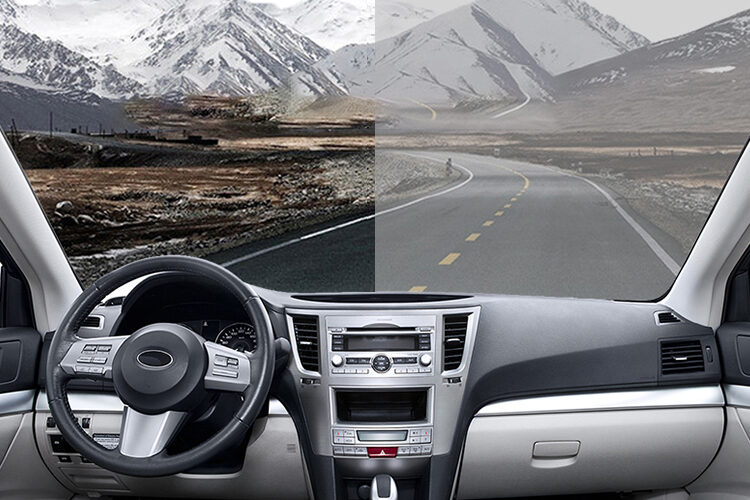
How sunroof film works to reduce UV rays, infrared heat, and glare while maintaining clear panoramic roof visibility.
The panoramic glass roof has become one of the most desirable features in modern vehicles. Airy, bright, and visually striking, it transforms the cabin experience. It also turns the ceiling of your car into a solar panel. On a clear summer day, unprotected panoramic glass can raise cabin temperatures by 15–25°C, make rear-seat passengers uncomfortable within minutes, and force your air conditioning to run at maximum just to stay manageable.
Sunroof film is the thermal response. Applied to the inside surface of the glass roof, it intercepts solar radiation before it becomes heat in your cabin — significantly reducing what enters the car while keeping the glass transparent.
This guide explains what it is, how the technology achieves its results, and what the realistic expectations are.
What Sunroof Film Is
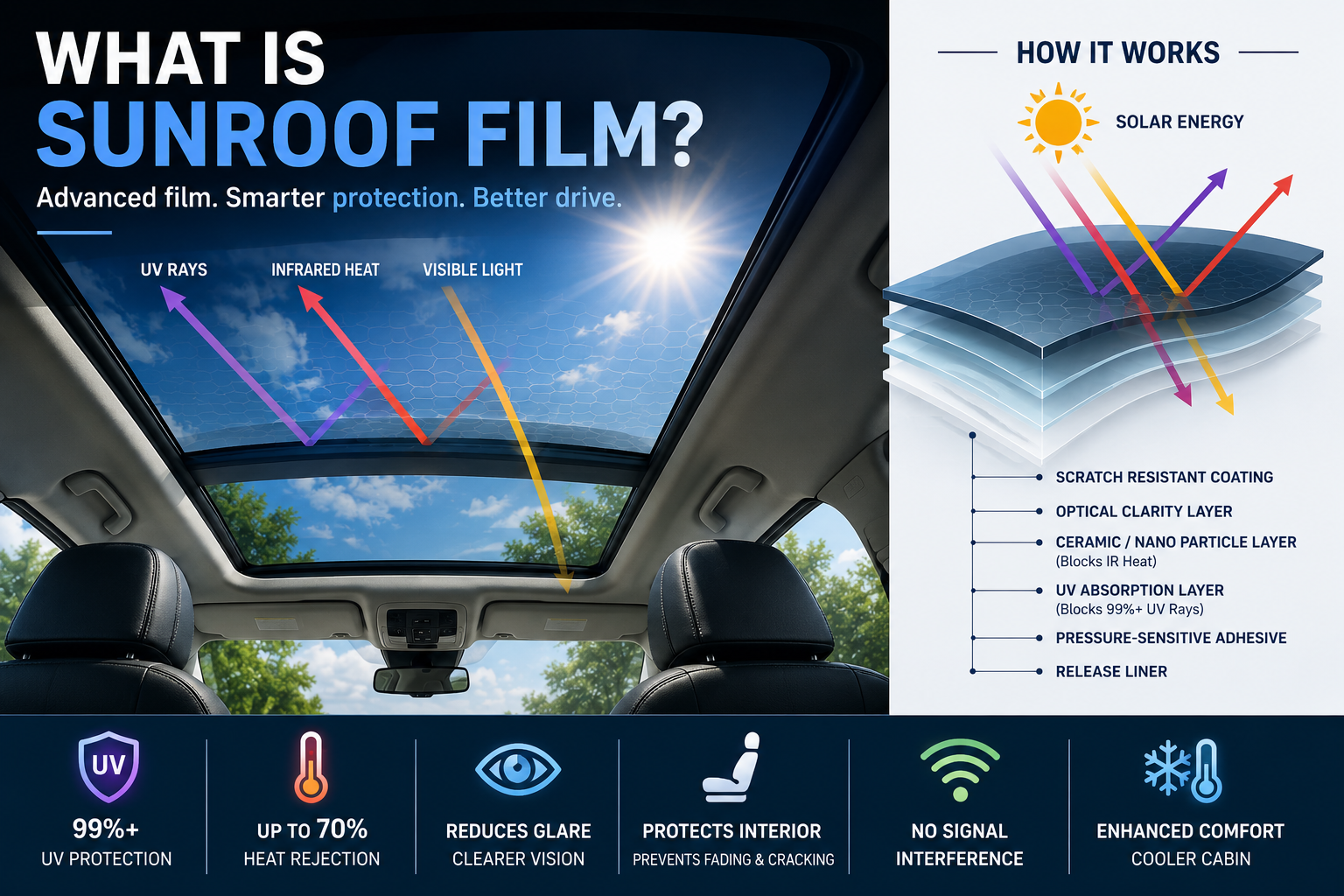
Sunroof film is a transparent or lightly tinted multi-layer polyester-based film applied to the interior surface of a vehicle’s glass sunroof or panoramic roof panel. It performs three main functions:
Solar heat rejection: The film’s coating layers intercept and either reflect or absorb solar radiation — UV, visible light, and infrared — before it passes through the glass into the cabin.
UV blocking: Quality sunroof film blocks 99%+ of ultraviolet radiation (280–380nm), protecting occupants and interior materials from UV damage.
Glare reduction: By reducing the intensity of visible light entering through the roof, film reduces the harsh overhead glare that panoramic glass creates on bright days.
Unlike window tint on door glass, sunroof film typically prioritises minimal visible light reduction — because drivers and passengers want to enjoy the open-sky feel of panoramic glass, not look through a dark ceiling. The engineering challenge of sunroof film is achieving high solar heat rejection at high visible light transmission (VLT). Premium ceramic and nano-ceramic products solve this best.
How It Works: The Solar Spectrum
To understand sunroof film, it helps to understand what’s in sunlight:
Ultraviolet (UV): 5% of solar energy. The component most harmful to skin and materials. Causes fading of leather, fabric, and plastics. Most quality films block 99%+ of UV regardless of other specifications.
Visible light: ~44% of solar energy. The component our eyes detect. VLT is the percentage that passes through the film. Higher VLT = brighter appearance.
Near-infrared (NIR): ~51% of solar energy. The “heat” component — the radiation you feel as warmth from sunlight. Invisible to the eye but responsible for the majority of solar heat gain in a vehicle.
The key insight: most of the solar heat entering through your sunroof is invisible. Blocking it doesn’t require making the glass dark. Modern ceramic sunroof film blocks 50–65% of total solar energy while maintaining 70–80% visible light transmission — allowing the open-sky appearance while rejecting most of the heat.
Premium sunroof films use ceramic nanoparticles — typically titanium nitride (TiN) or tungsten compounds — dispersed in the film’s coating layer. These nanoparticles have specific optical properties:
Strongly absorptive of near-infrared wavelengths (the heat energy)
Relatively transparent to visible wavelengths (the light your eyes see)
This selective absorption allows premium ceramic film to achieve high TSER (Total Solar Energy Rejected) at high VLT — blocking heat without significantly darkening the glass.
2. Reflection (Metalized / Magnetron Sputtered)
Metallic sunroof films use thin metal layers — typically aluminium, silver, or alloy combinations — to reflect solar radiation rather than absorb it. Reflection is more energy-efficient than absorption (absorbed energy generates heat in the glass itself, whereas reflected energy is simply redirected outward).
The trade-offs: metallic layers create a reflective appearance, and they can interfere with GPS, mobile phone, and satellite radio signals passing through the glass. On a sunroof positioned over where devices are typically used in the cabin, this signal interference can be noticeable.
3. Absorption (Carbon / Dyed Films)
Lower-tier films absorb solar radiation as their primary mechanism. The absorbed energy heats the film itself, and a portion re-radiates inward. Less efficient at heat rejection than reflection or selective ceramic absorption, but lower cost and effective for moderate protection.
What Gets Applied, Where, and How
Where: Sunroof film is applied to the interior surface of the glass. This is contrary to some expectations — drivers sometimes ask about exterior application. Interior application is standard because:
The film’s adhesive chemistry is designed for interior glass surfaces
Interior application is protected from weather, washing, and mechanical abrasion
The film doesn’t affect exterior appearance
Application method: Professional wet application using slip solution and squeegee. The installer cuts the film to the specific glass shape, applies it with slip solution, and squeegees out bubbles as the solution dries. For complex curved panoramic glass, heat and stretching tools help the film conform to the glass geometry.
Curing time: The adhesive requires 24–72 hours to fully cure before cleaning or significant temperature exposure.
Who installs it: Professional automotive film installers. The curved geometry of panoramic glass — including compound curves in modern vehicle roof designs — makes sunroof film installation more technically demanding than flat door glass. Not a DIY product for most vehicles.
What Sunroof Film Cannot Do
It doesn’t make the glass completely opaque. Even the darkest sunroof film (which is rarely the right choice for a roof) transmits some visible light. If you want complete blackout, an opaque panel or shade is the solution.
It doesn’t cool the glass itself. The glass surface temperature on a hot day is still high with film installed. Film reduces the heat entering the cabin, not the temperature of the glass surface.
It doesn’t substitute for air conditioning. It reduces the cabin heat load, which allows A/C to work more efficiently and maintain target temperature more easily. It doesn’t create coolness independently.
It doesn’t provide structural protection. Sunroof film is not a safety film — it doesn’t hold glass fragments together in an impact. If safety film for the roof glass is desired, this is a separate product category.
FAQ
Does sunroof film affect the electric sunroof’s open/close mechanism?
When properly installed, no. The film is applied to the interior glass surface; it doesn’t affect the mechanical frame, seals, or drive mechanism. Incorrect installation with film applied to or near the frame seals can create problems — correct installation terminates the film within the glass surface, well clear of moving parts.
Is sunroof film visible from outside the car?
Clear or lightly tinted sunroof film is essentially invisible from outside. The glass may appear very slightly darker depending on the VLT, but high-VLT ceramic film at 70–80% VLT is difficult to distinguish from unfilmed glass at normal viewing distances.
How long does sunroof film last?
Quality interior-applied automotive ceramic film: 5–10 years under typical conditions. UV exposure through the glass is significant for a roof application — the UV-absorbing properties of the film itself mean it absorbs the UV that would otherwise pass through. Premium films with HALS UV stabilisers in the film construction maintain performance over longer service lives.
Source Sunroof Film for Your Installation Business
KSB Window Film manufactures ceramic, nano-ceramic, and carbon sunroof film for panoramic roof vehicles, with TSER and VLT documentation for each product. Sample rolls and installer pricing available.