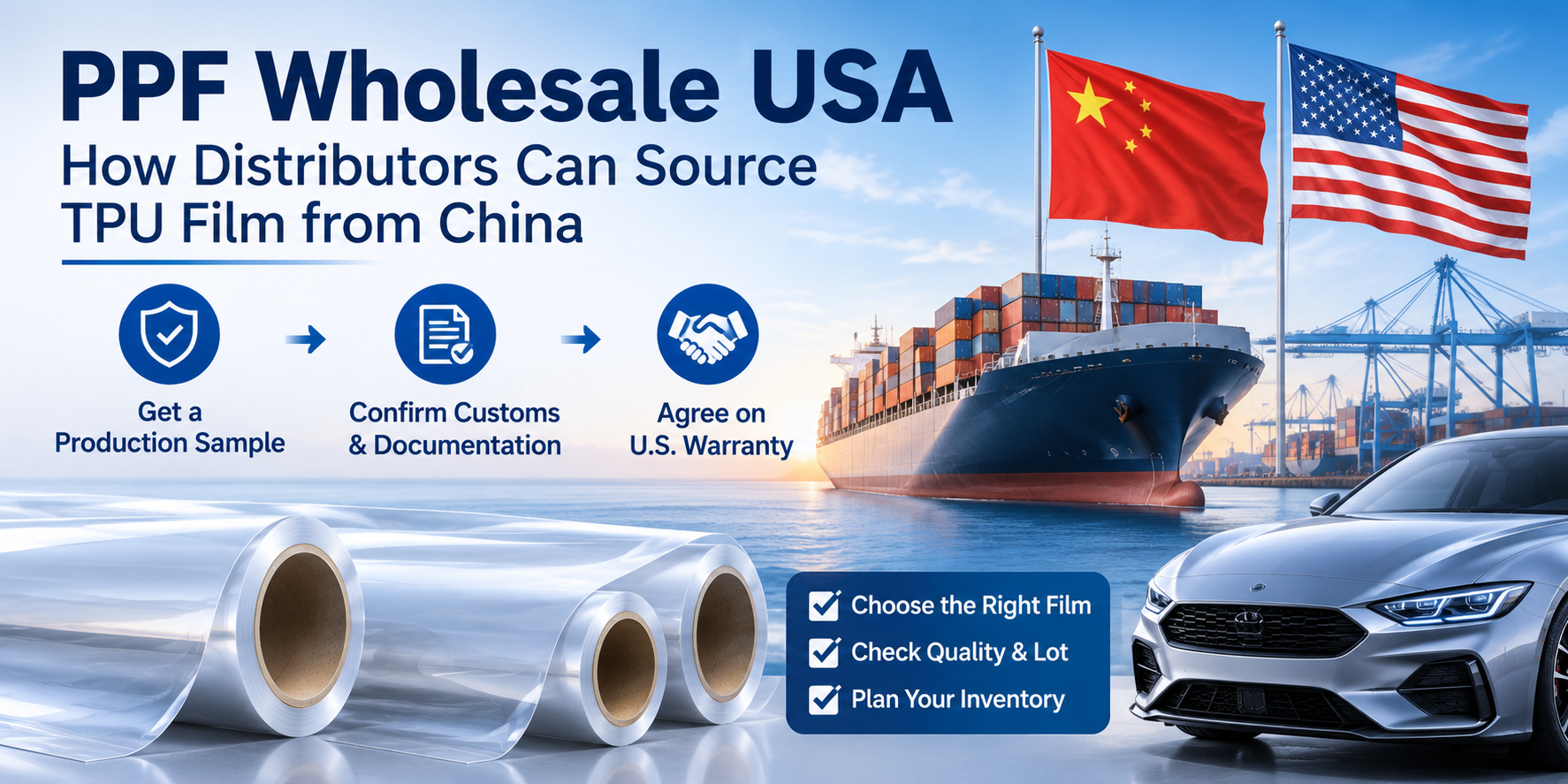
If you buy PPF wholesale for the USA, start with one clear gloss TPU film your installers can reorder confidently. Before you commit to a pallet from China, get a production sample in their hands, ask your customs broker to review the product and shipment details, and agree with the factory on who handles U.S. warranty claims. Those three steps tell you more about the order than a low factory price per roll.
Start with the film your installer accounts will reorder
Give the factory the exact roll size, finish and thickness you want to replace. If your shops order in inches and feet, confirm the actual dimensions in both unit systems on the quote and label. A 1.52 × 15 m roll is about 59.8 in × 49.2 ft. If a shop or cutting program requires a full 60 inches or 50 feet, confirm that width or length separately.
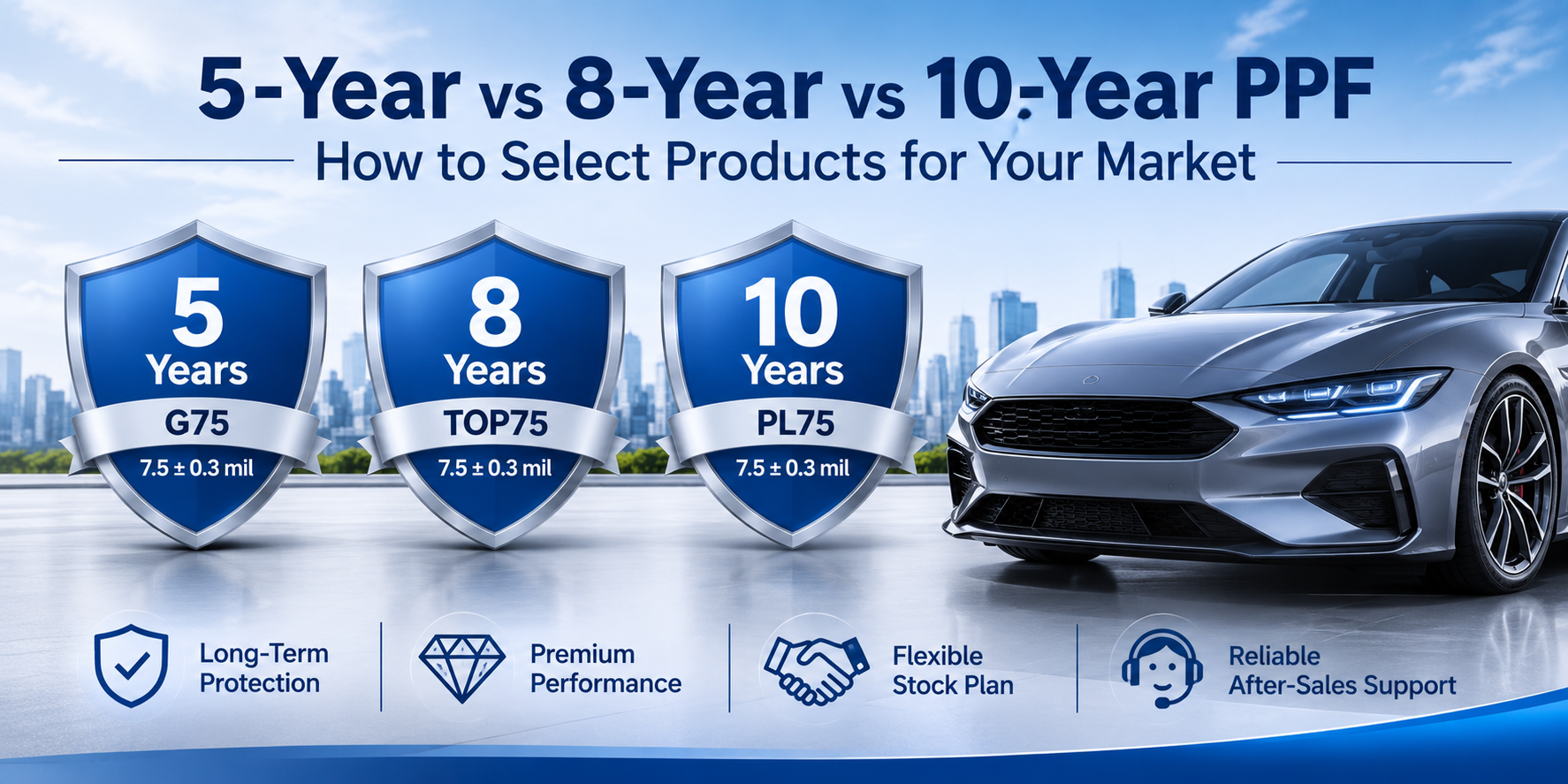
For a clear gloss trial, KSB’s D75 and TOP75 both list 7.5 ± 0.3 mil thickness. D75 has a listed six-year warranty and TOP75 an eight-year warranty. Compare them on the bumper, hood or mirror work your accounts do most often. Ask installers to record repositioning, edge finish and any rework at a scheduled follow-up. Get the exact warranty wording for the model and market before quoting coverage to dealers. Compare KSB PPF specifications and see the sample-roll testing guide.
Ask for quality documents and check the lot number
| Ask the factory for | What to verify |
| Model-specific technical data sheet | Revision, layer construction, thickness and tolerance, roll dimensions, and test methods for any values you plan to use in sales material |
| Supporting test reports | Exact model tested, test conditions and results. For a yellowing claim, ask how color change was measured and under what exposure. |
| Sample label and example QC record | Lot identifiers, which measurements are tracked, and what evidence will be available for your production lot |
| Written warranty for your U.S. channel | Eligible defects, exclusions, required records, who approves claims, and who covers film, labor and freight |
Keep the approved roll label, photos and TDS with the purchase order. Agree on what the factory will check before shipment and what your warehouse will check on arrival. When cartons come in, match the carton and roll identifiers to the shipment records. If an installer reports an issue later, those identifiers let you find the related stock and give the factory a specific batch to investigate.
Confirm U.S. entry and delivery before ordering
Send your broker a description of the finished film, its construction, how it is supplied, the declared origin and a draft commercial invoice. Ask the broker to review the tariff classification, customs value, applicable duties and additional tariffs, marking, and any bond or filing requirements for the shipment. CBP explains that the importer remains responsible for compliance when using a broker. Read CBP’s guidance on using a customs broker.
Ask the supplier for the packing list or packing data, including rolls per carton, pallet dimensions and gross weight. Agree on the named delivery point, who acts as importer of record, who pays which charges, and when the warehouse can receive the shipment. For a delivered quote, request a written breakdown of what is included. Confirm the finished product’s origin and marking with your broker before printing private-label cartons, including when the supplier describes the TPU base as sourced from another country. Review CBP’s commercial invoice guidance.
Set channel and reorder terms before you scale
If you sell through installer accounts and online, identify which SKUs and packaging go to each channel. Discuss whether the factory already supplies the same branded SKU in the U.S., who handles leads and customer claims, and how any account, territory or channel commitments will be documented. For private label, approve the artwork and decide whose contact details and warranty instructions appear on the carton. Ask how the lot code will remain visible after repackaging.
Plan the next shipment before the first one sells through. For example, if a clear gloss SKU sells eight rolls per week and takes seven weeks from reorder to sellable stock, you need 56 rolls of demand coverage. Add a two-week buffer and the example reorder point is 72 rolls of inventory position. Count sellable stock and confirmed inbound stock, subtract committed orders, and check that inbound rolls arrive before you need them. Use your own sales and lead times for the purchase decision.
Request a U.S. wholesale PPF quote
Tell KSB your company name, destination ZIP code, sales channel, target finish and roll dimensions, and estimated trial and repeat volumes. If you need private-label packaging, include that in the request. Ask for a model shortlist, sample options, available test data and a quote with the named delivery point so your team can compare the shipment with your current supply.
Request a U.S. PPF Wholesale Quote
Get a Free Sample or Quote
Looking for a reliable window film supplier? Contact us today for fast response and professional support.