Structure, Types, Benefits, and Heat Rejection Technology
What is Automotive Nano Ceramic Window Film?
Automotive nano ceramic window film is a heat-control film applied to car glass to improve heat rejection, UV protection, glare reduction, and driving comfort.
Unlike traditional dyed films, nano ceramic window film uses non-metal nano ceramic particles to block infrared heat while maintaining high clarity and stable signal transmission.
It is widely used on:
- Side windows
- Rear windows
- Front windshields
- Panoramic sunroofs
Automotive nano ceramic window film helps maintain a cooler cabin while protecting passengers and interior materials from strong sunlight exposure.
Why Nano Ceramic Window Film Matters
Without window film, automotive glass allows excessive heat and UV radiation to enter the vehicle.
This can cause:
- Hot cabin temperatures
- Strong driving glare
- Interior fading and cracking
- Increased air conditioning usage
Especially in hot climates, nano ceramic window film helps improve driving comfort and reduce heat buildup inside the vehicle.
Structure of Nano Ceramic Window Film
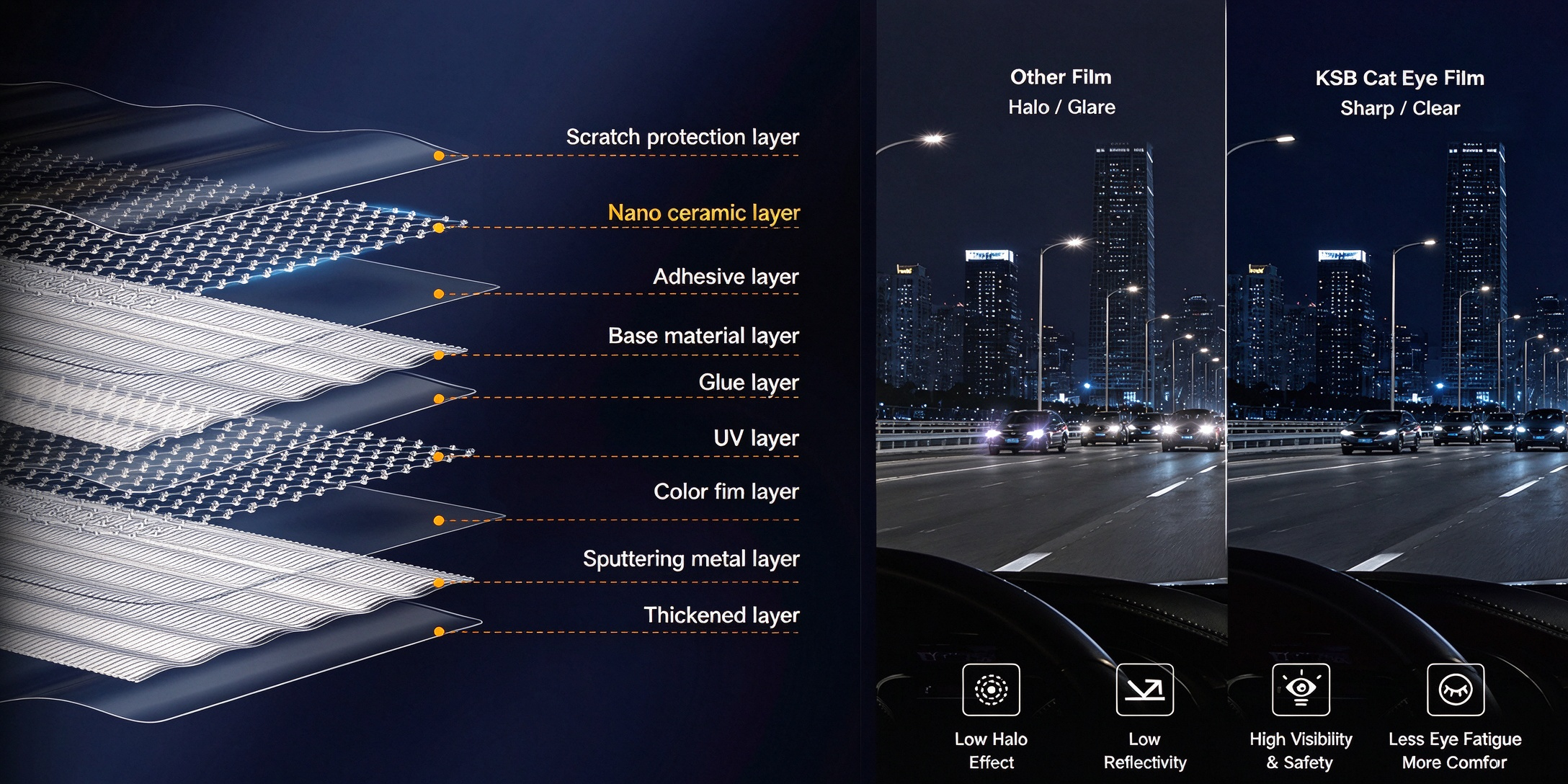
High-quality automotive nano ceramic window film is made with multiple functional layers:
- Scratch Resistant Layer – improves surface durability
- Nano Ceramic Functional Layer – controls heat and glare
- Adhesive Layer – improves installation stability and UV protection
- Release Liner – protects the adhesive before installation
The nano ceramic layer plays a major role in heat rejection, clarity, and long-term performance.
Types of Automotive Ceramic Window Film
Metalized Ceramic Film
Uses reflective metal layers for heat control.
Advantages
- Strong reflective heat rejection
Limitations
- May interfere with GPS and mobile signals
- Metal layers may oxidize over time
Non-Metal Nano Ceramic Film
Uses nano ceramic particles instead of metal layers.
Advantages
- Signal-friendly performance
- Stable heat rejection
- Lower haze and higher clarity
- Better long-term durability
Non-metal nano ceramic window film is widely used in modern vehicles because it does not interfere with electronic systems.
Nano Ceramic Film Manufacturing Technology
Different manufacturing technologies affect film performance and clarity.
Standard Mixing Technology
- Lower cost
- Larger particles
- Less stable heat insulation
High-Temperature Sintering Technology
- More uniform nano particles
- Higher transparency
- Lower haze
- More stable heat rejection
Advanced nano ceramic technology helps create high-clarity automotive window films with better heat insulation performance.
Benefits of Automotive Nano Ceramic Window Film
- Reduces cabin heat
- Blocks up to 99% UV rays
- Reduces glare during driving
- Helps protect interior surfaces
- Supports GPS and 5G signal stability
- Improves driving comfort in hot climates
Panoramic sunroofs are exposed to direct sunlight for long periods, so high-performance heat insulation film is especially important for reducing overhead heat during summer driving.
How to Choose Nano Ceramic Window Film
When selecting automotive nano ceramic window film, consider:
- Heat rejection performance (IRR)
- VLT and visibility
- Optical clarity
- Signal compatibility
- Long-term durability
Why Choose a Professional Manufacturer?
Working directly with a professional manufacturer ensures:
- Stable product quality
- OEM & ODM customization
- Strict quality control
- Competitive factory pricing
- Certification support (ISO, RoHS, REACH)
This is especially important for distributors, automotive detailers, and wholesale buyers.
Our Automotive Nano Ceramic Window Film Solutions
We provide automotive nano ceramic window films for:
All products are produced in-house with strict quality control to ensure stable heat rejection, UV protection, and long-term durability.
Get a Free Sample or Quote
Looking for a reliable window film supplier? Contact us today for fast response and professional support.