Published: June 22, 2026 · 9 min read · Category: PPF Sourcing
About this article: KSB Window Film manufactures TPU PPF for OEM and private label distribution programs. This guide reflects our direct experience in the manufacturing landscape and the criteria that distinguish reliable producers from the broader market noise.
The PPF manufacturer decision is the longest-lasting business decision you’ll make in your distribution or brand-building operation. You’ll receive their quality, their lead time reliability, and their documentation standards as your own — for better or worse. Getting this decision right is worth the evaluation effort it takes.
The Shortlist Problem
Searching “PPF manufacturer China” returns hundreds of results. Most of them are either trading companies presenting as manufacturers, or factories that produce adequate product at commodity specification but aren’t equipped to support a serious branded program.
The genuine manufacturers — companies with verified TPU film production capability, quality R&D, documented export history, and OEM program infrastructure — number in the dozens, not hundreds. The evaluation work is figuring out which category a specific company falls into.
Criteria 1: Actual Manufacturing Capability
The first question is binary: does this company manufacture PPF, or does it source finished film from elsewhere and rebrand or repackage it?
How to verify:
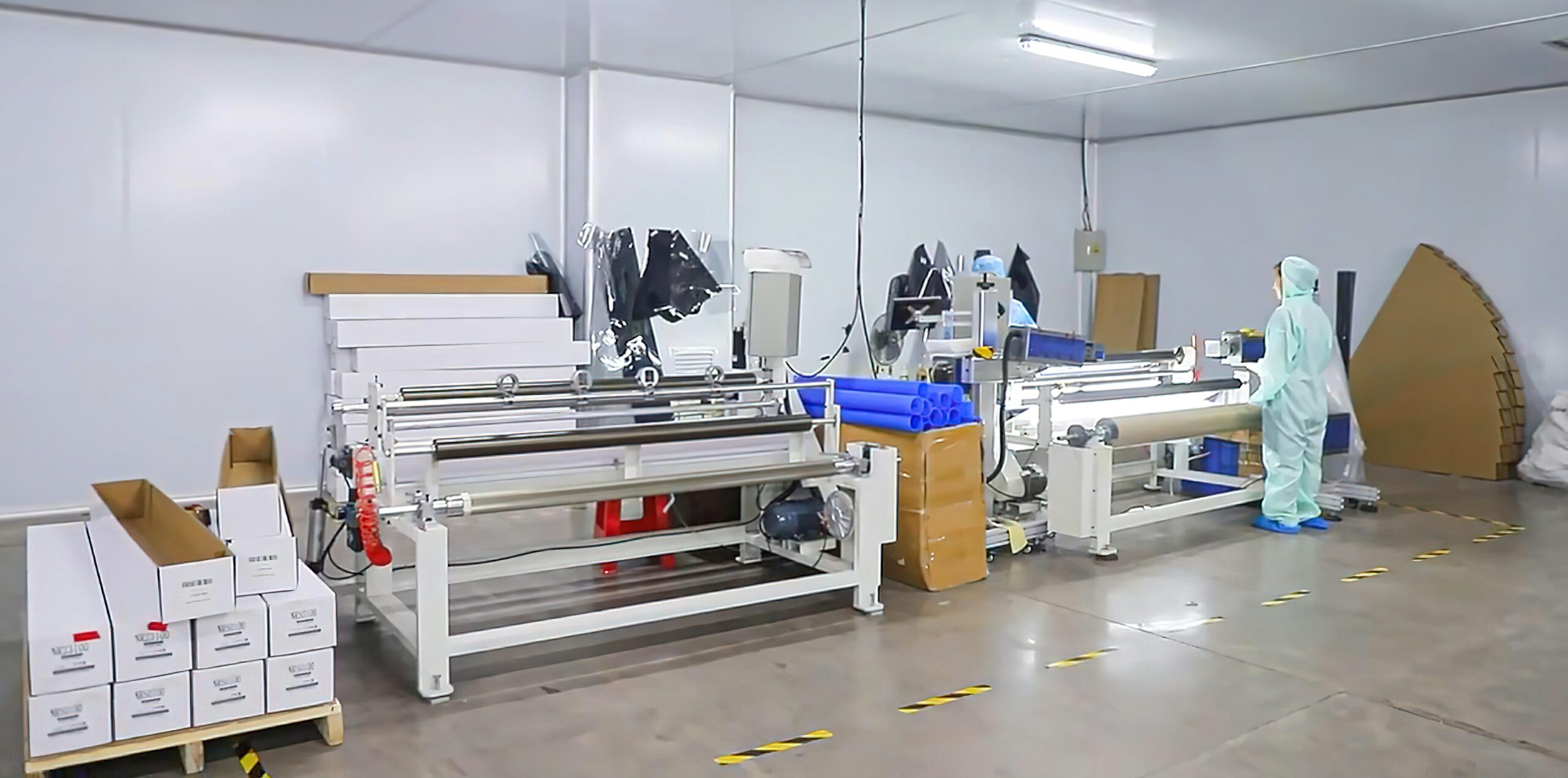
Ask for a facility video or arrange a visit. A genuine PPF manufacturer has:
- TPU extrusion equipment or documented long-term supply of TPU base film from a named supplier
- Precision coating equipment (slot-die or similar) for top coat application
- UV curing systems for top coat crosslinking
- Adhesive lamination equipment
- A functional QC lab with haze meter, adhesion tester, and UV exposure capability
A trading company or rebrander has none of these. They have a warehouse, possibly a laminating or cutting operation, and relationships with actual manufacturers.
Neither model is inherently bad — but you need to know which you’re dealing with, because their capabilities, accountability, and price structure are fundamentally different. See PPF Factory vs Trading Company: What’s the Difference? for the full comparison.
Criteria 2: TPU Quality and Source
The base TPU compound determines the film’s physical properties ceiling. A manufacturer using commodity-grade TPU cannot produce premium self-healing performance regardless of their top coat quality.
Ask: Who is your TPU compound supplier, and what grade do you specify?
Manufacturers using Covestro (Germany), Huntsman, Lubrizol, or equivalent documented-grade domestic Chinese TPU have made a deliberate quality decision. Manufacturers who can’t name their TPU supplier are either not manufacturing or not controlling their material inputs.
Quality indicators from the TPU grade:
- Elongation at break (affects conformability): 400–600%+ for premium products
- Tensile strength: 40–60 MPa range
- Shore hardness: A85–A95 range for most automotive PPF
Criteria 3: Top Coat Performance
Self-healing, optical clarity, scratch resistance, and UV stability all originate in the top coat. This is where the most significant quality variation between manufacturers lives.
What to test with a sample:
Self-healing: Scratch lightly with a fingernail, put in direct sun for 20 minutes. Premium film heals completely. Mediocre film shows partial recovery. Budget film shows none.
Haze: Install on clean flat glass. Look through it in good lighting. Haze below 1.5% is essentially invisible. Haze above 5% is clearly visible and creates a visual quality problem for premium vehicle applications.
Hardness: The pencil hardness test (3H or above is standard for quality film) confirms the top coat resists day-to-day scratching. Ask for the manufacturer’s own test data.
Criteria 4: Adhesive Quality
Adhesive is the least-discussed but most-felt differentiator in daily installation practice. A bad adhesive creates a miserable installation experience and a poor long-term result.
What characterises quality PPF adhesive:
- Initial tack: Enough to hold positioning without immediately bonding — allows the installer time to work
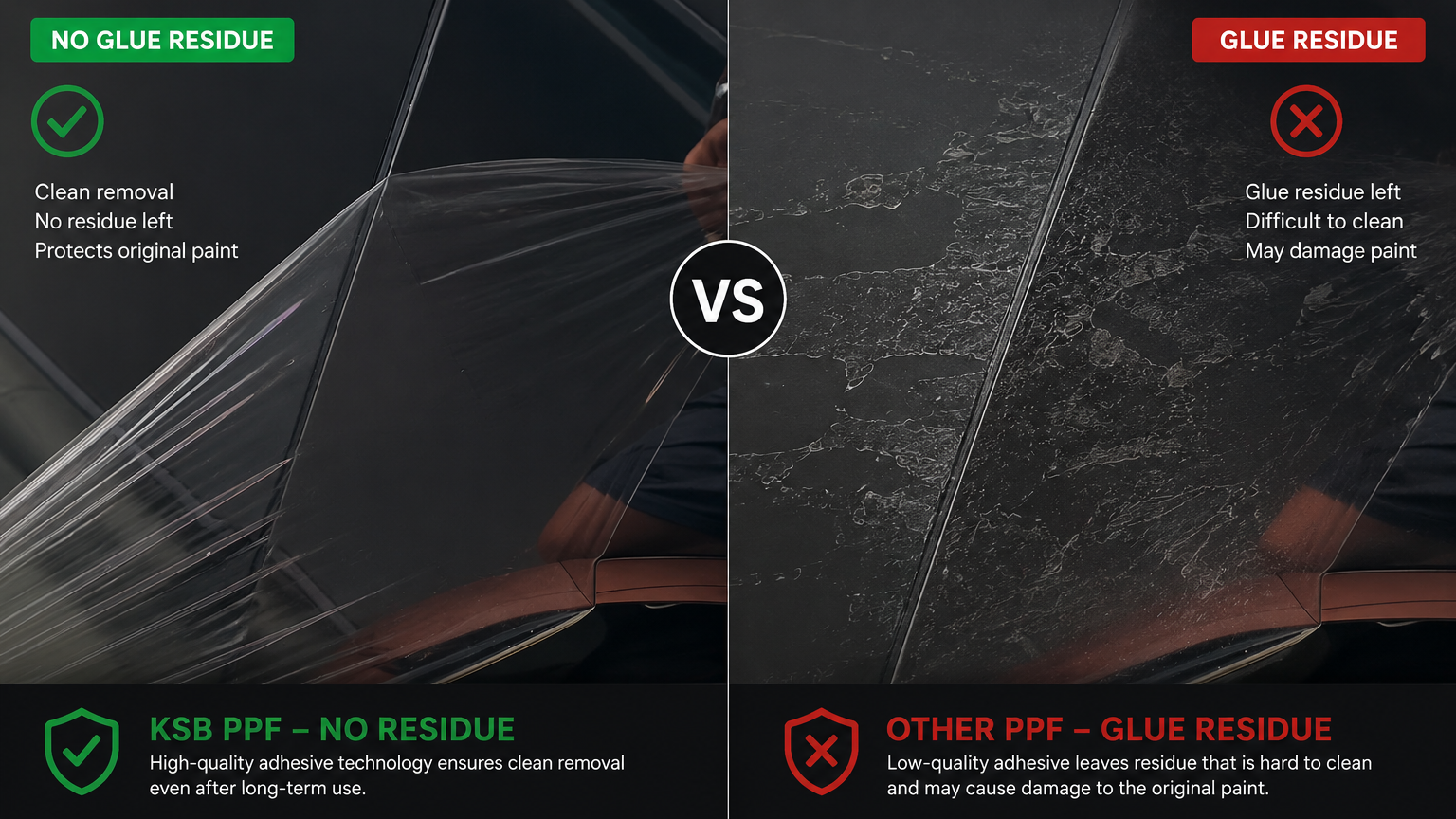
- Clean release liner: The liner peels without tearing or leaving adhesive residue
- Edge adhesion: Film holds flat at edges without lifting after temperature cycling
- Clean removability: At end of life (5–10 years), removes cleanly without leaving adhesive residue on the paint
Ask the manufacturer what adhesive system they use — acrylic PSA is standard for premium products. Ask about the temperature range the adhesive is rated for. Ask whether it’s been tested for clean removability after extended service. See PPF Adhesive Explained: Why Glue Quality Matters for technical depth on this.
Criteria 5: Quality Control Infrastructure
A manufacturer without a functioning QC system produces products that look good on samples and vary on production batches. This is the most common complaint about budget PPF suppliers — great first order, inconsistent subsequent orders.
What a functional QC system includes:
- Incoming material inspection for TPU and adhesive
- In-line optical inspection during coating
- Finished roll testing: haze, VLT, adhesion, self-healing assessment
- Batch records traceable to specific production runs
- Non-conformance documentation and corrective action records
Ask to see batch records from a recent production run. A manufacturer with a real QC system can pull this documentation quickly. One without it will deflect or produce generic paperwork.
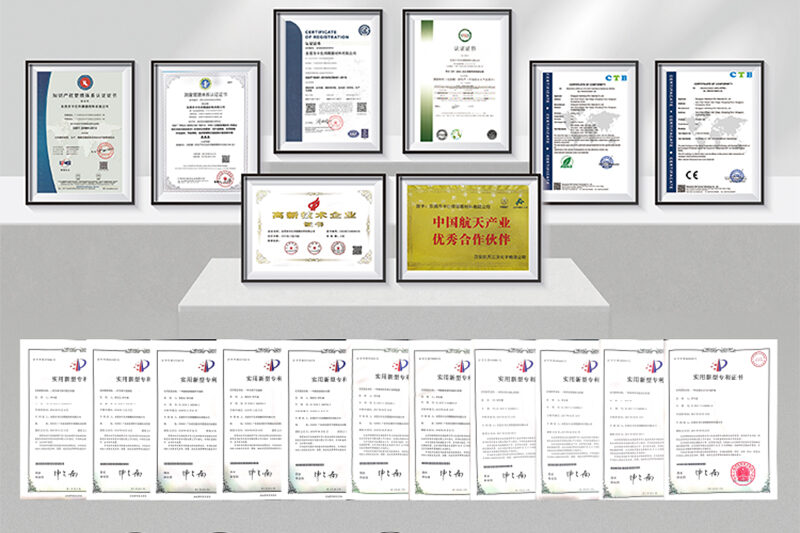
Criteria 6: OEM and Documentation Capability
For brand builders, the manufacturer’s administrative and documentation capability is as important as their production capability.
Can they:
- Provide current third-party test reports (SGS or Intertek) for specific products?
- Execute an exclusivity agreement with geographic scope?
- Manage your brand assets and produce packaging to your specifications?
- Provide export documentation appropriate for your target market?
- Support a warranty program with batch traceability?
A manufacturer who’s primarily focused on domestic or commodity export sales may not have these capabilities developed. Ask for examples — a warranty claim they’ve processed, packaging they’ve produced for another OEM client, an export documentation set for your target market.
Criteria 7: Track Record With Buyers Like You
References from actual buyers in markets similar to yours are the most reliable signal of manufacturer reliability. Not testimonials on a website — actual contact details for buyers you can speak to.
Ask:
- How long have you been buying from this manufacturer?
- Have you had quality issues, and how were they resolved?
- Have lead times been reliable?
- Would you recommend them for a first-time buyer in my market?
A manufacturer with confident, available references has earned them. One who hedges, delays, or provides references that go unanswered has not.
FAQ
How many manufacturers should I evaluate before choosing?
Evaluate three to five seriously (request samples, test them, visit or audit virtually) before making a decision. Wider than five spreads your evaluation effort too thin. Fewer than three doesn’t give you adequate comparison.
Is the cheapest reliable manufacturer worth the risk of the cheapest unreliable one?
No. The cost of a failed batch — customer complaints, replacements, reputational damage — typically exceeds the savings from cheap film across any realistic time horizon. Evaluate on total cost of ownership, not unit cost.
How do I know if a manufacturer’s exclusivity agreement is enforceable?
Chinese contracts are enforceable in Chinese courts, but the practical enforcement mechanism for a foreign buyer is limited. The more effective protection is: choose a manufacturer whose business model incentivises them to honour exclusivity (volume commitment from you, reputation risk from violation), and use the contractual agreement as a framework for the relationship rather than a legal weapon.
Further Reading
On this site:
- PPF Factory vs Trading Company: What’s the Difference? — Factory vs trading company in the PPF context
- PPF Factory Audit Checklist for Importers and Distributors — Structured audit framework
- Best Paint Protection Film Manufacturer in China (2026 Guide) — Vetted manufacturer shortlist
- Top Questions to Ask Before Buying PPF from China — Conversation guide for manufacturer evaluation
- How Long Does Paint Protection Film Last?
External:
- Panjiva Trade Intelligence — Verify any Chinese manufacturer’s actual export history
- SGS Factory Audits China — Third-party audit for pre-qualification
- Intertek Automotive Testing — Third-party product performance testing
Evaluate KSB Against Your Criteria
KSB Window Film provides transparent answers to every evaluation question in this guide — TPU supplier, top coat data, batch records, test reports, and reference buyers. We welcome factory visits and third-party audits.
→ Request KSB’s manufacturer qualification package — our export team responds within one business day.
Get a Free Sample or Quote
Looking for a reliable window film supplier? Contact us today for fast response and professional support.