What Certifications Should a PPF Manufacturer Have?
Published: July 1, 2026 · 8 min read · Category: PPF Sourcing
About this article: KSB Window Film holds ISO 9001 quality certification, SGS product test documentation, and maintains REACH compliance records for our PPF range. Certification questions from buyers evaluating suppliers are among our most common technical enquiries.
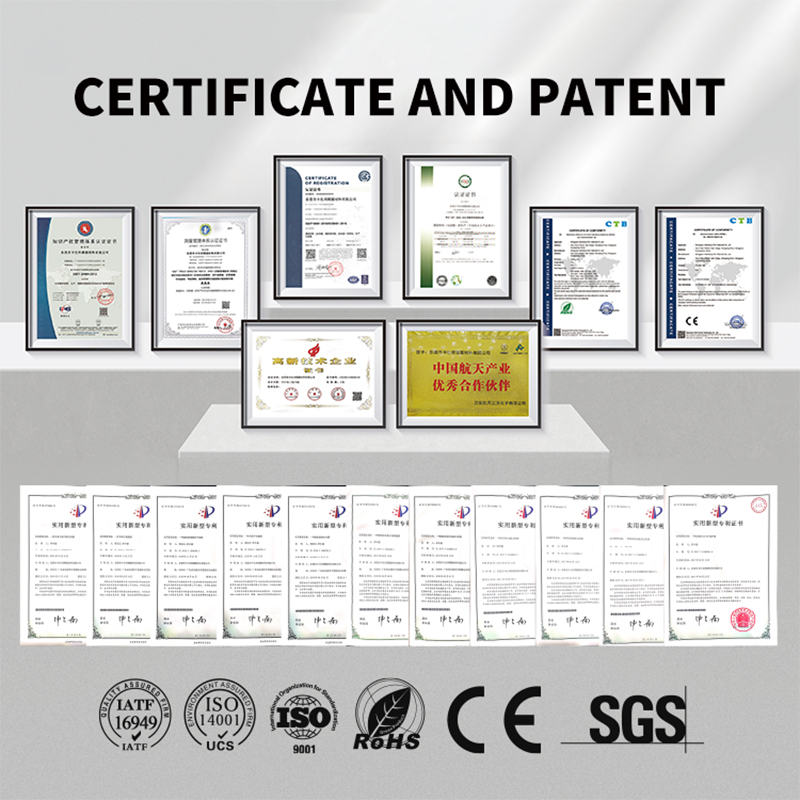
comprehensive certifications and patents including iso9001, iatf16949, ce, rohs, sgs, and multiple proprietary technologies.
Walk through any Chinese PPF manufacturer’s product listing and you’ll see a collection of logos: ISO certified, SGS tested, Intertek approved, REACH compliant, RoHS compliant. Some of these mean something specific and verifiable. Others are applied loosely. And a few are genuinely important — and frequently faked.
This guide tells you which certifications matter, what each actually proves, and how to verify them independently.
The Certifications That Matter Most
ISO 9001 — Quality Management System
What it certifies: The manufacturer has a documented, audited quality management system. This includes process documentation, internal auditing, management review, and corrective action processes.
What it doesn’t certify: Product quality. ISO 9001 certifies the management system. A factory with ISO 9001 producing poor film isn’t contradictory — it just means their quality system is failing to catch or prevent the problems.
Why it still matters: Factories with functioning quality management systems have infrastructure that makes consistent production more likely. They have procedures for handling defects, traceability for tracking problems back to root causes, and a management commitment to quality that purely-commercial operations don’t have.
How to verify: Every ISO 9001 certificate has a certificate number and a named certification body (CB). The CB should be IAF-accredited (verify at iaf.nu). Verify the certificate number on the CB’s own certificate registry. Expired certificates, certificates from non-IAF-accredited registrars, or certificates whose scope covers “trading” rather than “manufacturing” are red flags.
SGS / Intertek Test Reports — Product Performance
What they certify: Third-party laboratory measurement of specific product performance parameters. For PPF, relevant tests include:
Haze measurement (ASTM D1003): Optical clarity in the installed state
Tensile strength and elongation (ASTM D882): Mechanical properties of the TPU film
Adhesion (ASTM D3330 / peel adhesion): Adhesive bond strength
UV transmittance / UV blocking
Accelerated UV weathering (ASTM G154 or ISO 4892): Simulates years of UV exposure to assess yellowing and performance retention
What to check:
Report is product-specific (names the actual SKU, not just the brand or product family)
Dated within 12–18 months
Issued by SGS, Intertek, Bureau Veritas, or an ILAC-accredited equivalent
Test standard is referenced — ASTM, ISO, or EN — not an undefined internal method
A test report that doesn’t name the specific product, doesn’t reference a test standard, or is more than two years old is not adequate documentation for a commercial sourcing decision.
REACH Compliance (EU Chemical Regulations)
What it certifies: The product does not contain prohibited substances (from the REACH SVHC list) above threshold concentrations.
Why it matters: REACH compliance is a legal requirement for products sold in the EU. PPF contains plasticizers, adhesive chemistry, and UV stabilizers that need to be assessed against the SVHC list. Non-compliant products can be seized at EU customs.
How to verify: Request the manufacturer’s REACH declaration or Safety Data Sheet (SDS). The declaration should reference a specific assessment against the current SVHC candidate list. A generic “REACH compliant” claim without documentation is not acceptable for EU market compliance purposes.
RoHS Compliance (Restriction of Hazardous Substances)
What it certifies: The product doesn’t contain hazardous substances (lead, mercury, cadmium, hexavalent chromium, certain flame retardants) above threshold levels.
Relevance to PPF: RoHS primarily targets electrical and electronic equipment. For PPF, RoHS compliance is relevant if your product is being sold into markets where customers expect RoHS documentation for automotive or electronic-adjacent accessories. It’s not a legal requirement for PPF in most markets but is often requested by quality-conscious buyers.
OEKO-TEX Standard 100
What it certifies: Textile and related products tested for harmful substances — relevant if PPF is being positioned in markets with health-conscious consumer expectations (children’s vehicle seats, medical transport).
Practical relevance: Less commonly required than REACH/RoHS but occasionally requested by European buyers with strong sustainability commitments.
Market-Specific Certifications
US Market Considerations
No specific federal certification is mandatory for PPF sold in the US. However:
CARB (California Air Resources Board) compliance may be relevant for installers using PPF in California if the product’s off-gassing during installation creates VOC concerns
EU Market
REACH compliance is the primary legal requirement. For PPF included in a vehicle’s build spec (OE applications), automotive component standards may apply.
Australia
Australian Consumer Law requires that performance claims are not misleading. Specific PPF test documentation supports compliance with these standards.
UAE / GCC
ESMA may apply to automotive accessory products. Verify current requirements with a UAE customs consultant before commercial distribution.
The Documentation Package You Should Request
Before placing any commercial volume order with a PPF manufacturer, request:
Tier 1 (required for any serious supplier):
[ ] ISO 9001 certificate (verify CB accreditation and scope)
[ ] Current SGS or Intertek test report for specific SKUs (ASTM D1003 haze, ASTM D882 tensile/elongation, peel adhesion)
[ ] REACH declaration (if selling in EU)
Tier 2 (required for brand-building and OEM programs):
[ ] Accelerated UV weathering test results (ASTM G154 or ISO 4892)
[ ] Self-healing performance specification with temperature and time conditions
[ ] TPU compound documentation (supplier name and grade)
[ ] Batch record example showing production traceability
Tier 3 (additional for government, institutional, or premium specification):
[ ] ISO 14001 environmental management (if green procurement criteria apply)
[ ] Full product safety information sheet
[ ] Reference installer list with contact details
Red Flags in Certification Documentation
ISO certificate from a non-IAF-accredited registrar
Test reports with no test standard referenced
Test reports that cover a “range” or “series” rather than a specific product
REACH claims with no specific assessment documentation
Reports dated more than 2 years ago presented as current
Self-healing or performance claims with no third-party substantiation
FAQ
A manufacturer says they’re “SGS approved.” What does that actually mean?
It means they’ve paid SGS for some service — which could be anything from a factory audit to a product test to a consulting service. “SGS approved” as a label is not meaningful. What matters is the specific SGS test report showing the specific test conducted on the specific product. Ask for the document, not the label.
Can I rely on certifications provided by the installer rather than sourcing them direct from the manufacturer?
For a single purchase, certifications from the installer (who got them from the manufacturer) may be adequate. For ongoing commercial supply or OEM programs, obtain certifications directly from the manufacturer — they’re part of the supplier relationship documentation, and you need to know they’re current.
Is ISO 9001 more important than third-party product test reports?
They address different things. ISO 9001 tells you about the management system. Third-party product tests tell you about the specific product. Both matter. If forced to choose, product-specific test reports are more directly relevant to the question “does this film perform as claimed?” ISO 9001 is more relevant to “will performance be consistent across orders?”
ECHA REACH SVHC List — Current EU restricted substance list for REACH compliance verification
Get KSB’s Full Certification Package
KSB Window Film provides ISO 9001 certificates, current SGS test reports, REACH declarations, and accelerated UV weathering data for our PPF range. Our documentation package is ready for commercial building specifications and OEM program requirements.