When choosing paint protection film (PPF), buyers often focus on thickness, material, and warranty. However, surface characteristics are also important, particularly for distributors building a product range for different customer preferences.
One key difference is whether the film has a hydrophilic or hydrophobic surface. These two types behave differently when exposed to water and offer different options for product positioning.
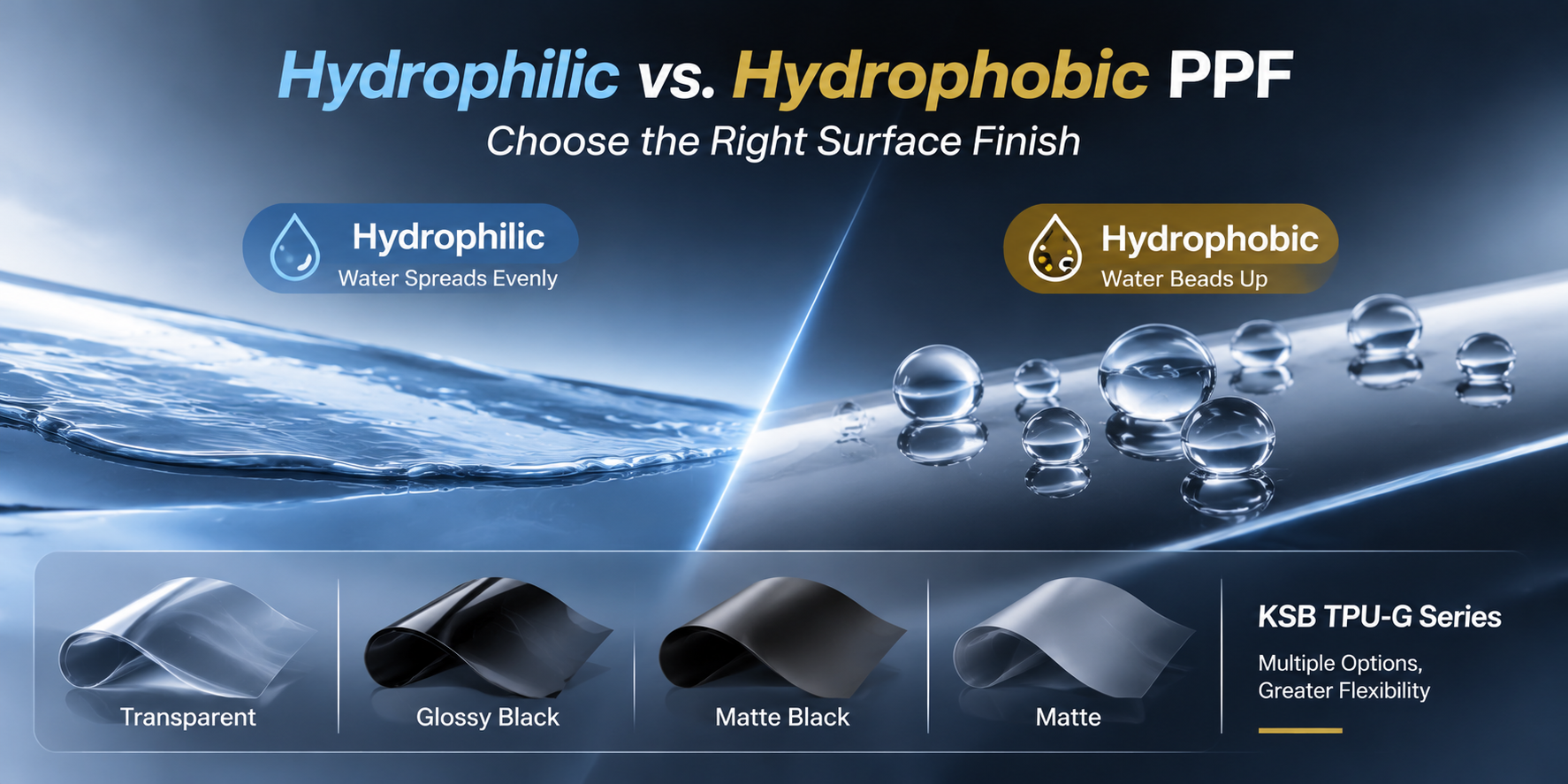
The KSB TPU-G Series includes both surface types, along with transparent, glossy black, matte black, and matte finishes.
Hydrophilic vs. Hydrophobic PPF: What’s the Difference?
Hydrophilic and hydrophobic describe how a surface interacts with water.
Hydrophilic PPF encourages water to spread across the surface rather than forming separate droplets. This creates a different water behavior from hydrophobic coatings.
Hydrophobic PPF encourages water to form droplets on the film. This surface behavior is often preferred by customers who look for a water-beading effect.
Neither type is automatically better. The right choice depends on customer preferences and product positioning.
For a more detailed explanation, see Hydrophobic vs. Hydrophilic PPF: Key Differences Explained.
TPU-G Series: Multiple Surface and Finish Options
The TPU-G Series offers 12 product options:
- Hydrophilic transparent PPF: G65, G75, G85, and G95.
- Hydrophobic transparent PPF: GS65, GS75, GS85, and GS95.
- Hydrophobic special finishes: G75 Glossy Black, G75 Matte Black, G75 Matte, and G85 Matte.
Beyond water behavior, appearance is another important selection factor:
- Transparent: Maintains the vehicle’s original paint appearance.
- Glossy Black: Provides a black finish with a glossy appearance.
- Matte Black: Offers a darker, non-glossy look.
- Matte: Provides an alternative surface appearance for customers seeking a different vehicle style.
These options allow distributors to offer both conventional paint protection and appearance-focused PPF products.
For more finish comparisons, read Gloss PPF vs. Matte PPF: Which Finish Should You Choose?.
TPU-G Series Specifications
The following tables show the available models, thicknesses, surface types, and key technical specifications.
Product Options
| Model | Thickness | Finish | Surface |
|---|---|---|---|
| G65 | 6.5MIL | Transparent | Hydrophilic |
| G75 | 7.5 MIL | Transparent | Hydrophilic |
| G85 | 8.5MIL | Transparent | Hydrophilic |
| G95 | 9.5 MIL | Transparent | Hydrophilic |
| G75 Glossy Black | 7.5 MIL | Glossy Black | Hydrophobic |
| G75 Matte Black | 7.5 MIL | Matte Black | Hydrophobic |
| G75 Matte | 7.5 MIL | Matte | Hydrophobic |
| G85 Matte | 8.5 MIL | Matte | Hydrophobic |
| GS65 | 6.5 MIL | Transparent | Hydrophobic |
| GS75 | 7.5 MIL | Transparent | Hydrophobic |
| GS85 | 8.5 MIL | Transparent | Hydrophobic |
| GS95 | 9.5 MIL | Transparent | Hydrophobic |
Technical Specifications
| Model | Glue Origin | Breaking Elongation | Gray Level | Warranty |
|---|---|---|---|---|
| G65 | China | 235% | Level 3 | 5 Years |
| G75 | China | 245% | Level 3 | 5 Years |
| G85 | China | 258% | Level 3 | 5 Years |
| G95 | China | 266% | Level 3 | 5 Years |
| G75 Glossy Black | China | 249% | Level 3 | 5 Years |
| G75 Matte Black | China | 248% | Level 3 | 5 Years |
| G75 Matte | China | 248% | Level 3 | 5 Years |
| G85 Matte | China | 255% | Level 3 | 5 Years |
| GS65 | China | 248% | Level 3 | 5 Years |
| GS75 | Germany | 300% | Level 4–5 | 6 Years |
| GS85 | China | 258% | Level 3 | 5 Years |
| GS95 | China | 275% | Level 3 | 5 Years |
Shared Performance Specifications
| Performance Item | Specification |
|---|---|
| 20-Minute Peeling Force | 1700–1800 GF |
| 24-Hour Peeling Force | 2200–2300 GF |
| Heat Repair | Yes |
Breaking elongation refers to the TPU base material, not the recommended stretching percentage of the finished film.
One notable option is GS75, which features German-sourced glue and TPU base material, a Japan-sourced paint coat, 300% base material breaking elongation, and a 6-year warranty.
How Distributors Can Build a PPF Product Range
When sourcing PPF wholesale, distributors should consider the overall product mix rather than focusing on one specification.
A practical range can include:
- Different thicknesses for varying product requirements.
- Both hydrophilic and hydrophobic transparent films.
- Glossy black and matte finishes for appearance-focused customers.
- Different material configurations and warranty options.
Comparing specifications and samples is also important when selecting a supplier. How to Identify High Quality Paint Protection Film and How to Test a PPF Sample Roll offer additional guidance for product evaluation.
FAQ
What is the main difference between hydrophilic and hydrophobic PPF?
Hydrophilic PPF encourages water to spread across the surface, while hydrophobic PPF encourages water to form droplets. The difference mainly relates to surface-water behavior.
Is hydrophobic PPF always better than hydrophilic PPF?
No. Neither surface type is universally superior. The choice depends on customer preferences and the intended product positioning.
Can black PPF be used instead of transparent PPF?
Yes. Glossy black and matte black PPF provide alternative exterior finishes for customers who want to change their vehicle’s appearance while adding paint protection.
Further Reading
On this site:
- Wholesale Paint Protection Film Buying Guide — Planning a wholesale product range.
- How Long Does PaintProtection Film Last? — Understanding PPF durability.
- How Paint Protection Film Is Manufactured — Learning about the production process.
Conclusion
The KSB TPU-G Series combines hydrophilic and hydrophobic transparent PPF with glossy black and matte finish options. This variety gives distributors more flexibility when building a product range for different customer preferences.
Contact KSB to learn more about the TPU-G Series and available supply options.
Get a Free Sample or Quote
Looking for a reliable window film supplier? Contact us today for fast response and professional support.