Published: June 12, 2026 · 7 min read · Category: PPF Guide
Most buyers don’t think about hydrophobic vs. hydrophilic properties when choosing paint protection film — and most installers don’t raise it unless a customer specifically asks. It’s the kind of spec difference that gets buried in technical data sheets while the marketing conversation stays focused on self-healing speed and thickness numbers.
That’s a missed opportunity. Water-behavior characteristics have real implications for how a vehicle looks after rain, how easy the film is to maintain, and how the surface performs over time. For distributors building a product range and installers advising customers, this distinction separates informed recommendations from guesswork.
What Hydrophobic and Hydrophilic Actually Mean
Both terms describe how a surface interacts with water — specifically, the contact angle that a water droplet forms when placed on the surface.
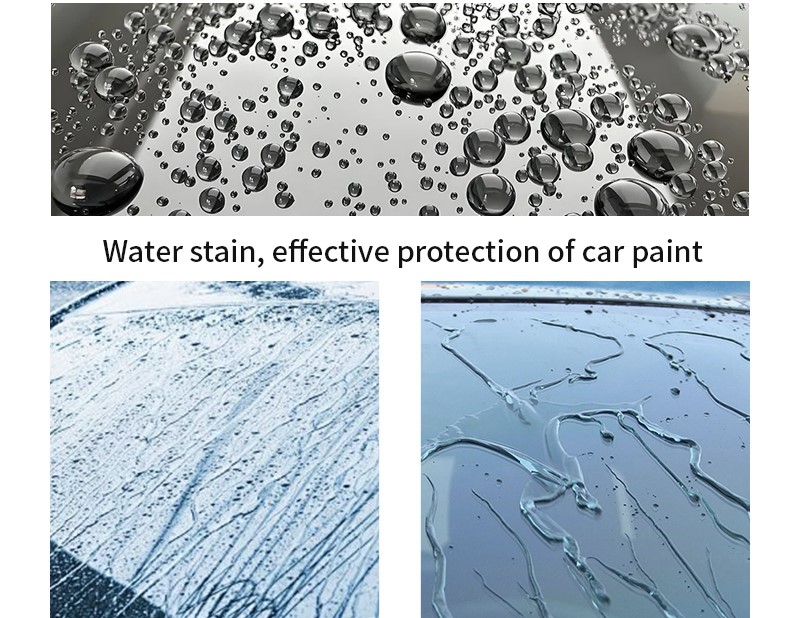
Hydrophobic means water-repelling. A hydrophobic surface causes water to bead — droplets form a high contact angle (typically above 90°) and roll off with minimal encouragement. A freshly waxed car bonnet in the rain demonstrates this clearly: tight, near-spherical drops that slide away at low tilt angles.
Hydrophilic means water-attracting. A hydrophilic surface causes water to spread flat rather than bead. Contact angle is low (below 30°, often near zero on strongly hydrophilic surfaces), and water forms a continuous thin sheet rather than discrete droplets.
Standard automotive clear coat sits somewhere in the middle — neither strongly hydrophobic nor hydrophilic without treatment. PPF products, depending on their top coat formulation, can lean meaningfully in either direction.
Hydrophobic PPF: What It Offers
Most quality TPU PPF products are moderately to strongly hydrophobic out of the box. Premium products — particularly those with hydrophobic-enhanced top coats or factory-applied ceramic coatings — achieve contact angles of 100–120°.
Practical benefits:
Easier maintenance. Water beads and evacuates before it can deposit minerals. Road spray and light rain spend less time in contact with the surface, reducing water spotting and mineral deposit buildup. Less contamination accumulation means less cleaning effort and less abrasion over time.
Self-cleaning at speed. At highway speeds, water on a hydrophobic surface evacuates quickly. This reduces the progressive buildup of road film that dulls appearance on vehicles driven regularly in wet conditions.
Visual satisfaction. Tight water beading on a freshly cleaned vehicle is visible evidence of surface protection. It’s compelling to customers and to installers who take pride in handover presentation.
The limitation: Hydrophobic properties degrade over time. The chemical groups responsible — fluoropolymers, siloxanes, certain polyurethane architectures — are depleted by UV exposure, abrasive cleaning, and chemical contact. The rate of degradation depends on top coat chemistry and UV stabilizer quality. Premium products maintain hydrophobicity longer; this is one dimension of the broader lifespan question covered in How Long Does Paint Protection Film Last?
Hydrophilic PPF: The Counterintuitive Approach
Hydrophilic PPF is a more recent development, and the value proposition sounds backward until you think about contamination behavior rather than water behavior.
A strongly hydrophilic surface forms a uniform, ultra-thin water film rather than discrete beads. This water layer acts as a barrier between the surface and airborne contaminants — dust, pollen, industrial fallout, fine particulates. Contaminants don’t bond to the PPF surface directly; they bond to the water layer, which then sheet-rinses away when the vehicle is rinsed or it rains.
The result: vehicles with hydrophilic film in high-contamination environments (heavy urban traffic, near industrial areas, high pollen seasons) tend to stay cleaner between washes than equivalently located hydrophobic vehicles. The film doesn’t provide dramatic beading performance, but it self-rinses more thoroughly.
Where hydrophilic makes the strongest case:
In cities where a vehicle goes from clean to dusty in 48 hours, sheet-rinsing behavior is more practically valuable than tight beading. Hydrophobic film beads beautifully but doesn’t necessarily remove all surface contamination with a rinse. Hydrophilic film doesn’t bead at all, but rinses cleaner.
For rural or highway-dominant use where contamination is lower and water spotting from mineral deposits is the bigger concern, hydrophobic holds the advantage.
Side-by-Side Comparison
| Factor | Hydrophobic PPF | Hydrophilic PPF |
|---|---|---|
| Water behavior | Beads and rolls off | Sheets off uniformly |
| Contamination removal | Good — beads carry most contaminants | Excellent — sheet rinse removes more thoroughly |
| Visual appeal in rain | High — visible, satisfying beading | Lower — less dramatic |
| Between-wash cleanliness | Good | Excellent in contamination-heavy environments |
| Degradation pattern | Gradual bead-angle reduction over years | More stable formulations in some products |
| Ceramic coating compatibility | Yes — most ceramics enhance hydrophobicity | Requires compatible product selection |
| Best environment | Highway, rural, mineral-rich water areas | Urban, industrial, high-pollen locations |
How Ceramic Coating Changes the Picture
Whether the base PPF is hydrophobic or hydrophilic, a ceramic coating applied over it changes surface behavior — typically strongly toward hydrophobicity.
Most commercial ceramic coatings are hydrophobic by design. Applied over PPF, they create a sacrificial hydrophobic layer that can be refreshed periodically. For hydrophobic-oriented PPF, this is a natural enhancement. For hydrophilic PPF, a conventional hydrophobic ceramic somewhat undermines the design intent — you’re converting a sheet-rinsing surface to a beading surface.
Some manufacturers and detailers have developed ceramic-compatible products that maintain hydrophilic sheet-rinsing behavior. This is still a specialist segment. For the mainstream professional market, the dominant combination remains hydrophobic-enhanced PPF plus a quality hydrophobic ceramic topcoat.
Verifying the Performance Claim
Hydrophobic performance is objectively measurable. A contact angle meter gives precise readings — genuinely hydrophobic products should show contact angles above 100°. Any supplier making strong hydrophobic claims should provide test data, not just marketing copy.
For hydrophilic products, sheet-rinsing behavior can be assessed through run-off angle testing on contaminated surfaces.
The simplest verification: a water drop test on a sample. A genuinely hydrophobic surface shows immediate, tight beading. A hydrophilic surface shows water spreading and sheeting. Any surface claiming strong hydrophobicity that produces flat, slow-moving drops is not delivering what it claims.
What This Means for Product Range Decisions
For most markets, a quality TPU film with natural or enhanced hydrophobicity covers the majority of customer expectations. Beading is visible, satisfying, and easy to communicate value around.
For urban markets with heavy contamination, a hydrophilic option addresses a real maintenance problem. If your installer base operates in dense cities where vehicles are perpetually dusty between washes, this could be meaningful differentiation.
For premium positioning, factory-pre-coated ceramic PPF (arriving already coated with a ceramic hydrophobic layer) is an increasingly common high-end tier. It simplifies the installation process and delivers a premium result with clear value communication.
FAQ
1.What is hydrophobic PPF?
Hydrophobic PPF repels water and creates tight water beads that roll off the surface easily, helping reduce water spots and improve cleaning efficiency.
2.What is hydrophilic PPF?
Hydrophilic PPF spreads water into a thin sheet instead of forming droplets, helping contaminants rinse away more evenly from the surface.
3.Which is easier to clean, hydrophobic or hydrophilic PPF?
Hydrophobic PPF is generally easier for daily maintenance because dirt and water slide off more easily, especially during driving or rain.
4.Does ceramic coating affect hydrophilic PPF?
Yes. Most ceramic coatings add hydrophobic properties, which can reduce the original sheet-rinsing effect of hydrophilic PPF.
5.Which PPF is better for city driving?
Hydrophilic PPF can perform better in dusty urban environments because it helps contaminants rinse away more evenly.
6.Which PPF is better for highway driving?
Hydrophobic PPF is often preferred for highway driving because water beads and evacuates quickly at higher speeds.
7.Does hydrophobic performance fade over time?
Yes. UV exposure, washing, and chemical cleaners gradually reduce hydrophobic performance, although premium TPU films last significantly longer.
Building a PPF range and want to match hydrophobic specs to your market? Contact us — we help buyers understand which product characteristics suit their specific distribution context.
Further Reading
On this site:
- What Is Paint Protection Film (PPF)? Complete Guide for Beginners — Full product overview providing context for surface performance properties
- Self-Healing PPF Explained: How Does It Work? — The other major top coat performance dimension
- TPU vs PVC PPF: Which Paint Protection Film Is Better? — Why base material quality underpins all surface performance
- How Long Does Paint Protection Film Last? — How hydrophobic properties degrade as part of overall aging
- How Paint Protection Film Is Manufactured — Top coat formulation in the production context
External:
- American Chemical Society — Surface Chemistry — Background on contact angle science and hydrophobic surface chemistry
- Covestro Polyurethane Technical Resources — TPU surface formulation reference
- SEMA Automotive Appearance Resources — Industry context for coatings in the automotive aftermarket
Get a Free Sample or Quote
Looking for a reliable window film supplier? Contact us today for fast response and professional support.