What Is Smart Film? Everything You Need to Know

This article provides a complete explanation of smart film technology, including PDLC, SPD, electrochromic, and thermochromic systems. It covers working principles, technical differences, performance parameters, installation considerations, and real-world applications. Designed for architects, installers, and B2B buyers, it helps clarify when smart film is suitable and when alternative glazing technologies should be used.
Tailoring Paint Protection Film for Luxury Fleet Owners Worldwide
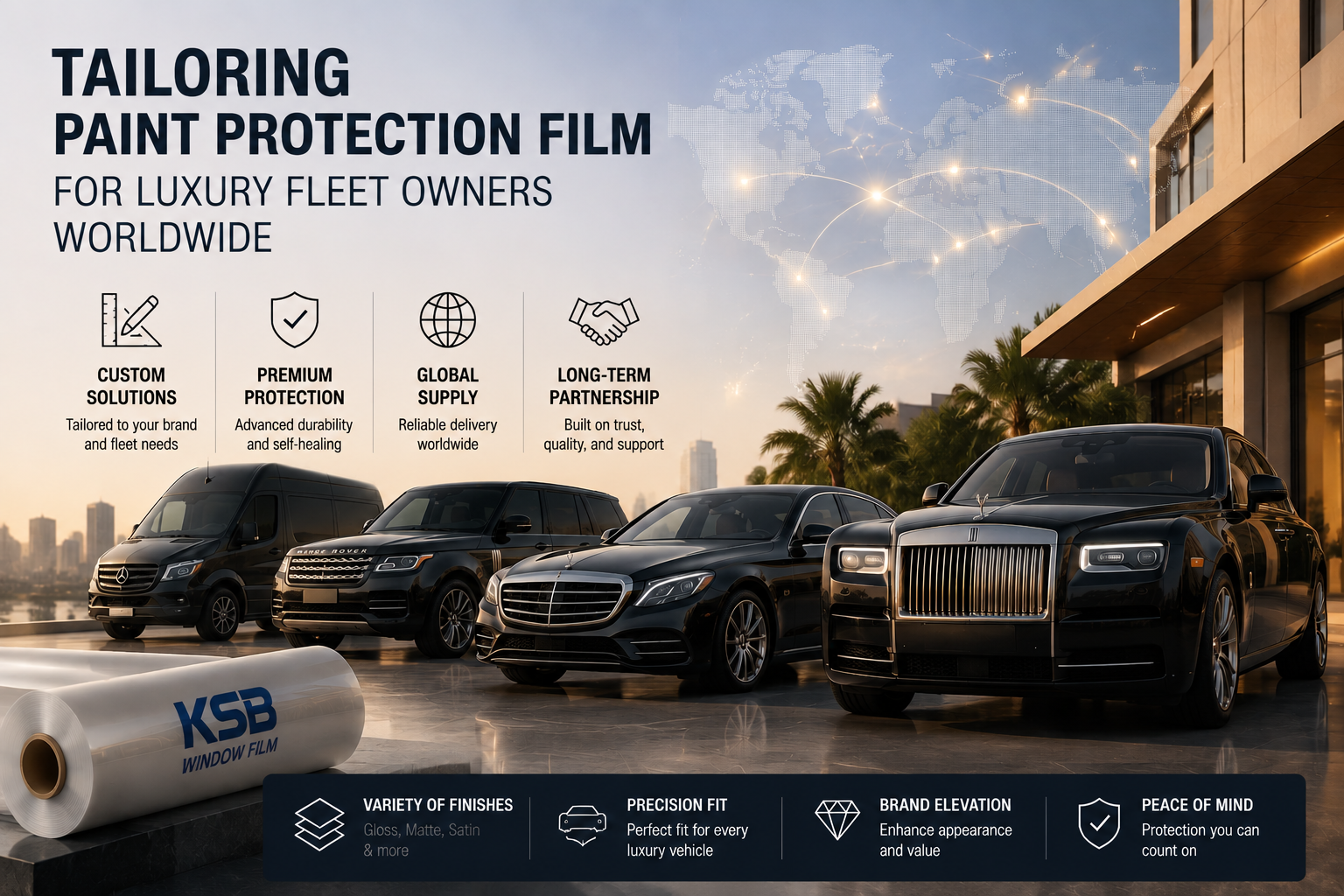
This article explains how luxury fleet operators require standardized, multi-region Paint Protection Film (PPF) programs rather than single-vehicle decisions. It outlines KSB’s structured fleet approach, including regional formulation adjustments for Europe, Middle East, Southeast Asia, and North America, as well as ROI-driven procurement logic, documentation systems, and installation consistency across global markets.
Safety Film vs Tempered Glass: Which Provides Better Protection?
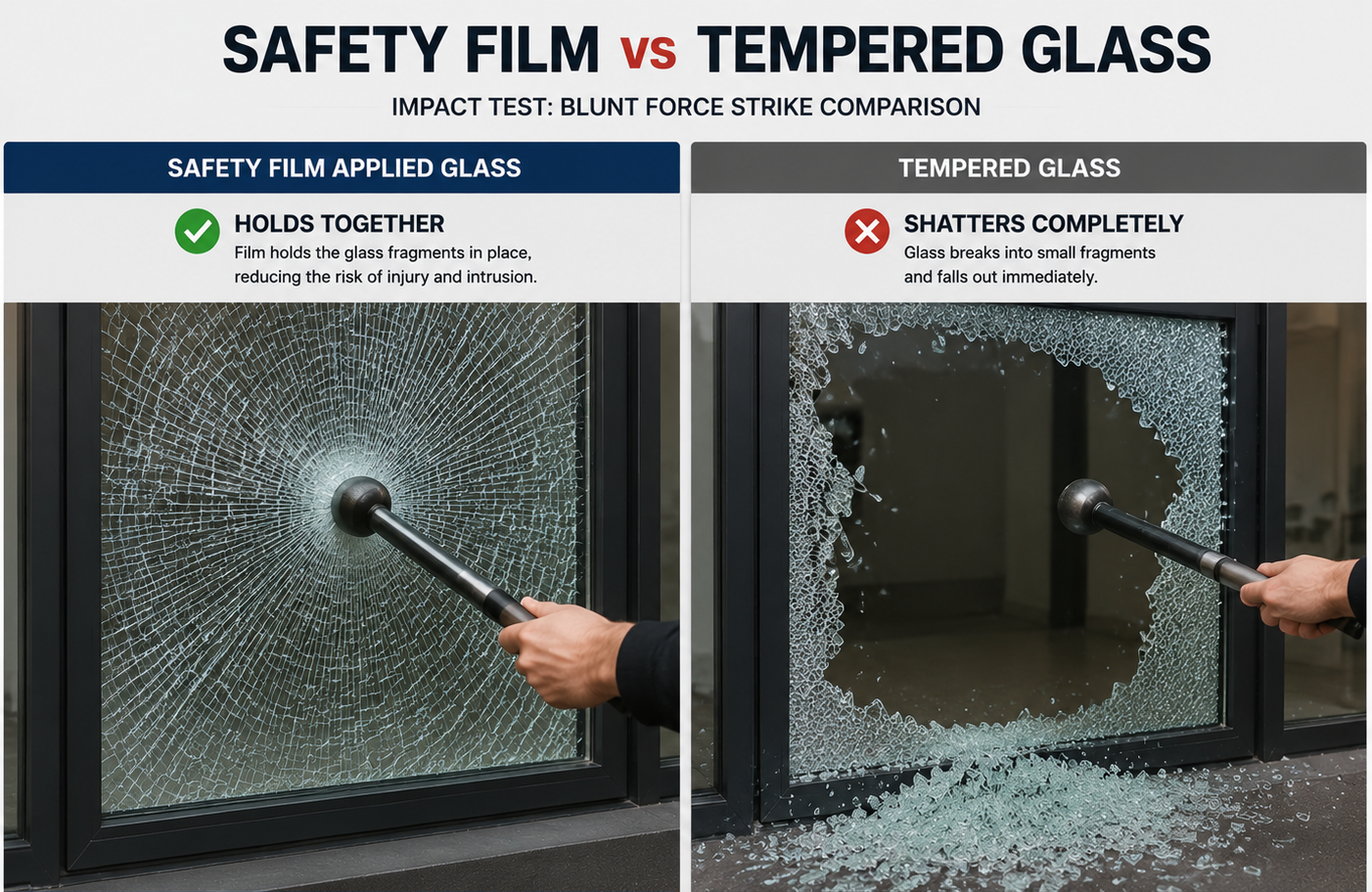
This article compares safety window film and tempered glass in terms of security performance, fragment retention, blast resistance, and cost efficiency. It explains how each solution performs under different risk scenarios such as forced entry, impact breakage, and building safety compliance, helping buyers choose the right protection strategy for architectural glazing.
Anti-Fouling vs. Heavy Pollution: Why Cities Need Advanced Hydrophobic PPF
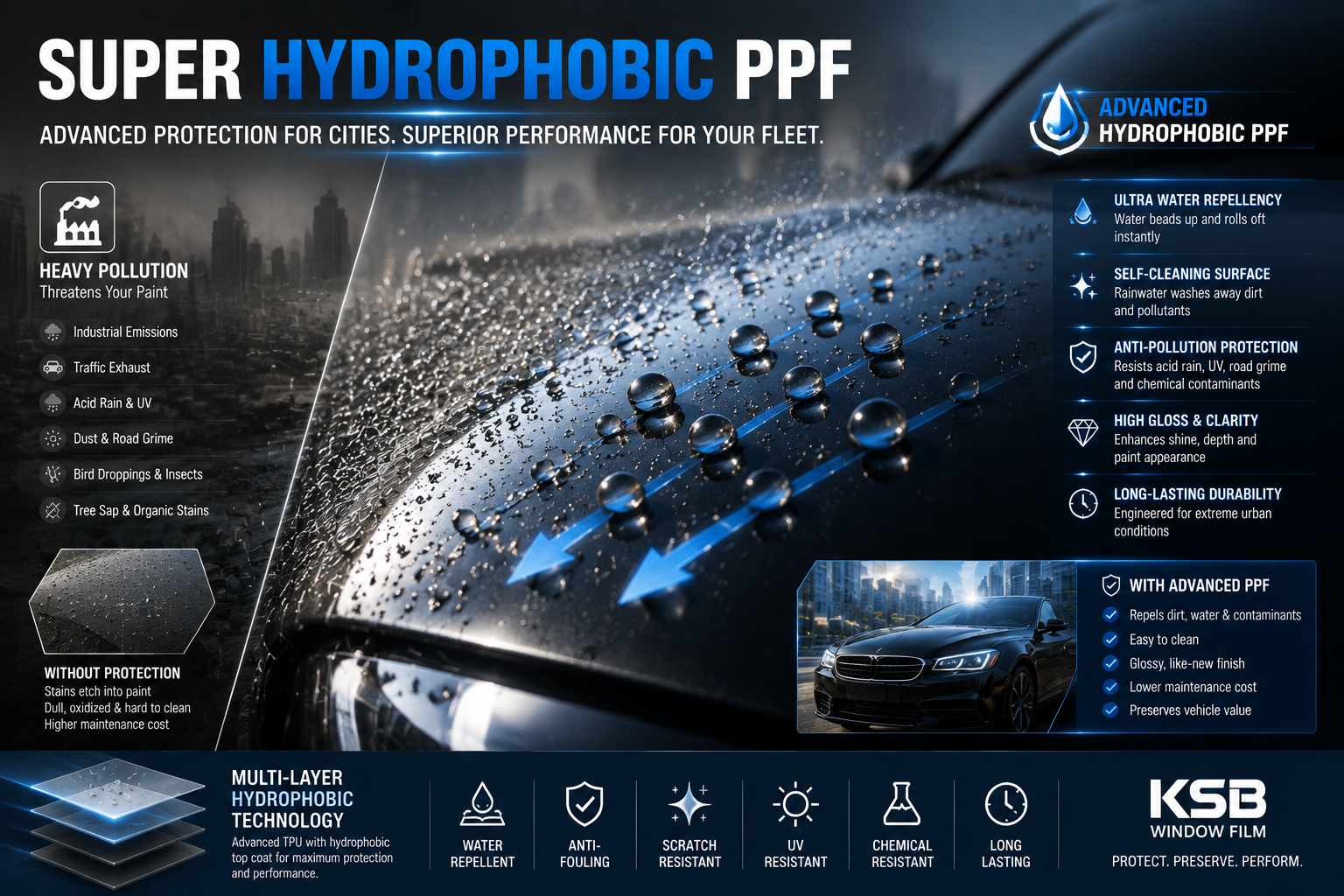
This article explains how hydrophobic PPF top coat technology protects vehicles in urban environments with heavy pollution, acid rain, and industrial fallout. It details how high water contact angle surfaces reduce contaminant adhesion, minimize etching, and improve long-term paint protection performance in city driving conditions.
Ceramic Tint vs Carbon Tint: Which Window Film Should You Choose?
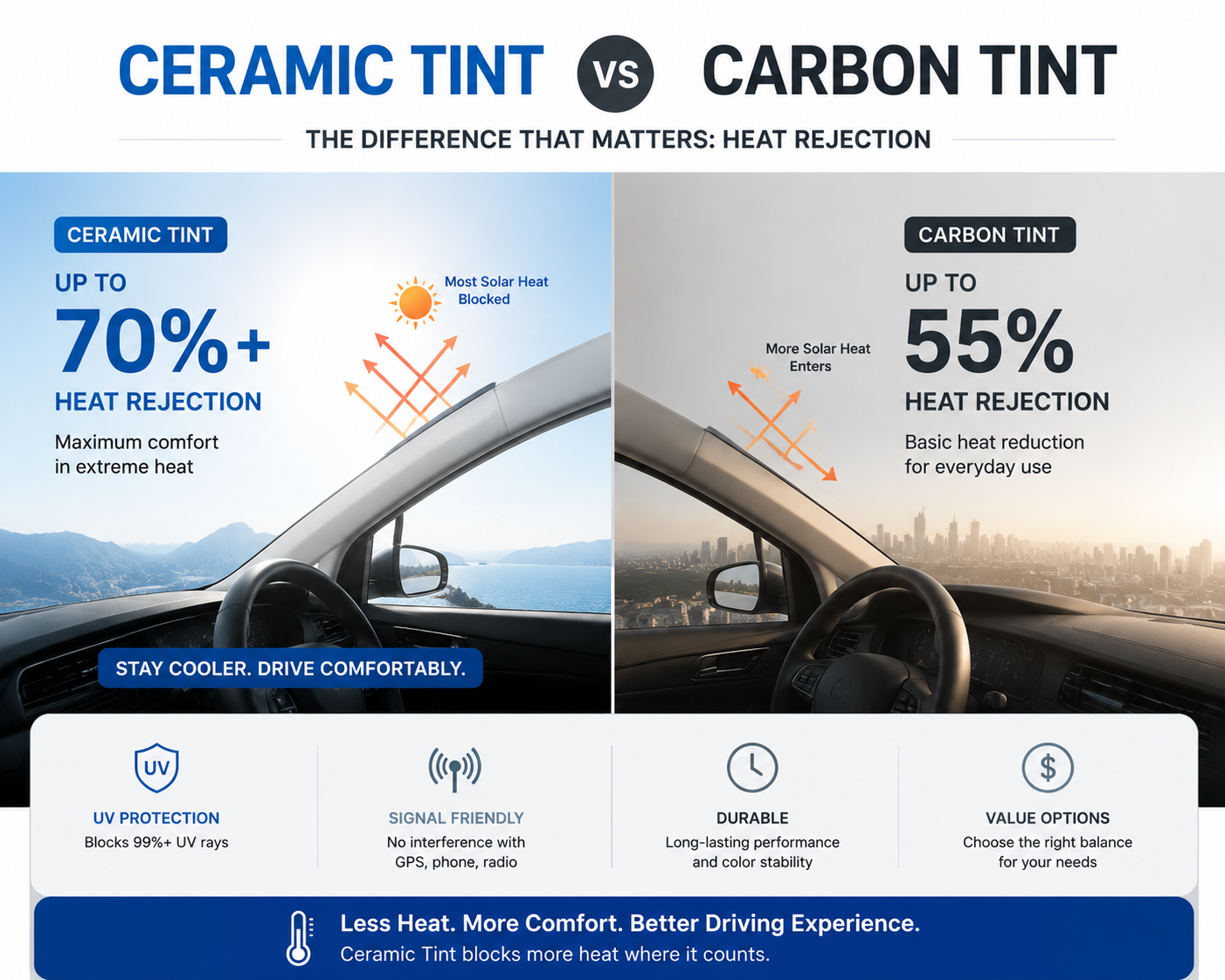
This article compares ceramic tint and carbon tint window films, explaining differences in heat rejection, material technology, durability, and cost to help users choose the right automotive window film based on climate and budget.
Winter-Proof PPF: Preventing Cracking and Brittleness in North American Climates
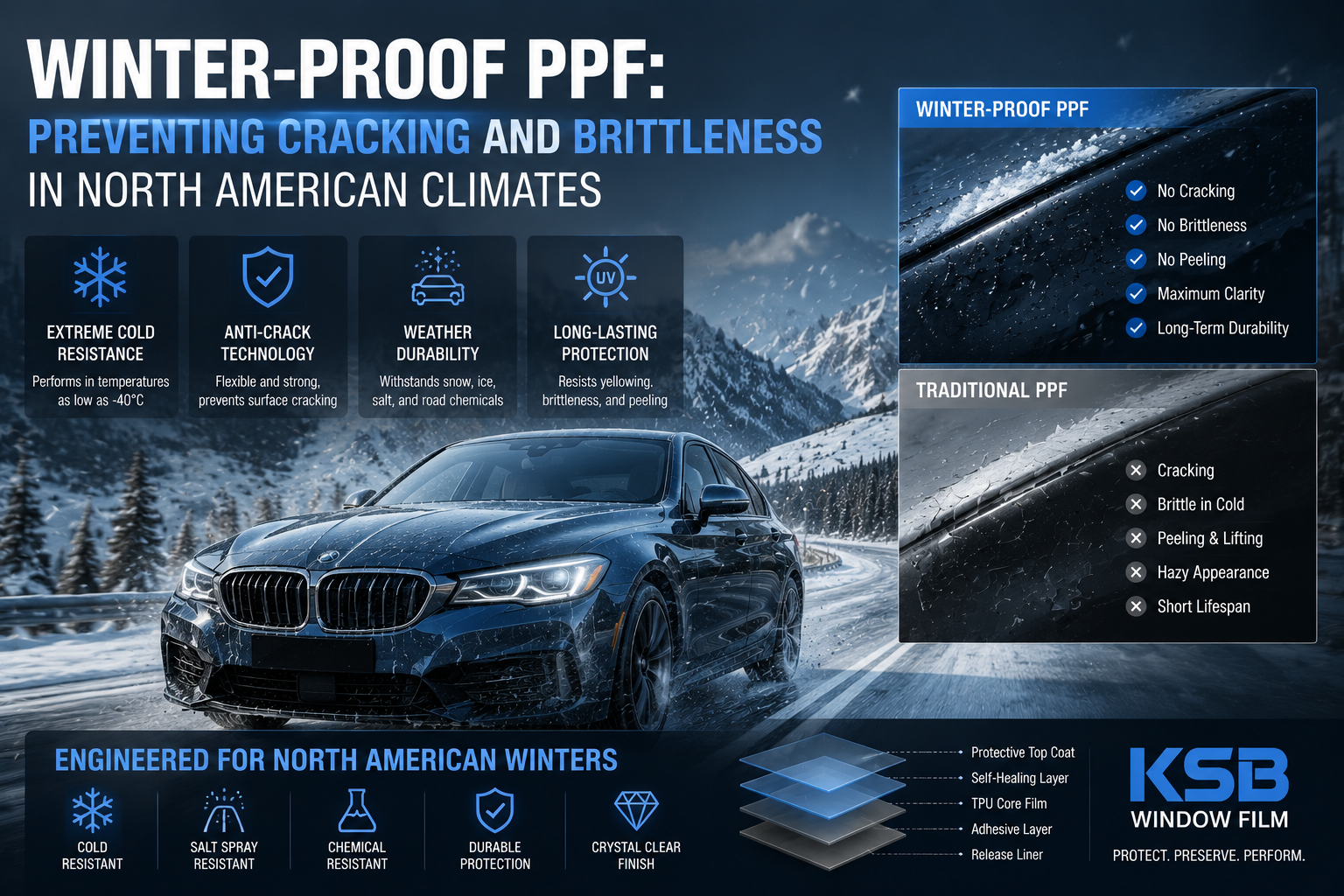
This article explains how PPF is engineered for extreme North American winter conditions, focusing on low-temperature brittleness, freeze-thaw edge failure, and salt exposure. It details how advanced TPU formulation, low Tg materials, and cold-weather adhesive systems ensure flexibility, durability, and impact resistance at temperatures down to -40°C.
XPEL vs TPU Paint Protection Film: What’s the Difference?
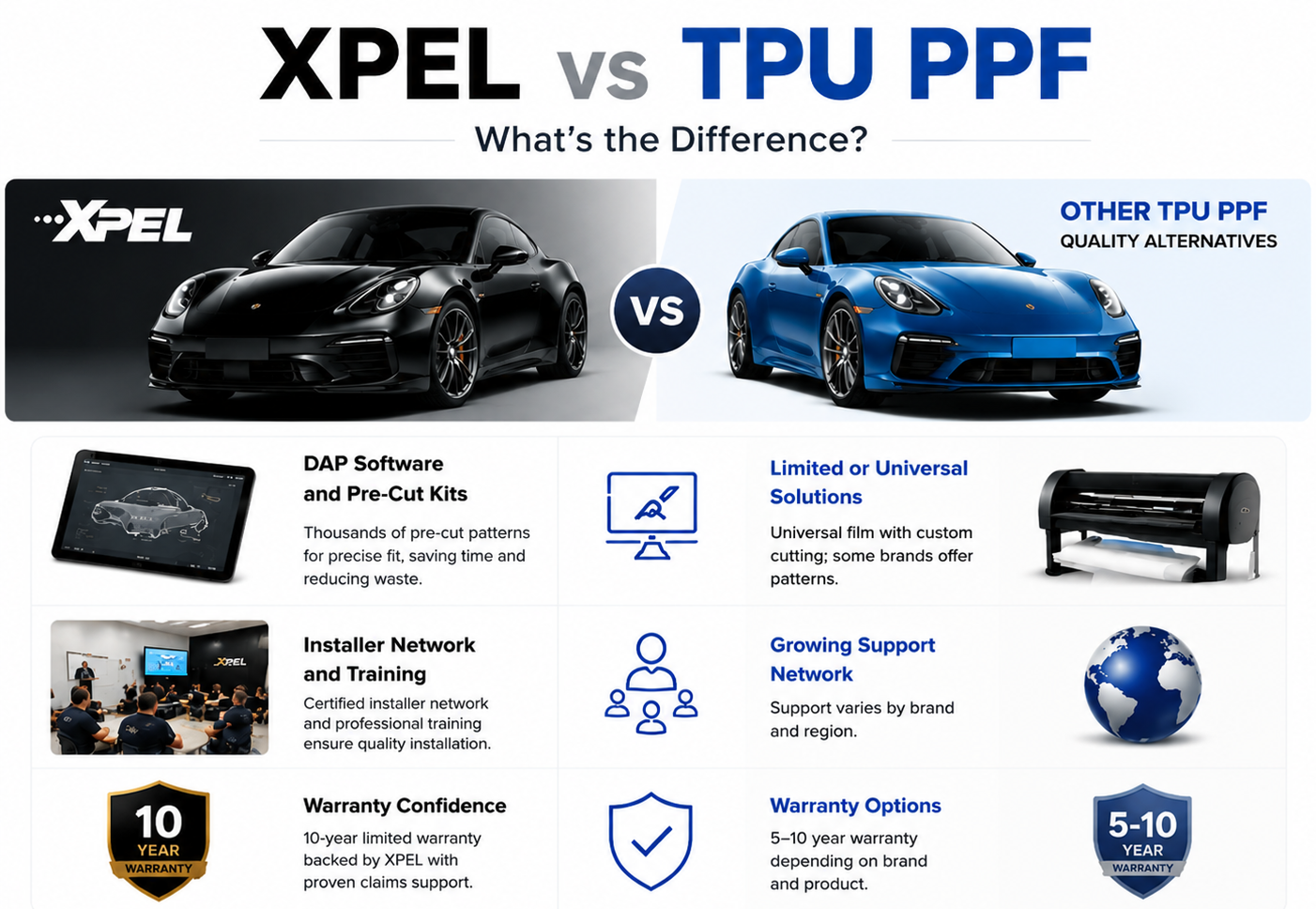
This article compares XPEL paint protection film with other TPU PPF brands and manufacturers. It explains the difference between a premium PPF brand and TPU as a material, analyzes performance, self-healing technology, installation systems, warranty support, pricing, and OEM alternatives, helping distributors, installers, and private label buyers evaluate whether XPEL’s premium pricing is justified.
Surviving the Tropical UV and Humidity: PPF Engineering for Southeast Asia
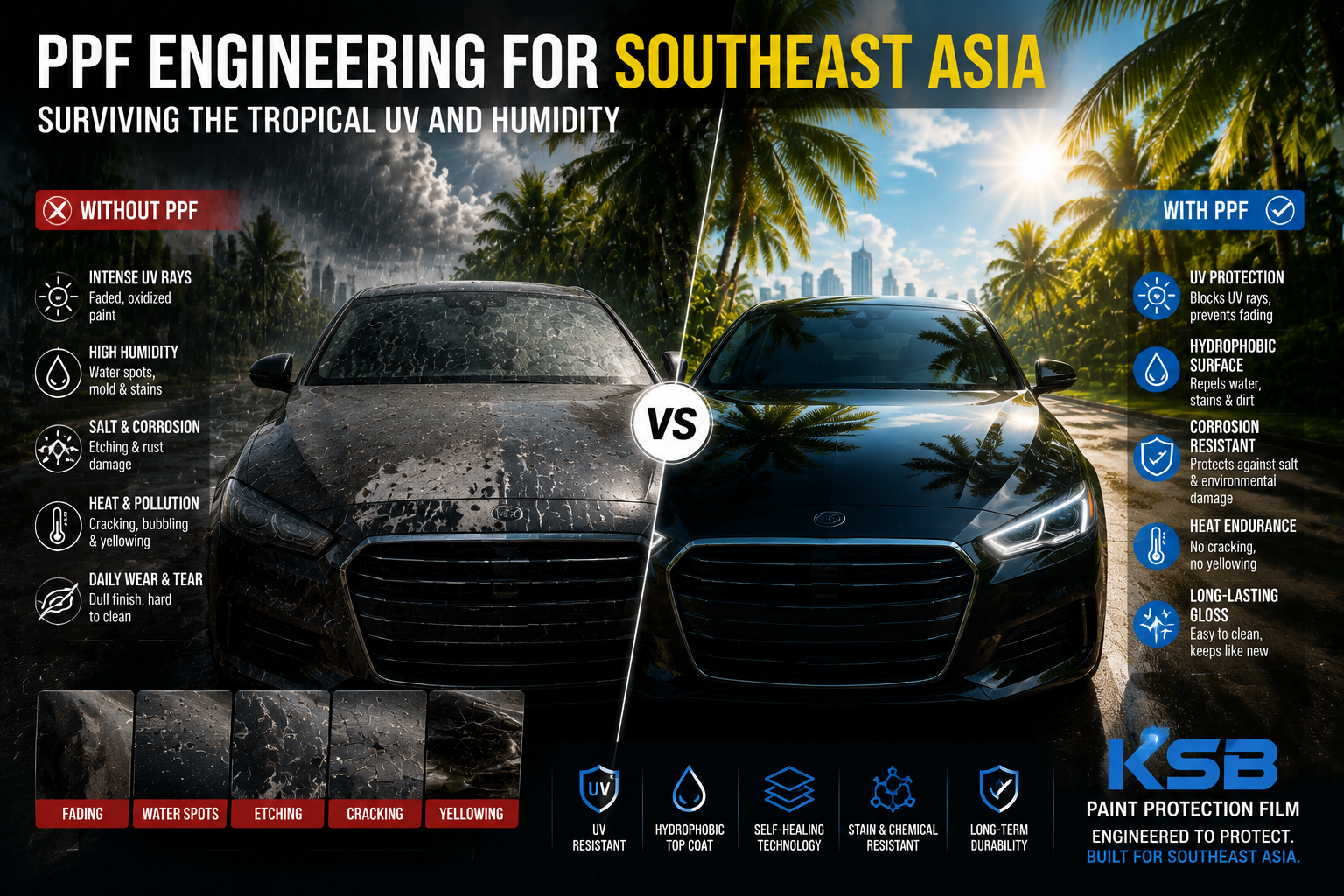
Published: July 28 , 2026 · 7 min read · Category: PPF Regional Southeast Asia’s climate is deceptively demanding for paint protection film. The challenges are less dramatic than a Gulf sandstorm — but the combination of 85–95% year-round humidity, intense UV, frequent acid rain events, and year-round high ambient temperature creates a degradation environment […]
3M Safety Film Alternatives: How Chinese Manufacturers Compare

Compare 3M safety window film with leading Chinese manufacturers. Learn the differences in certification, performance, pricing, OEM capability, and how to choose the right safety film supplier for your project.
PPF Formula Optimization for the Middle East: Beating 50°C Heat and Sandstorms
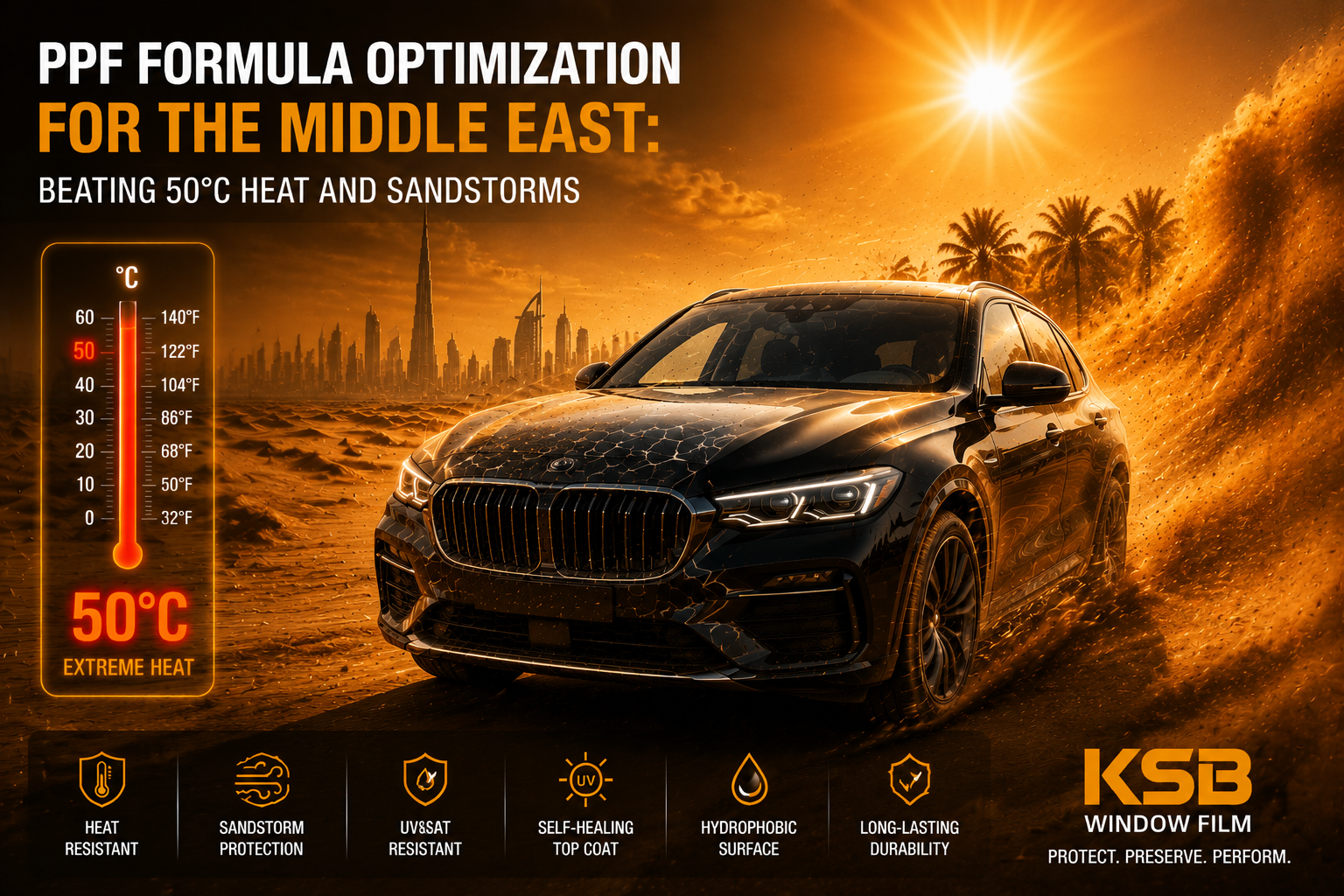
This article explains how PPF formulations are optimized for extreme Middle Eastern climates, including 50°C heat, high UV exposure, and sandstorm abrasion. It details engineering adjustments in adhesive Tg, HALS loading, top coat hardness, and UV stabilisation systems to ensure long-term durability and performance in Gulf region automotive applications.