Published: June 17, 2026 · 10 min read · Category: PPF Brand Building
About this article: KSB Window Film operates an OEM and private label program for TPU paint protection film, exported to distributors and brand builders across North America, Europe, and Asia-Pacific. This guide reflects what we see work — and what we see fail — in PPF brand launches.
Starting a PPF brand sounds like a product decision. It’s actually a business model decision first, a market positioning decision second, and a product decision third. Brands that launch in the wrong order — picking a supplier before they’ve figured out who they’re selling to and why — tend to end up with rolls of film in a warehouse and no clear story to tell an installer.
This guide gives you the sequence that works.
Step 1: Decide What Kind of Brand You’re Building
PPF brands occupy three distinct market positions, and the one you choose determines your supplier requirements, pricing, margin structure, and installer sales approach.
Performance brand: You lead with specifications — TSER, haze percentage, self-healing speed, tested durability. Your customer is the professional installer who has educated clients and can command premium prices. Your film has to perform to spec, and you need third-party test data to back every claim.
Value brand: You compete on price-to-performance ratio. Quality is real but not headline-spec. Your customer is the mid-volume installer who wants a reliable product at a price that allows them to compete in a cost-sensitive market. Your competitive advantage is consistent supply at honest pricing.
Niche brand: You own a specific application — marine PPF, matte PPF for luxury vehicles, ultra-wide format for commercial wrapping, agricultural equipment protection. Less competition, more loyal buyers, premium pricing tolerance. Requires a more specific supplier brief.
Pick one. Launching without a clear position means you’ll fight premium brands on performance (losing) and value brands on price (losing) simultaneously.
Step 2: Map Your Distribution Path
Before you spec the film, know how it gets to the person who installs it.
Direct to installer: You sell directly to professional PPF installers. Your brand needs installer-facing marketing, technical documentation, and possibly a training or certification program. Margins are best. Account management intensity is highest.
Through distributors: You sell to regional distributors who resell to installers. Your brand needs to support the distributor’s sales process — technical sheets, sample rolls, co-marketing materials. Margins are shared. Scale is faster.
E-commerce / online: For lower-complexity DIY-adjacent products or for entry-level products. Higher volume potential, lower average ticket, significant customer support requirements.
Most successful PPF brands start direct-to-installer in a defined geography and layer in distributors as volume justifies it.
Step 3: Choose Between Private Label and OEM
This is where most brand builders make their first major decision. The options are:
Private label: You apply your brand to an existing manufacturer’s product. The film formulation, TPU grade, and top coat chemistry are the manufacturer’s — you contribute packaging design, brand identity, and marketing. Fastest to market. Lower upfront cost. Lower differentiation.
OEM (custom formulation): You work with the manufacturer to develop film to your specifications — specific TPU grade, top coat hardness and self-healing profile, adhesive chemistry, specific performance targets. Takes 3–6 months longer. Higher upfront investment. Creates a product that’s genuinely yours.
The honest framework: start private label, plan for OEM. Private label lets you validate market demand and build installer relationships before committing to OEM development costs. Once you know what your market responds to, OEM delivers the product differentiation that makes the brand defensible.
For the full comparison, see OEM vs Private Label PPF: What’s the Difference?.
Step 4: Select Your Manufacturer
The manufacturer is your most important long-term business partner. Their quality consistency is your brand’s quality consistency. Their lead times are your delivery promises. Their OEM capability is your product development roadmap.
What to evaluate:
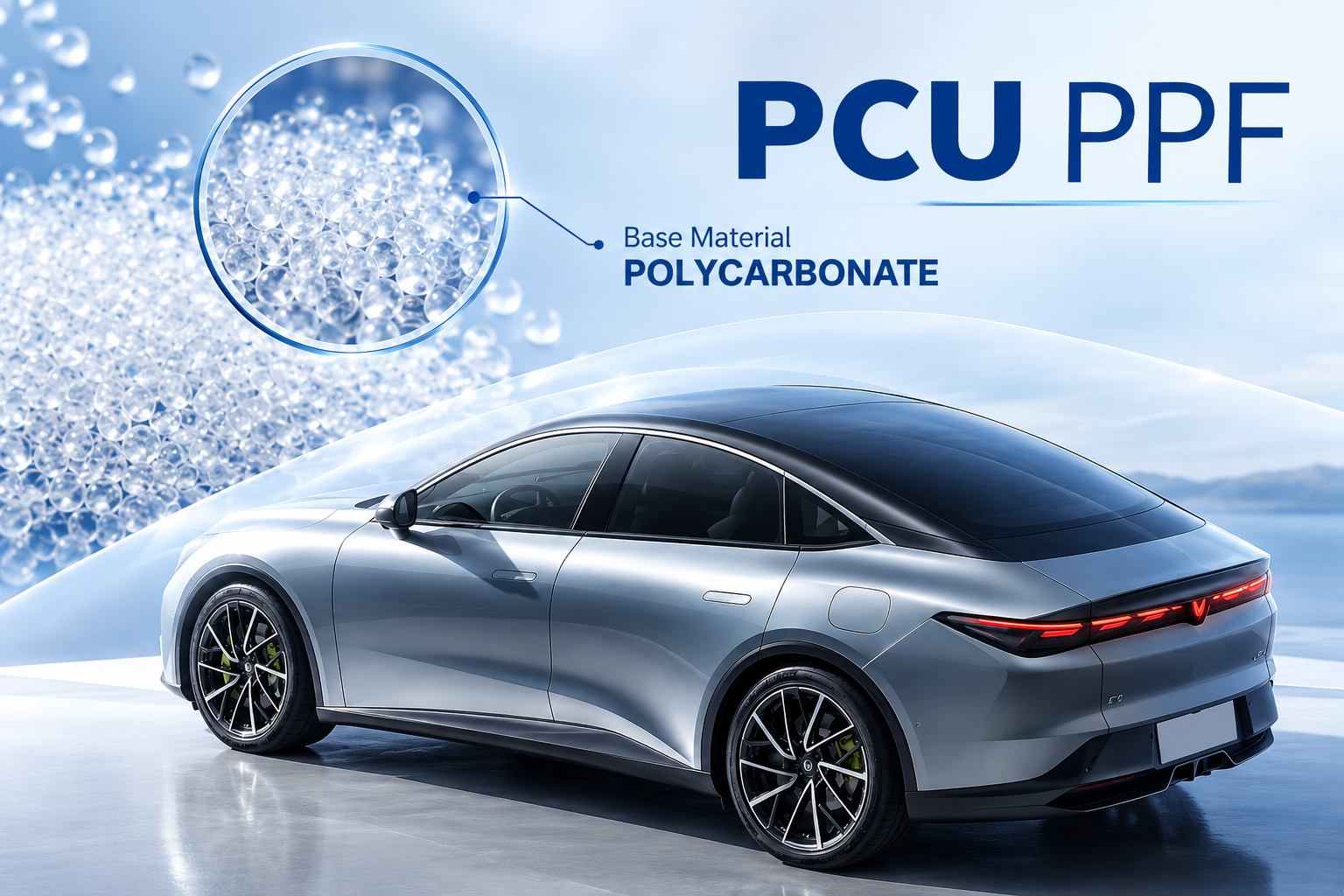
TPU base material: Premium TPU from Covestro, Huntsman, or equivalent-grade domestic Chinese suppliers. Ask directly: who is your TPU supplier and what grade? A manufacturer who can’t answer this is either not manufacturing or not paying attention to their own inputs.
Top coat chemistry: The self-healing performance, optical clarity, and long-term UV stability all come from the top coat. Ask about pencil hardness rating, self-healing speed at ambient temperature, and accelerated UV aging test results. Premium top coats hit 3H–4H hardness with healing under 20 minutes in direct sun.
OEM program structure: If OEM is on your roadmap, understand the manufacturer’s program now: minimum volumes per SKU, exclusivity terms, development timeline, and how they handle brand asset management.
Export track record: A manufacturer who’s shipped to your target market before understands the compliance documentation, labeling requirements, and logistics for that lane. First-timers create avoidable delays.
KSB Window Film operates a structured OEM and private label PPF program — see Top Paint Protection Film Manufacturers in China for a broader shortlist.
Step 5: Build the Product Line Architecture
A PPF brand needs a product line that installers can navigate and sell. Common structures:
Two-tier: Entry (6.5–7 mil, value) + Premium (8–8.5 mil, performance). Clean, easy to present to installers, clear upsell path.
Three-tier: Entry + Performance + Signature (ultra-premium, maximum spec). Allows the brand to compete across three buyer segments. More inventory complexity.
Finish-focused: Gloss + Matte as distinct product lines (same core film, different top coat finish). Increasingly popular as matte aesthetics have grown.
Most brands that try to launch with 8+ SKUs immediately run into MOQ complexity — each SKU requires its own minimum production commitment. Start with 2–3 SKUs, prove the demand, then expand.
Step 6: Build the Brand Identity
The name: Must travel. Test it with a linguist for any meanings in the languages of your primary markets. Check trademark availability in your target jurisdictions (USPTO for US, EUIPO for EU) before committing.
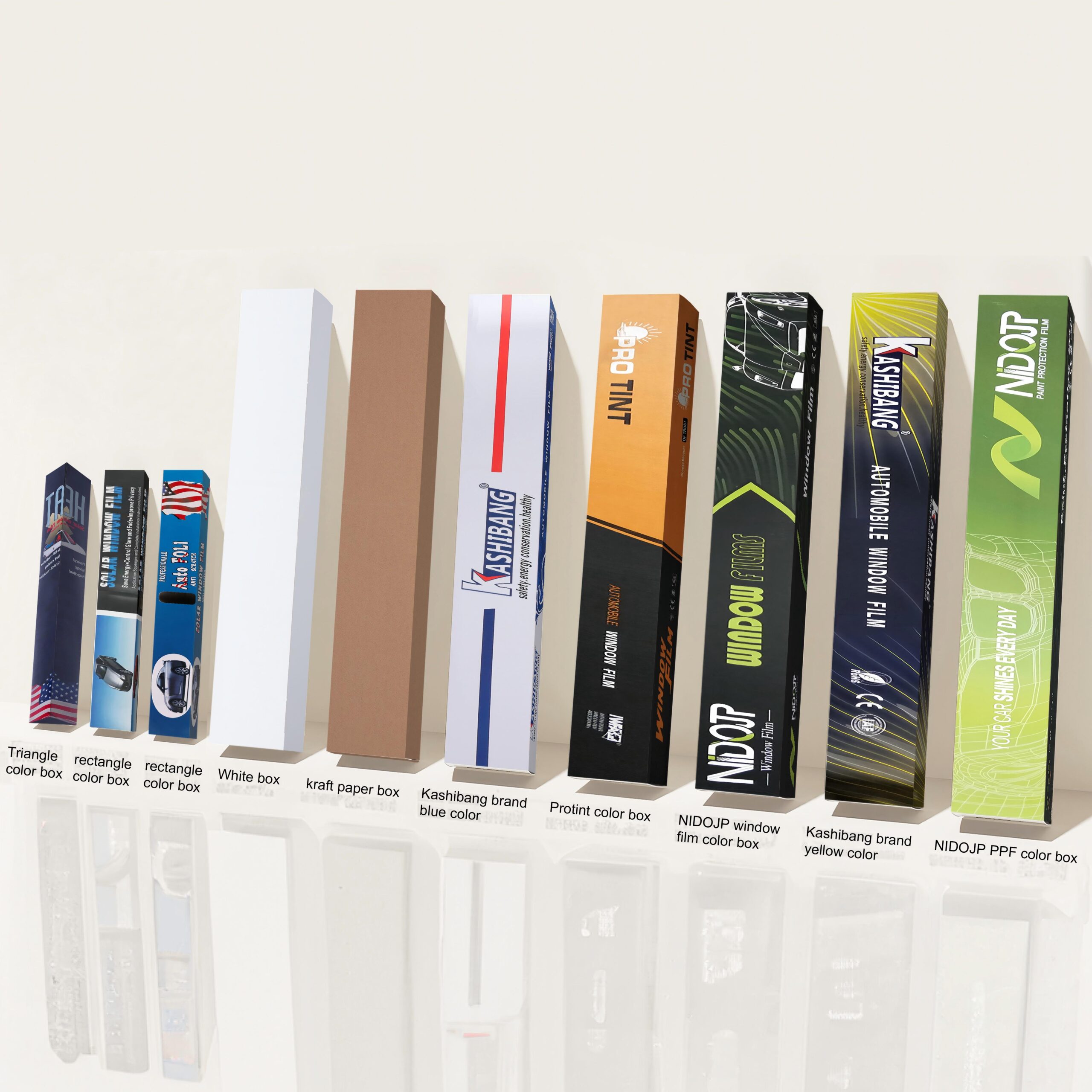
Packaging: Core labels, end caps, outer boxes. For OEM, your factory will produce these to your design. Critical elements: product name, SKU, thickness, VLT-equivalent description (“gloss” / “matte”), warranty reference, batch/lot number, and country of origin. See OEM vs Private Label PPF: What’s the Differencefor the full component breakdown.
Technical documentation: Every SKU needs a technical data sheet with haze, self-healing specification, adhesion data, warranty terms, and installation instructions. This is what professional installers evaluate before they stock your product. It needs to be current, accurate, and in the right language for your market.
Step 7: Go to Market — Starting Small Deliberately
The instinct is to launch wide. The better approach is to launch deep in a small geography with a defined installer group.
Target 10–15 professional installers in your initial market. Give them samples. Do training. Be available when they have installation questions. Let them produce case study content. Build the installer community before you try to scale the distribution.
PPF brands grow through installer reputation. When a respected installer recommends a brand to their network, that’s worth more than any advertising spend. The brands that scale fast almost always have strong early installer advocates.
Timeline and Investment Reference
| Phase | Timeline | Investment Level |
|---|---|---|
| Private label launch (2 SKUs) | 3–4 months | Low–medium |
| OEM development (custom spec) | 8–14 months total | Medium–high |
| First installer distribution launch | 3–6 months from product | Low (direct) to medium (distributor) |
| Brand recognition in target market | 18–36 months | Ongoing |
FAQ
How much capital do I need to start a PPF brand?
Private label at modest scale (2 SKUs, 300 rolls each): the film and packaging cost might run $8,000–$20,000 depending on product tier. Add branding costs, samples, and initial marketing: $5,000–$15,000. Total first-round investment of $15,000–$40,000 is realistic for a properly resourced private label launch. OEM development adds $5,000–$20,000 for the development process before production.
Do I need to be in the installation business to start a PPF brand?
No — many successful PPF brand founders come from distribution, automotive aftermarket sales, or adjacent industries. What matters is genuine market knowledge (who buys, why, what problems they have) and strong supplier relationships. The installation craft itself is the installer’s domain.
Can I start a PPF brand from outside China?
Yes. Most PPF brand builders source from Chinese manufacturers and build their brands in their home markets. The distance adds lead time and requires careful import planning — see How Paint Protection Film Is Manufactured for the logistics framework.
Further Reading
On this site:
- OEM vs Private Label PPF: What’s the Difference? — The foundational sourcing model decision
- How to Choose a Reliable PPF Manufacturer — Supplier selection in depth
- How Paint Protection Film Is Manufactured — Vetted manufacturer starting points
- Top Questions to Ask Before Buying PPF from China — Import process and compliance
External:
- USPTO Trademark Search — Verify brand name availability in the US
- EUIPO Trade Mark Register — EU trademark verification
- SEMA Industry Resources — Automotive aftermarket industry context for PPF distribution
Build Your PPF Brand on KSB Film
KSB Window Film’s PPF program supports private label and OEM brand launches with current SGS test documentation, geographic exclusivity agreements, and packaging development support.
→ Request KSB’s PPF brand program overview and sample rolls — we respond within one business day.
Get a Free Sample or Quote
Looking for a reliable window film supplier? Contact us today for fast response and professional support.