The difference between standard and premium paint protection film (PPF) is not determined by thickness alone. A higher-standard product requires a well-considered combination of TPU material, adhesive, top coating, surface characteristics, and manufacturing consistency.
For distributors and professional installers, understanding these factors is important when selecting products for different market segments. A film may have an impressive specification on paper, but its overall value depends on how its individual components work together.
1. Premium PPF Starts with Material Configuration
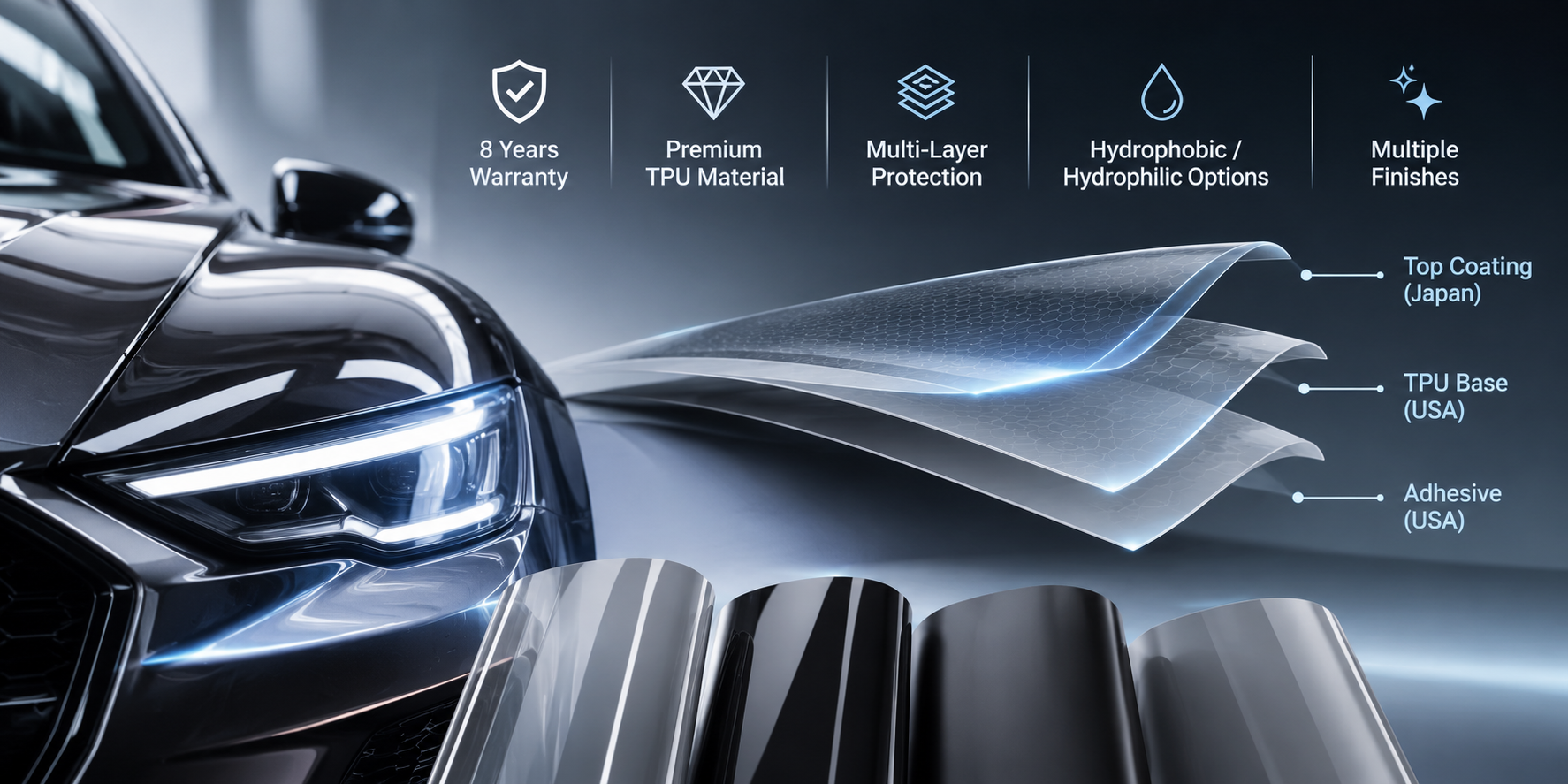
PPF is a multi-layer product. Its performance is influenced by the characteristics of its TPU base, adhesive layer, and surface coating. Each component has a different role, so evaluating only one material does not provide a complete picture.
- TPU base material: Forms the main protective layer. Its material properties influence flexibility, elongation, and the film’s physical characteristics.
- Adhesive: Determines how the film bonds to the vehicle’s paint. Adhesive selection is important for installation, positioning, and long-term bonding behavior.
- Top coating: Forms the outer surface and contributes to the film’s surface characteristics, including its interaction with water and contaminants.
This is why premium PPF selection should begin with the complete material configuration rather than a single selling point.
The TPU-TOP Series uses USA-sourced glue and TPU base material, combined with a Japan-sourced paint coat. This material combination is one of the defining features of the series.
| Component | Material Origin |
|---|---|
| Glue | USA |
| TPU Base Material | USA |
| Paint Coat | Japan |
| Warranty | 8 Years |
However, material origin alone does not guarantee product quality. Buyers should also consider technical specifications, sample performance, production consistency, and warranty conditions. For a deeper understanding of TPU selection, see How to Choose TPU for Paint Protection Film.
2. Why Thickness Should Not Be the Only Selection Criterion
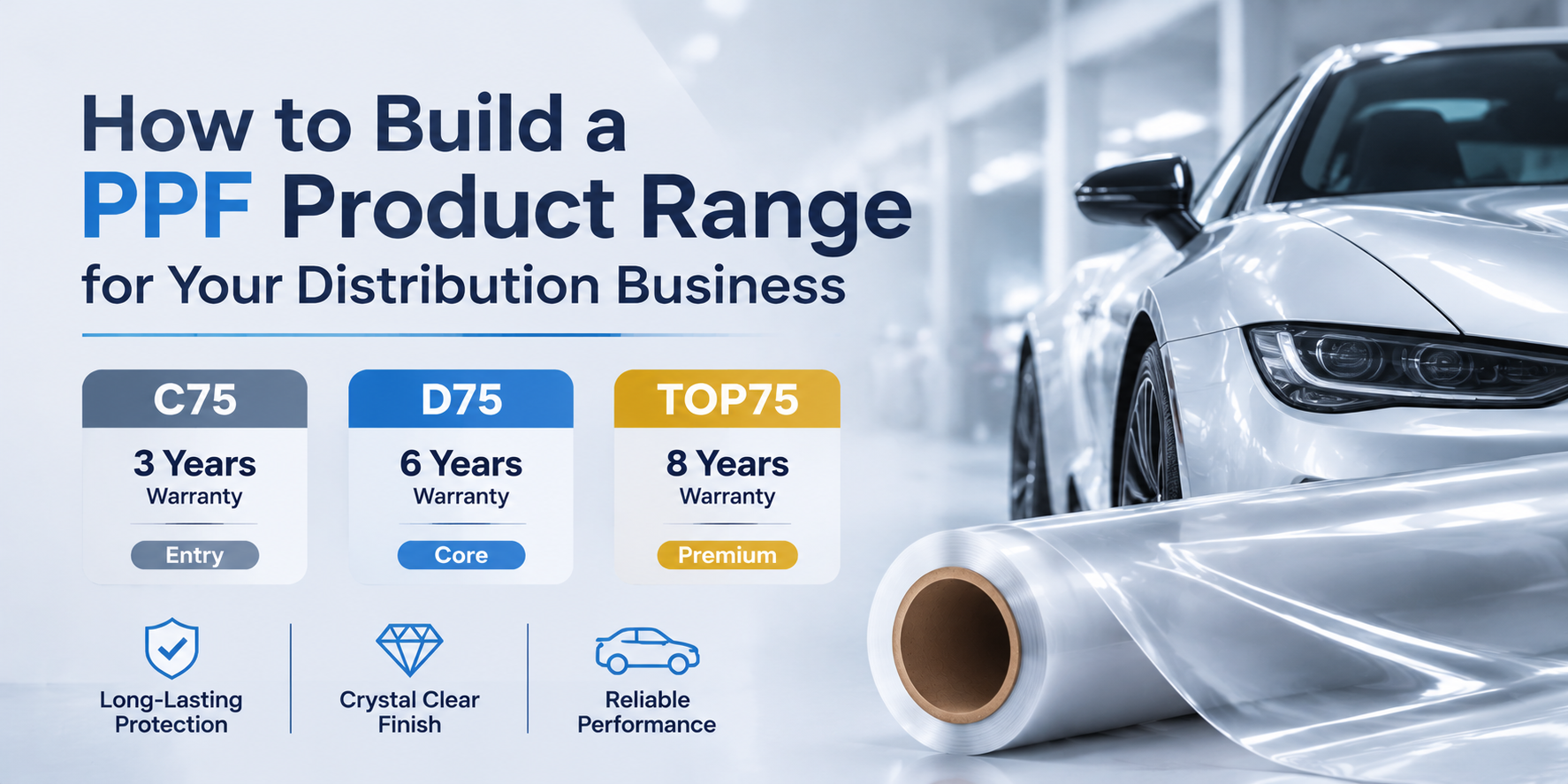
Thickness is one of the first specifications buyers compare when sourcing PPF. Different thickness options allow distributors to build product ranges for different customer expectations and price levels.
But a thicker film is not automatically a better film. Thickness alone cannot explain the quality of the TPU, adhesive performance, coating characteristics, or overall construction.
A more practical approach is to evaluate thickness together with material properties and the intended application. For example, buyers comparing 6.5 MIL, 7.5 MIL, and 8.5 MIL products should look beyond the numbers and review the complete specifications.
The TPU-TOP Series offers several thickness options:
| Model | Thickness | Color / Finish | Surface |
|---|---|---|---|
| TOP65 | 6.5 MIL | Transparent | Hydrophilic |
| TOP75 | 7.5 MIL | Transparent | Hydrophilic |
| TOP85 | 8.5 MIL | Transparent | Hydrophilic |
| TOP95 | 9.5 MIL | Transparent | Hydrophilic |
| TOPS75 | 7.5 MIL | Transparent | Hydrophobic |
| TOPS85 | 8.5 MIL | Transparent | Hydrophobic |
| TOP75 Glossy Black | 7.5 MIL | Glossy Black | Hydrophobic |
| TOP75 Matte Black | 7.5 MIL | Matte Black | Hydrophobic |
| TOP75 Matte | 7.5 MIL | Matte | Hydrophobic |
| TOP80 Matte | 8.0 MIL | Matte | Hydrophobic |
The range gives distributors flexibility when building product combinations. Instead of offering only one thickness, they can select options according to their target customers and market positioning.
For more detail, read 6.5mil vs 7.5mil vs 8.5mil PPF: What’s the Difference?.
3. Understanding TPU Elongation Beyond the Numbers
Elongation is another specification worth examining when comparing TPU materials. It describes how much a material stretches before breaking under specified test conditions.
For PPF buyers, this provides a reference for understanding the physical characteristics of the TPU base material. However, breaking elongation should not be confused with installation stretchability. The behavior of finished film also depends on its complete construction and other material properties.
The TPU-TOP Series has the following base material breaking elongation specifications:
| Model | Base Material Breaking Elongation |
|---|---|
| TOP65 | 305% |
| TOP75 | 340% |
| TOP85 | 361% |
| TOP95 | 368% |
| TOPS75 | 345% |
| TOPS85 | 362% |
| TOP75 Glossy Black | 310% |
| TOP75 Matte Black | 428% |
| TOP75 Matte | 362% |
| TOP80 Matte | 355% |
These figures help buyers compare the listed TPU base materials, but they should not be used as the sole basis for ranking finished PPF products. A more complete evaluation should combine material data with sample installation and product assessment.
4. Hydrophilic or Hydrophobic: Which Surface Is More Suitable?
Surface behavior is another factor that differentiates PPF products.
Hydrophilic surfaces allow water to spread more readily across the surface, while hydrophobic surfaces encourage water to form droplets. These characteristics create different water-interaction behaviors and may appeal to different customer preferences.
Neither surface type is universally superior. The right choice depends on the market’s expectations, the desired appearance and maintenance preferences.
For distributors, offering both options can make a product range more adaptable. The TOP and TOPS transparent options provide this choice within the same series.
Learn more in Hydrophobic vs Hydrophilic PPF: Key Differences Explained.
5. Why Product Range Matters to Distributors
A premium PPF range should not only focus on one specification. It should also give distributors enough flexibility to serve different customer groups.
Some customers prefer transparent film that preserves the vehicle’s original appearance. Others may be interested in changing the vehicle’s look through matte or black finishes.
The TPU-TOP Series includes transparent, glossy black, matte black, and matte options. Combined with different thicknesses and surface characteristics, this gives distributors more choices when planning their product portfolios.
For businesses selling PPF across different market segments, this flexibility can be useful. It allows them to offer different product configurations without treating every customer requirement as the same.
6. How Should Buyers Evaluate a Premium PPF Supplier?
A premium product positioning should be supported by more than a specification sheet. Before placing a bulk order, distributors should consider several practical factors:
- Material transparency: Can the supplier clearly identify the materials used in the film’s construction?
- Specification consistency: Are technical specifications clearly documented for each product option?
- Sample evaluation: Can buyers inspect and install samples before making a purchasing decision?
- Product range: Does the supplier offer suitable thicknesses, surface options, and finishes for the target market?
- Warranty clarity: Are the warranty period and coverage conditions clearly defined?
These checks help buyers distinguish between a product with attractive marketing claims and one supported by clear product information and verifiable evaluation.
For more purchasing considerations, see How to Identify High Quality Paint Protection Film.
FAQ
1. Does a higher price always mean better PPF quality?
No. Price can reflect material selection, product configuration, manufacturing costs, and supplier positioning, but it does not independently prove performance. Buyers should compare the complete specifications, request samples, and review warranty conditions before deciding whether a product offers suitable value.
2. Is TPU origin more important than adhesive and coating selection?
Not necessarily. TPU is an important part of PPF, but the adhesive and top coating also contribute to the finished product. A balanced evaluation should consider all three components rather than treating the origin of one material as a complete quality indicator.
3. Should distributors offer both hydrophilic and hydrophobic PPF?
Offering both can help distributors serve customers with different surface preferences. The choice should be based on local market demand, product positioning, and the characteristics customers value. Neither surface type needs to replace the other across every product range.
4. What should buyers verify before purchasing premium PPF in bulk?
Buyers should check material information, technical specifications, sample performance, production consistency, and warranty coverage. It is also useful to confirm whether the supplier can maintain consistent specifications across repeat orders.
Further Reading
On this site:
- How to Choose TPU for Paint Protection Film — Understanding TPU material selection.
- 6.5mil vs 7.5mil vs 8.5mil PPF: What’s the Difference? — Comparing common thickness options.
- Hydrophobic vs Hydrophilic PPF: Key Differences Explained — Understanding surface behavior.
- How to Identify High Quality Paint Protection Film — Practical product evaluation.
Conclusion
Premium PPF is not defined by one impressive number or a single material origin. It is the result of a considered material configuration, suitable physical properties, surface options, and consistent product specifications.
With USA-sourced glue and TPU base material, a Japan-sourced paint coat, multiple thicknesses, and different finish options, the TPU-TOP Series offers a relatively premium product range for distributors seeking more flexibility in their PPF selection.
Get a Free Sample or Quote
Looking for a reliable window film supplier? Contact us today for fast response and professional support.