Wet Glaze vs Mechanically Attached Safety Film: Which Installation Method Is Right?
Published: September 4, 2026 · 7 min read · Category: Safety & Security Film
About this article: KSB Window Film provides frame attachment specification guidance alongside our security film products. Frame attachment method is the most consequential installation decision in security film projects — this guide explains the options clearly.
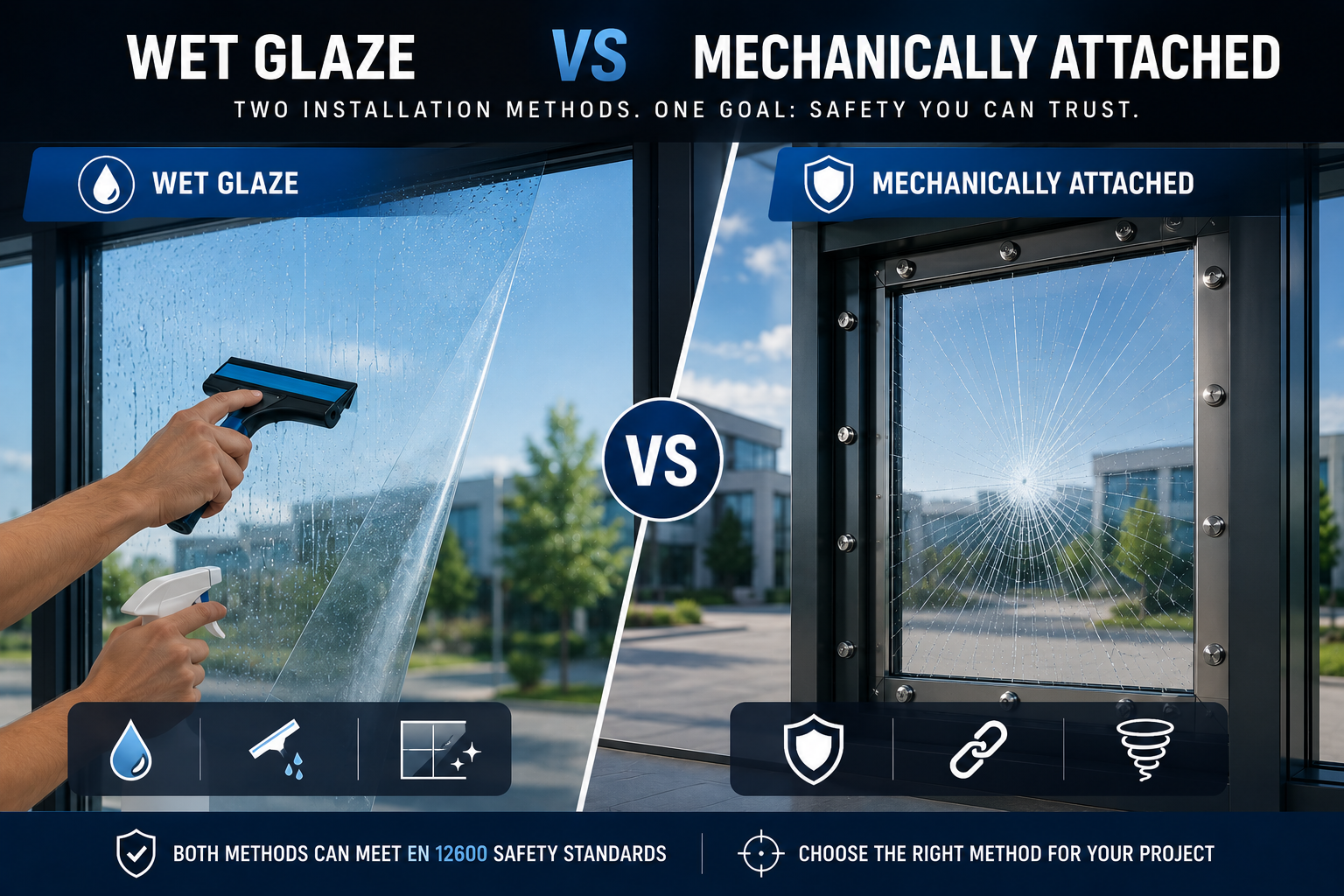
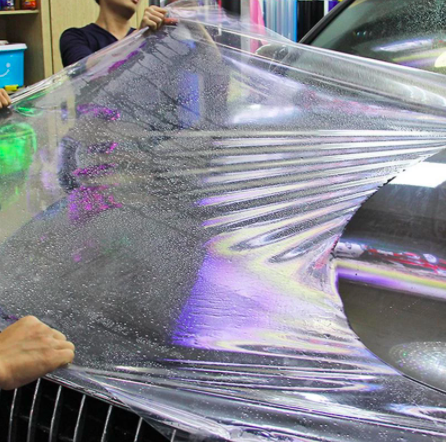
Comparison of wet glaze and mechanically attached installation methods for security window film systems.
Most buyers who research security window film learn that frame attachment is important. Fewer understand that “frame attachment” describes two fundamentally different methods with different performance profiles, different installation requirements, and different appropriate applications. Getting the method right matters as much as getting the film thickness right.
Why Frame Attachment Exists
Security film without frame attachment holds glass fragments together, but the intact film-glass unit can be pushed inward as a whole after the glass is broken. The glass-film unit is bonded to the glass surface by the film adhesive, but it’s not bonded to the building structure. One push inward defeats the security.
Frame attachment bonds the film edge (or the glass-film unit perimeter) to the window frame, which is itself structurally connected to the building. Now the glass-film unit cannot be pushed through — an attacker must physically defeat the film material itself, not just push an intact panel inward.
Both wet glazing and mechanical attachment achieve this bonding. They do it differently and with different performance characteristics.
Method 1: Wet Glazing (Structural Silicone)
What It Is
Wet glazing uses structural silicone sealant to bond the film edge to the window frame. The silicone provides both adhesion and elastic deformation capacity — it can absorb movement and energy while maintaining the bond.
How It’s Installed
After film application, the installer:
Cleans the frame perimeter and primes it (silicone requires a clean, primed surface)
Applies a structural silicone bead along the film edge, bridging between the film surface and the frame
Allows the silicone to cure (typically 24–48 hours before the installation can be loaded)
The silicone bead typically runs along all four edges of the film, encapsulating the film perimeter within the adhesive system.
Performance Characteristics
Flexibility: Structural silicone is elastic — it can absorb in-plane and out-of-plane movement without bond failure. This makes wet glazing effective for blast applications where the glass-film unit moves under pressure before the frame absorbs the load.
Blast resistance: Wet glazing is the preferred frame attachment method for blast-rated installations. The elastic silicone absorbs energy as the film-glass unit deflects under blast overpressure, then transfers the load to the frame.
Waterproofing: The silicone bead also weatherproofs the film edge, protecting the adhesive from moisture ingress that can cause edge lifting over time.
Limitation: The silicone bond strength depends heavily on surface preparation and application quality. Poorly primed surfaces, contaminated frames, or silicone applied in cold/humid conditions can produce inadequate bond strength that isn’t visually detectable.
When to Specify
Blast film applications (government, embassy, high-threat commercial)
External wet-glazed curtain wall systems
Any application where the frame is recessed or the film edge needs weatherproofing
Applications requiring EN 12600 Class A or LPS 1270 Class A3+ performance
Method 2: Perimeter Attachment Tape (PAT)
What It Is
Perimeter attachment tape uses a structural pressure-sensitive adhesive tape to bond the film edge to the window frame. The tape bridges from the film surface to the frame surface, creating the mechanical connection.
How It’s Installed
After film application and trimming:
The frame surface adjacent to the film edge is cleaned and may be primed
PAT is applied along the film edge, pressing firmly to bond to both the film and the frame
The tape achieves full bond strength within 24–72 hours
PAT installation is simpler and faster than wet glazing, and doesn’t require cure time before loading.
Performance Characteristics
Simplicity: Faster installation, no cure time, more tolerant of imperfect surface conditions than structural silicone.
Adequate for most commercial security applications: PAT-based frame attachment with 8 mil film achieves LPS 1270 Class A1 or A2 in most tested configurations — adequate for retail security, schools, standard commercial buildings.
Less suitable for blast: PAT is generally not specified for blast applications. The tape doesn’t provide the elastic energy absorption that structural silicone offers under blast loading.
Aesthetic consideration: A visible strip of tape at the frame edge is slightly more obvious than a clean silicone bead. In heritage or premium aesthetic settings, wet glazing may be preferred for visual reasons.
Applications where wet glazing cure time is operationally inconvenient
LPS 1270 Class A1 or A2 requirements
Retrofit installations where surface preparation for silicone is challenging
Method 3: Mechanical Channels
What It Is
Mechanical channels are metal profiles (typically aluminium or steel) that are mechanically fastened to the window frame and capture the film edge within the channel. The mechanical connection is rigid, not adhesive.
Performance Characteristics
Highest resistance: Mechanical channels provide the most robust frame attachment — not dependent on adhesive bond quality. Required for the most demanding blast specifications and for some LPS 1270 Class A4 applications.
Structural load transfer: The mechanical fasteners directly transfer load from the glass-film unit to the frame structure. For government blast standards (GSA, UFC), mechanical channels may be required in addition to wet glazing.
Installation complexity: Requires drilling into the frame and structural considerations that other methods don’t. Typically specified by a structural or security engineer.
Visual impact: Metal channels visible at the frame perimeter change the glazing appearance. Slimline profiles minimise this but it’s not invisible.
When to Specify
Government and embassy blast applications
Highest-class LPS 1270 (A4) requirements
Applications where adhesive methods are insufficient due to frame construction
Military and critical infrastructure specifications
Comparative Summary
Factor
Wet Glazing
Attachment Tape
Mechanical Channels
Installation complexity
Medium
Low
High
Cure time required
Yes (24–48h)
No
No
Blast resistance
High
Low
Highest
Forced entry resistance
High (LPS A2–A3)
Moderate (LPS A1–A2)
Highest (LPS A3–A4)
Surface prep requirements
Demanding
Moderate
Demanding
Visual impact
Minimal (clean bead)
Slight (tape edge)
Moderate (channel visible)
Cost
Medium
Low
High
Typical applications
Blast, high-security
Commercial security
Government, critical infra
FAQ
Can I use attachment tape on a blast film installation?
Standard PAT is generally not appropriate for blast applications — it doesn’t provide the elastic energy absorption needed for blast load transfer. Structural silicone wet glazing (or mechanical channels) is required for blast-rated installations.
Does the frame material affect attachment method choice?
Yes. Aluminium frames are the most straightforward for all three methods. Timber frames can accept wet glazing and attachment tape but may require additional substrate preparation. Steel frames may need specific primer systems for silicone adhesion. Composite or uPVC frames require compatibility verification — some frame materials are incompatible with structural silicone.
Can frame attachment be added to an existing film installation that didn’t have it?
Yes — attachment tape can be applied to existing film installations. Wet glazing can typically be applied to existing film if the film edges are clean and accessible. This is a common retrofit upgrade when a property upgrades its security specification without replacing the film.
KSB Window Film provides product-specific frame attachment guidance — specifying the appropriate method for your film product, frame type, and performance target. We work with installers on both standard PAT and wet-glazed installations.