Published: June 16, 2026 · 9 min read · Category: Sourcing Guide
There’s a version of window film supplier verification that most buyers do: they get a sample, it looks good, the price works, and the supplier’s Alibaba profile shows “Gold Member since 2017.” Order placed.
Then there’s the version that actually protects you.
The gap between those two approaches is where most costly sourcing mistakes originate — not outright fraud, usually, but factories misrepresenting their manufacturing capability, products that perform well on the first order and drift on subsequent ones, or suppliers with no experience exporting to your specific market who create compliance headaches you end up solving.
This article lays out a systematic verification process: what to check, how to check it, and what the results tell you.
Step 1: Verify the Business Registration
英文版切片_19-1.jpg)
The first document to request from any Chinese supplier is their 营业执照 (yíngyè zhízhào) — business license. This is a government-issued document that every legally operating Chinese company is required to hold and display.
What to look for:
- Registered name: Does it match the name on all correspondence, invoices, and export documents? Discrepancies between the trading name and the registered legal name are common and not always problematic — but you need to know the legal entity you’re contracting with.
- Business scope (经营范围): This section lists what the company is legally permitted to do. Look for manufacturing-related terms: 生产 (production), 制造 (manufacturing), 加工 (processing). A scope that only lists 销售 (sales) or 贸易 (trading) without manufacturing terms means you’re dealing with a trading company, regardless of what they claim.
- Registered capital: Not a direct quality indicator, but very low registered capital (under ¥500,000) for a company claiming to be a major manufacturer is worth noting.
- Registration date: How long have they been operating under this registration?
How to verify it’s real: Chinese business registrations are publicly searchable through the National Enterprise Credit Information Publicity System at gsxt.gov.cn. Enter the company name in Chinese (which the supplier should provide) and you can verify the registration details independently.
Step 2: Cross-Reference the Physical Address
The address on the business license should correspond to an actual manufacturing facility.
How to check: Enter the address into Google Maps, Baidu Maps, or both — satellite view and street view where available. Ask yourself: does the physical location look like it could house a manufacturing operation? Industrial zones, loading docks, large floor plates, utility infrastructure — or is it an office building in a commercial district?
A few scenarios to watch for:
- Commercial address for a claimed manufacturer: A supplier listing an office in a downtown business park can’t have a sputtering line there. They’re either operating from a different (undisclosed) location or sourcing from another factory.
- Address doesn’t match on satellite: If the factory is listed in one city’s industrial zone but Google Maps shows a field, the address may be fictitious, outdated, or the registration may cover a different location than production.
- Very small facility for claimed capacity: A 2,000 square meter building cannot house a full window film production line including PET storage, coating operations, lamination, slitting, QC lab, and finished goods warehouse simultaneously. If the footprint doesn’t match the capacity claim, probe further.
Step 3: Check Their Export History
This is one of the most underused verification tools available to buyers, and it’s genuinely powerful.
Panjiva and ImportGenius are commercial trade intelligence platforms that index US customs import records. Every shipment entering the US by ocean freight generates a public customs record — shipper name, consignee, product description, weight, and port of origin. These records are searchable by company name or address.
What to search for: Enter the supplier’s company name or the address listed on their business license. Look at:
- Are there actual export records? A self-described major manufacturer with zero US shipment records from their listed address has either never sold to the US market or is operating from a different location than they’ve disclosed.
- What products are they shipping? Does “window film” or “solar control film” appear in the product descriptions, or are they shipping something entirely different?
- What’s the volume? Irregular or very small shipments suggest they’re not the volume player they claim.
- Who are they shipping to? If the consignee names are recognizable distributors in your market, that’s useful market intelligence about who their existing customers are.
Note: These databases primarily cover US import records. For EU-bound shipments, similar services exist but coverage is less comprehensive. For orders going elsewhere, Panjiva’s global database has partial coverage from other trade data sources.
Step 4: Verify Certifications Independently
When a supplier sends you an ISO certificate, SGS report, or any other credential, don’t just accept the PDF. Verify it.
ISO 9001: Every legitimate ISO certificate has a certificate number and names the certification body (CB) that issued it. Look up the CB on the IAF (International Accreditation Forum) member database to confirm they’re an accredited registrar. Then go directly to the CB’s website and use their certificate verification function — most accredited registrars have a public lookup by certificate number. If the certificate number doesn’t appear in their database, the certificate is either fraudulent or expired.
SGS / Intertek / Bureau Veritas test reports: These reports should include the lab’s accreditation reference and can be cross-checked through ILAC (International Laboratory Accreditation Cooperation). More practically: check that the report is product-specific (names the actual product you’re evaluating), recent (within 12–18 months), and was conducted to a recognized standard — not an internal methodology the factory designed themselves.
Red flags in certification documents:
- Certificate scope that covers “sales and trading” rather than manufacturing
- Issuing body with no searchable web presence or IAF accreditation
- Test reports with no product name, only a generic range description
- IR rejection data with no wavelength range specified
- Reports that appear to be screenshots or low-quality scans of scans
The full certification verification framework is in What Certifications Should a Window Film Manufacturer Have?
Step 5: Request and Evaluate Samples Systematically
Samples are not just about checking whether you like the product — they’re a verification tool.
What to request:
- Minimum one roll of each SKU under consideration (standard sample lengths are fine — 3–5m)
- The corresponding technical data sheet for each product
- The SGS or Intertek test report that corresponds to the specific sample
What to test:
VLT verification: A basic tint meter (available from industry suppliers for under $200) will give you the actual VLT measurement. Compare it to the claimed spec. A product labeled “35% VLT” that measures 28% or 42% is telling you either the spec is wrong or quality control is loose.
Optical clarity: Install a section on clean flat glass and look through it at a straight horizontal line some distance away. Ripple, haze, or rainbow iridescence at oblique angles are signs of coating or lamination quality issues.
Adhesive behavior: How does it install? Does it position and reposition without tearing? Does it air out cleanly? Does it hold flat without edge lifting after 48 hours? Adhesive problems that show up at the sample stage will show up at scale.
Color consistency across the roll: Look at the sample from the beginning, middle, and end. Inconsistent tint depth across a single roll indicates coating uniformity problems.
What the sample response process itself tells you: How long did it take from sample request to receipt? Was there a mix-up in what was sent? Did the TDS match the product? These logistical details about a simple sample order are a preview of how the supplier manages complexity on larger orders.
Step 6: Conduct a Factory Audit
For any supplier you’re considering as a primary source — or for any order above a threshold you’re comfortable with — a factory audit before the first order is worthwhile.
Option A: Visit in person If you’re China-based, or if a trip can be combined with Canton Fair attendance or other supplier visits, an in-person visit is the most complete option. Use the Window Film Factory Audit Checklist to structure the visit.
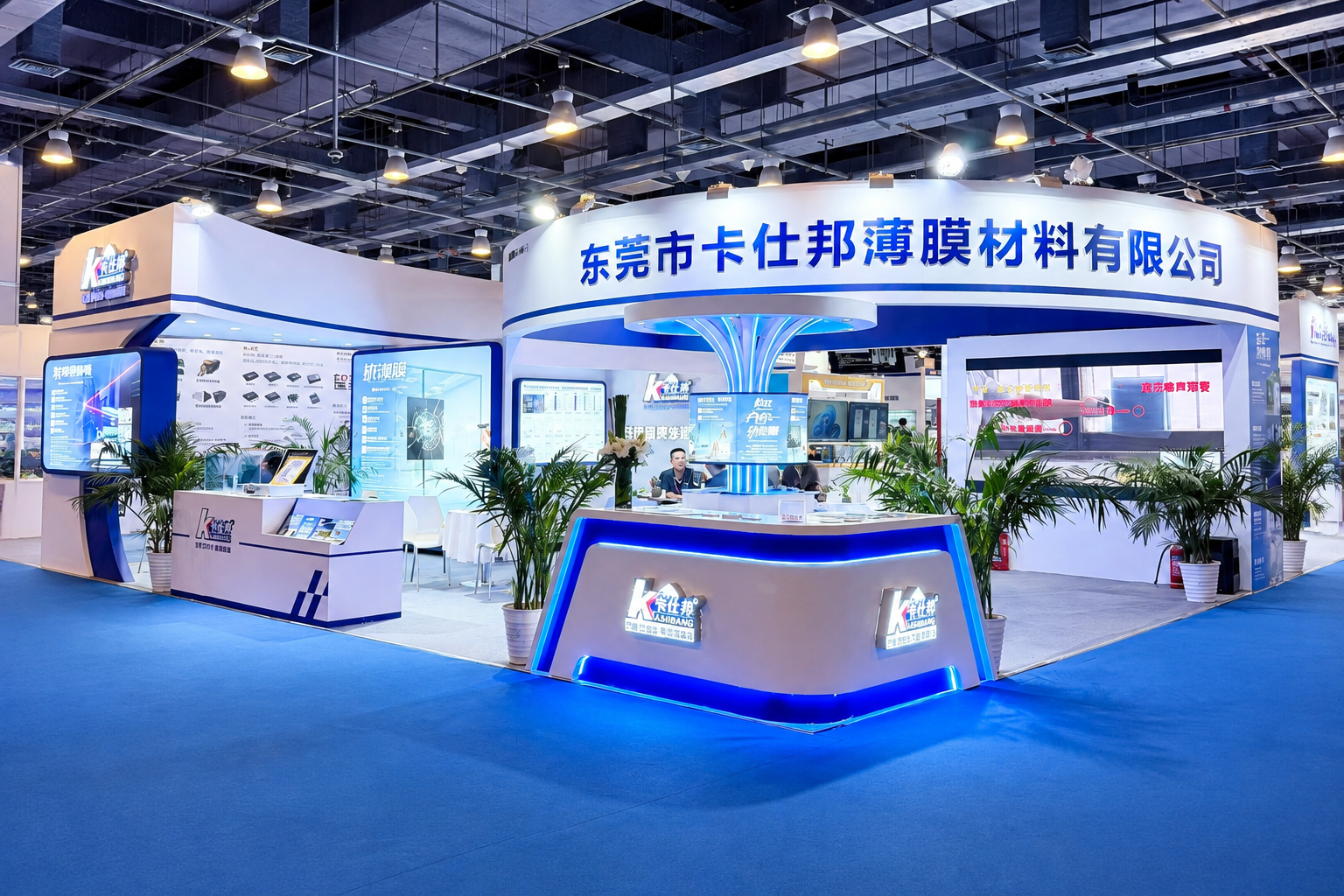
Key things to look for: the production equipment actually matching the claimed product category (a sputtering line for ceramic film, appropriate wet coating for dyed film), the QC lab containing functional testing equipment, raw material storage with traceability documentation, and the general condition and organization of the facility.
Option B: Third-party audit For buyers who can’t visit in person, hiring a third-party inspection company to conduct a factory audit is a well-established practice in China sourcing. Reputable services:
A standard factory audit takes one day on-site and costs roughly $400–$700 depending on location and scope. The resulting report covers facility capabilities, quality system documentation, and workforce information. It won’t catch every issue, but it catches the structural ones — and it also signals to the supplier that you’re a serious buyer who does proper due diligence.
Option C: Video audit As a minimum, request a live video walkthrough of the facility — not a pre-recorded promotional video. Ask the person on camera to show you specific things: the sputtering chamber, the QC lab, the raw material storage area. A supplier who won’t do a live video walkthrough with camera access to the production floor has something to hide.
Step 7: Check References
Ask for references from other international buyers — specifically buyers in similar markets to yours, or with similar order profiles.
Most established exporters have clients who are willing to take a reference call. The questions worth asking a reference:
- How long have you been buying from this supplier?
- Have you had quality issues? How were they resolved?
- How is their communication and responsiveness?
- Have lead times and delivery commitments been reliable?
- Would you source from them again?
Listen for what they don’t say as much as what they do. A reference who gives uniformly positive answers with no specific examples is probably more of a courtesy call than a genuine endorsement. A reference who says “their product is good but you need to stay on top of them on documentation” is giving you actually useful information.
Putting the Verification Picture Together
No single verification step gives you the complete picture — but together they do. Here’s a quick reference for what each step is designed to catch:
| Verification Step | What It Catches |
|---|---|
| Business license check | Trading company vs. manufacturer; registration status |
| Address cross-reference | Facility doesn’t exist or doesn’t match claimed capacity |
| Export history search | No actual export activity; wrong products; misrepresented volume |
| Certification verification | Fake or expired certifications; wrong scope |
| Sample testing | Performance gaps vs. claimed spec; adhesive or quality issues |
| Factory audit | Production capability misrepresentation; QC system gaps |
| Reference check | Reliability and relationship quality with existing buyers |
A supplier who passes all seven checks may still have problems you haven’t found. But a supplier who fails two or three of them has given you clear reasons to walk away before you’ve committed money or time.
FAQ
Q1: Why is factory verification important before ordering window film?
Factory verification helps buyers confirm manufacturing capability, product quality, and supplier reliability before placing bulk orders.
Q2: What documents should a window film factory provide?
A reliable factory should provide business licenses, certifications, test reports, and factory audit documents.
Q3: How can I confirm if the supplier owns production equipment?
You can request factory videos, production photos, equipment lists, or arrange a factory inspection to verify manufacturing facilities.
Q4: What should I check during a factory audit?
Key areas include production lines, quality control systems, raw material storage, packaging processes, and export experience.
Q5: Why are sample tests important before cooperation?
Sample testing allows buyers to evaluate heat rejection, UV protection, adhesive quality, and film clarity before mass production.
Q6: Can third-party inspections help verify a supplier?
Yes. Third-party inspections can confirm factory conditions, production capability, and product consistency before shipment.
Need help verifying a specific supplier before placing an order? Contact us — we’ve helped buyers assess manufacturers across China and can point you toward third-party audit services for your region.
Further Reading
On this site:
- Top Questionsto Ask Before Choosing a Window Film Supplier — The conversation side of supplier evaluation
- Window Film Factory Audit Checklist: 12 Questions to Ask Before You Partner — Structured framework for the facility visit
- What Certifications Should a Window Film Manufacturer Have? — Deep dive on certification verification
- Window Film Factory vs Trading Company: What’s the Difference? — Why the factory/trading distinction matters
- How to Import Window Film from China: Complete Buyer’s Guide — Verification in the context of the full import process
External:
- China National Enterprise Credit System — Official Chinese government business registration lookup
- IAF Member Database — Verify ISO certification body accreditation
- Panjiva Trade Intelligence — US import records by exporter
- QIMA Factory Audits — Third-party audit booking
- ILAC Laboratory Accreditation — Verify testing laboratory credentials
Get a Free Sample or Quote
Looking for a reliable window film supplier? Contact us today for fast response and professional support.