Published: June 5, 2026 · 10 min read · Category: PPF Guide
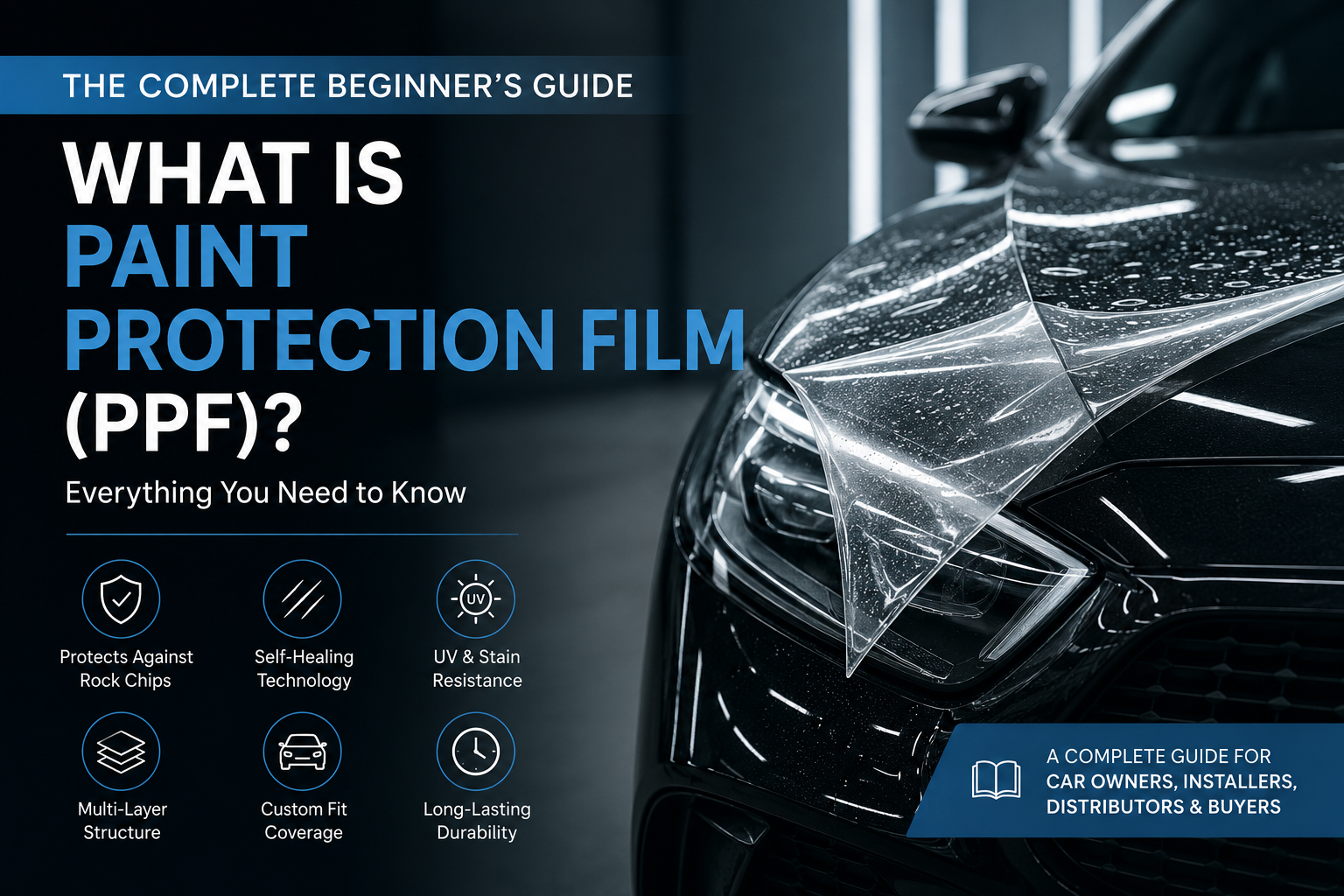
The first time most people hear about paint protection film is after they’ve already needed it — a new car with a rock chip in the hood, a door edge that got kissed by a shopping cart, a bonnet full of fine scratches from a drive down a gravel road. By that point, the conversation has shifted from “should I protect the paint?” to “how much is a respray going to cost?”
PPF exists to prevent that conversation. But between the marketing claims, the installer upsells, and the sheer number of products on the market, it can be hard to figure out what paint protection film actually is, what it does, and whether it’s worth the investment for your situation.
This guide covers everything a first-time buyer needs to know — without the sales pitch.
What Paint Protection Film Actually Is
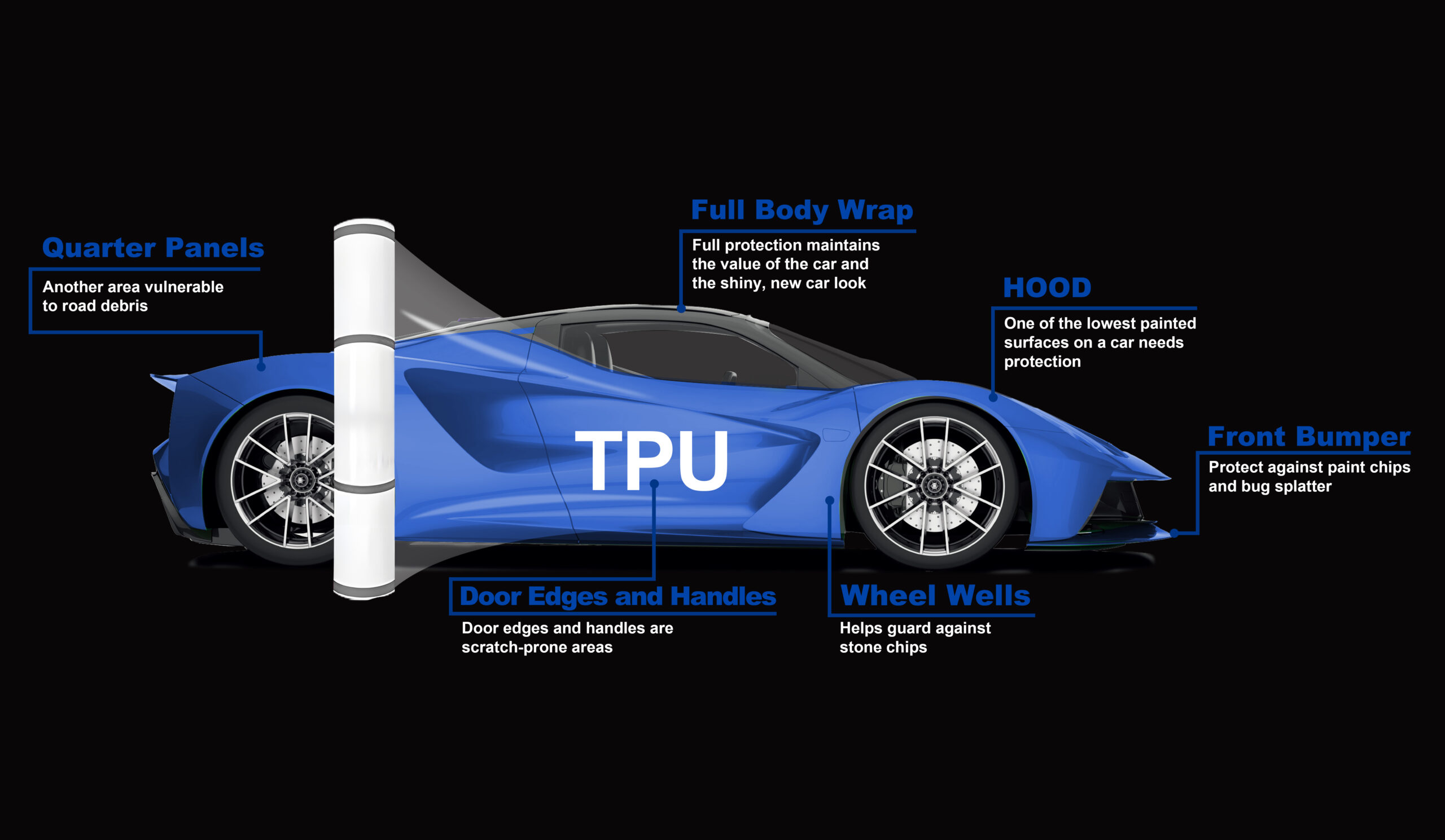
Paint protection film is a thermoplastic urethane (TPU) film applied directly to a vehicle’s painted surfaces. It’s transparent, typically between 6 and 10 mils thick (1 mil = 0.0254mm), and bonded to the paint using a pressure-sensitive adhesive.
The film sits as a physical barrier between the paint and the outside world. Gravel, road debris, insects, bird droppings, minor abrasions from car washing — the film takes the damage instead of the paint. On higher-quality films, surface scratches in the film itself can heal through a process called self-healing, where the top coat layer returns to its original state when exposed to heat.
PPF is not a ceramic coating. It’s not a vinyl wrap. It’s not window tint. It occupies a specific category: a sacrificial transparent protective layer designed to absorb physical impacts that would otherwise damage paint.
A Brief History: How PPF Got Here
Paint protection film was originally developed for military use — specifically for helicopter rotor blades and leading edges on military aircraft, where high-velocity debris impact was a constant problem. The US military needed a film that could take punishment without contributing weight or drag, and early versions of PPF were developed to meet that requirement.
The technology eventually made its way into automotive use, initially applied to high-value race cars and exotic vehicles where paint protection justified the cost and effort. By the late 1990s and early 2000s, aftermarket installation had become established in the US, and the category has expanded steadily since.
Today, PPF is a mainstream product. Major manufacturers ship to installers globally, full-vehicle coverage is standard practice on premium and luxury vehicles, and the technology has evolved significantly — from the thick, yellowing early products to today’s optically clear, self-healing films that are difficult to detect on a properly installed vehicle.
What PPF Protects Against
Understanding what PPF does and doesn’t protect against helps set realistic expectations before you spend money on an installation.
PPF protects against:
Rock chips and road debris. This is the primary use case. The film absorbs the kinetic energy of gravel and small stones striking the surface at speed. High-impact zones — leading edges of the bonnet, front bumper, behind wheel arches, lower door edges — are where rock chip damage concentrates, and where PPF provides the most obvious value.
Insect and bird dropping damage. Bug splatter and bird droppings contain acids that etch into clear coat if left on a painted surface, especially in direct sun. PPF provides a non-porous barrier that prevents etching and makes cleaning easier.
Fine scratches from washing and detailing. Swirl marks from automated car washes, light scratches from improper hand washing technique, and micro-abrasion from dirty wash mitts — these accumulate over time on bare paint. On PPF, the same mechanical action produces scratches in the film’s self-healing top coat that disappear with heat.
Minor abrasion damage. Brushing against a hedge, a narrow parking space, shopping trolley contact — these events leave marks on paint that require professional correction. The same event on PPF leaves a mark on the film that can either self-heal or be addressed by replacing the affected section.
PPF does not protect against:
Deep impacts. A stone large enough and traveling at sufficient velocity will go through the film and damage the paint underneath. PPF reduces the frequency and severity of impacts, but it’s not impact-proof.
Severe scratches. A key drawn deliberately across the surface will cut through PPF just as it cuts through paint — possibly more cleanly, since the film is softer than cured automotive clear coat.
Panel damage. PPF is not structural. A collision or a hard impact that dents a panel will dent it regardless of film coverage.
UV damage to paint underneath. Most quality PPF has UV inhibitors in the film itself, but these slow UV transmission rather than eliminating it. Long-term UV exposure on paint under film depends on the film’s UV blocking specification.
The Structure of a PPF Film
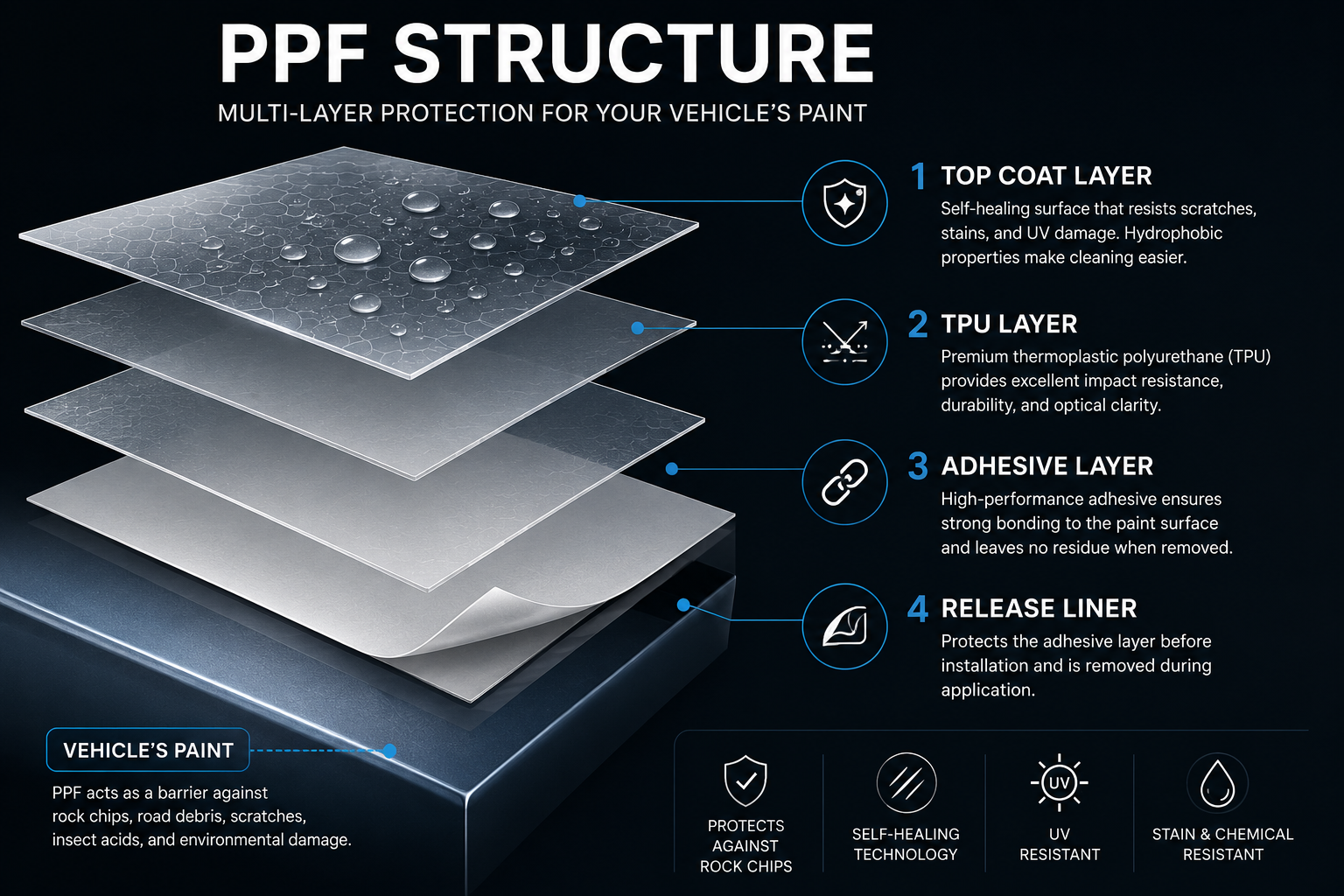
A finished PPF product is a multi-layer laminate, and understanding what each layer does helps explain why product quality varies significantly:
Clear coat / top coat: The outermost layer, typically a polyurethane coating. On self-healing films, this layer contains elastomers that allow it to return to a smooth state after light scratching. The hardness, clarity, and self-healing speed of the top coat are primary differentiators between premium and budget PPF products.
TPU base layer: The structural core of the film, providing flexibility, impact resistance, and optical clarity. TPU (thermoplastic urethane) is the dominant material in modern PPF because of its combination of toughness, clarity, and conformability. PVC was used in earlier products but has largely been superseded by TPU in quality applications.
Adhesive layer: The pressure-sensitive adhesive that bonds the film to the paint. Adhesive quality affects installation behavior, long-term adhesion stability, and whether the film can be removed cleanly without leaving residue or damaging paint.
Release liner: Protective backing that covers the adhesive until installation.
The relative quality of each layer contributes to the finished product’s performance. A film with a premium top coat on a low-grade TPU base will perform differently from one where all layers are specified to a consistent quality standard.
Self-Healing: How It Works and What to Expect
Self-healing is the feature that most distinguishes modern PPF from earlier products, and also the feature that generates the most confusion about what it actually does.
The self-healing property resides in the top coat layer. The top coat contains polymer chains with elastic memory — when the surface is scratched by light abrasion (fingernail, fine grit, light key contact), the polymer chains deform. When heat is applied — direct sunlight, warm water, a heat gun — the chains relax back toward their original configuration, and the scratch disappears.
What this means practically:
- Fine scratches from car washing or detailing typically self-heal within minutes in direct sunlight or with warm water
- Light swirl marks disappear with ambient heat over hours
- Deeper scratches — anything that noticeably catches a fingernail — may partially improve but won’t fully heal
- The self-healing property is in the top coat, not the film body — the film can still be cut, punctured, or abraded through to the adhesive
Self-healing speed varies by product. Some premium films will heal fine scratches in direct sunlight in under 20 minutes. Lower-grade products may take longer or require more heat. In cold climates, ambient self-healing is slower — a bucket of warm water accelerates the process.
PPF vs. Ceramic Coating vs. Vinyl Wrap
These three products are frequently confused, partly because they’re often sold and installed by the same shops and sometimes applied together. They do different things.
PPF: Physical protection from impact, abrasion, and chemical damage. Transparent. Protects the paint but doesn’t change its appearance (except gloss vs. matte finish options). The only option for meaningful rock chip protection.
Ceramic coating: A liquid polymer applied to paint (or over PPF) that creates a hydrophobic hard layer. Protects against chemical etching, UV damage, and minor surface contamination. Makes cleaning dramatically easier. Does not provide meaningful protection against rock chips or physical impact — it’s surface-hard, not impact-absorbent.
Vinyl wrap: Changes the vehicle’s appearance (color, texture, finish). Provides some minor surface protection. Not designed for long-term durability or impact resistance in the way PPF is. Typically replaced every 3–5 years as a style decision rather than a protection decision.
Many vehicles get all three: PPF on high-impact areas for physical protection, ceramic coating over the PPF for hydrophobic protection and easy maintenance, and sometimes vinyl on specific panels for aesthetic effect.
Where PPF Is Typically Applied
Full vehicle coverage is an option — and for high-value or new vehicles, it makes sense. But many buyers apply PPF selectively to the highest-risk areas:
High-impact zones (most commonly protected):
- Full bonnet (hood) — primary rock chip target at highway speeds
- Front bumper — lower section catches the most debris
- Front fenders — leading edge and wheel arch area
- Mirrors — frequently clipped in tight spaces and car washes
- Rocker panels — lower body between wheel arches, exposed to road debris and road grime
- Door edges — where parking lot door-ding damage concentrates
- Door cup handles — fingernail wear over thousands of open/close cycles
Rear protection:
- Boot lid / trunk lid — stone chip from the vehicle ahead while following
- Rear bumper — loading damage, reverse parking contact
Additional areas on full-coverage installs: Pillars, roof, full doors, headlights, and any other painted surface can be covered on full-vehicle installs.
How PPF Is Priced
PPF pricing varies based on three main factors: the film product chosen, the coverage area, and the installer.
Film product spans a wide range — from budget PVC-based films at the lower end to premium TPU products from established manufacturers. The material cost per square meter can vary by 300–500% between the cheapest and most expensive options.
Coverage area is straightforward — more surface covered means more material and more installation labor. A partial front-end kit (bonnet, bumper, mirrors) costs significantly less than a full-vehicle wrap.
Installer skill and location have substantial impact on pricing. PPF installation is genuinely skilled work — complex curves, panel overlaps, edge tucking, and avoiding contamination under the film require training and practice. Installers in major cities with high overheads and strong reputations charge accordingly.
Broad reference ranges (these vary significantly by market and installer):
- Partial front end: $400–$900 USD
- Full front end: $800–$2,000 USD
- Full vehicle: $2,500–$7,000+ USD
These numbers shift with film product choice, vehicle complexity, and local market pricing.
Is PPF Worth It?
For new vehicles, high-value vehicles, and vehicles driven regularly at highway speeds in conditions with road debris — the cost-benefit calculation usually works in PPF’s favour. A single bonnet respray can cost $800–$2,000 depending on paint type and market. A full PPF bonnet installation that prevents that respray over five years has paid for itself.
For older vehicles with existing paint imperfections, lower-value vehicles where the insurance claim would cover damage anyway, or primarily urban drivers who rarely encounter high-debris conditions — the calculus is different.
The honest answer is that PPF is worth it for the vehicles and driving conditions where it will actually be tested. For the rest, the money may be better spent elsewhere.
Thinking About PPF for Your Product Line?
If you’re a distributor or installer looking to add PPF to your offering — or if you’re sourcing PPF material for OEM or wholesale purposes — the choice of film product and supplier matters significantly. The gap between premium and budget PPF is larger than in most automotive film categories.
→ Contact us about PPF sourcing — we work with buyers across automotive and specialty film categories and can connect you with verified TPU PPF manufacturers.
Further Reading
On this site:
- TPU vs PVC PPF: Which Paint Protection Film Is Better? — Material comparison for the two main PPF types
- Gloss PPF vs Matte PPF: Which Finish Should You Choose? — Finish options and when each makes sense
- 6.5mil vs 7.5mil vs 8.5mil PPF: What’s the Difference? — Thickness tiers and performance implications
- How Long Does Paint Protection Film Last? — Lifespan, warranty, and what affects durability
- OEM Window Film vs Private Label: Which Is Better? — Sourcing model guidance applicable to PPF as well
External:
- SEMA (Specialty Equipment Market Association) — Industry body for automotive aftermarket products including PPF
- PNAA (Paint and Nänotechnology Association of America) — Resources on automotive paint protection
- Intertek Automotive Testing — Third-party testing for automotive protective films
- Consumer Reports: Paint Protection Films — Independent consumer product assessments
Get a Free Sample or Quote
Looking for a reliable window film supplier? Contact us today for fast response and professional support.