Published: August 1, 2026 · 8 min read · Category: Smart Film Guide
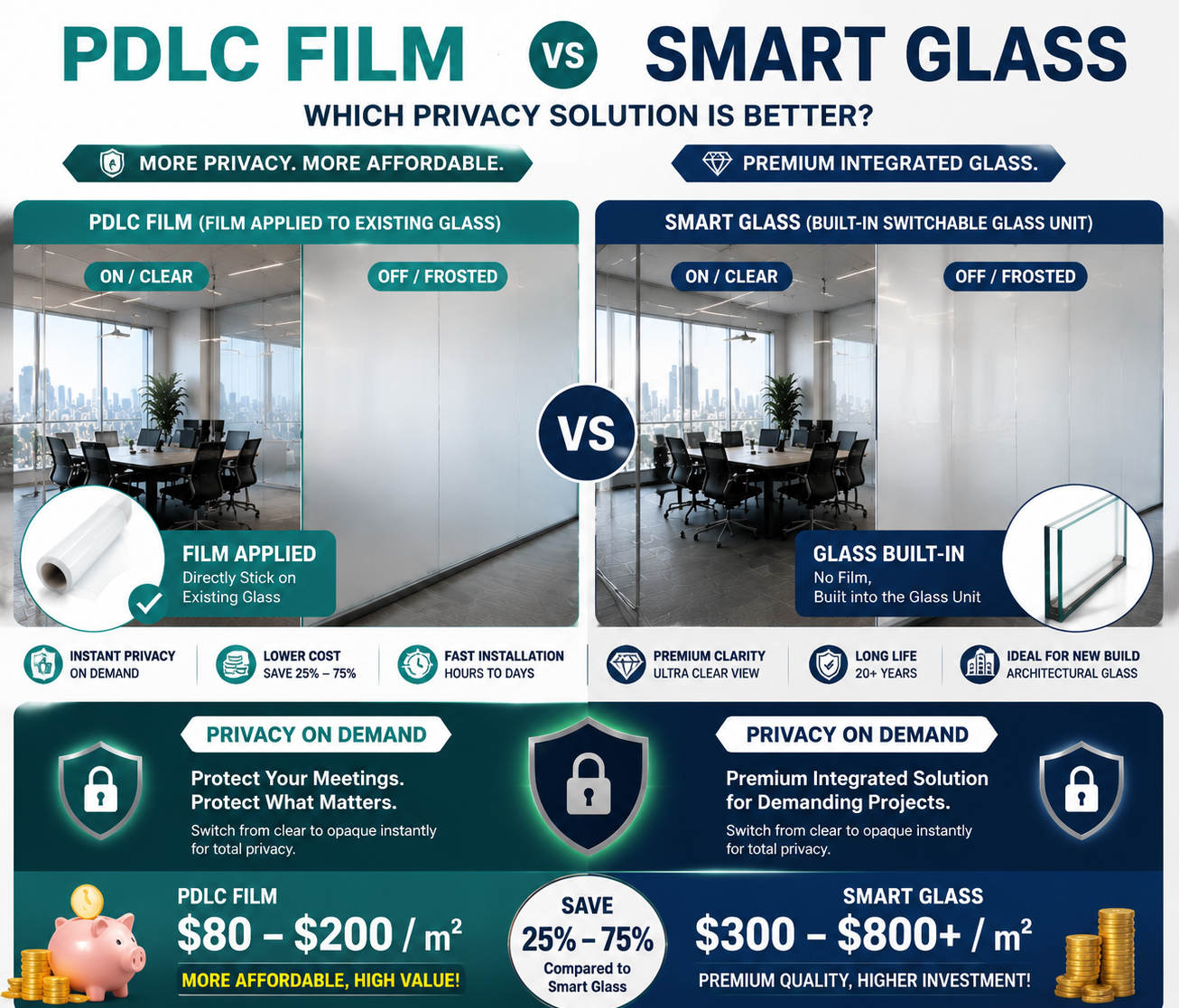
Architects, interior designers, and building owners face this question regularly: should we specify smart glass or smart film for this project? The functional outcome looks the same from across the room — a glass surface that switches between transparent and opaque on demand. The differences that matter are in cost, lead time, installation complexity, and long-term performance.
Neither is universally better. The right choice depends on whether the glass is being installed new or already exists, what the budget is, and what kind of performance and aesthetics the project demands.
Here’s how they actually compare.
What Each Product Is
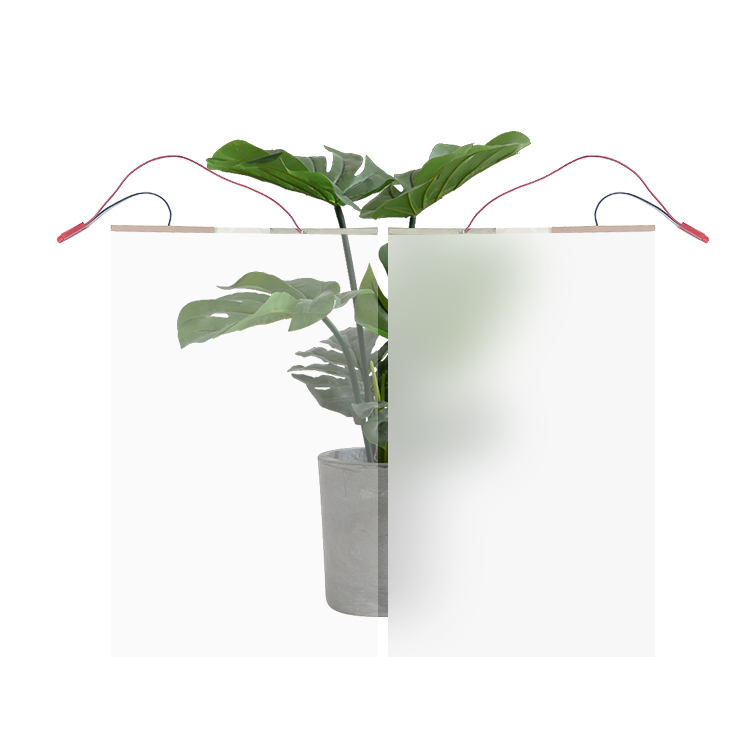
PDLC smart film is a laminated film applied to existing glass surfaces. The liquid crystal switching layer is embedded within the film, which is adhesive-backed for application to standard flat glass. It requires an external power supply and controller, but no modification to the glass itself.
Smart glass (switchable glass, electrochromic glass, or SPD glass depending on the specific technology) has the switching layer factory-integrated within the glass panel — sandwiched between two glass lites during manufacturing. It arrives on-site as a finished glazing unit and is installed like standard glass.
Cost: The Biggest Practical Difference
This is usually where the conversation starts and sometimes ends.
Smart film installed cost: $80–$200 per square meter, depending on market, product tier, and installation complexity. The film itself typically runs $30–$80/sqm; power supply, controller, wiring, and labor account for the rest.
Smart glass installed cost: $300–$800+ per square meter for PDLC-based smart glass; electrochromic and SPD (suspended particle device) technologies typically run higher. Frame fabrication, structural considerations, and specialized glaziers add to the cost.
On a 50 square meter conference room glazing project, the difference between smart film and smart glass can be $10,000–$30,000 or more. For projects where budget is a real constraint — which is most projects — this difference is decisive.
Installation: Retrofit vs. New Construction
Smart film can be applied to existing glass in a matter of hours to days. No structural changes. No glass replacement. An existing glass partition in an office refurbishment can be converted to switchable privacy glass in a day. This makes smart film the only viable option for retrofit applications where replacing the glass would require structural work, extended downtime, or is simply not practical.
Smart glass requires the glass to be specified and ordered before installation — typically with lead times of 4–12 weeks for custom sizes. It’s a construction-phase product. Retrofitting an existing building with smart glass means removing and replacing all the glass panels, which involves structural and glazing work that most renovation budgets don’t accommodate easily.
The retrofit advantage of smart film is often the deciding factor in commercial renovation projects, where tenants are fitting out leased space and can’t (or don’t want to) replace the landlord’s glazing.
Optical Performance
This is where smart glass has a genuine advantage on paper — and a qualified advantage in practice.
Smart glass in the transparent state is typically clearer, with lower haze (often below 1%) and no seams, edges, or bubbles from the film application process. The integration of the switching layer within the glass also means better long-term durability and resistance to delamination.
Smart film in the transparent state achieves haze levels of 1–5% depending on product tier. Premium products come very close to smart glass optical quality. Budget products can show noticeable haze, slight blue tint, or uneven clarity that is visible in certain lighting conditions.
In real-world applications — conference rooms, hotel bathrooms, office partitions — the difference between 0.5% haze (smart glass) and 2% haze (quality smart film) is imperceptible to most occupants. The visible difference only becomes apparent in direct side-by-side comparison or in applications with very high optical clarity requirements (museum display cases, precision optical environments).
For most commercial and residential applications: quality smart film delivers optically acceptable performance. For demanding architectural applications where glass quality is paramount, smart glass has a meaningful edge.
Durability and Longevity
Smart glass wins here, and it’s not particularly close.
With the active layer protected between two glass panels, smart glass is not susceptible to delamination, surface scratching, or edge lifting. It handles moisture and temperature cycling better than a film applied to glass surface. Most smart glass products carry 10-year warranties and are designed for 20+ year service life.
Smart film applied to interior surfaces in controlled environments (conference rooms, office partitions) can achieve 7–10 year service life with quality products. Film on exterior or high-UV-exposure surfaces has a shorter effective lifespan. The adhesive interface between film and glass is the vulnerability — good adhesive chemistry from reputable manufacturers minimizes this, but it remains the weak point compared to factory-integrated smart glass.
For exterior glazing or high-humidity environments (exterior facades, exterior swimming pool enclosures), smart glass is the more appropriate choice. For interior applications where replacement in 8–10 years is an acceptable business reality, smart film is competitive.
Customization and Lead Time
Smart film is available off-the-shelf in standard widths (typically up to 1.52m wide) and can be cut to size on-site or supplied pre-cut. Standard product is available from stock or with short lead times (1–3 weeks typically). Custom sizes within standard film widths are straightforward.
Smart glass is ordered to exact panel dimensions and typically has 4–12 week lead times for custom fabrication. Maximum panel sizes are constrained by manufacturing capability (most manufacturers up to 3m × 6m; very large panels can be more complex). Revisions to dimensions during the design process create delays and potential cost penalties.
For fast-moving commercial fit-out projects, smart film’s short lead time and on-site flexibility can be operationally decisive.
Control System Integration
Both products support similar control options — wall switches, building management system integration, timer control, mobile app, and voice control. The control systems are essentially identical because both use the same PDLC switching mechanism requiring AC voltage control.
One distinction: smart glass products from established manufacturers sometimes come with proprietary control systems that may offer more seamless integration with specific BMS platforms, though this advantage has narrowed as smart film suppliers have developed compatible controllers.
Which One for Which Situation?
| Factor | Smart Film Wins | Smart Glass Wins |
|---|---|---|
| Retrofit / existing glass | ✓ | |
| New construction with long lead time budget | ✓ | |
| Cost-constrained projects | ✓ | |
| Maximum optical clarity | ✓ | |
| Exterior glazing / high UV | ✓ | |
| Longest service life | ✓ | |
| Fast installation | ✓ | |
| Large one-off panel sizes | ✓ | |
| Flexibility to change later | ✓ | |
| Interior commercial renovation | ✓ |
The Practical Answer for Most Projects
For the majority of commercial interior renovation projects, office fit-outs, hospitality upgrades, and residential applications: smart film delivers 85–90% of smart glass functionality at 25–40% of the cost.
That’s a compelling value proposition for most buyers. The cases where smart glass is the clearly correct choice are narrowing as smart film quality improves — primarily exterior applications, very long-life new construction, and high-specification projects where budget is not a constraint.
1. Is PDLC smart film cheaper than smart glass?
Yes. PDLC smart film typically costs 25–40% of the installed cost of smart glass, making it a more affordable solution for most interior privacy applications.
2. Can smart film be installed on existing glass?
Yes. One of the biggest advantages of PDLC film is that it can be applied directly to existing glass without replacing the glazing system.
3. Does smart glass have better optical clarity?
Generally yes. Smart glass usually offers lower haze and slightly better transparency, although premium PDLC film provides comparable performance for most commercial applications.
4. Which lasts longer: smart film or smart glass?
Smart glass typically has a longer service life because the active layer is protected inside the laminated glass structure. Smart film generally provides 7–10 years of service in interior environments.
5. Which is better for office renovations?
PDLC smart film is usually the preferred option for office renovations because it can be installed on existing glass partitions with minimal disruption and lower project costs.
Further Reading
On this site:
- What Is Smart Film? Everything You Need to Know — Foundational overview of smart film products
- The Future of Smart Glass and Smart Film Technology— Innovations, Applications, and Market Trends
- PDLC Smart Film: Applications, Technical Realities, and Regulations by Region— A Complete Guide for Global Buyers
External:
- Glass Magazine — Smart Glass Technology — Industry coverage of switchable glass and film products
- ASHRAE Window Performance Standards — Building envelope standards applicable to both products
- Pilkington Glass Technical Resources — Leading glass manufacturer’s technical reference including switchable glass
Get a Free Sample or Quote
Looking for a reliable window film supplier? Contact us today for fast response and professional support.