PCDL-based TPU is often introduced through a short sales claim: better hydrolysis resistance, better weathering, or a longer-lasting PPF. Those claims point to real material considerations, but they skip the part that helps a buyer understand the material.
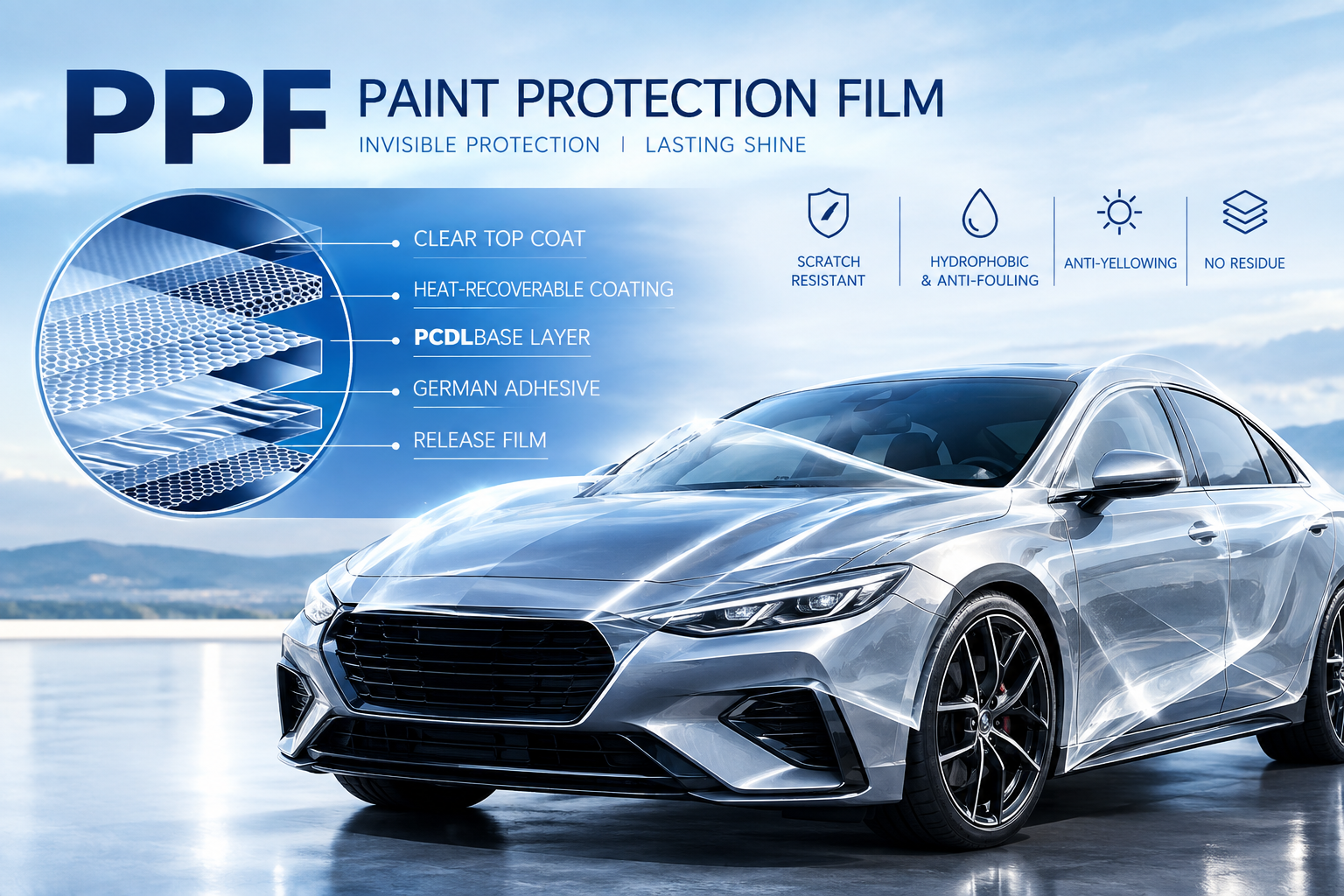
PCDL is not a finished film and it is not a rigid polycarbonate plastic. It is one of the raw-material building blocks used to make polyurethane. Its main role is in the soft segment of the polymer, where it influences flexibility, environmental resistance, and the way the material retains properties over time.
To understand what PCDL changes, it helps to begin with how TPU is built.
What Is PCDL
PCDL stands for polycarbonate diol. It is an oligomeric polyol containing carbonate groups in its backbone and hydroxyl groups at its ends. Those terminal hydroxyl groups allow it to react with isocyanates during polyurethane synthesis.
PCDL is available in different molecular weights and molecular structures. The diols used to build the polycarbonate chain can be linear, branched, or mixed. These choices affect viscosity, crystallinity, flexibility, compatibility, water uptake, and the properties of the final polyurethane.
For that reason, the phrase PCDL-based TPU identifies a chemistry family, not one fixed recipe.
How PCDL Is Used in TPU
Thermoplastic polyurethane is a segmented block copolymer. Its structure develops through reactions among three main inputs:
• A polyol, which forms much of the soft segment
• A diisocyanate
• A low-molecular-weight chain extender, which helps form hard segments
When PCDL is the principal polyol, the resulting material is commonly described as polycarbonate-based TPU or PCDL-based TPU.
The material remains thermoplastic because the hard segments form physical associations rather than permanent chemical crosslinks. Heat can soften the polymer for processing, while cooling allows the hard domains to reform and provide strength.
The chemistry is adjustable. Changing the PCDL molecular weight, isocyanate, chain extender, hard-segment percentage, and process conditions changes the balance among hardness, tensile strength, elongation, recovery, transparency, and adhesion.
This is why two suppliers can both claim PCDL-based TPU and still provide films with different behavior.
Hard Segments and Soft Segments in TPU
The soft and hard segments perform different jobs, but their interaction matters more than either segment alone.
Soft Segments
Soft segments are relatively flexible polymer chains. They contribute to elongation, low-temperature movement, softness, and elastic recovery. The type of polyol used in this segment also affects resistance to water, oils, chemicals, heat, and oxidation.
PCDL is one possible soft-segment chemistry. PCL, conventional polyester polyols, and polyether polyols are other common options.
Hard Segments
Hard segments are formed from the diisocyanate and chain extender. They associate into domains that reinforce the TPU. Their chemistry and content affect tensile strength, hardness, modulus, abrasion resistance, and thermal behavior.
Increasing hard-segment content does not simply make a film better. It may raise strength and hardness while reducing flexibility or changing adhesion and processing. Published work on PCDL-based TPU adhesives has shown that the hard-to-soft segment ratio materially affects peel strength and mechanical performance.
For clear outdoor PPF, the isocyanate choice is also important. Aliphatic isocyanate chemistry is generally preferred where resistance to UV-induced color change is required. PCDL does not replace that requirement.
PCDL PCL Polyester and Polyether
The table below summarizes broad tendencies. It is not a ranking of finished PPF products.
| Soft-segment family | Basic chemistry | Typical strengths | Points to verify |
| PCDL | Polycarbonate diol | Hydrolytic stability, wear resistance, chemical and environmental resistance | Exact PCDL structure, flexibility, clarity, formulation, cost |
| PCL | Polycaprolactone polyester | Mechanical balance, flexibility, abrasion resistance, mature processing history | Hydrolysis performance, crystallinity, aging data, stabilizers |
| Conventional polyester | Polyester polyol such as adipate | Strength, abrasion resistance, oil and solvent resistance | Moisture and heat aging, microbial resistance, low-temperature behavior |
| Polyether | Polyether polyol such as PTMEG | Hydrolysis resistance and low-temperature flexibility | Oxidative stability, oil and solvent resistance, optical and formulation requirements |
These families overlap. A carefully designed polyester system may outperform a poorly formulated polycarbonate system in a specific test. The grade and complete polymer design matter.
Why PCDL Based TPU Is Used in PPF
Paint protection film places several demands on the substrate at the same time. The film must stretch around complex panels, recover from strain, remain clear over paint, tolerate heat and moisture, and support coating and adhesive layers.
PCDL-based TPU is attractive because polycarbonate polyols can support a balanced combination of hydrolysis resistance, wear resistance, chemical stability, and mechanical durability. Raw-material manufacturers use PCDL in coatings, synthetic leather, adhesives, flexible films, and elastomers for similar reasons.
In PPF, these material characteristics are most relevant to the substrate’s ability to retain useful properties. They do not directly create self-healing, hydrophobicity, or adhesive repositionability. Those functions come mainly from other layers.
Hydrolysis Resistance
Hydrolysis breaks susceptible chemical bonds through reaction with water. In polyurethane applications, heat and humidity can make the problem more severe.
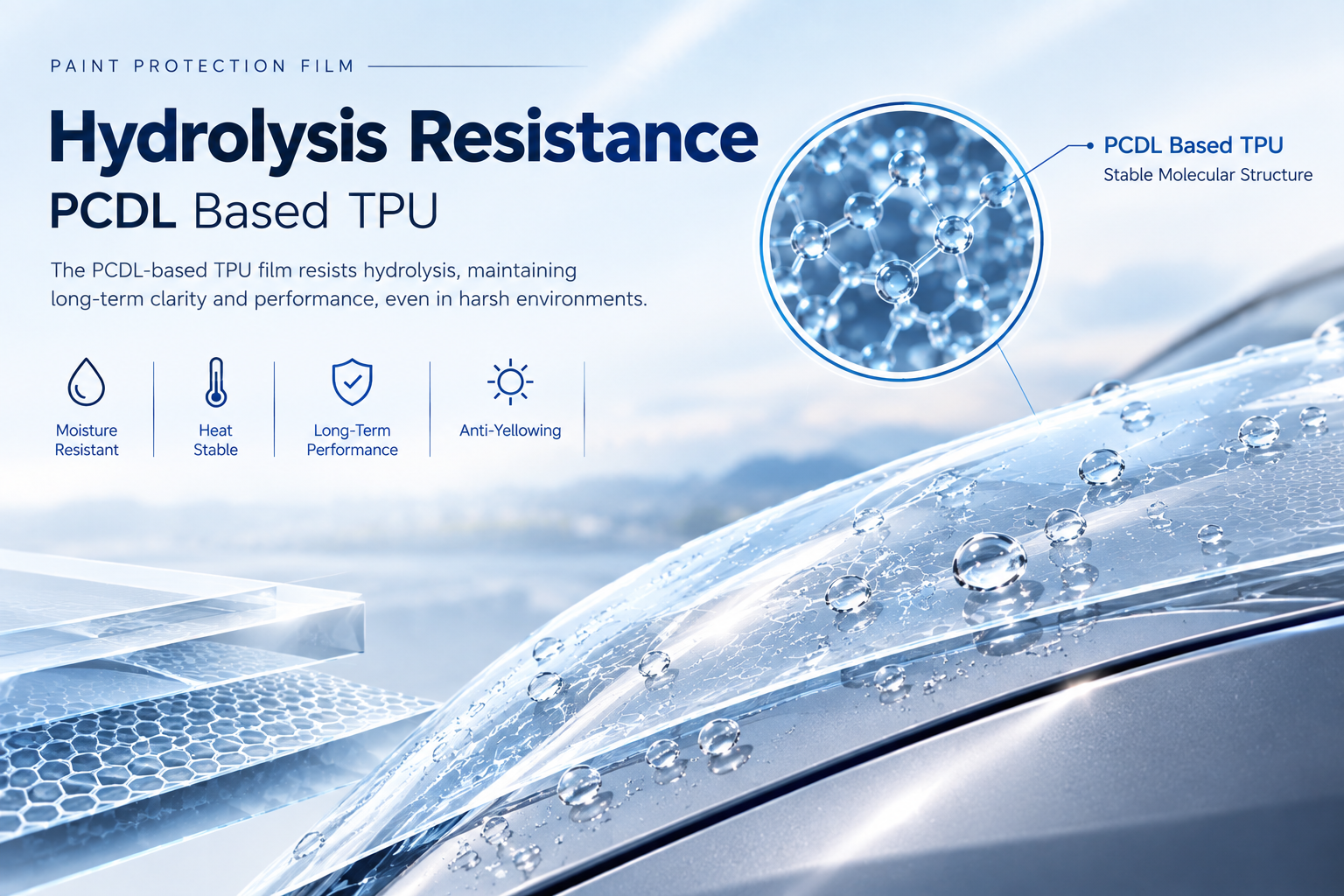
Polycarbonate polyols are widely used where resistance to water and hydrolytic degradation is important. This is one of the strongest technical reasons for using PCDL-based polyurethane in a film intended for humid or demanding environments.
Even so, a PPF claim should be tied to a defined test. Useful questions include:
• Was the raw TPU or the complete PPF tested?
• What temperature and humidity were used?
• How long was the exposure?
• Were tensile strength, elongation, gloss, haze, color, or peel strength measured afterward?
• How much of each property was retained?
A pass or fail statement without these details is difficult to compare across suppliers.
Chemical Resistance
PCDL-based polyurethane can be formulated for resistance to oils, solvents, water, and other chemicals. The exact result varies by PCDL structure and formulation.
For PPF, chemical exposure first affects the topcoat. Bird droppings, insect residue, road film, alkaline cleaners, acidic contamination, and petroleum products reach the surface before the substrate. A good substrate can improve the material foundation, but the complete multilayer film still needs finished-product chemical testing.
Weathering
Weathering combines several stresses: UV radiation, heat, oxygen, moisture, and temperature cycling. PCDL can contribute to environmental stability, but it is not a UV absorber and it does not prevent every degradation mechanism.
Outdoor clarity also depends on:
• Aliphatic rather than aromatic polyurethane chemistry
• UV absorbers and hindered amine light stabilizers
• Topcoat formulation and coating weight
• Adhesive color stability
• Production cleanliness and layer uniformity
When a supplier describes a PCDL film as weather resistant, ask for results from the finished product after an identified weathering cycle. Xenon-arc and fluorescent-UV exposures simulate different parts of outdoor stress and should not be treated as interchangeable.
Flexibility and Mechanical Behavior
PCDL does not have one fixed elongation value. The final TPU may be soft and highly extensible or relatively firm, depending on molecular weight, chain structure, hard-segment content, and processing.
For PPF, a high elongation percentage can be useful, but it does not describe installation behavior by itself. Buyers should also consider modulus, elastic recovery, tear behavior, permanent deformation, and how the film responds after heat and aging.
A film that stretches easily but does not recover well may distort on a panel. A film with high tensile strength but excessive stiffness may be difficult to conform around complex curves. Good PPF requires a workable balance.
What PCDL Does and Does Not Tell You
PCDL tells you something meaningful about the polyurethane’s soft-segment chemistry. It can indicate that the material was designed with hydrolysis and environmental stability in mind.
It does not tell you:
• Whether the TPU is aliphatic
• Which UV stabilizers are present
• How clear the extruded or cast film is
• Whether the topcoat self-heals well
• Whether the adhesive repositions cleanly
• How consistent the coating is across a roll
• How long the finished PPF will last in a specific climate
Those questions require separate specifications and tests.
How PPF Buyers Should Use a PCDL Claim
Treat PCDL as one useful input in a larger evaluation.
Start by asking for a clear material description. Then review the finished film’s thickness, tensile and elongation data, optical measurements, topcoat performance, adhesive behavior, and aging results.
Sample installation remains essential. A data sheet cannot show how the film feels during repositioning, whether it creates lift lines, how the edges settle, or whether surface texture becomes visible over dark paint.
For long-term supply, check batch consistency as well. The value of a strong formulation is limited if thickness, coating weight, adhesive performance, or optical appearance varies from one order to the next.
Frequently Asked Questions
What does PCDL stand for
PCDL stands for polycarbonate diol. It is a polyol used to form soft segments in some polyurethane and TPU formulations.
Is PCDL a type of TPU
No. PCDL is a raw-material building block. When it is reacted with an isocyanate and chain extender, it can become part of a PCDL-based TPU.
Is PCDL based TPU the same as PCU
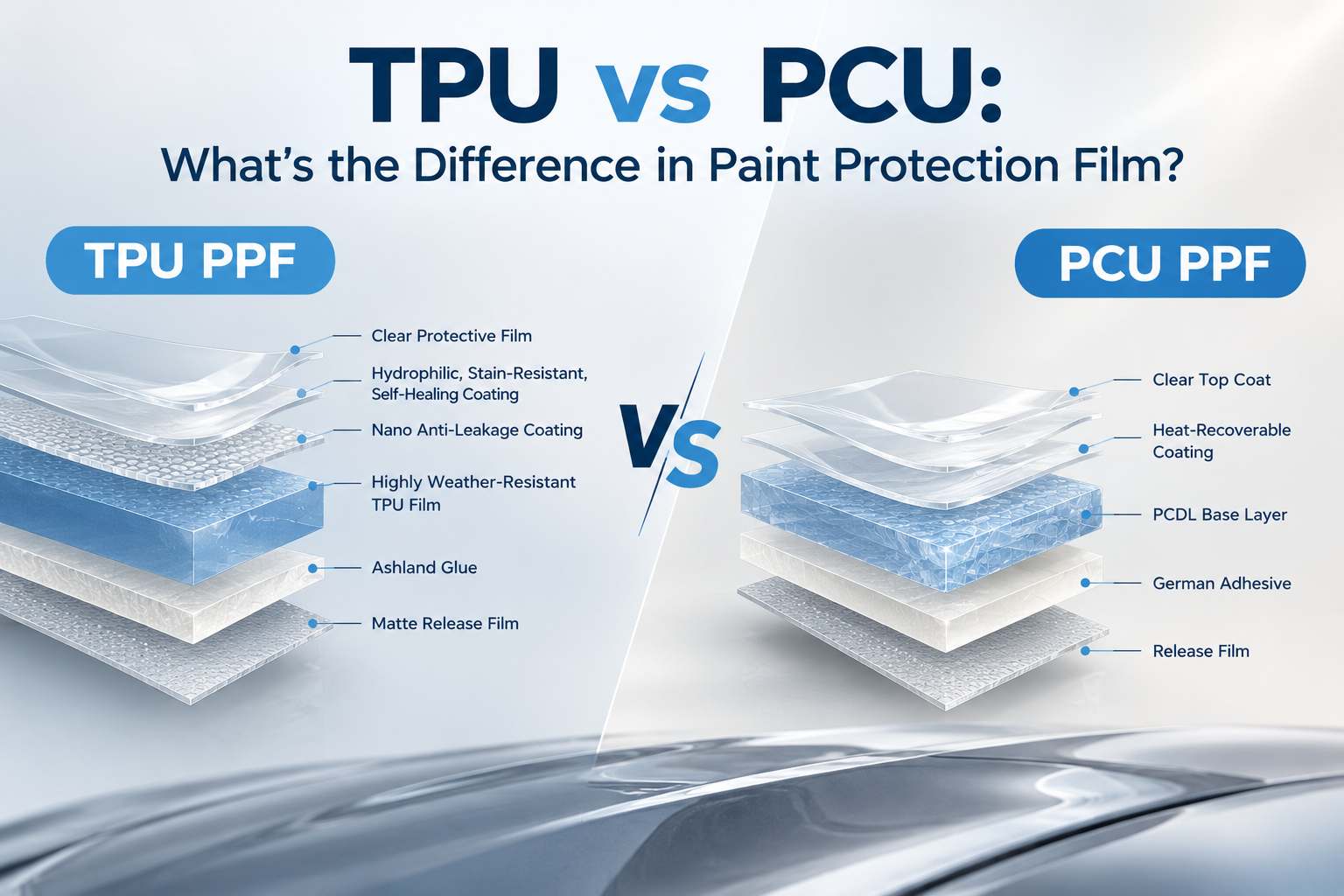
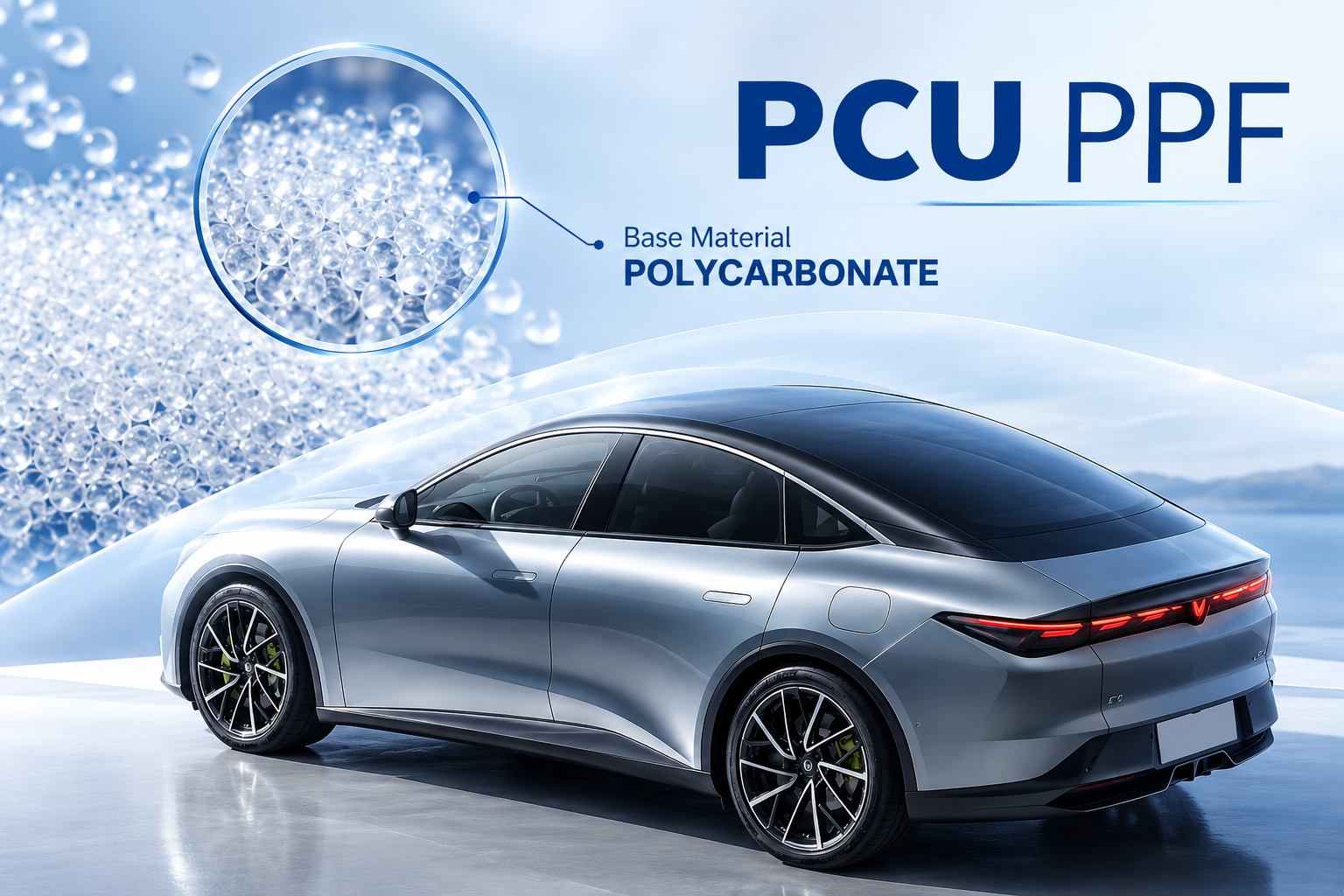
The terms are often associated in PPF marketing. PCU commonly refers to polycarbonate-based polyurethane, while PCDL identifies the polycarbonate diol used in the polyurethane chemistry. Supplier usage varies, so confirm the actual material specification.
Is PCDL based TPU always more flexible
No. Flexibility depends on PCDL structure, molecular weight, hard-segment content, isocyanate chemistry, chain extender, additives, and processing.
Does PCDL prevent PPF yellowing
PCDL alone cannot guarantee anti-yellowing performance. Aliphatic polyurethane chemistry, stabilizers, topcoat design, adhesive stability, manufacturing quality, and exposure conditions all affect color change.
Is PCDL based TPU suitable for hot and humid markets
Its hydrolytic stability can make it an attractive substrate chemistry for hot and humid conditions. Buyers should still review finished-film weathering, humidity, color, mechanical-retention, and adhesive data.
Further Reading
On this site:
- PCDL vs PCL TPU — Compare the two TPU chemistries commonly used in PPF substrates.
- TPU vs PCU: What’s the Difference in Paint Protection Film? — Clarify the relationship between TPU, PCU and PCDL-based materials.
- How to Choose TPU for Paint Protection Film — Learn which TPU properties matter when selecting PPF materials.
- Aliphatic TPU vs Aromatic TPU PPF — Understand another important TPU classification for PPF durability and appearance.
- Why Aliphatic TPU is the Gold Standard for Premium PPF Manufacturing — Explore how TPU chemistry affects premium PPF performance.
Get a Free Sample or Quote
Looking for a reliable window film supplier? Contact us today for fast response and professional support.