The KSB Titanium Gold TK Series is an automotive window film range developed with Nano Titanium Empty Gold technology. It combines thermal reflection, high infrared rejection, and reduced internal reflection to deliver different levels of solar control.
The series includes four models: TK70, TK30, TK15, and TK05, with visible light transmittance ranging from 5% to 70%. This range allows distributors and automotive film brands to offer different options according to customer preferences and local market requirements.
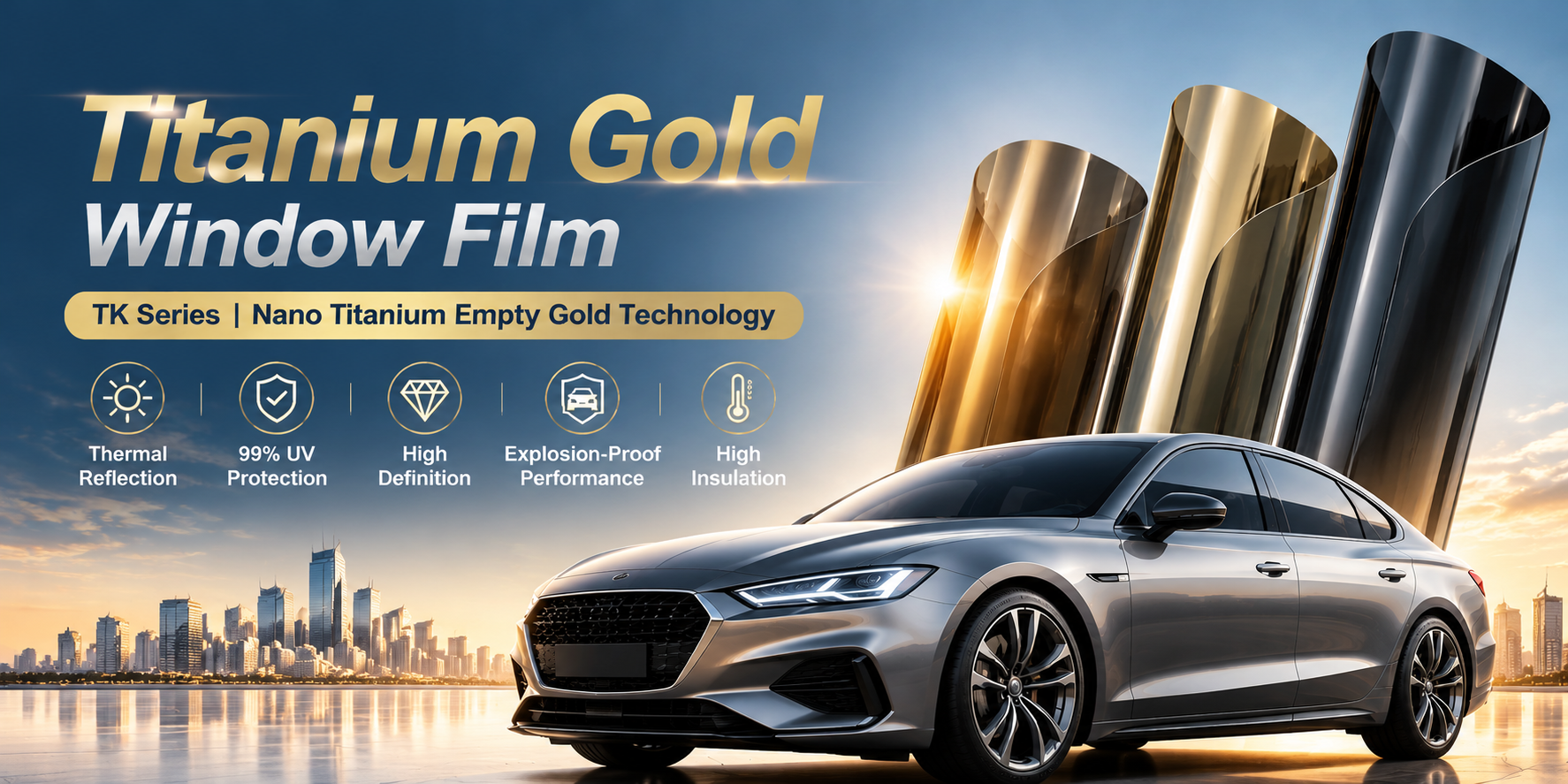
Nano Titanium Gold Material Technology
The TK Series uses Nano Titanium Empty Gold as its core material technology, supported by specialized processing methods designed to improve material stability and optical performance.
Three technologies are central to the series:
- Nano Titanium Empty Gold: The core material technology behind the Titanium Gold range.
- UV Curing Shaping and Sticking Process: Designed to address the problem of easy oxidation.
- Perfect Extinction Technology: Helps reduce internal reflection.
Material selection and processing are important considerations in window film production. From raw materials to finished rolls, manufacturing procedures influence product consistency and quality. These stages are also relevant when evaluating how window film is manufactured.
Key Features
The TK Series combines several performance characteristics for automotive window applications:
- High Definition: Designed for clear visual performance.
- Thermal Reflection: Supports solar heat control.
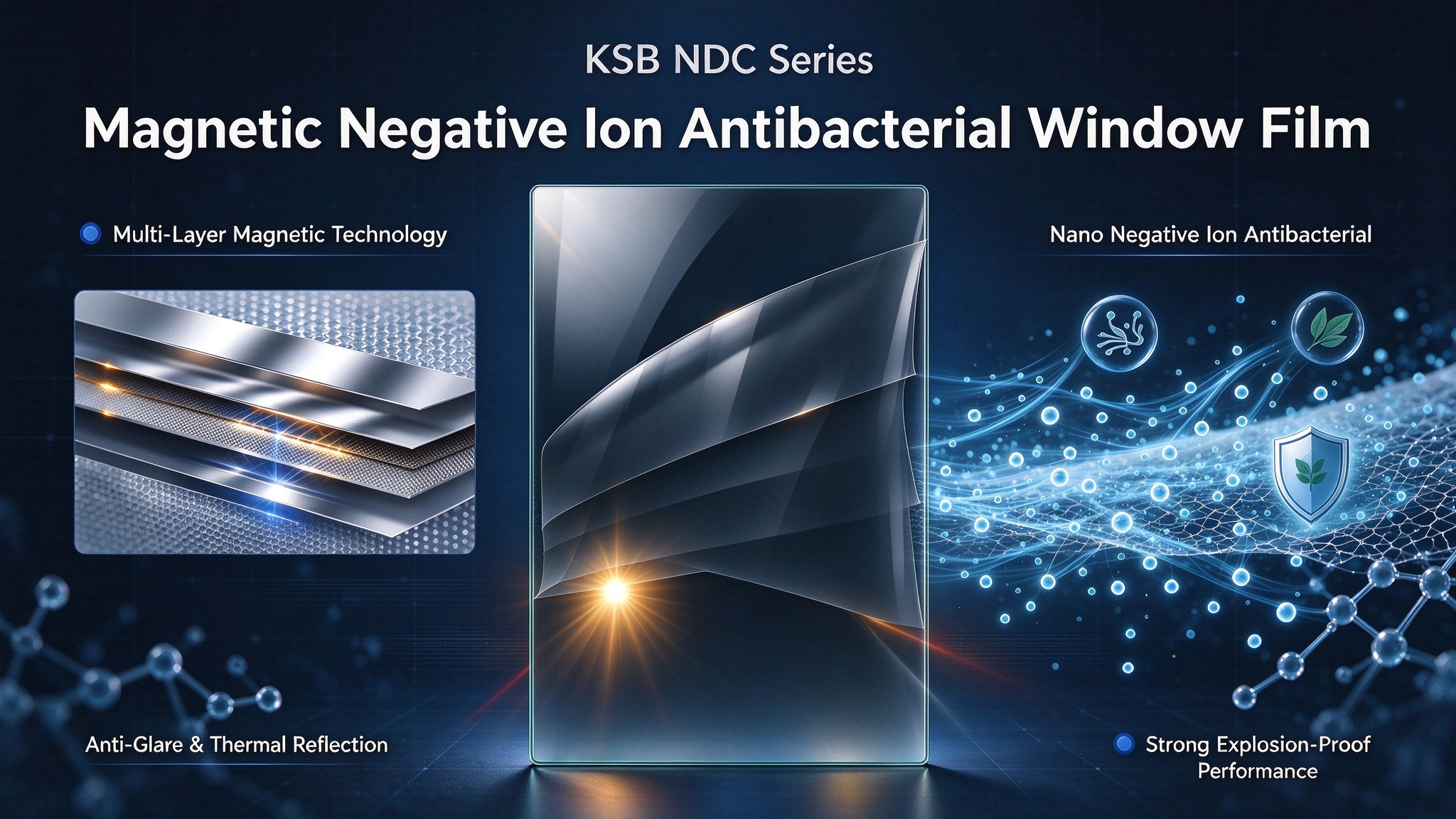
- Strong Explosion-Proof Performance: Provides an additional glass protection feature.
- High Insulation: Combines infrared rejection with total solar energy control.
- 99% UV Rejection: All four models provide 99% ultraviolet rejection.
- Reduced Internal Reflection: Supported by Perfect Extinction Technology.
For buyers comparing solar control films, it is important to distinguish between infrared rejection and total solar energy rejection. IRR measures rejection at a specified infrared wavelength, while TSER considers the overall solar energy entering through the glazing. These indicators describe different aspects of performance and should not be treated as interchangeable.
TK Series Technical Specifications
The four models share the same thickness, scratch resistance, UV rejection, internal reflectance, and color decay time. Their main differences are VLT, infrared rejection, and TSER.
| Parameter | TK70 | TK30 | TK15 | TK05 |
|---|---|---|---|---|
| Visible Light Transmittance (VLT) | 70% | 30% | 15% | 5% |
| IR Heat Rejection (950nm) | 86% | 95% | 97% | 99% |
| IR Heat Rejection (1400nm) | 98% | 99% | 99% | 99% |
| Ultraviolet Rejection (UVR) | 99% | 99% | 99% | 99% |
| Total Solar Energy Rejection (TSER) | 55% | 81% | 89% | 96% |
| Total Solar Transmittance | 0.45 | 0.19 | 0.11 | 0.04 |
| Internal Reflectance | 12% | 12% | 12% | 12% |
| Shading Coefficient | 0.50 | 0.21 | 0.12 | 0.04 |
| Haze | 0.69 | 0.58 | 0.54 | 0.65 |
| Scratch Resistance | 3H | 3H | 3H | 3H |
| Thickness | 2.5mil | 2.5mil | 2.5mil | 2.5mil |
| Color Decay Time | 8 years | 8 years | 8 years | 8 years |
The relationship between VLT and TSER is particularly useful when comparing the four models. TK70 allows the highest visible light transmission, while TK05 has the lowest VLT and the highest TSER. Buyers can also compare the figures with other solar control film performance metrics when assessing different product technologies.
Choosing the Right TK Model
Each model serves a different light transmission preference:
- TK70 – 70% VLT: The lightest option in the range, with 55% TSER.
- TK30 – 30% VLT: A middle option with 81% TSER.
- TK15 – 15% VLT: Lower light transmission and 89% TSER.
- TK05 – 5% VLT: The darkest option, with the highest TSER at 96%.
Model selection should consider the intended vehicle application, customer preferences, local tint regulations, and the required balance between visibility and solar control.
The comparison also illustrates why buyers should assess more than film color or darkness. Different film technologies can produce different results in clarity, heat rejection, and appearance. Understanding the differences between ceramic, carbon, and dyed window films can help distributors build a more suitable product range.
Wholesale and OEM Cooperation
For window film distributors and private label brands, adding a new product series involves more than selecting technical specifications. Product consistency, packaging, customization, and long-term supply arrangements are also important.
KSB provides support for:
- Wholesale orders
- OEM customization
- Private label packaging
- Product specification selection
- Technical documentation
Businesses developing their own window film brands can consider the differences between OEM and private label window film when planning their product and branding strategy. Packaging is another part of the process, particularly for distributors who need consistent brand presentation across different markets.
KSB Manufacturing Capabilities
Dongguan Kashibang Film Materials Co., Ltd. manufactures automotive and architectural window films for international distributors, wholesalers, and private label customers.
Company Information
- Established: 2014
- Factory Area: 50,000 m²
- Production Lines: 3
- Annual Production Capacity: 80 million m²
- Quality Management Certifications: ISO 9001, IATF 16949
- Product Compliance: CE, RoHS
For buyers evaluating a long-term manufacturing partner, production capacity, quality management, and supplier reliability should all be considered. A structured window film factory audit checklist can help organize this evaluation before placing an order.
FAQ
What is the difference between TK70, TK30, TK15, and TK05?
The four models mainly differ in VLT, infrared rejection, and TSER. TK70 has the highest VLT at 70%, while TK05 has the highest TSER at 96%.
Why should buyers compare IRR and TSER separately?
IRR measures infrared rejection at a specified wavelength, such as 950nm or 1400nm. TSER measures total solar energy rejection. Both indicators provide different information about film performance.
What is the purpose of the UV curing process?
The UV curing shaping and sticking process is designed to address material oxidation issues. Buyers can request supporting technical documentation when evaluating the product.
Does KSB support OEM and private label orders for the TK Series?
Yes. KSB supports wholesale supply, OEM customization, and private label packaging. Buyers can discuss model selection, samples, specifications, and packaging requirements with the sales team.
Further Reading
On this site:
- Window Film Durability & Longevity — Factors affecting film lifespan.
- What Certifications Should a Window Film Manufacturer Have? — Manufacturer qualifications and compliance.
- How to Import Window Film from China — A practical sourcing guide.
- Top Questions to Ask Before Choosing a Window Film Supplier — Key points for supplier evaluation.
Explore the TK Series with KSB
The Titanium Gold TK Series combines Nano Titanium Empty Gold material technology, specialized UV curing processing, and Perfect Extinction Technology. With four VLT options and different levels of solar energy rejection, it offers distributors flexibility when developing their automotive window film product range.
For technical details, samples, wholesale orders, or OEM cooperation, Contact Us.
Get a Free Sample or Quote
Looking for a reliable window film supplier? Contact us today for fast response and professional support.