IR Rejection Explained: What Does It Really Mean?
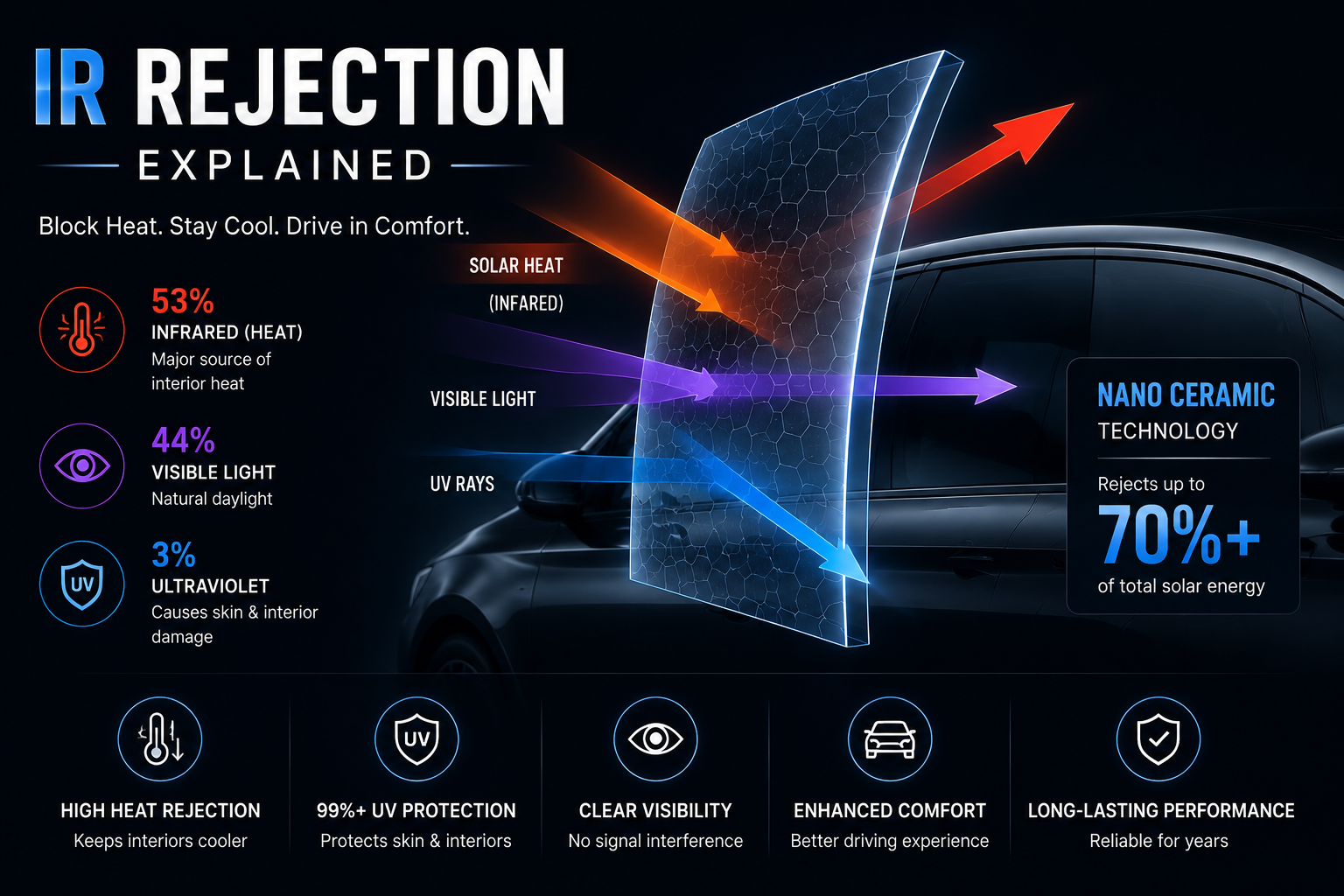
This article explains what IR rejection really means in window film performance, how infrared radiation affects heat transfer, and why IR rejection numbers can be misleading without proper testing methodology. It covers single-wavelength vs full-spectrum IR testing, TSER comparison, NFRC and ISO standards, and how to correctly evaluate nano ceramic window film heat rejection claims.
How to Choose an OEM Paint Protection Film Manufacturer
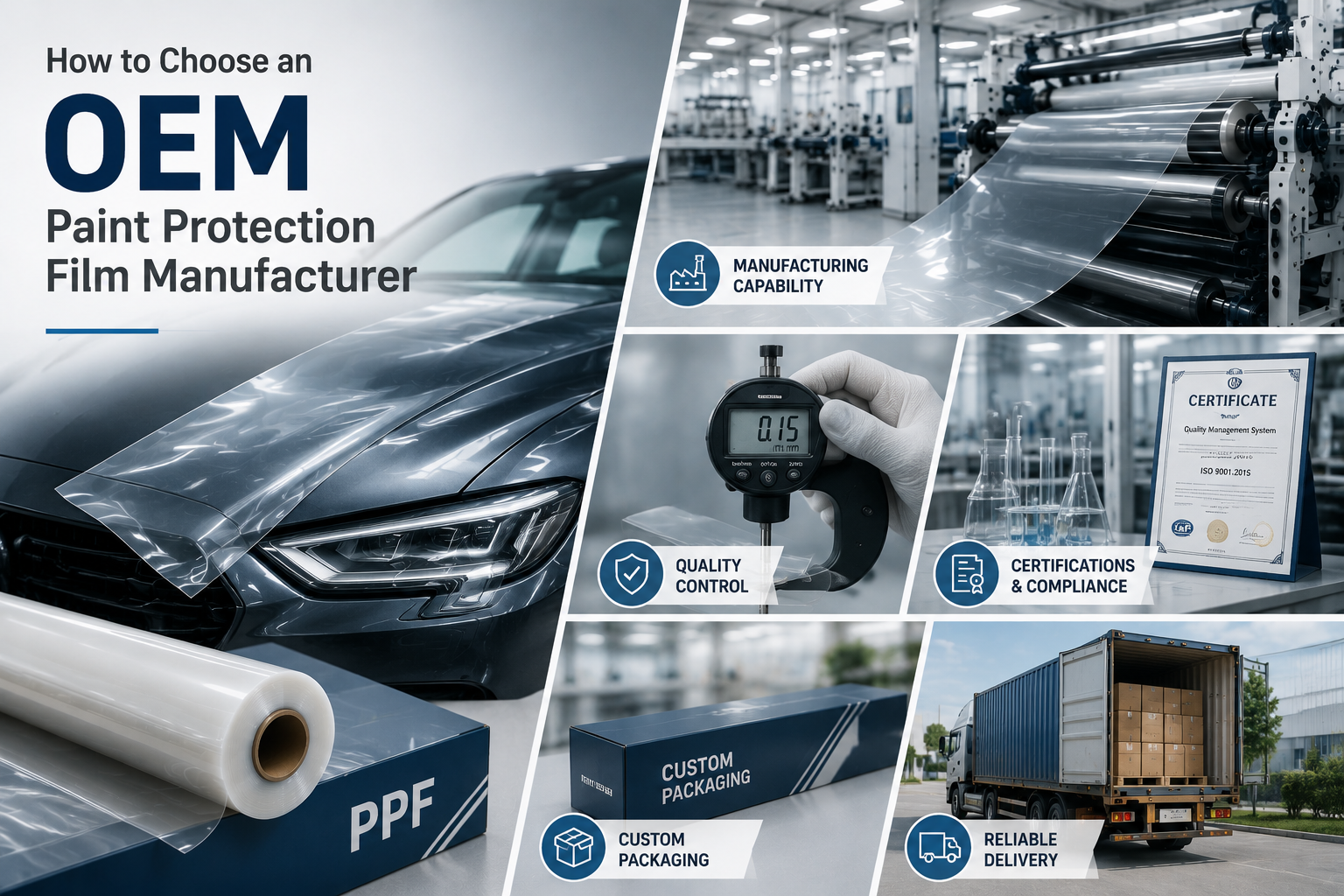
Learn how to evaluate and select a reliable OEM Paint Protection Film manufacturer by checking production capability, material transparency, quality control systems, and OEM service support before placing bulk orders.
How Nano Ceramic Window Film Blocks Heat
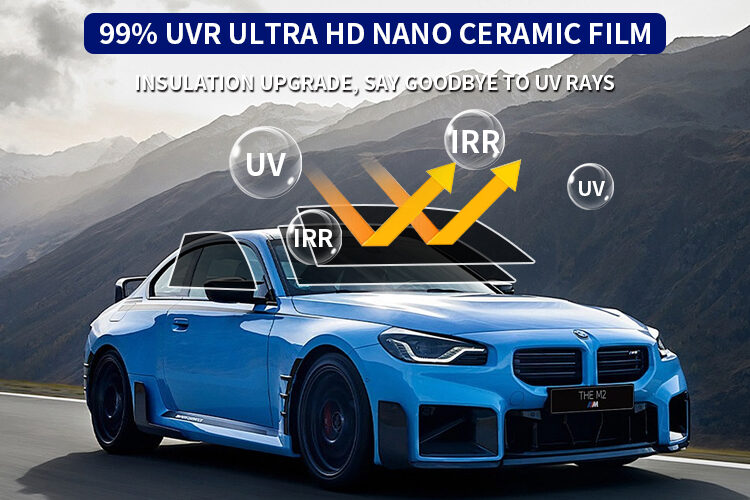
Learn how nano ceramic window film blocks infrared heat while maintaining high visibility. Discover the science behind ceramic heat rejection and what makes it more effective than traditional window films.
How to Identify High Quality Paint Protection Film
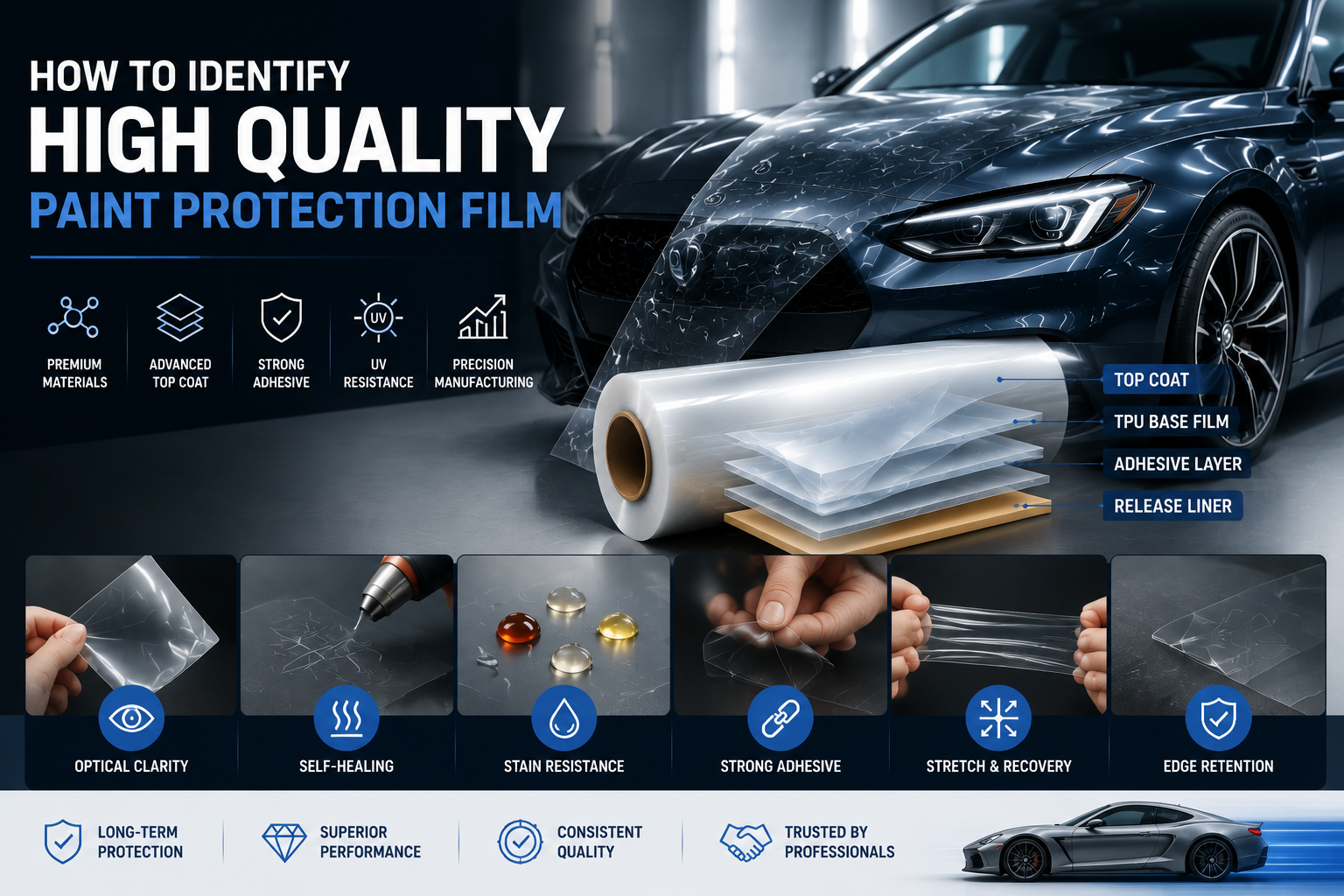
Learn how to identify high quality Paint Protection Film by evaluating TPU materials, self-healing performance, adhesive quality, optical clarity, and supplier documentation before placing bulk orders.
Nano Ceramic vs Metalized Window Film: Pros and Cons
This article compares nano ceramic window film and metalized window film in terms of heat rejection, signal interference, UV protection, appearance, durability, and overall performance. It explains how metalized films use reflective metal layers while nano ceramic films use non-metallic ceramic nanoparticles, helping buyers understand why ceramic film has become the preferred premium option for modern automotive and architectural applications.
Why Does Paint Protection Film Cost So Much?
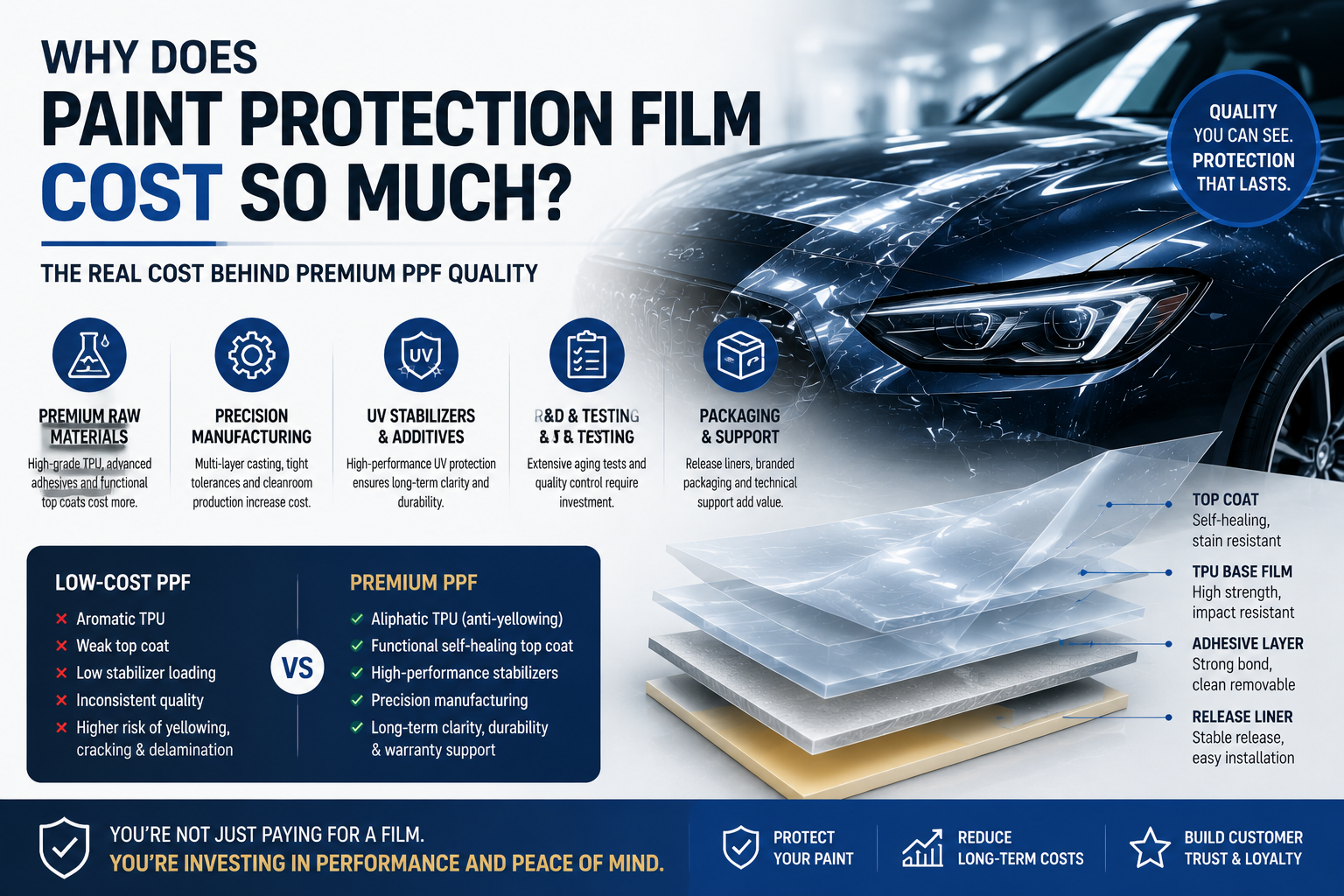
Paint Protection Film (PPF) prices vary widely, but the difference goes far beyond profit margins. This guide explains how TPU materials, self-healing top coats, adhesives, UV stabilizers, manufacturing precision, and quality testing all contribute to PPF cost.
Nano Ceramic vs Dyed Window Film: Complete Comparison
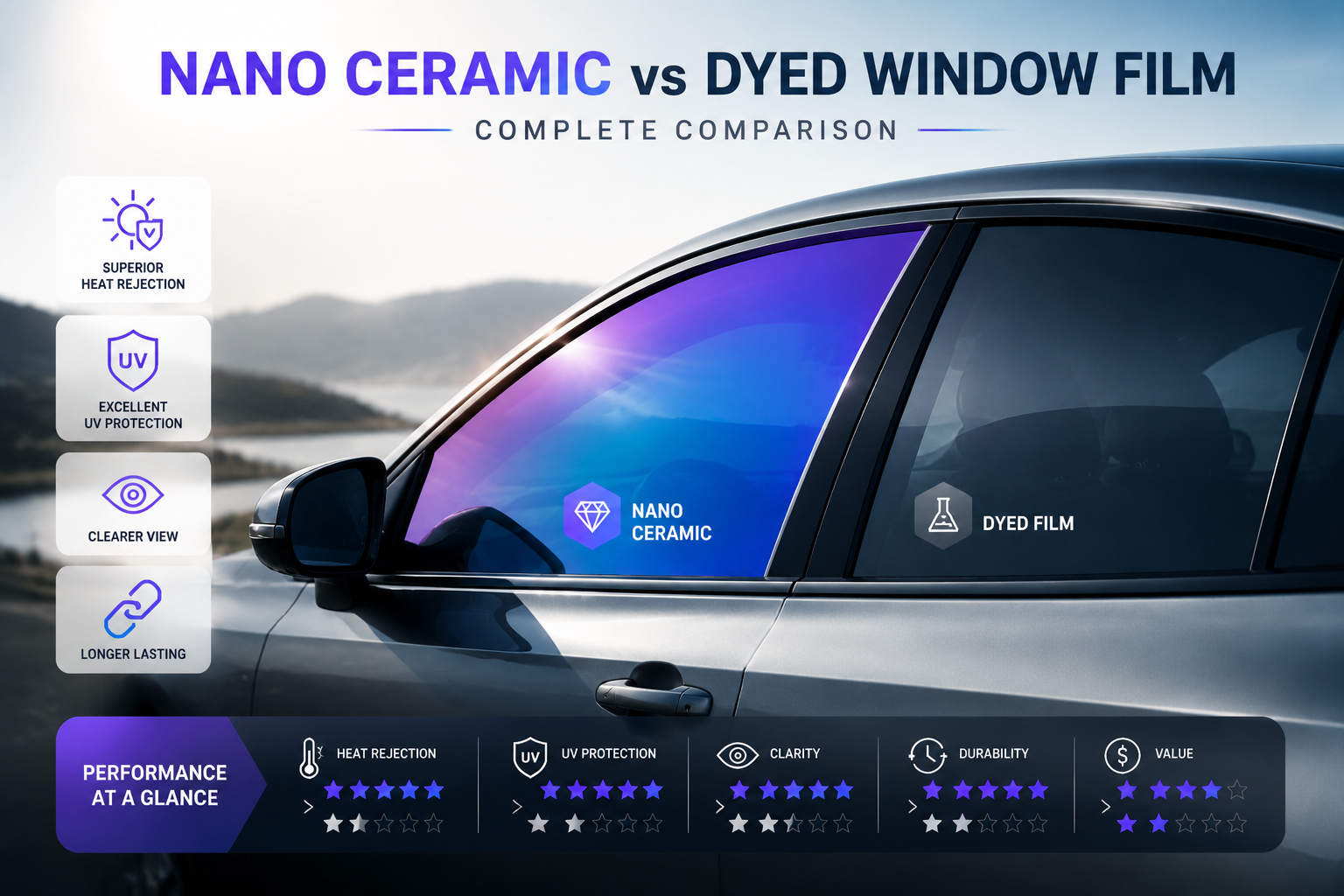
This article compares nano ceramic window film and dyed window film in terms of heat rejection, UV protection, signal transparency, color stability, lifespan, and price. It explains how each technology works, why nano ceramic film offers significantly better long-term thermal performance, and when dyed film may still be suitable for budget or short-term applications.
How to Choose TPU for Paint Protection Film
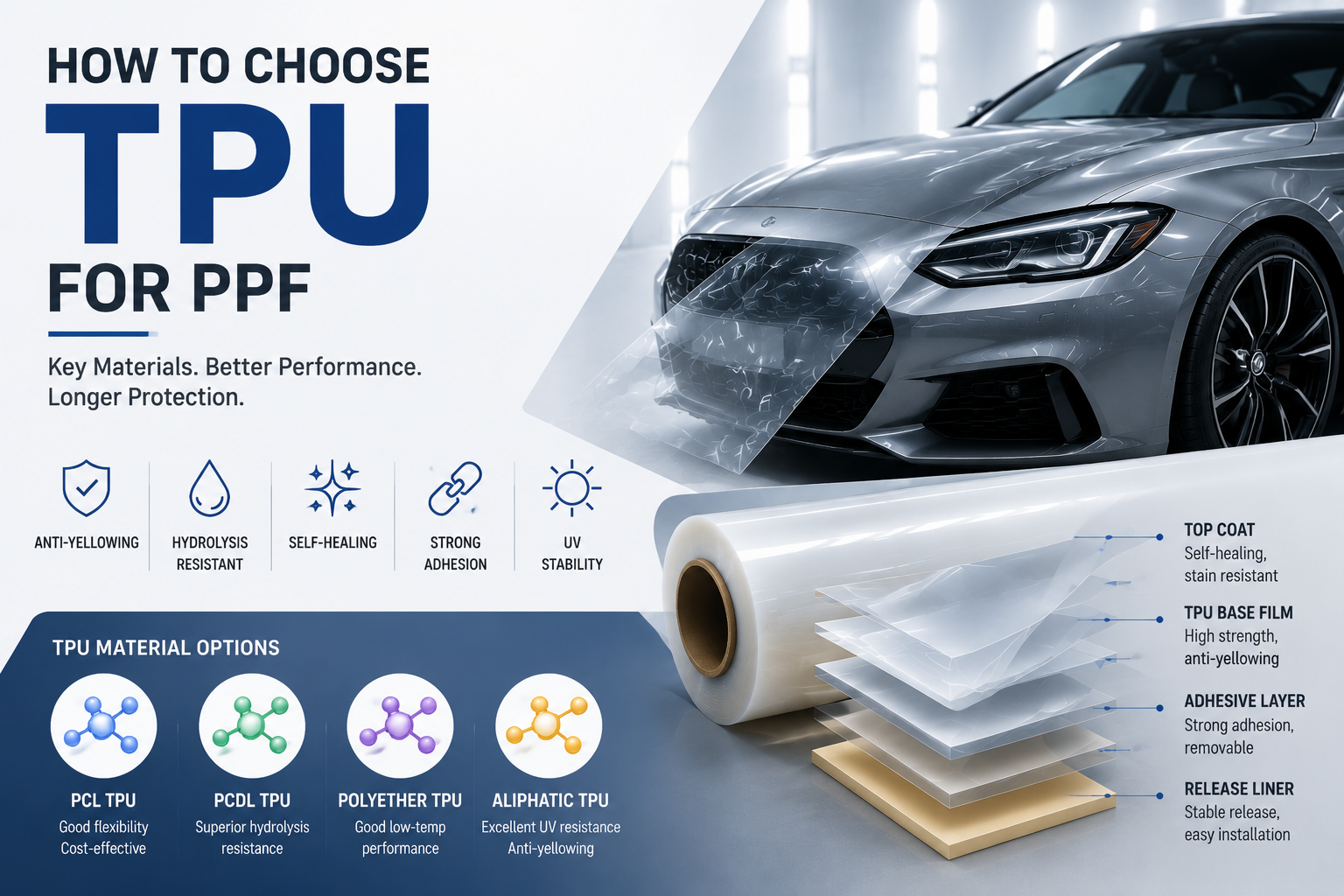
Choosing the right TPU is one of the most important decisions when sourcing Paint Protection Film (PPF). This guide explains the differences between PCDL, PCL, polyester, polyether, aliphatic and aromatic TPU, and shows how top coat, adhesive, UV stabilizers, and manufacturing quality affect film performance.
Nano Ceramic vs Carbon Window Film: Which Is Better?
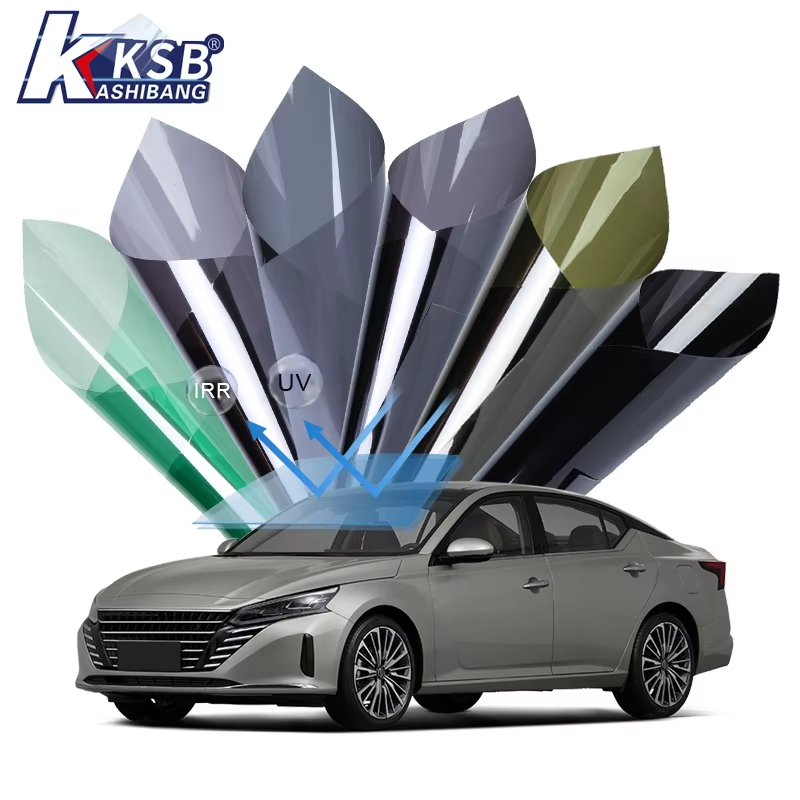
This article compares nano ceramic window film and carbon window film in terms of heat rejection, infrared blocking, UV protection, signal transparency, optical clarity, durability, and overall value. It explains the real-world performance differences between the two technologies and helps car owners, installers, distributors, and window film buyers choose the right option based on climate, budget, driving conditions, and long-term performance expectations.
Top Paint Protection Film Manufacturers in China (2026 Guide)

This guide introduces some of the leading paint protection film manufacturers in China in 2026, explains the differences between integrated manufacturers and converting operations, and helps distributors, importers, and OEM buyers evaluate suppliers based on TPU materials, self-healing technology, certifications, export capability, and OEM support.