If you’ve been sourcing window film for a while, you’ve probably run into this problem: a supplier sends you a sample labeled “ceramic,” it looks great, tests reasonably well — and then six months into selling it, you’re dealing with delamination complaints, color shift, or customers asking why their GPS keeps cutting out.
The ceramic film market has a serious quality problem. Because “ceramic” has become a premium selling point, plenty of manufacturers apply that label to films that don’t deserve it. Before you place a bulk order, there are a few things worth understanding about how real ceramic film is made, what specs to demand, and how to tell whether a supplier actually knows what they’re doing.
What Nano Ceramic Window Film Actually Is
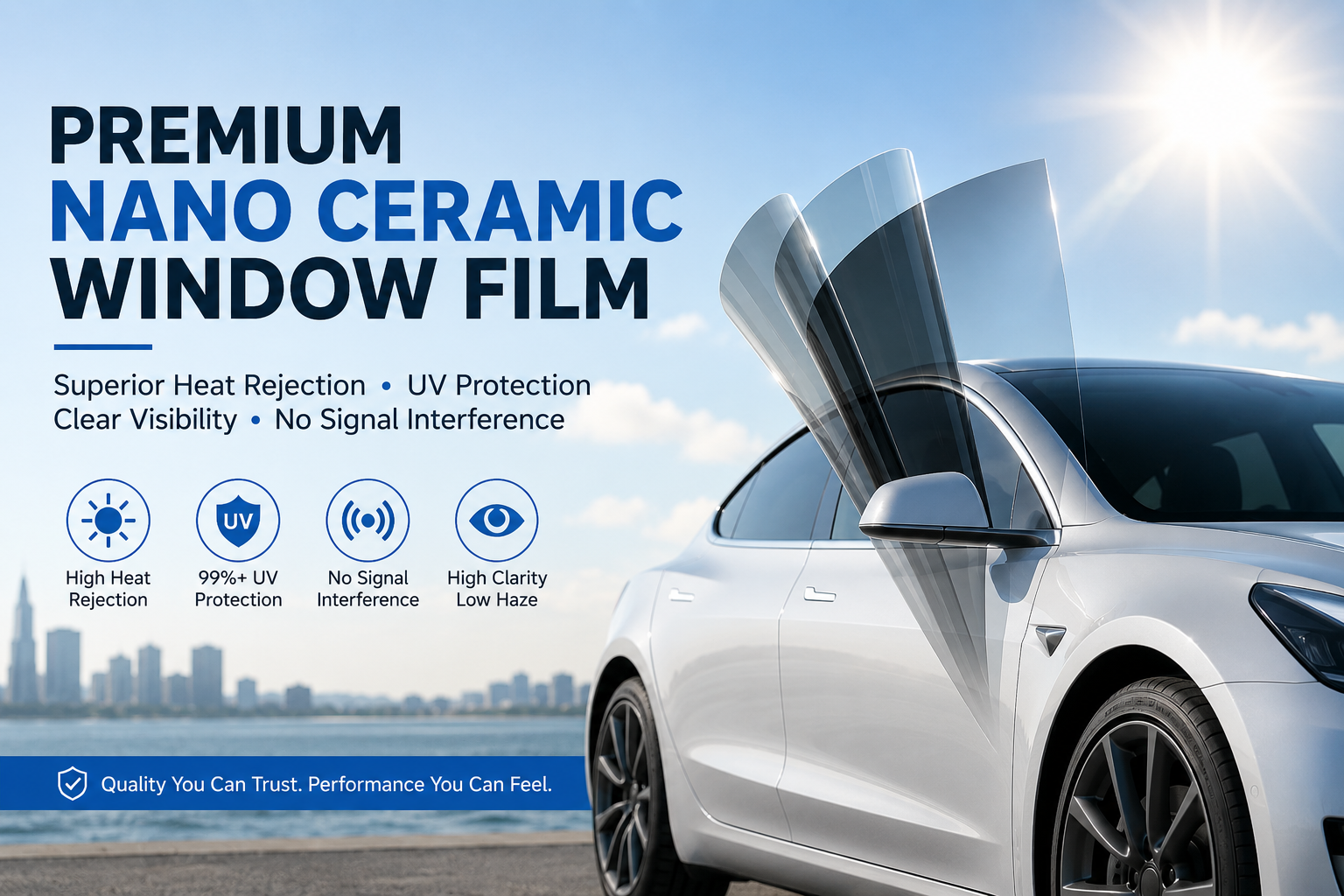
True nano ceramic film uses ceramic nanoparticles — typically titanium nitride or similar compounds — suspended in the film’s adhesive or coating layer. The “nano” part matters: particles at the nanometer scale scatter and absorb infrared radiation without interfering with radio frequencies, which is why ceramic film doesn’t block GPS, cellular, or toll transponder signals the way traditional metallized films can.
The performance advantage over dyed film is significant. A well-made ceramic film with 35% VLT can reject 60–70% of total solar energy and block upward of 99% of UV. A dyed film at the same VLT might manage 40–45% total solar rejection and offers minimal UV protection beyond what the substrate itself provides.
The manufacturing process is more complex and more expensive than dyed or metalized film. That cost difference is real — which is why when you see ceramic film priced at the same level as basic dyed film, something doesn’t add up.
The “Ceramic Look” Problem
Here’s what actually happens with a lot of budget “ceramic” film: manufacturers take a standard metallized or hybrid film, add a thin ceramic coating on the surface, and market it as ceramic. The heat rejection numbers might look acceptable on a spec sheet, but the performance mechanism is mostly the metal layer, not the ceramic.
The giveaway is usually signal interference. If a film labeled ceramic causes noticeable GPS degradation, it has meaningful metal content — ceramic nanoparticles don’t block RF signals. That’s not a minor detail; it’s a deal-breaker for plenty of end customers, especially for automotive applications.
Another version of this: some films use ceramic particles in concentrations too low to meaningfully contribute to heat rejection. The particles are there (so it’s technically “ceramic”), but they’re functioning as filler rather than as the primary performance layer. Real ceramic film is built around the ceramic coating being the core functional element, not an afterthought.
5 Things That Separate Serious Ceramic Film Suppliers from Everyone Else
1. They can show you third-party test data, not just their own spec sheets
Any manufacturer can print numbers on a data sheet. What you want is an SGS, Intertek, or equivalent third-party test report for the specific SKU you’re ordering — not a general brand certification, but a test of that particular film.
The tests that matter most:
- Solar energy rejection (TSER or Total Solar Energy Rejected): This is the composite number. Don’t just look at IR rejection in isolation — some films inflate this by only measuring at a narrow IR wavelength range.
- VLT (Visible Light Transmission): Should match labeled spec within ±2–3%.
- UV rejection: Should be 99%+ for any film calling itself ceramic.
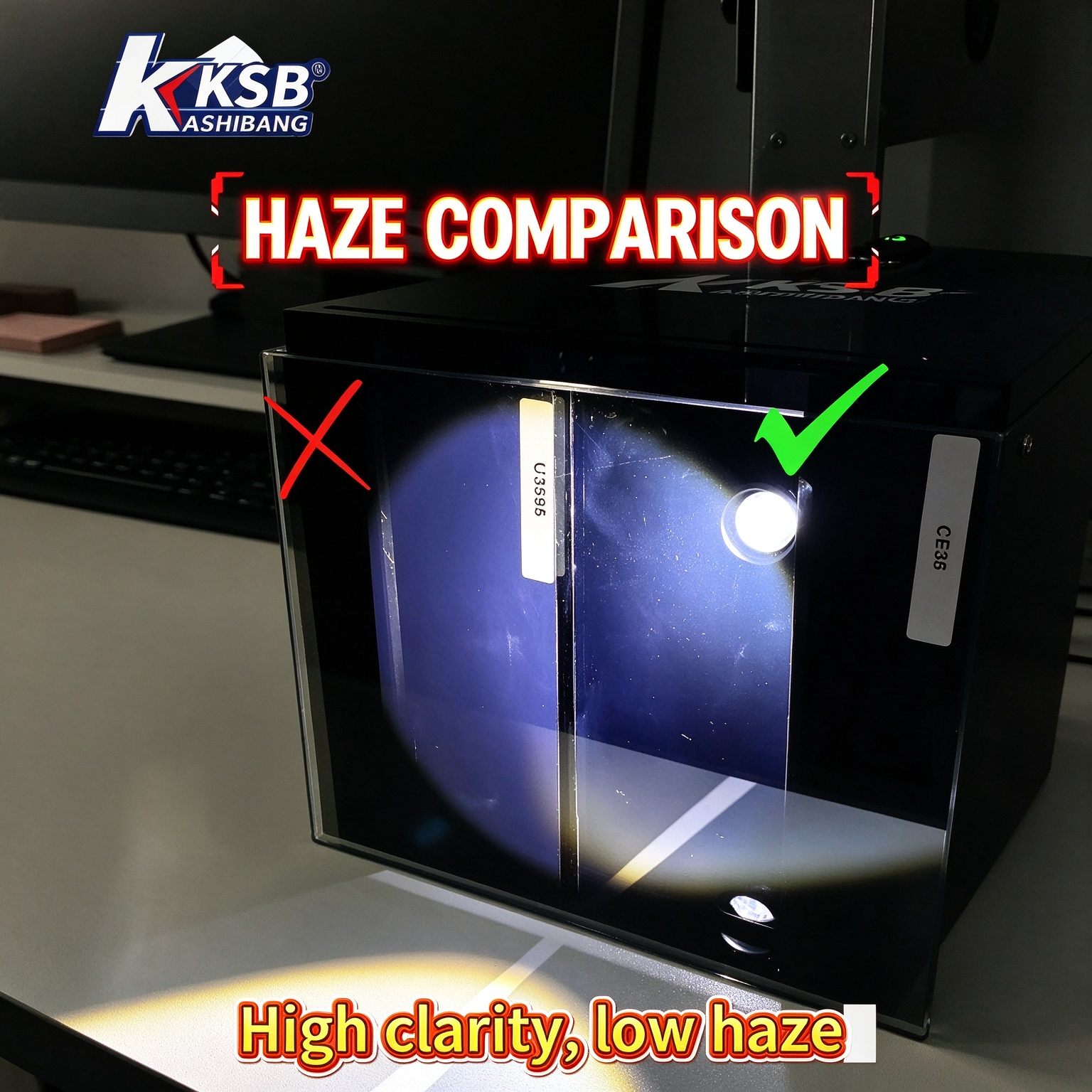
- Haze value: This measures optical clarity. Anything above 1.5% haze is noticeable to installers and customers. Quality ceramic film should be under 0.8%.
If a supplier can’t produce a recent third-party test report for a specific product, that’s a red flag.
2. Their facility actually makes film — they don’t just slit and repackage
There’s a significant difference between a film manufacturer and a film converter. Converters buy film rolls in bulk, slit them to customer widths, apply their own branding, and sell them as their own product. There’s nothing inherently wrong with this model, but if you’re paying ceramic film prices, you should understand what you’re actually buying.
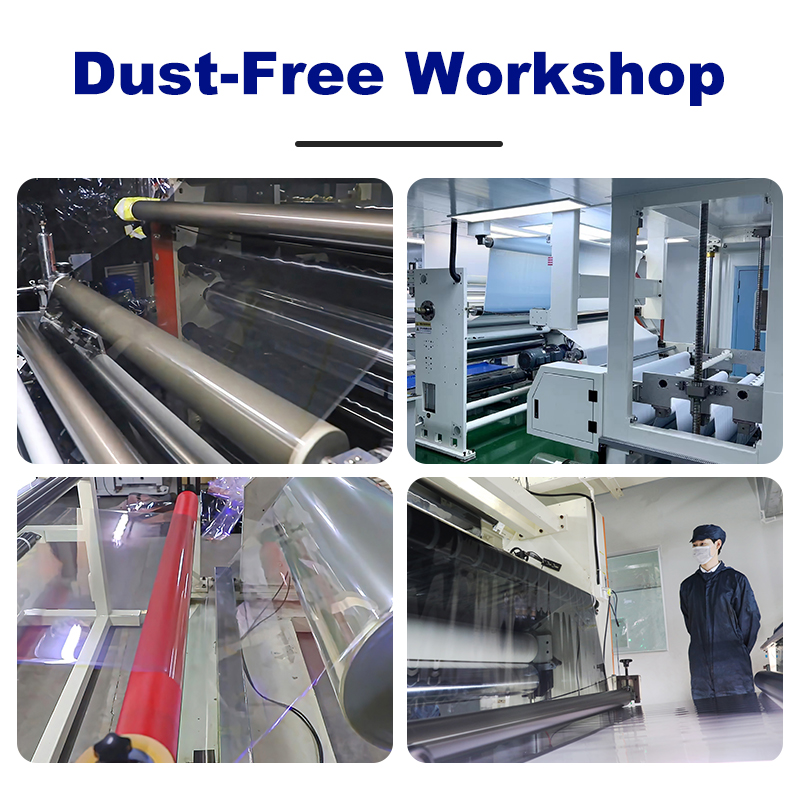
A real manufacturer controls the coating process. Ask for photos or video of the production line. Ask what coating method they use — sputtering, vacuum deposition, and wet coating processes each have different characteristics and cost structures. A supplier who can answer these questions in specifics is almost certainly actually making film. One who deflects with marketing language probably isn’t.
3. They have documented production consistency, not just good samples
Getting a great sample is easy. The harder thing is getting the same film three years and fifteen orders later. Ask suppliers about their batch-to-batch consistency protocols. Do they do incoming material inspection? What’s their QC process for finished rolls? Do they retain production samples from each batch for traceability?
This matters more for ceramic film than for basic products because the nanoparticle distribution in the coating is harder to control. Inconsistent particle dispersion leads to hotspots, uneven heat rejection, and optical distortion. A supplier with real process controls will be able to talk about this specifically.
4. Their warranty is backed by something real
A five-year or lifetime warranty means nothing if the manufacturer has no claims process, no US (or local) service infrastructure, and no track record of actually honoring claims. When you’re evaluating a supplier, ask directly: what happens when a customer files a warranty claim? Who handles it? What documentation do they need?
Good suppliers have dealt with claims before and have a real answer to this. Suppliers who’ve never had claims processed (or who sidestep the question) are telling you something.
5. They understand your market
This is less technical but equally important. A ceramic film built for Middle Eastern markets where heat load is extreme and UV intensity is high needs different tuning than film optimized for Northern European markets where visible light transmission is a priority. A supplier who’s actually been in the business for a while will have product variants designed around real-world regional requirements, not one-size-fits-all SKUs.
Specs to Confirm Before Any Bulk Order
When you’re preparing to place a real order, get written confirmation on these figures — not verbal assurances, written specs that can be referenced in a purchase order:
| Specification | What to Look For |
|---|---|
| VLT (Visible Light Transmission) | Match to labeled spec ±2% |
| TSER (Total Solar Energy Rejected) | 50%+ for premium ceramic at 35VLT |
| IRR (Infrared Rejection) | 90%+ at 980nm for quality ceramic |
| UV rejection | 99%+ |
| Haze | Under 1.0% (ideally under 0.8%) |
| Adhesive type | Pressure-sensitive, solvent-free preferred |
| Film thickness | Stated in mils or microns — verify it matches |
| Shelf life | Minimum 2 years from manufacture date |
Also ask about the substrate: polyester substrate quality varies, and cheaper substrates yellow faster and are harder to work with during installation, regardless of how good the ceramic coating is.
How KSB Approaches Ceramic Film Manufacturing
KSB is a factory-direct window film manufacturer based in Dongguan, China, with production focused on automotive and architectural film for international distributors and installers. Our ceramic film line uses vacuum-deposited ceramic coating on a multi-layer PET substrate. We don’t use hybrid metal/ceramic construction — the heat rejection performance comes from the ceramic layer.
Our ceramic range includes films from 5% to 80% VLT, with TSER values ranging from 58% to 74% depending on the SKU. All products come with SGS test reports, and we maintain batch production records for traceability. We support OEM and private label with MOQs that work for regional distributors.
We’re not the cheapest option in China, and that’s by design — genuinely ceramic film costs more to make than the alternatives. If you’re comparing us on price to suppliers selling ceramic at dyed-film pricing, you’re likely comparing different products.
Before You Order: Test the Film Yourself
No description — including this one — replaces hands-on testing. For any new supplier relationship, the minimum evaluation before a bulk order should be:
- Measure VLT independently with a calibrated tint meter. If the film doesn’t match its stated spec, you’re done.
- Test RF transparency — use a phone GPS and test signal strength with and without the film applied to a glass surface. True ceramic should show no degradation.
- Durability test — apply a small piece to glass, expose it to water, and check adhesion and clarity after it dries. Clean edges and no bubbling are what you’re looking for.
- Install a test vehicle or panel and let it sit in direct sun for 30–60 days before committing to inventory.
These steps take time. They’re worth it.
FAQ
What certifications should I verify before ordering ceramic window film?
Check for ISO 9001, SGS or Intertek test reports, and compliance with local regulations like REACH or NFRC, depending on your target market.
How can I ensure the quality of ceramic window film before placing a bulk order?
Request physical samples, test VLT and IRR performance with a light meter or third-party lab, and inspect adhesive stability, clarity, and scratch/self-healing properties.
What are the typical OEM minimum order quantities for ceramic window film?
OEM minimums generally range from 500–2,000 rolls per SKU for customized packaging, though some factories may allow smaller trial orders with shared packaging runs.
If you’re evaluating KSB as a supplier, the most straightforward next step is to request a sample roll. We’ll send you the film along with the relevant test documentation so you can evaluate both side by side. Lead time on samples is typically under two weeks to most markets.
[Request a ceramic film sample from KSB →]
Get a Free Sample or Quote
Looking for a reliable window film supplier? Contact us today for fast response and professional support.