Published: July 16, 2026 · 9 min read · Category: Sourcing Guide
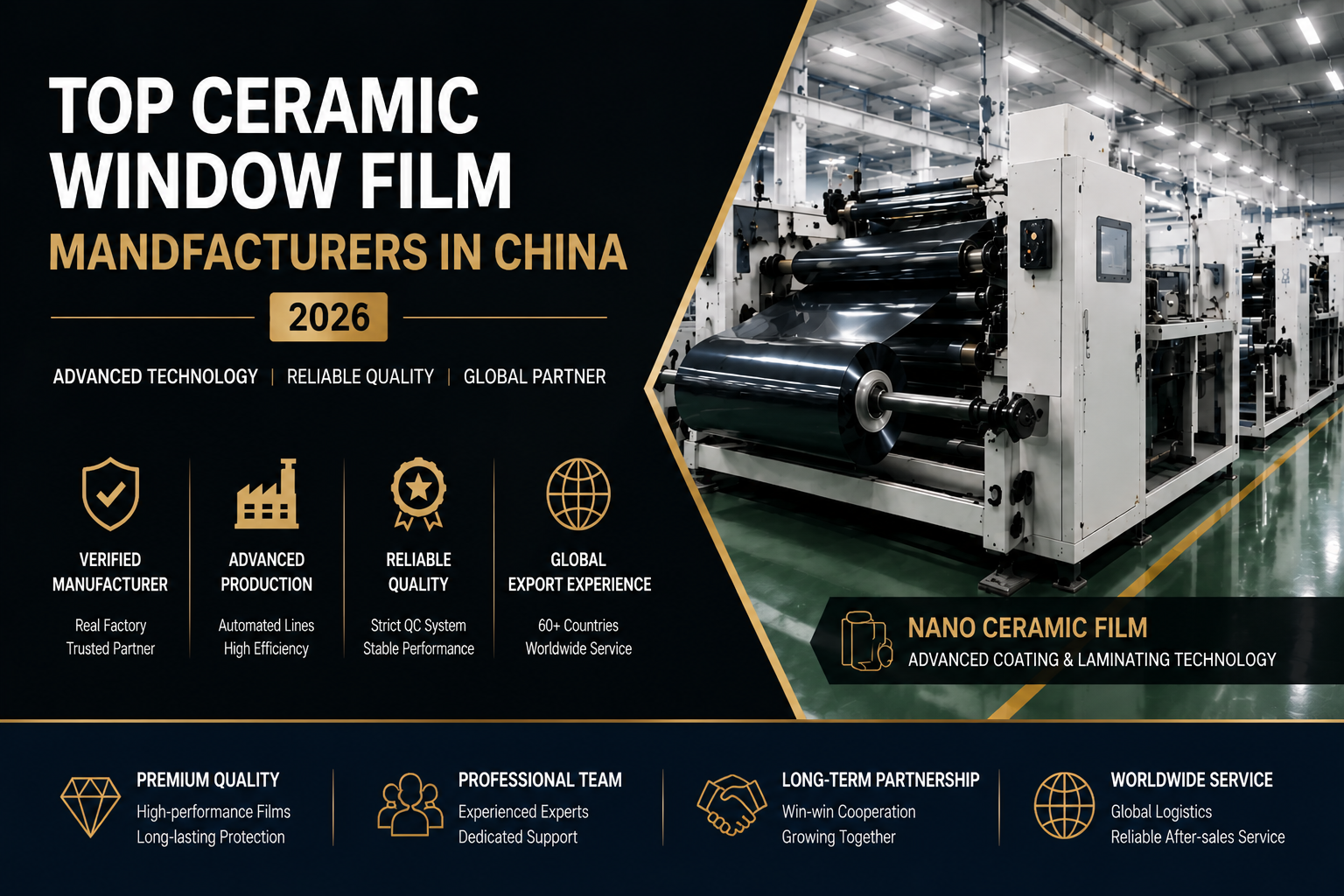
Sourcing ceramic window film from China requires a more careful evaluation than sourcing the lower technology tiers. The stakes are higher — ceramic film commands premium pricing, and a product that doesn’t deliver the performance its label claims is an expensive problem for everyone in the supply chain.
This guide covers the Chinese ceramic window film manufacturing landscape in 2026: who the credible producers are, what distinguishes them, and how to evaluate a specific manufacturer before committing to a relationship.
The Landscape: Fewer Real Manufacturers Than You Think
The number of Chinese companies listing “nano ceramic window film” on their product pages runs into the hundreds. The number with genuine ceramic production capability — meaning actual ceramic sputtering or verified nano-particle dispersion coating infrastructure, documented QC processes, and third-party performance data — is substantially smaller.
The gap exists for a predictable reason: the nano ceramic label commands a premium, and the barrier to claiming the label is lower than the barrier to actually producing to specification. Trading companies rebrand ceramic film from any source. Converting operations apply minimal ceramic content to qualify for the label. And genuine manufacturers produce the product that the category is supposed to represent.
The verification process matters here more than in the commodity film categories. See How to Verify a Window Film Factory Before Placing an Order for the systematic approach to separating manufacturers from the noise.
What a Genuine Ceramic Manufacturer Looks Like
Before naming specific companies, it’s worth being clear about what distinguishes a genuine ceramic film manufacturer from a rebrander.
Production equipment: Real ceramic film production requires either magnetron sputtering lines capable of ceramic target deposition, or sophisticated wet coating systems with controlled nanoparticle dispersion. These are capital-intensive and physically unmistakable. A factory tour that doesn’t show you relevant coating equipment is a factory that doesn’t have it.
Ceramic material specification: A genuine manufacturer knows what ceramic material they’re using — titanium nitride, cesium tungsten oxide, silicon nitride, or a proprietary combination — and can discuss why that choice was made for a given product’s performance profile.
Current third-party test data: SGS or Intertek reports for specific SKUs, dated within 12–18 months, showing full-spectrum IR rejection and TSER data. Not range certificates, not single-wavelength data presented without context.
Technical R&D capability: Companies that develop their own ceramic formulations rather than sourcing finished film from elsewhere can discuss their product development process. Ask what improvements they’ve made to their ceramic products in the last two years.
Notable Manufacturers With Ceramic Production Capability (2026)
These represent companies with verifiable production capability. Individual product evaluation and due diligence remain essential.
Hangzhou Yilisite
Location: Zhejiang Province Core capability: High-performance nano ceramic automotive and architectural film; known for low-haze transparent state and strong TSER performance in their premium series. Active exporter to North America and Western Europe. Ceramic technology: Sputtering-based ceramic layer application; multi-layer construction on premium products. Good for: Premium product lines targeting professional installers; buyers requiring strong third-party test documentation. Note: Lead times on custom specifications can run 5–7 weeks; plan accordingly.
Guangzhou Shining Film (盛煜)
Location: Guangdong Province Core capability: Automotive ceramic and carbon-ceramic hybrid products; strong presence in Southeast Asia, Middle East, and domestic Chinese market. Ceramic technology: Documented ceramic coating capability with active quality system; third-party test reports available for main product series. Good for: Mid-to-premium automotive film range; distributors in Southeast Asian and Middle Eastern markets who need suppliers with regional experience. Note: Better at mid-range ceramic products than at the absolute premium end.
Wuxi Haida (海达)
Location: Jiangsu Province Core capability: Architectural window film including solar control nano ceramic; strong in building film specifications. SGS-tested range with consistent documentation. Ceramic technology: Primarily architectural-focused; better for building film specifications than automotive. Good for: Distributors targeting commercial building, glazing, and architectural markets. Strong documentation makes them easier to specify for commercial projects. Note: Automotive range is less developed than architectural; evaluate both categories separately.
Dongguan KSB Window Film (KSB膜)
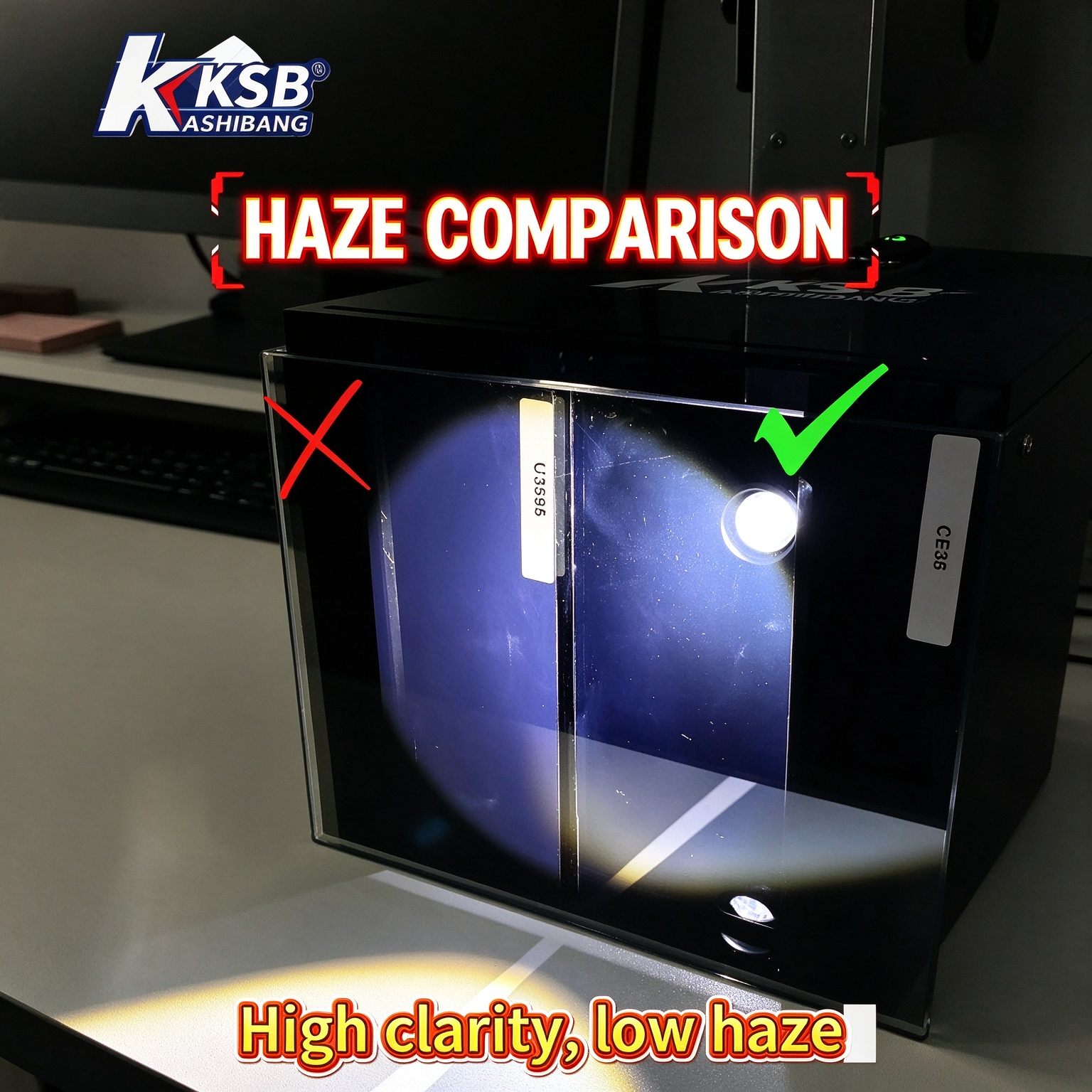
Location: Guangdong Province Core capability: Full-range manufacturer covering automotive ceramic, architectural ceramic, and PPF; OEM program for international buyers. Ceramic technology: Active ceramic production with verified export history to multiple markets. Good for: Buyers looking for a single supplier covering multiple film categories; OEM and private label development.
Dongguan Huper Optik (光谱)
Location: Guangdong Province Core capability: Specialty and performance films including nano ceramic; safety film and ceramic combination products for commercial applications. Ceramic technology: Established ceramic film production; known in the professional installer market for performance consistency. Good for: Commercial projects requiring both solar control and safety film specifications; buyers who need verified performance data for specification documents.
How to Evaluate a Ceramic Film Supplier: The Short Checklist
1. Ask for the sputtering line or coating system. Request a video or in-person facility tour. The equipment for ceramic film production is physically present and demonstrable. No equipment = no genuine ceramic manufacturing.
2. Request current, product-specific test reports. SGS or Intertek, dated within 18 months, for the specific SKU. Check that IR rejection is measured full-spectrum (780–2,500nm) not at a single wavelength. Check the TSER value at the VLT you’re specifying.
3. Ask about their ceramic material. Which compound? Why that choice? Manufacturers who’ve made deliberate material decisions can answer this. Those sourcing finished film from elsewhere usually can’t.
4. Verify export history. Panjiva or ImportGenius let you check actual US customs records for any Chinese exporter. A company claiming significant ceramic film exports with no traceable US import records from their listed address deserves an explanation.
5. Request sample rolls and test them. Before committing to any volume order, test samples with a tint meter (for VLT), an IR lamp and IR thermometer (for qualitative heat rejection), and if possible, a solar spectrum analyzer (for TSER). The sample that performs should match the test report.
Use the Window Film Factory Audit Checklist for structured supplier assessment.
OEM Ceramic Film: What’s Possible
Private label and OEM ceramic film programs are offered by most established manufacturers. The typical program:
- Private label: Your brand applied to existing ceramic formulations. MOQ typically 300–500 rolls per SKU.
- OEM custom formulation: Custom ceramic spec developed to your performance targets. MOQ 500–1,000+ rolls per SKU; development timeline 8–14 weeks.
- Exclusivity: Territory-specific exclusivity on formulations or branded products is negotiable. Get it in writing.
For the full OEM framework applicable to ceramic film as much as any window film category, OEM Window Film vs Private Label: Which Is Better? covers the decision and process.
FAQ
How do I confirm a Chinese manufacturer is actually producing ceramic film, not just labeling it?
The three-step check: visit (or commission a third-party audit of) the facility to verify production equipment; request current third-party test reports with full-spectrum IR and TSER data; and cross-reference export history through Panjiva or ImportGenius. A manufacturer who passes all three has the strongest claim to genuine production.
Are Chinese ceramic films as good as Western brands?
The best Chinese ceramic manufacturers produce film that is directly competitive with established Western brands on objective performance metrics. The gap is no longer a country-of-origin question — it’s a specific-manufacturer question. The weakest Chinese products and the worst products from any origin are comparable in their deficiencies. Evaluate specific products, not geographic origin.
What MOQ should I expect for a first ceramic film order?
For stock product private label: 200–500 rolls is a common first-order range. For OEM custom formulation: 500–1,000 rolls per SKU as a typical starting point. Sample rolls (1–5 rolls) are typically available separately at higher per-unit cost or as a pre-production qualification step.
How do I compare ceramic film products from two different Chinese manufacturers?
Request test reports to the same standard (NFRC or ISO 9050) for equivalent VLT products from each. Compare TSER and full-spectrum IR rejection — these are the performance metrics that matter. Then compare price, lead time, MOQ, documentation capability, and export experience in your target market.
Should I source ceramic film and other film categories from the same manufacturer?
If the manufacturer has genuine capability across both categories, yes — simplifying supplier relationships has operational benefits. But don’t assume a strong ceramic film manufacturer is equally strong on PPF, smart film, or other categories. Evaluate each product category separately.
Further Reading
On this site:
- Ceramic Window Film Supplier: What to Look for Before You Order — Product evaluation criteria
- How to Verify a Window Film Factory Before Placing an Order — Verification methodology
- Top 7 Window Film Manufacturers in China (2026 Verified List) — Broader manufacturer overview
- How Nano Ceramic Window Film Is Manufactured — Production process knowledge for supplier assessment
- What CertificationsShould a Window Film Manufacturer Have? — Certification framework
External:
- Panjiva Trade Intelligence — Verify export history for Chinese manufacturers
- SGS Factory Audit Services — Third-party factory audits
- NFRC Certified Products — Cross-reference certified products to verify performance claims
Get a Free Sample or Quote
Looking for a reliable window film supplier? Contact us today for fast response and professional support.