Published: June 13, 2026 · 9 min read · Category: Brand Building
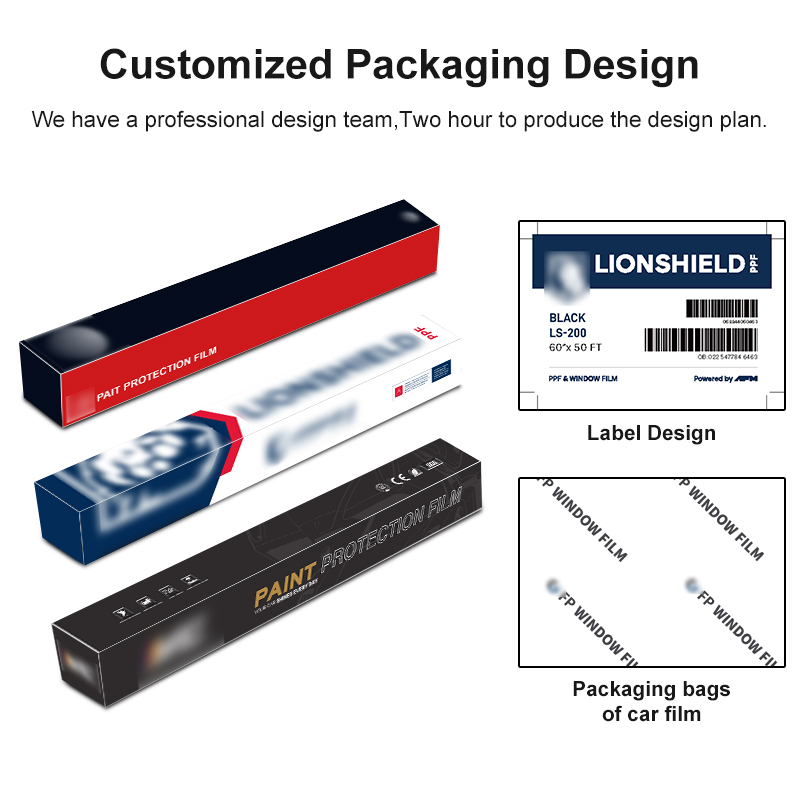
Packaging is the part of building a window film brand that most people underestimate until they’ve done it wrong once.
It’s easy to get focused on the product — the film specs, the supplier relationship, the pricing model — and treat packaging as something you’ll sort out at the end. Then the production run is ready, the factory needs your artwork files in 72 hours, and you’re suddenly making decisions about box dimensions, label materials, and regulatory text under time pressure that you could have avoided entirely.
This guide covers the full scope of OEM packaging for window film: what formats exist, what each component needs to include, how to brief a factory correctly, and the compliance requirements that vary by market. Whether you’re launching your first private label product or overhauling an existing brand’s packaging, the same principles apply.
Why Packaging Matters More Than Most Brand Builders Expect
Professional window film installers form opinions about your brand before they’ve installed a single square foot. The way a roll arrives in their hands — the box, the core label, the smell of the packaging, whether the end caps protect the roll properly — signals something about quality and attention to detail before the film ever hits a window.
Beyond first impressions, packaging serves three functional purposes that have real business consequences:
Regulatory compliance. In most mature markets, the claims on your packaging — VLT percentage, UV rejection, IR rejection — need to be accurate and in some jurisdictions need to be substantiated by specific test methodologies. Getting this wrong creates compliance risk, installer trust issues, and potential import problems.
Installer experience. How the roll behaves when it comes out of the box matters. Is the release liner easy to start? Does the core allow for smooth unwind? Is there a leader (a tab of backing film to grab on to) at the start of the roll? These details are the difference between an installer who recommends your brand and one who quietly switches.
Brand consistency. Every touchpoint in the distribution chain — the outer carton, the inner wrap, the core label, the end cap sticker — reinforces or undermines your brand positioning. A premium product in poorly finished packaging is a credibility problem.
The Anatomy of Window Film Packaging
Window film packaging typically has four to six components, each with its own design and specification requirements.
1. The Roll Core Label
The core label wraps around the cardboard or plastic core that the film is wound onto. It’s the most important single piece of packaging because it stays with the roll throughout the distribution chain and is what the installer reads at point of use.
What must be on the core label:
Product information:
- Brand name and logo
- Product series name and SKU/model number
- Film dimensions (width × length, e.g., 1.52m × 30m)
- Film technology (automotive, architectural, nano-ceramic, carbon, etc.)
Performance data:
- VLT (Visible Light Transmittance) — as a percentage
- UV rejection — as a percentage
- IR rejection — as a percentage (specify measurement methodology if space allows)
- TSER (Total Solar Energy Rejected) — for architectural products especially
- Shading coefficient or SHGC if targeting commercial/building markets
Compliance and traceability:
- Country of origin (“Made in China” or equivalent, required in most markets)
- Batch/lot number (allows traceability back to production records)
- Production date or date code
- Applicable standard references (e.g., ANSI/IWFA S-001 for US automotive)
Installation and safety:
- Basic installation instructions or QR code linking to full instructions
- Surface application (automotive / architectural / marine)
- Warranty reference (“X year warranty — see terms at [website]”)
Label material considerations: Core labels need to be durable — they live in warehouses, vans, and installation shops, and they get handled repeatedly. Self-adhesive polypropylene (PP) or polyethylene (PE) label stock holds up significantly better than standard paper labels in humidity and temperature variation. If your factory offers only paper labels as standard, it’s worth discussing an upgrade.
2. End Caps
End caps cover the exposed ends of the roll and serve both a protective and a branding function. They’re typically circular, cut from cardboard or foam, and either friction-fit into the core ends or attached with a sticker.
For premium brand positioning, printed end cap stickers (matching your brand colors, with brand name and possibly product name visible) add polish without significant cost. For basic private label, plain cardboard caps are functional.
Specify: Cap diameter (must match core inner and outer diameter), material (cardboard vs. foam for extra protection), and whether you want printed stickers applied.
3. Individual Roll Wrap
Many manufacturers wrap individual rolls in polyethylene film or a light cardboard sleeve before boxing. This protects the roll from dust and moisture and gives you another branding touchpoint.
For high-end positioning, a matte or gloss poly bag with your brand colors and logo printed creates a premium unboxing moment. For standard distribution products, plain clear poly or a simple white sleeve is functional and cost-effective.
4. The Outer Box / Retail Box
The outer carton serves different functions depending on your distribution channel:
Trade/wholesale distribution: The carton is primarily a shipping container. Focus on durability (double-wall corrugated for rolls longer than 30m), clear product identification (brand, product name, SKU, and dimensions visible on the outside), and consistent orientation marking (indicate which end is up to prevent roll deformation in storage).
Retail or installer-direct: The box is a sales tool. Cleaner design, printed graphics rather than plain kraft, window or cutaway showing the roll inside — all contribute to shelf presence and purchase decision.
Specification checklist for outer box:
- Inner dimensions must accommodate the roll with appropriate clearance (typically 20–30mm clearance on all sides)
- Corrugated grade: single wall (adequate for most commercial rolls ≤30m), double wall (recommended for longer rolls or heavy products)
- Print finish: standard flexo on kraft (economical), full-color offset print on white corrugated (premium), or digital print for shorter runs
- Bar code placement (if required for retail distribution)
- Regulatory text placement (origin, any required market-specific labeling)
5. Inner Core and Winding Specification
The core itself — usually 76mm (3-inch) diameter, though some manufacturers use 38mm (1.5-inch) — affects installation behavior. The industry standard for professional automotive and architectural film is 76mm. Make sure your specification calls this out explicitly; some factories default to smaller cores that are harder to work with.
Winding tension matters more than most packaging specs acknowledge. Over-wound rolls put sustained stress on the adhesive layer and can create deformation or adhesive creep. Under-wound rolls deform in transit. Ask your factory what tension profile they use and whether it’s documented in their production spec.
Leader and tail: A “leader” is a short section of release liner-only material at the start of the roll — no film, just backing — that gives the installer something to grab when starting an installation. A “tail” is the same at the end. Not all manufacturers include these by default; for professional-grade products, they’re worth specifying.
6. Master Carton (Export Carton)
For distribution-level orders, individual roll boxes are typically palletized inside master cartons. Master carton specs should cover:
- Number of rolls per master carton (typically 4–6 for standard 30m rolls)
- Master carton dimensions and weight
- Pallet configuration (how many master cartons per pallet layer, how many layers)
- Pallet type (ISPM 15 heat-treated wood required for export to most markets)
- Carton labeling (batch number, production date, destination marking)
Market-Specific Packaging Compliance
Different markets have different requirements for what must appear on window film packaging. The following are the main requirements for major buyer markets — verify current requirements with a local compliance consultant before printing large runs.
United States:
- “Made in China” or country of origin must be clearly marked
- FTC requirements mean any energy or performance claim (UV rejection, heat reduction) must be substantiated by test data matching the claim
- ANSI/IWFA S-001 reference on automotive film signals compliance with the US industry standard
- California Prop 65 warning may be required depending on film chemistry — check with your compliance counsel
European Union:
- Country of origin declaration
- CE marking where applicable (required for certain architectural safety films under the Construction Products Regulation)
- REACH compliance statement (no prohibited substances above threshold levels) — may be required for some film chemistries
- Instructions in the local language of the destination country for consumer products
Australia:
- Country of origin mandatory
- For automotive film: reference to AS/NZS 2080 or relevant Australian Standard
- Australian Consumer Law requires that performance claims are accurate and not misleading
UAE / GCC:
- Arabic language text required for UAE and many GCC markets
- ESMA registration or product certification reference where required
- Halal or other certification marks not typically applicable to window film, but check current import documentation requirements with a UAE customs broker
The Artwork Briefing Process: What Factories Need From You
This is where packaging projects most commonly go wrong. Factories need specific information in a specific format, and buyers who don’t provide it clearly end up with delays, incorrect samples, and reprints.
What to provide:
- Brand guidelines document — Logo files (vector format: AI, EPS, or SVG — not JPEG), brand colors in CMYK and Pantone references, approved fonts, and any brand usage rules.
- Dielines — The flat template for each packaging component showing cut lines, fold lines, and bleed areas. Your factory should be able to provide blank dielines for their standard packaging formats; you fill them with your brand assets.
- Copy deck — All the text that needs to appear, in its final form, for each market and language. Don’t leave text decisions to the factory.
- Performance data — The actual VLT, UV, IR, and TSER values that will appear on labels, verified against your current third-party test reports. Don’t use estimated or rounded figures.
- Regulatory requirements — Tell the factory which markets you’re shipping to and what compliance text is required. If you’ve worked with a compliance consultant, provide them with the requirement list.
- Approval process — Define clearly how many rounds of physical samples you require before approving for mass production, and who on your side has authority to approve.
File format requirements: Most Chinese packaging manufacturers work with Adobe Illustrator files (.ai) or PDF with embedded fonts and outlined text. Confirm file format requirements with your factory before starting design work — having to recreate artwork in a different format at the last minute is a common, entirely avoidable delay.
Packaging MOQs and Lead Times
Packaging components typically have their own minimum order quantities, separate from the film itself.
For custom-printed roll labels, the MOQ is often 500–1,000 labels per design (one design = one SKU). For custom-printed outer boxes, MOQs of 500–1,000 units per design are common for offset printing; digital printing allows shorter runs at higher per-unit cost.
This matters for brand builders launching multiple SKUs simultaneously — the packaging MOQs across a full product line add up, and running the economics before committing to a design system prevents surprises.
Lead times:
- Roll label printing: 7–14 days once artwork is approved
- Custom box printing: 15–25 days
- Allow additional time for physical sample approval before mass production
Build these lead times into your overall product launch timeline. See How to Start Your Own Window Film Brand for a full launch timeline that integrates packaging development with the broader brand launch process.
Working With Your Factory on Packaging
The best OEM manufacturers have packaging development processes built into their workflow — a dedicated person or team who handles brand assets, produces samples, and coordinates between production and the buyer.
The worst ones treat packaging as an afterthought, handle it in the final week before shipment, and produce results that don’t match what was approved.
Before you commit to a factory for OEM production, ask specifically:
- Who manages the packaging development process on your side?
- Can I see samples of packaging you’ve produced for other OEM clients (with brand info redacted)?
- What file formats do you require for artwork?
- What is your sample approval process, and how many rounds of revision are included?
- What is your packaging MOQ for roll labels and outer boxes?
The answers establish whether this is a factory that can actually support a professional brand launch, or one where you’ll be managing packaging chaos on top of product development.
FAQ
Q1: What is OEM window film packaging?
OEM window film packaging allows brands to customize boxes, labels, logos, and designs for their own private label products.
Q2: What packaging options are available for private label window film?
Common options include custom cartons, branded inner boxes, logo stickers, instruction manuals, and customized roll labels.
Q3: Can manufacturers print my company logo on the packaging?
Yes. Most OEM manufacturers support logo printing and custom branding for packaging and labels.
Q4: What information should be included on window film packaging?
Packaging usually includes product model, VLT, IR rejection, UV protection, size specifications, installation instructions, and brand details.
Q5: What is the minimum order quantity for custom packaging?
MOQ requirements vary by manufacturer, but custom OEM packaging usually requires a higher order quantity than standard packaging.
Q6: Why is custom packaging important for private label brands?
Custom packaging improves brand recognition, enhances product presentation, and helps distributors build a professional market image.
Ready to develop OEM packaging for your window film brand? Send us an inquiry — we work with buyers through the full OEM process, including connecting them with factories that have professional packaging development capabilities.
Further Reading
On this site:
- How to Start Your Own Window Film Brand — The full brand launch process that packaging fits within
- OEM Window Film vs Private Label: Which Is Better? — Understanding the sourcing model before designing packaging
- How to Source OEM Window Film from China: A Step-by-Step Guide — Working with a factory through the full OEM development process
- What Certifications Should a Window Film Manufacturer Have? — Ensuring the performance data on your packaging is backed by verified test reports
- How to Import Window Film from China: Complete Buyer’s Guide — Import compliance considerations that connect to packaging requirements
External:
- IWFA Labeling Guidelines — Industry standard references for what professional window film labels should include
- FTC Packaging and Labeling — US regulatory requirements for product claims on packaging
- GS1 Barcode Standards — If you’re distributing into retail channels, GS1 barcodes are the standard; register your brand before printing packaging
- Pantone Color System — Industry standard for specifying print colors; use Pantone references when briefing packaging suppliers to ensure color accuracy across print runs
Get a Free Sample or Quote
Looking for a reliable window film supplier? Contact us today for fast response and professional support.