Installing paint protection film (PPF) requires more than stretching the material to cover a vehicle panel. The film must also respond appropriately after stretching and remain well-positioned around curves, edges, and complex body contours.
For professional installers, stretchability and elastic recovery are important material characteristics. They influence how the film behaves during positioning and application.
The KSB Paint Protection Film(XM1) is designed with a stretchable TPU base and elastic recovery properties to support professional installation requirements.
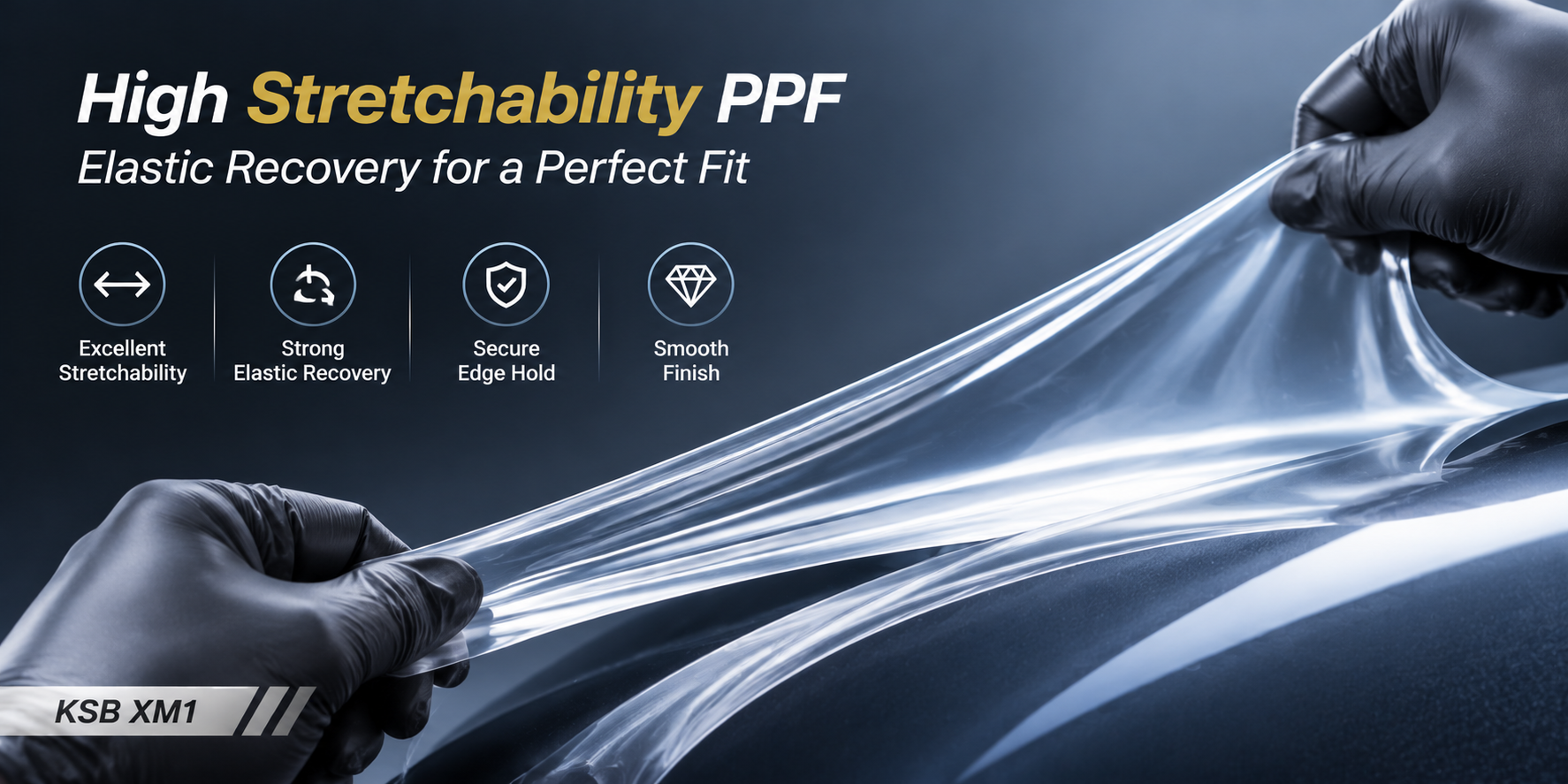
Stretchability and Elastic Recovery: What’s the Difference?
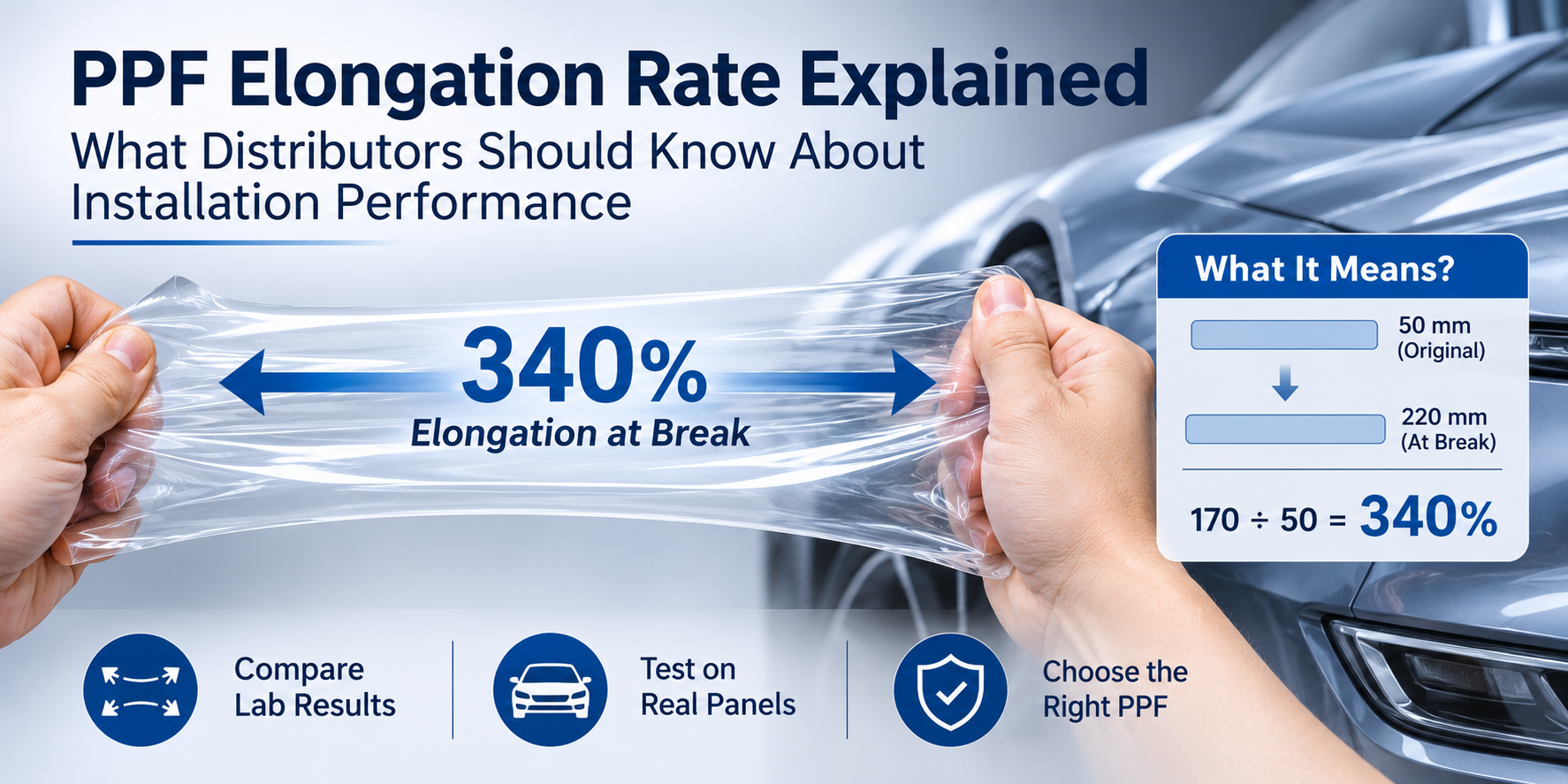
Stretchability describes how far a material can extend, while elastic recovery refers to how it responds after the stretching force is released.
Both characteristics matter during PPF installation. Flat panels may require relatively little adjustment, but bumpers, recessed areas, and curved body panels often involve more stretching and repositioning.
A film should therefore be evaluated beyond its maximum elongation. Its behavior after stretching is also important.
For more background on material selection, see How to Choose TPU for Paint Protection Film and How to Identify High Quality Paint Protection Film.
How Elastic Recovery Affects Installation
When PPF is stretched around curves and edges, material tension can influence positioning and edge stability.
Suitable stretchability and recovery behavior can help installers manage the film during application and reduce unnecessary adjustment. However, edge lifting cannot be attributed to one material property alone.
Other important factors include:
- Surface preparation and cleanliness.
- Adhesive bonding characteristics.
- Panel shape and installation conditions.
- Installer experience and application technique.
Adhesive performance is particularly relevant when evaluating edge behavior. Learn more in PPF Adhesive Explained: Why Glue Quality Matters.
XPCL: Material Configuration and Specifications
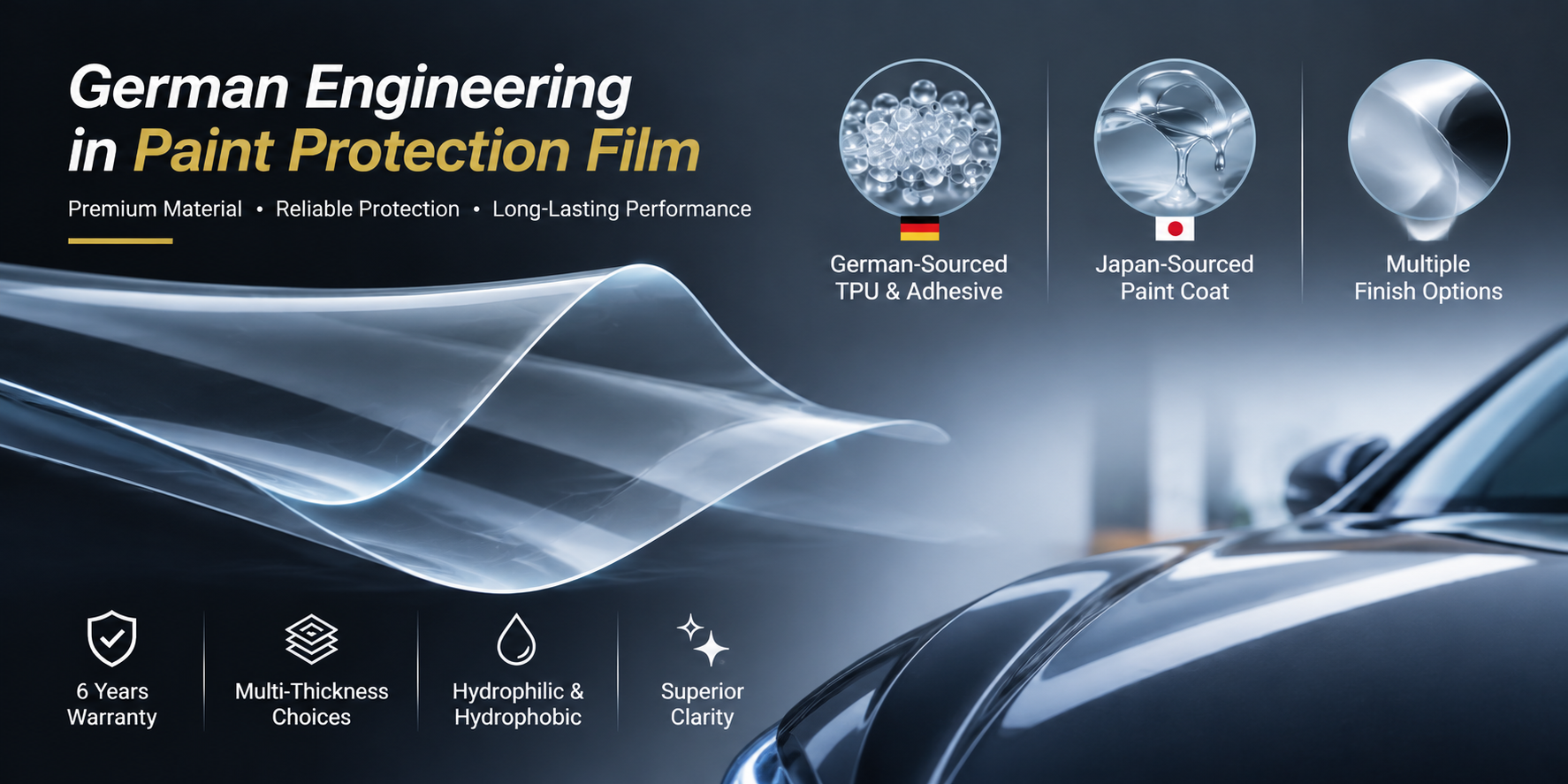
The XPCL Series combines German-sourced TPU base material and adhesive with a Japan-sourced paint coat. Its hydrophobic TPU construction and 280% base material breaking elongation provide technical reference points for evaluating its material characteristics.
| Item | Specification |
|---|---|
| Model | XPCL |
| Thickness | 7.5+0.3 MIL / 190+0.3 μm |
| TPU Base Material | Germany |
| Glue | Germany |
| Paint Coat | Japan |
| Material | Hydrophobic TPU |
| Base Material Breaking Elongation | 280% |
| Gray Level | Level 4 |
| 20-Minute Peeling Force | 1700–1800 GF |
| 24-Hour Peeling Force | 2200–2300 GF |
| Warranty | 6 Years |
The 280% elongation value refers to the TPU base material’s breaking elongation. It is not the recommended stretching percentage of the finished film or a direct measurement of elastic recovery.
For a better understanding of thickness selection, see 6.5mil vs. 7.5mil vs. 8.5mil PPF: What’s the Difference?.
What Should Installers Check in a PPF Sample?
Technical specifications provide a starting point, but practical sample evaluation is also necessary.
When testing XPCL, installers can focus on four areas:
- Stretching: Observe how the film extends around curved panels.
- Recovery: Check how the material responds after tension is released.
- Edge positioning: Evaluate how it behaves around edges and complex contours.
- Adhesion: Review positioning and bonding behavior during application.
These checks help buyers understand whether the film suits their installation methods and target applications.
For a more systematic approach, see How to Test a PPF Sample Roll: 5 Critical Shop Tests Before Placing a Bulk Order.
FAQ
Why is elastic recovery important in PPF installation?
Elastic recovery describes how a material responds after being stretched. It can influence film tension and positioning when installers work around curves and edges.
Does higher breaking elongation mean easier installation?
Not necessarily. Breaking elongation measures how far a material extends before breaking under specified test conditions. Actual installation also depends on film construction, adhesive behavior, and installation technique.
Can elastic recovery prevent PPF edge lifting?
It may help installers manage material tension and positioning, but it cannot guarantee that edge lifting will not occur. Surface preparation, adhesive performance, panel geometry, and installation technique also matter.
Further Reading
On this site:
- Self-Healing PPF Explained: How Does It Work? — Understanding self-healing functionality.
- How Paint Protection Film Is Manufactured — Exploring film construction.
- How Long Does Paint Protection Film Last? — Understanding product durability.
Conclusion
PPF stretchability should not be judged by extension alone. Elastic recovery, adhesive behavior, and edge positioning all contribute to the installation process.
With 280% base material breaking elongation, hydrophobic TPU construction, and German-sourced TPU base material and adhesive, KSB XPCL offers a product option for distributors and professional installers who value material flexibility and recovery characteristics.
Contact KSB to learn more about XPCL and available supply options.
Get a Free Sample or Quote
Looking for a reliable window film supplier? Contact us today for fast response and professional support.