Published: June 8, 2026 · 10 min read · Category: Sourcing Guide
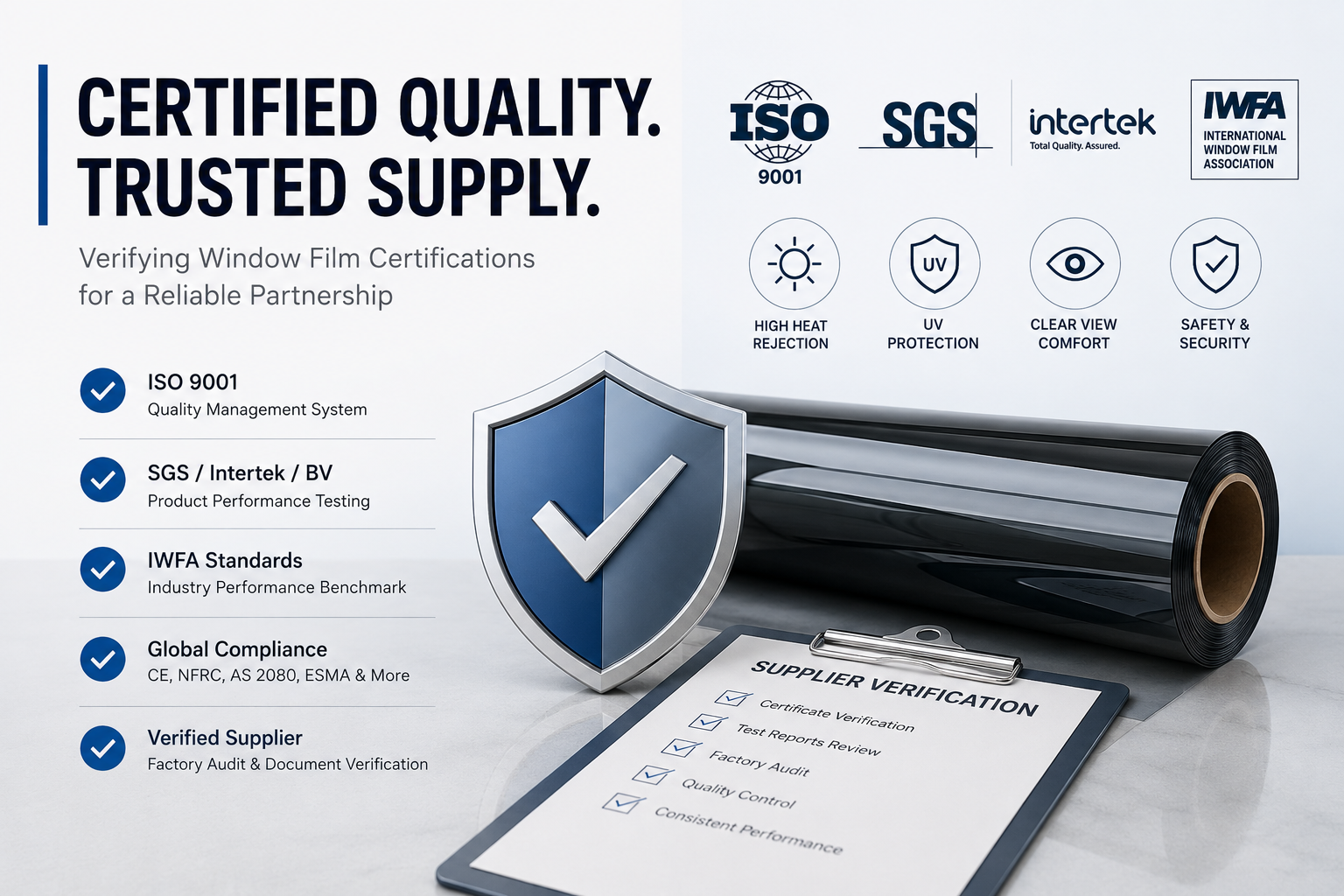
“We are ISO certified and SGS tested.”
You’ll see some version of this line in nearly every Chinese window film supplier’s email signature, product catalog, and Alibaba profile. It sounds reassuring. It’s also, in many cases, almost meaningless — not because the certifications themselves are worthless, but because buyers rarely know what to look for, what to ask for, or how to tell a real certification from a logo slapped on a brochure.
This guide breaks down every certification that actually matters for window film manufacturers, what each one covers, what it doesn’t, and — crucially — how to verify you’re looking at the real thing.
Why Certifications Matter (and Where They Fall Short)
Before getting into the specifics, it’s worth being clear about what certifications can and can’t tell you.
A valid certification tells you that at a specific point in time, a specific product or process met a specific standard. That’s genuinely useful information. It’s not a guarantee that every roll of film coming off the production line meets the same standard. It’s not a proxy for the supplier’s overall reliability. And it’s definitely not a substitute for your own due diligence.
The buyers who get the most value from certifications treat them as a starting point for questions, not a finishing line. “You have SGS certification — can I see the actual report? Which product? What test date? Which parameters were tested?” That’s the conversation that separates serious suppliers from suppliers who’ve learned that buyers stop asking once they see a logo.
With that framing in place, here’s what to look for.
ISO 9001: The Baseline, Not the Benchmark
What it is: ISO 9001 is a quality management system standard. It certifies that a company has documented processes, internal audits, and management systems in place to consistently deliver products that meet customer and regulatory requirements.
What it actually means for window film buyers: ISO 9001 does not test the product. It does not verify film performance. It certifies the process — that the factory has a system for managing quality, not that the quality is good. A factory producing low-grade dyed film can be ISO 9001 certified. A factory producing world-class nano-ceramic film might theoretically not be.
That said, ISO 9001 is still a meaningful baseline. Factories with functional quality management systems catch defects before they leave the building. They have corrective action processes when things go wrong. The certification is a better proxy for operational maturity than product quality.
How to verify it: Every ISO 9001 certificate has a certificate number, an issuing certification body (CB), and an expiry date. Look up the issuing body on the IAF (International Accreditation Forum) database to confirm it’s an accredited registrar. Then verify the certificate number directly on the registrar’s website. If the registrar won’t let you verify online, that’s a flag.
What to watch for: Expired certificates. Certificates where the scope statement (the “this certifies that…” language) covers only trading or sales activities, not manufacturing. Certificates issued by obscure registrars with no IAF accreditation.
SGS, Intertek, and Bureau Veritas: Product Test Reports
What they are: SGS, Intertek, and Bureau Veritas are global third-party testing and certification companies. When a window film manufacturer provides an “SGS certificate” or “Intertek test report,” they’re typically referring to a product performance test conducted at one of these labs.
What these reports actually cover: Unlike ISO 9001, these are product-specific. A window film test report from SGS or Intertek will typically measure:
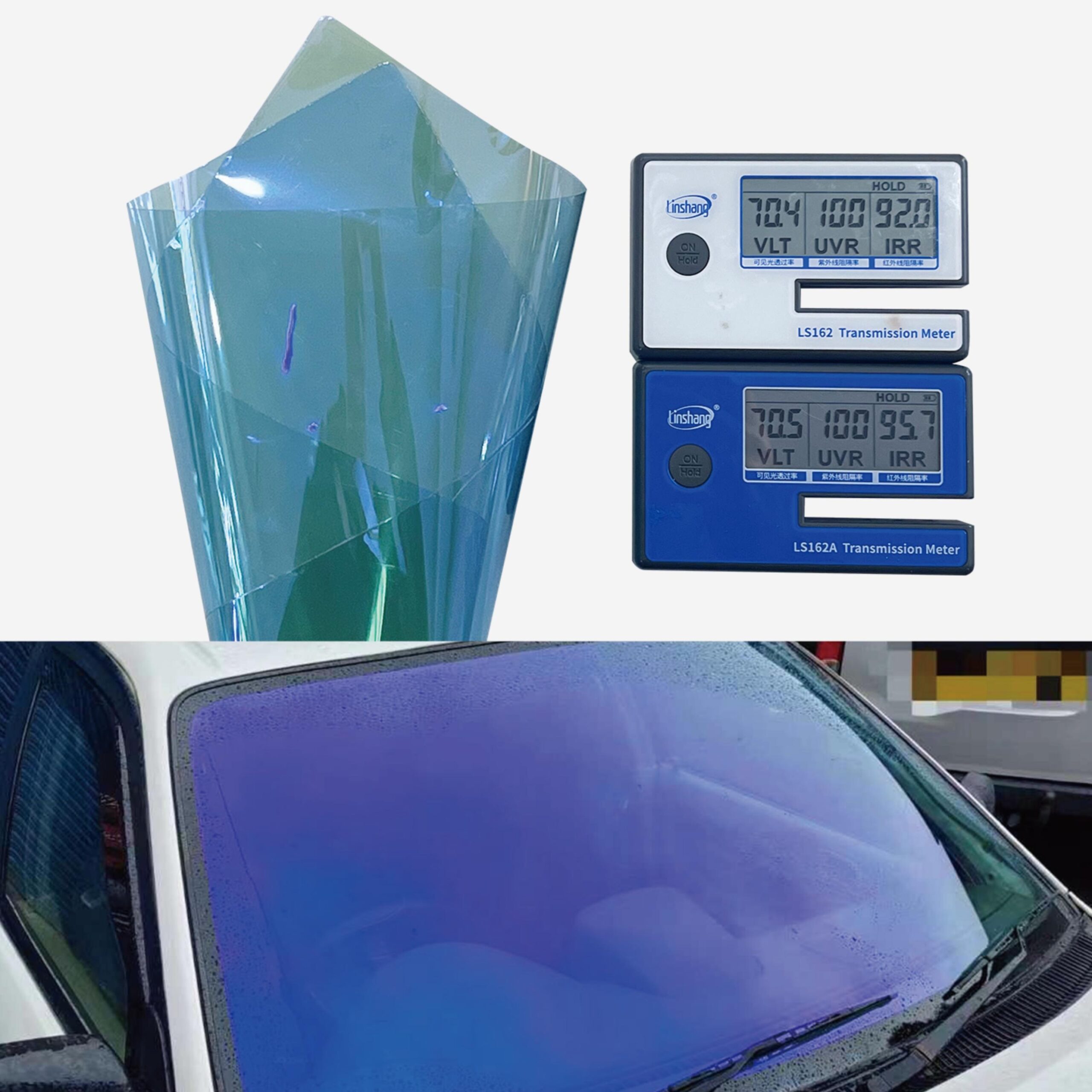
- VLT (Visible Light Transmittance): The percentage of visible light passing through the film
- VLR (Visible Light Reflectance): Internal and external reflectance
- TSER (Total Solar Energy Rejected): The overall solar energy rejection performance
- UV Rejection: Usually measured at wavelengths up to 380nm
- IR Rejection: Heat rejection — this one deserves special attention (more below)
- SC (Shading Coefficient) and SHGC (Solar Heat Gain Coefficient): Relevant for architectural applications
The IR rejection problem: This is where a lot of manufacturer claims fall apart under scrutiny. Infrared radiation spans a wide spectrum (roughly 780nm–2,500nm). Some manufacturers quote IR rejection at a narrow, favorable wavelength — typically around 900–1,000nm where their film performs well — rather than across the full solar IR spectrum.
When you’re reviewing an IR rejection claim, look at the test methodology in the report. Is it measuring at a single wavelength or across the full spectrum? A film claiming “96% IR rejection” at 950nm may only achieve 40–50% rejection across the full solar IR band. Both numbers are technically accurate. Only one of them reflects real-world performance.
How to verify reports: Test reports should include: the specific product/sample description, the test standard used (NFRC, EN, ASHRAE, etc.), the lab name and accreditation number, the test date, and specific measured values with tolerances. If a supplier sends you a report without a product name, or a report that’s three years old, or a scan of a scan that’s barely legible — ask for the original, and ask for a recent one.
How to verify the lab: SGS, Intertek, and Bureau Veritas all maintain searchable databases of their certified products and test reports. You can also verify accreditation through ILAC (International Laboratory Accreditation Cooperation). If a supplier’s “SGS certificate” doesn’t pull up anywhere in an SGS search, treat it with significant skepticism.
IWFA Standards: The Industry Benchmark
What it is: The IWFA (International Window Film Association) has developed the most widely recognized industry standards specifically for window film, including ANSI/IWFA S-001 for automotive film and guidelines for architectural film performance claims.
Why it matters: IWFA standards aren’t just test protocols — they define how performance should be measured and how claims should be communicated. A manufacturer that references IWFA standards in their test reports is using a methodology that professional installers and commercial buyers in North America will recognize and trust.
What to look for: IWFA membership alone doesn’t mean much — membership is open. What matters is whether the manufacturer’s products have been tested against IWFA standards and whether the resulting reports are accurate and current. Ask specifically whether they test to ANSI/IWFA S-001 for automotive products or equivalent IWFA guidelines for architectural.
AIMCAL: Relevant for Serious Manufacturers
What it is: AIMCAL (Association of International Metallizers, Coaters and Laminators) is the industry association for manufacturers who apply coatings and metallic layers to flexible substrates — which includes most window film production processes.
Why it matters: AIMCAL membership and participation in their testing and standards programs signals genuine manufacturing capability, not just trading or assembly. A supplier claiming to be a manufacturer who has no familiarity with AIMCAL is worth probing further.
Practical note: AIMCAL membership is more common among manufacturers with genuine coating operations. It’s a useful data point in the factory vs. trading company question. See Window Film Factory vs Trading Company: What’s the Difference? for the broader context on why this matters.
Market-Specific Certifications
Beyond the global standards above, your target market may require or strongly prefer specific regional certifications. These vary significantly and change over time — always verify current requirements with a local customs broker or industry contact before finalizing your product lineup.
United States: NFRC and FTC Compliance
The NFRC (National Fenestration Rating Council) rates window products for energy performance. NFRC certification isn’t mandatory for window film in all contexts, but it’s increasingly requested for commercial building projects, green building specifications (LEED, ENERGY STAR), and government procurement.
FTC guidelines aren’t a certification per se, but they govern how energy and performance claims can be made on products sold in the US. If a manufacturer’s packaging makes VLT, UV, or energy-savings claims, those claims need to be substantiated by test data that matches the methodology the FTC expects. Manufacturers who’ve been selling into the US market for years typically understand this. New exporters often don’t.
European Union: CE Marking and EN Standards
CE marking is required for certain window film products sold in the EU, depending on application. Safety film intended for structural glazing applications falls under the Construction Products Regulation (CPR) and may require CE marking under harmonized EN standards.
Relevant EN standards include:
- EN 12600: Pendulum impact testing for safety film on glass
- EN 14449: Safety film for laminated glass applications
- EN 410: Measurement of light and solar characteristics
A manufacturer exporting to Europe should be able to tell you which EN standards are applicable to their products and provide the corresponding test documentation. Vague answers to this question suggest limited EU export experience.
Australia: AS 2080 for Automotive Film
Australia has its own standard for automotive window tinting film — AS 2080 — which specifies permissible VLT levels and test methods. Australian state regulations set limits on how dark a vehicle’s windows can be tinted, and products sold for automotive use are expected to meet this standard.
This matters practically because some Chinese manufacturers quote VLT percentages that are measured under different conditions than AS 2080 specifies, leading to products that appear compliant on paper but fail real-world compliance checks. If you’re importing for the Australian market, verify that test reports specifically reference AS 2080 methodology.
UAE and GCC: ESMA Certification
The Emirates Authority for Standardization and Metrology (ESMA) has mandatory certification requirements for window film products imported into the UAE. The UAE Window Film Regulation (UAE.S GSO 1882) specifies permitted VLT levels and requires product certification before import.
GCC countries broadly have become more active on window film regulation in recent years, particularly for automotive applications. If you’re distributing into the Middle East, verify current ESMA requirements with a UAE-based customs consultant — the requirements have been updated multiple times and what was compliant two years ago may not be today.
China: GB Standards
For window film manufactured in China and sold domestically, GB (Guóbiāo, or national standard) certifications apply. The relevant standards include GB/T 29735 for automotive window film. These aren’t directly relevant for export buyers, but a manufacturer who can speak fluently about GB standards as well as international ones tends to have a more systematic approach to compliance overall.
Safety Film: Additional Certification Considerations
Safety and security film — products designed to hold glass together on impact — carries higher stakes and correspondingly more specific certification requirements.
EN 12600 (Europe): The standard pendulum impact test for safety glazing. Safety film products for the EU market should have test reports to this standard, specifying which impact performance class they achieve.
ANSI Z97.1 (United States): The American National Standard for safety glazing materials in buildings. Relevant for safety film used in architectural applications.
GSA/government specifications: For safety film used in US government facilities, blast resistance certification to GSA (General Services Administration) and Department of State standards may be required. These are highly specific and not something most manufacturers carry unless they’ve actively targeted that segment.
If safety film is part of your product range or your customers’ applications, these certifications aren’t optional — they’re the baseline for having a credible conversation with commercial buyers.
The Certifications That Don’t Mean What They Seem To
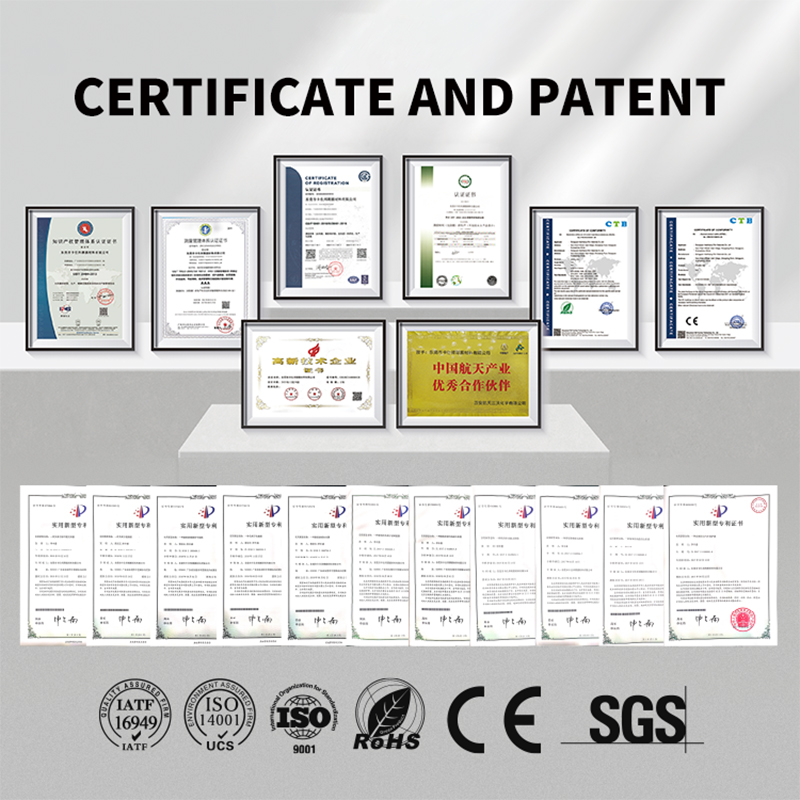
A few credentials that appear frequently but warrant scrutiny:
“ISO 14001 certified” — This is an environmental management system standard, not a quality or product standard. It says nothing about film performance.
“SGS Approved Supplier” — This language sometimes appears on supplier profiles and means very little. SGS tests products and audits factories; “approved supplier” status can refer to nothing more than paying for an SGS audit service. The specific test reports are what matter, not the general label.
“REACH compliant” and “RoHS compliant” — These are substance restriction standards (EU chemical regulations). Compliance means the product doesn’t contain prohibited substances above threshold levels. This is a minimum requirement for EU market access, not a performance indicator. A REACH-compliant film can still perform poorly.
“CE certified” without specifying the directive — CE marking is required under several different EU directives depending on the product type. A supplier claiming “CE certified” without telling you which directive, which harmonized standard, and where the declaration of conformity is filed has probably not gone through a legitimate CE process.
In-house “certificates” — Some manufacturers produce their own quality certificates or performance reports without third-party testing. These have no independent verification value. If the issuing organization is the same company as the manufacturer, it’s not a certification.
How to Request and Verify Certifications: A Practical Checklist
When evaluating any window film manufacturer, here’s what to request and what to check:
ISO 9001:
- [ ] Certificate with certificate number, issuing CB, and valid date range
- [ ] Scope statement covers manufacturing (not just trading)
- [ ] CB is IAF-accredited (verify at iaf.nu)
- [ ] Certificate number verifiable on the CB’s own website
SGS / Intertek / Bureau Veritas test reports:
- [ ] Report is product-specific (not a generic range certificate)
- [ ] Test date within the last 12–18 months
- [ ] Test standard clearly identified (NFRC, EN 410, ANSI/IWFA, etc.)
- [ ] IR rejection methodology specified (wavelength range, not just a single point)
- [ ] Report includes lab name and accreditation reference
- [ ] Lab accreditation verifiable through ILAC
Market-specific:
- [ ] NFRC for US commercial/green building applications
- [ ] EN 12600 / EN 410 for EU safety and solar control claims
- [ ] AS 2080 for Australian automotive applications
- [ ] ESMA for UAE/GCC distribution
Red flags:
- [ ] Any certificate that can’t be verified via the issuing body
- [ ] Test reports with no product name or vague product descriptions
- [ ] IR rejection claims without methodology disclosure
- [ ] Certificates where the scope doesn’t match the claimed activity
- [ ] Reluctance to provide original documents (not just logos or scans)
Putting It in Context
Certifications matter, but they’re one layer of due diligence — not the whole picture. A factory can have spotless documentation and still deliver inconsistent production quality. Conversely, some excellent smaller manufacturers are still building out their certification portfolio and will have strong product performance but fewer formal credentials than you might expect.
The most reliable indicator of a manufacturer’s quality isn’t any single certificate — it’s the combination of verifiable documentation, a transparent factory operation, a track record with international buyers, and the willingness to answer specific questions with specific answers.
Before placing any significant order, run the certifications check above alongside a factory audit. Our Window Film Factory Audit Checklist covers the operational questions that sit alongside the documentation review — together they give you a much cleaner picture than either alone.
FAQ
1. Why are certifications important for window film manufacturers?
Certifications help verify product quality, performance consistency, and compliance with international market standards.
2. What is the most common certification for window film factories?
ISO 9001 is one of the most common certifications, showing the manufacturer follows a quality management system.
3. Why are SGS and Intertek test reports important?
They provide third-party verification for key performance data like UV rejection, IR rejection, and VLT.
4. What should buyers check on a certification report?
Check the product name, test date, testing standards, and whether the report matches the actual product SKU.
5. Are certifications required for exporting window film internationally?
Many markets require certifications or compliance documents for customs clearance and legal product claims.
6. How can buyers verify if a certification is real?
Buyers can verify certificate numbers through official certification bodies, testing labs, or accreditation databases.
Working With Certified Suppliers
Navigating the certification landscape is genuinely complex — particularly if you’re selling across multiple markets with different requirements. If you’re trying to shortlist manufacturers who can meet specific certification requirements for your target market, we can help narrow it down.
We work with window film buyers across North America, Europe, Australia, and the Middle East — and we know which manufacturers have the documentation infrastructure to support serious international distribution, and which ones are still catching up.
→ Send us a sourcing inquiry and we’ll follow up within one business day.
Further Reading
On this site:
- Window Film Factory Audit Checklist: 12 Questions to Ask Before You Partner — Operational due diligence to run alongside certification verification
- Top 7 Window Film Manufacturers in China (2026 Verified List) — Verified manufacturers with documented certification track records
- Window Film Factory vs Trading Company: What’s the Difference? — Why the factory/trading company distinction matters for certification validity
- Ceramic Window Film Supplier: What to Look for Before You Order — Performance claims and verification specific to ceramic and nano-ceramic products
- How to Import Window Film from China: Complete Buyer’s Guide — How certifications connect to customs clearance and market compliance
External resources:
- IAF Member Database — Verify ISO certification body accreditation
- ILAC Laboratory Accreditation — Verify testing lab accreditation for SGS, Intertek, and BV reports
- IWFA Standards Library — ANSI/IWFA standards for automotive and architectural film
- NFRC Product Directory — Search US NFRC-certified window film products
- ESMA UAE Standards Portal — Current UAE window film certification requirements
- AIMCAL — Coatings and laminating industry body; relevant for assessing genuine manufacturing capability
Get a Free Sample or Quote
Looking for a reliable window film supplier? Contact us today for fast response and professional support.